
Rigorous Third Grade Science Curriculum for NGSS
Do you ever wonder what your third graders should know in science? As an elementary teacher that follows the Next Generation Science Standards (NGSS), this third grade science curriculum helps me easily set up science learning centers in our classroom.

These science centers cover ALL of the NGSS science topics for third grade and include hands-on activities for each standard. They also include digital components for Google Classroom!
Third Grade Science Curriculum – Your Questions Answered
Before I link up to all of our 3rd grade NGSS science units, let me answer a few quick questions that you might have about them. If you have a question that I haven’t answered, let me know in the comment section below.
What are the Next Generation Science Standards?
The Next Generation Science Standards are multi-dimensional. They include Performance Expectations, Disciplinary Core Ideas, Cross-Cutting Concepts, and Science and Engineering Practices
There is a lot of interwoven content, concepts, and science practices in each and every NGSS science standard.
Find out more about how to read the NGSS and which parts of each standard we used when designing the Third Grade Science Science Stations and our 5E Units for Third Grade.

What If I Teach in Texas using the TEKS?
You’re in luck! We have an alignment between the NGSS and TEKS that shows which standards in the NGSS match which standards in the TEKS. All of our Science Stations are linked in the alignment so you can easily find them.

Why are there so many Science Stations?
We originally created 9 Science Station Units for third grade with 8 stations per unit. Many teachers were only using parts of each of the units, so we broke them down into individual science stations. The individual science stations are only available on TpT.
We also have the science stations available by domain as well as a yearlong bundle. Here is how they are broken out:
- INDIVIDUAL Science Station
- UNIT Bundle by NGSS Standard (8 Stations in each UNIT)
- DOMAIN Bundle (Physical Science, Life Science, Earth Science)
- YEARLONG Bundle
While you can purchase each science station individually, you save more money by purchasing the science units or a larger bundle.
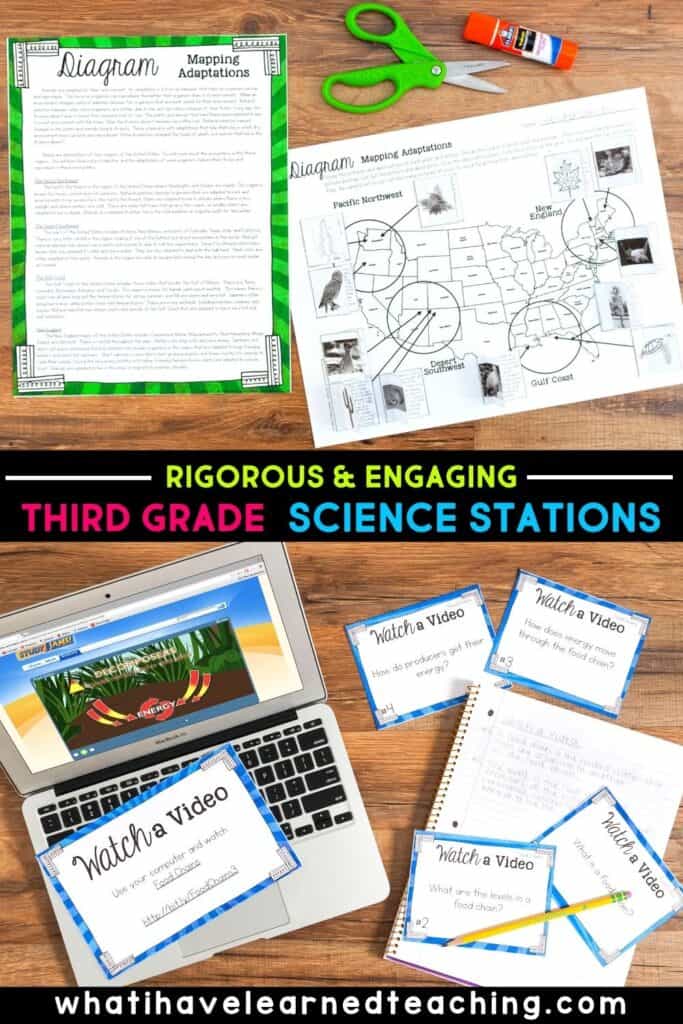
How do I use the Science Stations in my Classroom?
Great question! There are many ways to use the science stations. Some teachers use them in small groups or as science centers. Other teachers use them one at a time in a whole group format. Since COVID, many teachers are using them in a distance learning environment with Google Classroom.
There really is no one-way or right answer to this question. It depends on how your classroom is set up and how much time you have for science instruction each week.
Click the image below for more information on how I set up my science stations.

Are there Digital Science Stations?
Yes! All of our science stations come with digital versions with Google Slides and Forms. Students can do many of these activities online or respond to the hands-on activities in Google Classroom. The Google Classroom components vary a little between each station.
► Google Forms™️ with Reading Passages, Differentiated Questions, and Links to the Videos are available for all stations
► Google Slides™️ with Activity Directions & Worksheets to record results are available for the Investigate, Diagram, Model, Explore, and Sort stations
Please note that while we have included digital versions for online science learning, many of the core activities are hands-on and require additional materials and resources.
Click the image below for an explanation of how some of our science stations have been adapted for Google Classroom.

Third Grade Science Station UNITS
There are 9 Third Grade Science Station UNITS. Directly below are links to purchase each unit. Keep scrolling to find more links and in-depth details and photographs about each unit.
-
 Product on saleThird Grade Science Stations BUNDLEOriginal price was: $222.12.$111.84Current price is: $111.84.
 -
-
-
-
-
-
-
-
-
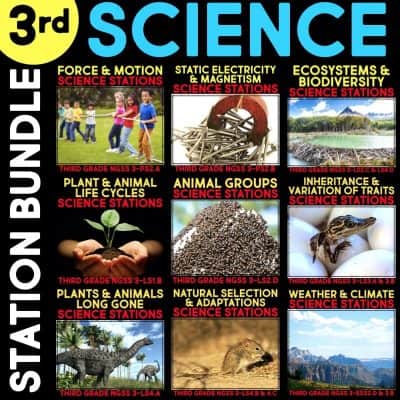

What Science Topics are Taught in Third Grade?
Below are the Third Grade Science Stations that are aligned with the Next Generation Science Standards. They are organized by domain and include links to more photographs and in-depth descriptions of each science station.
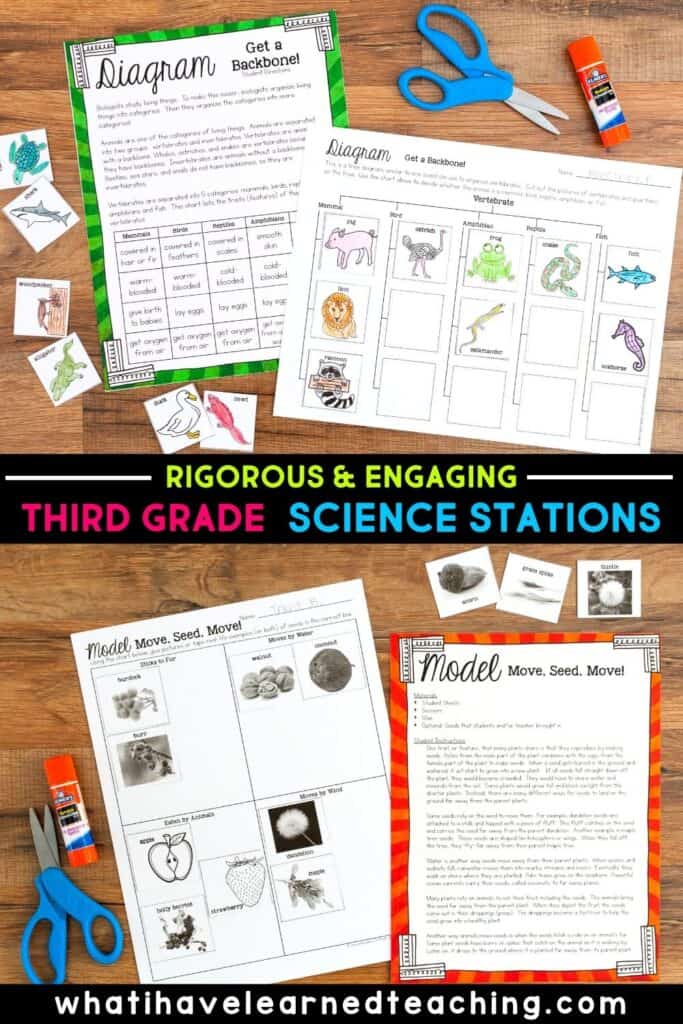
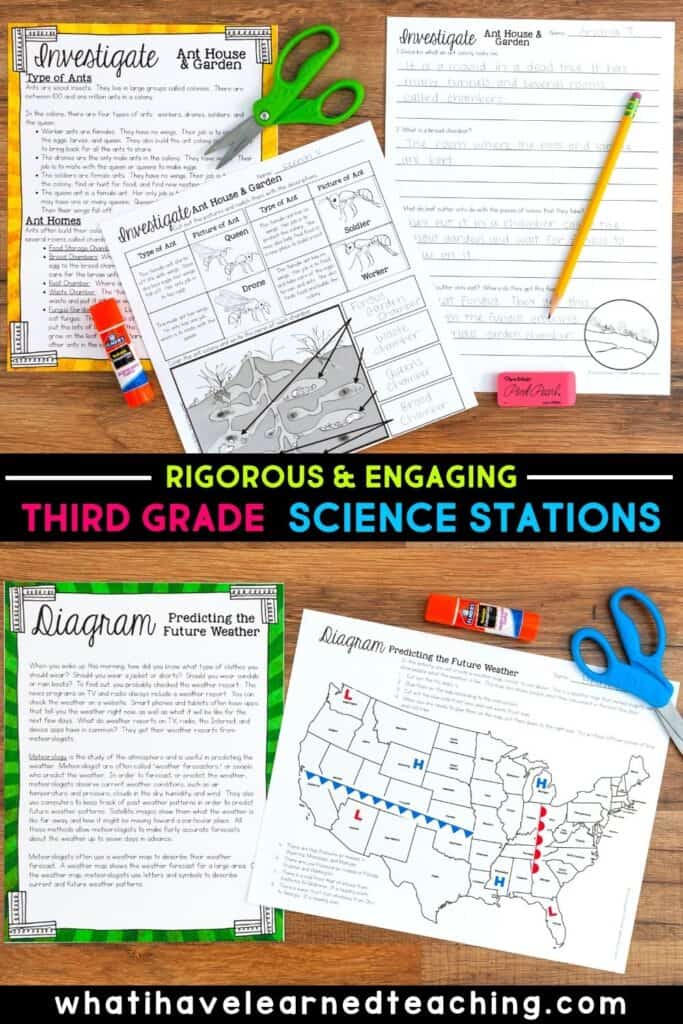
Take a look at this post for a more general overview of the components included in each of the third-grade science station units. Each science station unit or topic has these 8 stations:
- Watch
- Play
- Investigate
- Diagram
- Read
- Model
- Explore
- Sort
Also included in each unit are vocabulary cards and checklists. Click the image below to see more photographs of each individual station and a description of each component.

Below are information and links for each Science Station Unit available for third grade organized by its science domain.
Physical Science
The physical science resources for third grade focus on force and motion and static electricity and magnetism.
Force & Motion – NGSS 3-PS2.A
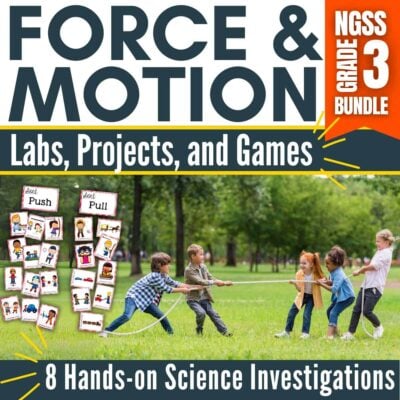
In the Force and Motion Science Station Unit students play games, watch videos and explore the properties of force and motion. Students conduct a balloon race and determine what makes one balloon move faster. They draw a new slide given certain requirements, design a ball-track, create a pinwheel, and sort images into push and pull forces.
Here are details about the Force and Motion SORT for third grade:

Static Electricity & Magnetism – NGSS 3-PS2.B
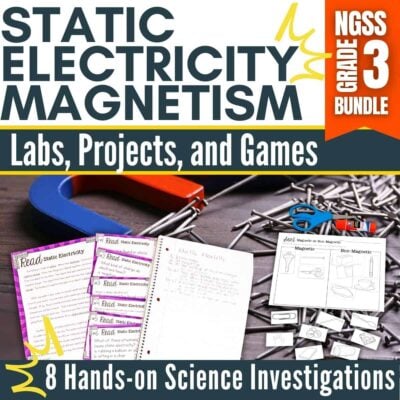
For Static Electricity and Magnetism, students watch videos, play games, and learn about magnets and static electricity. One activity is finding magnetic and non-magnetic objects in the classroom or at home during distance learning. Students also diagram static electricity and identify which charges are attracted or repelled. Students read about static electricity, model magnetism, explore static electricity and sort magnetic and non-magnetic images of objects.
Click here for an explanation of the SORT science station:

Life Science
The life science stations focus on life cycles of plants and animals, ecosystems, animal groups, inheritance of traits, natural selection, and plants and animals from long ago.
Life Cycles: Plants and Animals – NGSS 3-LS1.B
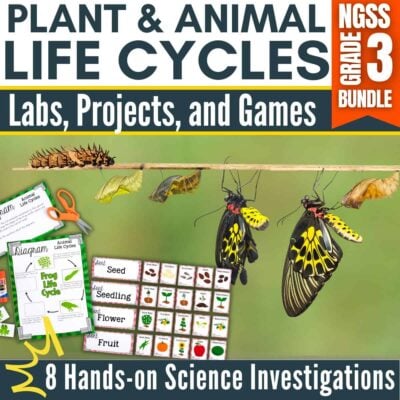
The Life Cycle Science Stations focus on the life cycle of plants and animals. Students watch videos, play games, learn about insect life cycles and phases, and put the states of various animals’ life cycles in order. Students also dissect a flower and identify the its structures, identify the parts of plants that we eat, and sort plant life cycles.
Here is an in-depth post about the Life Cycles of Plants and Animals Science Station Unit. Take a look at each science station in this unit bundle.

Here is an explanation of the SORT station:

Ecosystems: Animal Group Behavior & Interactions – NGSS 3-LS2.D
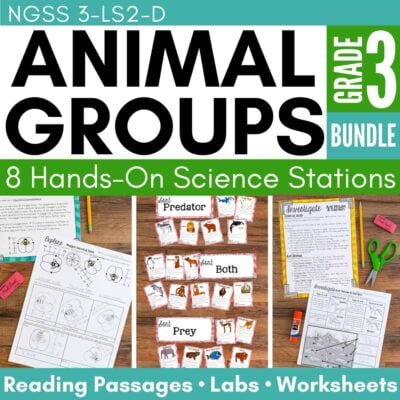
The Animal Groups Science Stations focus on how animals interact together within an ecosystem and within animal groups. Students watch videos and play games to learn about animal groups. Students investigate ant colonies, monarch butterflies, chimpanzees, meerkats, bees, predators, and prey. Students learn how animals work together to survive, have roles within their animal group, migrate, communicate, and more.
The SORT station is a predator vs. prey sort where students read details about how the animal acquires food and determine whether it is a predator or prey or both. Take a look at it by clicking the image below.

Inheritance and Variation of Traits – NGSS 3-LS3.A and 3-LS3.B
In Inheritance and Variation of Traits Stations students learn about animal traits and how different animals in the same species acquire unique traits. Students learn about why leaves change color, how dolphins learn to find food, different types of animal teeth, and plant growth based on the resources available to them. Students conduct an investigation to learn how colors can be found within other colors. They also learn about organism classification, how otters learn traits, model seed dispersal, and about plant identification.
The SORT station for the Inheritance and Variation of Traits is about warm-blooded and cold-blooded animals:

Ecosystems and Biodiversity – NGSS 3-LS2.C and 3-LS4.D
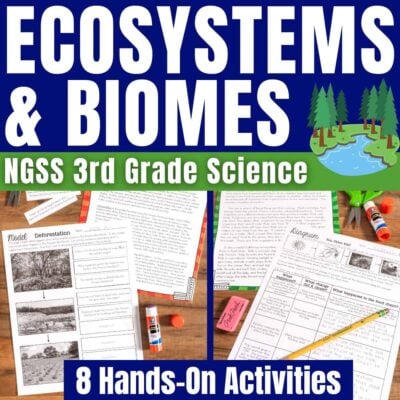
The Ecosystems and Biodiversity Science Station Unit includes activities where students learn about how an environment’s change affects the traits of organisms. Students diagram a food chain in an ecosystem and identify what happens when something changes in that food chain. Students read about how beavers change their ecosystem, the effects of deforestation, explore invasive species, and more.
Click below for an in-depth description and a variety of images for the Ecosystems Science Station Unit.

Also available is the SORT station where students sort plants and animals into biomes.

Plants & Animals Long Gone – NGSS 3-LS4.A
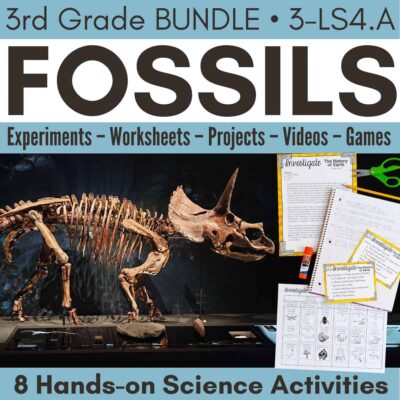
The Plants and Animals Long Gone Science Unit focuses on learning about how fossils are made, petrified forests, different eras in the prehistoric timeline, woolly mammoths, paleontology, and dinosaur structures.
In the Ancient Animals SORT students identify whether the ancient animal was a meat eater or plant eater.

Natural Selection & Adaptations – NGSS 3-LS4.A
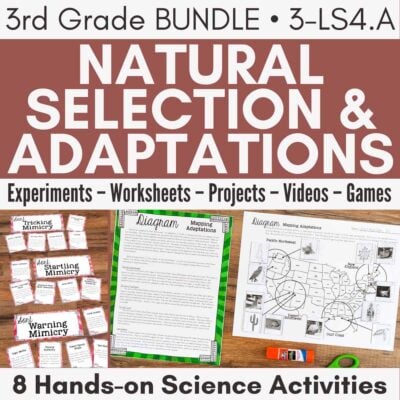
The Natural Selection and Adaptation Unit focuses on plant adaptations, natural selection, regional plants and animal adaptations, the Arctic biome, hare adaptations, bird beaks, and more!
The Natural Selection SORT focuses on types of mimicry. Take a look here.

Earth Science
There is only one earth science unit for third grade and it focuses on weather and climate.
Weather & Climate – NGSS 3-ESS2.D & NGSS 3-ESS3.B
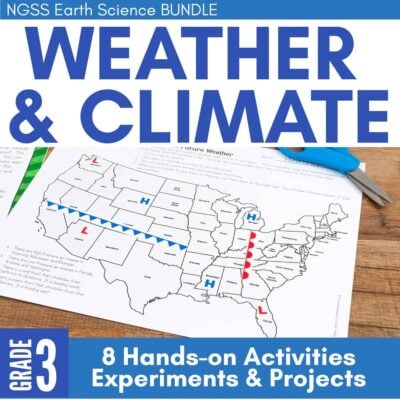
In this third-grade science unit students learn about clouds, meteorology, weather maps, extreme weather events, types of precipitation, meteorologist tools, and climate zones.
The Weather and Climate SORT asks students to sort areas into climate zones. Take a look here.

Free Third Grade Science Station
Would you like a FREE Science Station to use in your classroom? Click the image below to sign up and have it sent to your email address.

How do I Purchase the Science Stations?
The Third Grade Science Stations are available on my website or on Teachers Pay Teachers.
-
Product on saleThird Grade Science Stations BUNDLEOriginal price was: $222.12.$111.84Current price is: $111.84.
-
-
-
-
-
-
-
-
-
Jessica BOschen
Jessica is a teacher, homeschool parent, and entrepreneur. She shares her passion for teaching and education on What I Have Learned. Jessica has 16 years of experience teaching elementary school and currently homeschools her two middle and high school boys. She enjoys scaffolding learning for students, focusing on helping our most challenging learners achieve success in all academic areas.