
Types of Mimicry Card Sort Third-Grade Science Activity
Teach students about Natural Selection with a SORT about Types of Mimicry aligned with the Next Generation Science Stations for Third Grade. This NGSS science station has students read a short passage, then read a description of an animal and determine the type of mimicry: tricking mimicry, startling mimicry, or warning mimicry.
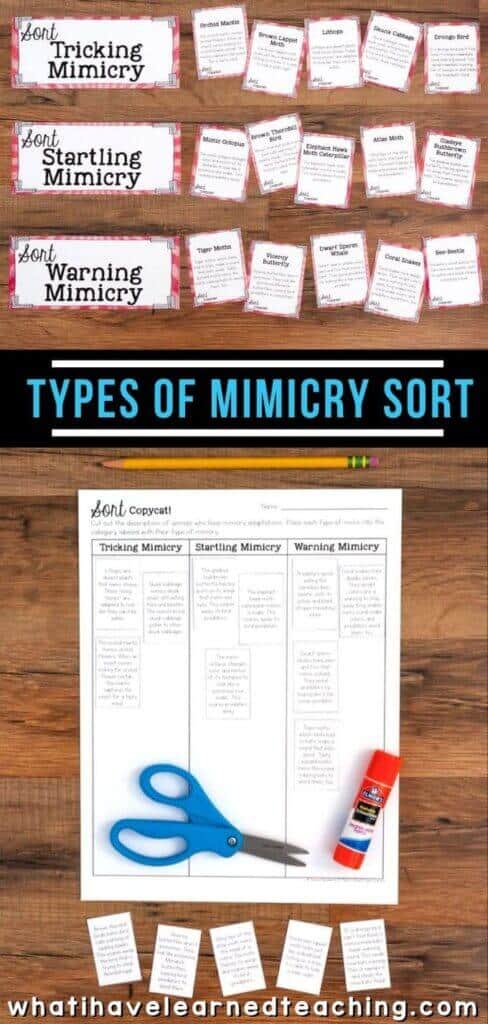
What is Included in the Types of Mimicry Sort Station
Included in the Sort about Mimicry is:
- an Informational text that gives a short description of each type of mimicry
- Differentiated questions in short answer, fill-in-the-blank, and multiple-choice formats. Worksheet and task cards are included for some options.
- Larger table-group color sort
- Smaller cut and paste sort for individual students
- Answer key
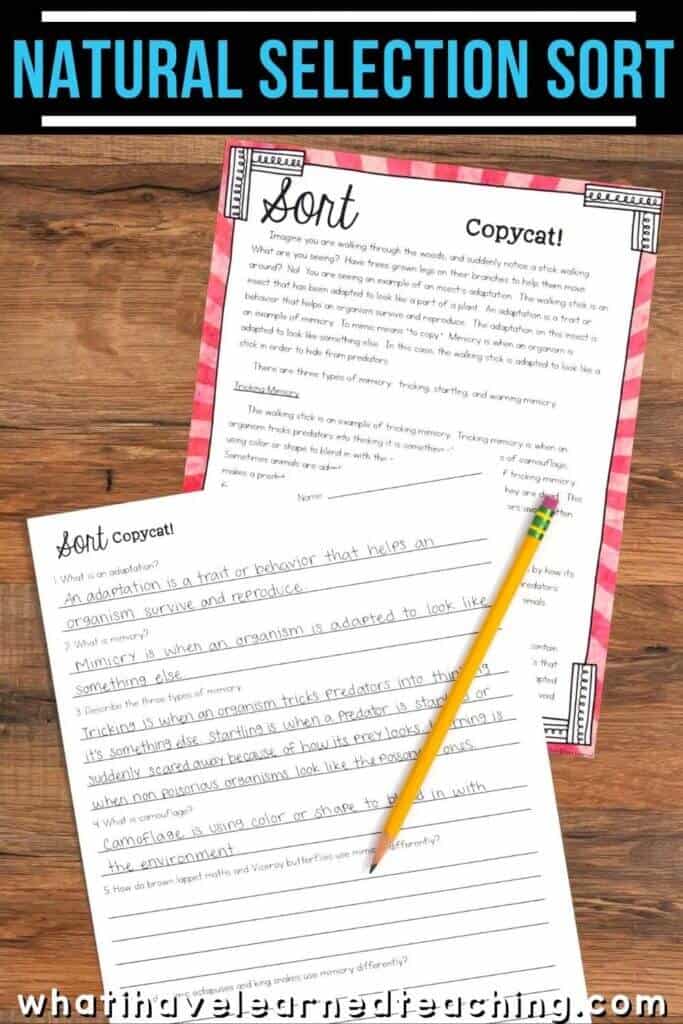
Informational Article about Types of Mimicry
The Types of Mimicry Sort includes an informational article about how animals copy other animals through mimicry. Also included are differentiated responses. What you see below is the short answer page. Also included are fill-in-the-blank and multiple-choice questions.
The types of mimicry included in this resource are tricking, startling, and warning mimicry.
The Mimicry Sort about Adaptations comes in two formats. There’s a larger, color version and a black-and-white version.
Large Mimicry Adaptations Sort for Table Groups
There are two ways to do this sort. One way is in table groups where students collaboratively read the description and determine the type of mimicry it describes.
This sort has an in-depth description of the animal’s attributes on each card.

Here are examples of several of the descriptions above:
- Viceroy Butterfly: Viceroy butterflies aren’t poisonous. They look like poisonous Monarch butterflies, causing bird predators to avoid them.
- Skunk Cabbage: Skunk cabbage mimics the skunk smell, attracting flies and beetles. The insects bring skunk cabbage pollen to other skunk cabbages.
Students would read the description and sort it into the correct type of mimicry.
Cut and Paste Option
The second way to do the sort is a cut-and-paste option. Students can do both options: the sort color option as a whole group and the cut and paste option individually. Or you can choose to have students do only one option.
The cut-and-paste option is all in black and white and a worksheet format. Students read the description and then sort it into the correct type of mimicry.

How to Purchase the Natural Selection Mimicry Science Station
This Natural Selection Types of Mimicry Sort Science Station can be purchased on Teachers Pay Teachers. It is sold individually and part of a whole Natural Selection set of stations. Also available is a Third Grade NGSS Science Station BUNDLE.
Also available is a 5E Unit all about Natural Selection. This 5E unit goes in-depth on Natural Selection using the 5E process.
Would you like a Free Science Station?
I have a set of free science stations for 2nd, 3rd, and 4th. Click here or the image below to access them.

Jessica BOschen
Jessica is a teacher, homeschool parent, and entrepreneur. She shares her passion for teaching and education on What I Have Learned. Jessica has 16 years of experience teaching elementary school and currently homeschools her two middle and high school boys. She enjoys scaffolding learning for students, focusing on helping our most challenging learners achieve success in all academic areas.