Glacier Model Activity for 4th Grade Science
When students encounter glaciers in a science unit on Earth’s surface changes, the concept can feel abstract with ancient ice, distant mountains, and slow processes measured in centuries. This glacier…

Find engaging earth science activities for elementary students that cover weather, climate, landforms, erosion, and Earth’s systems. These hands-on lessons and science stations help students explore how the Earth changes over time and how different systems interact. Perfect for NGSS-aligned instruction in grades 2–5.
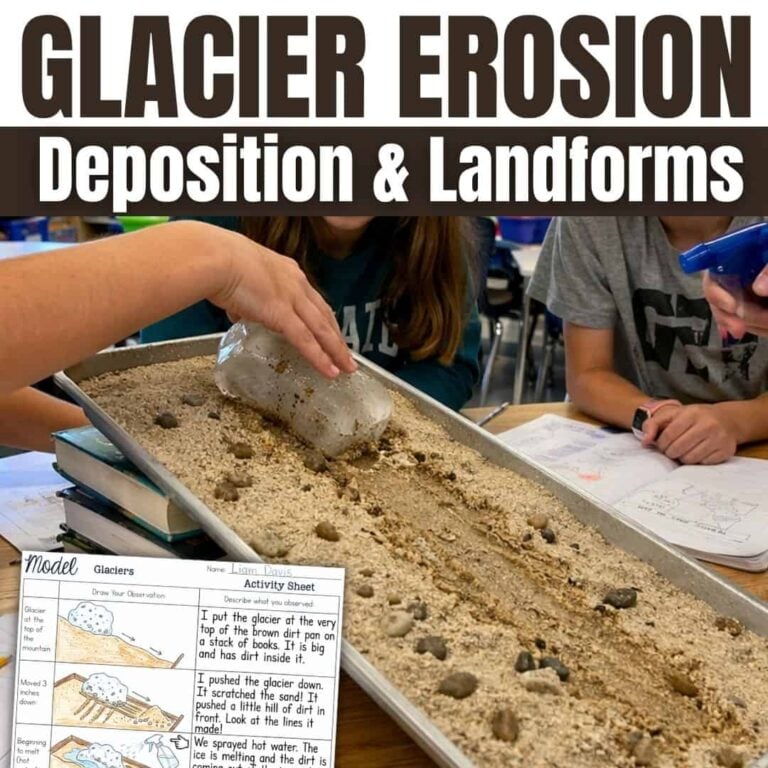
When students encounter glaciers in a science unit on Earth’s surface changes, the concept can feel abstract with ancient ice, distant mountains, and slow processes measured in centuries. This glacier…
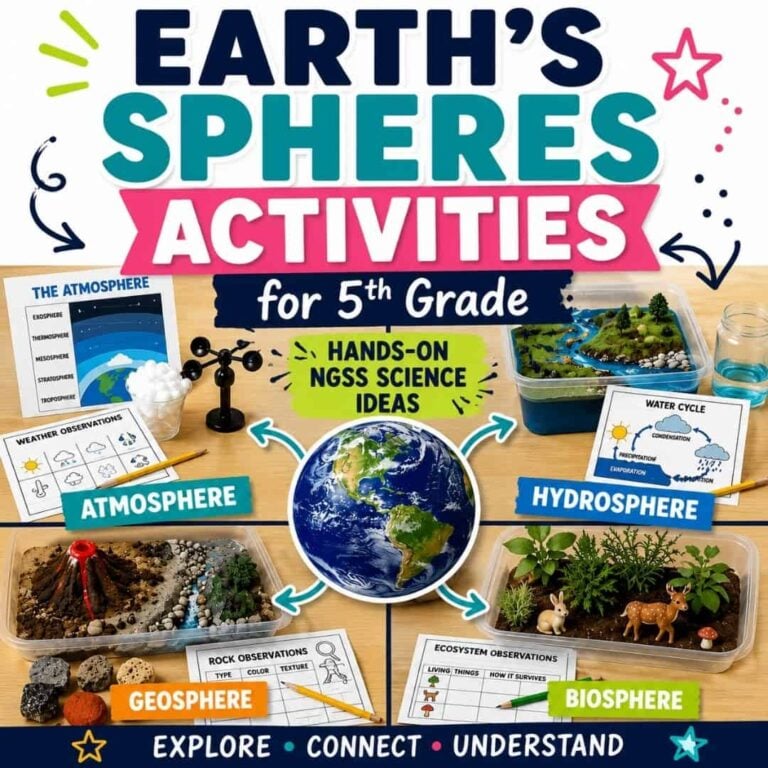
When students learn about Earth’s spheres, they’re learning to see the planet as a system rather than a collection of separate facts. The atmosphere, hydrosphere, geosphere, and biosphere are constantly…
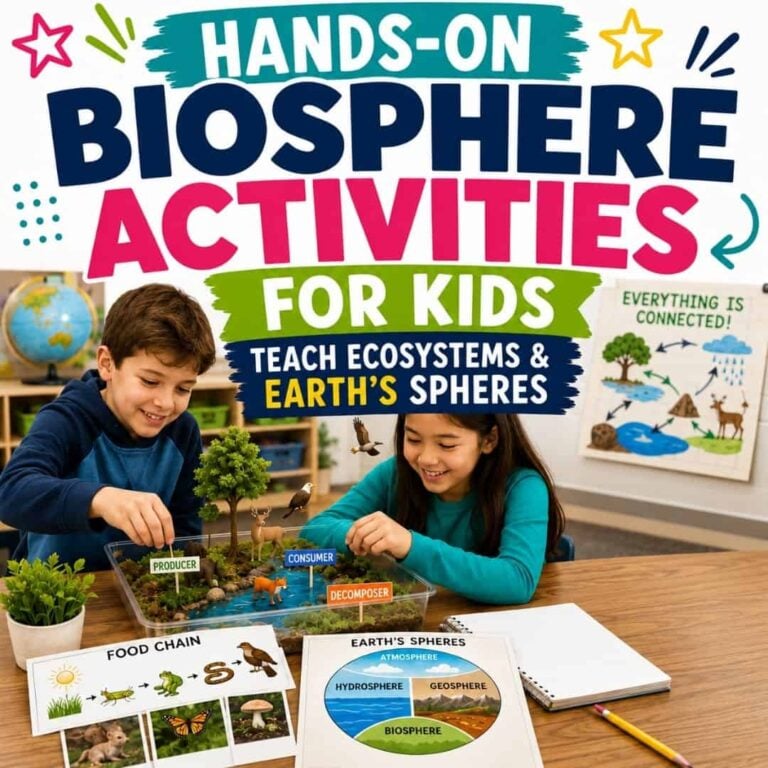
The Earth’s biosphere is the sphere that students are already part of, making it a great anchor for teaching Earth’s systems. Every organism on the planet, from the bacteria in…
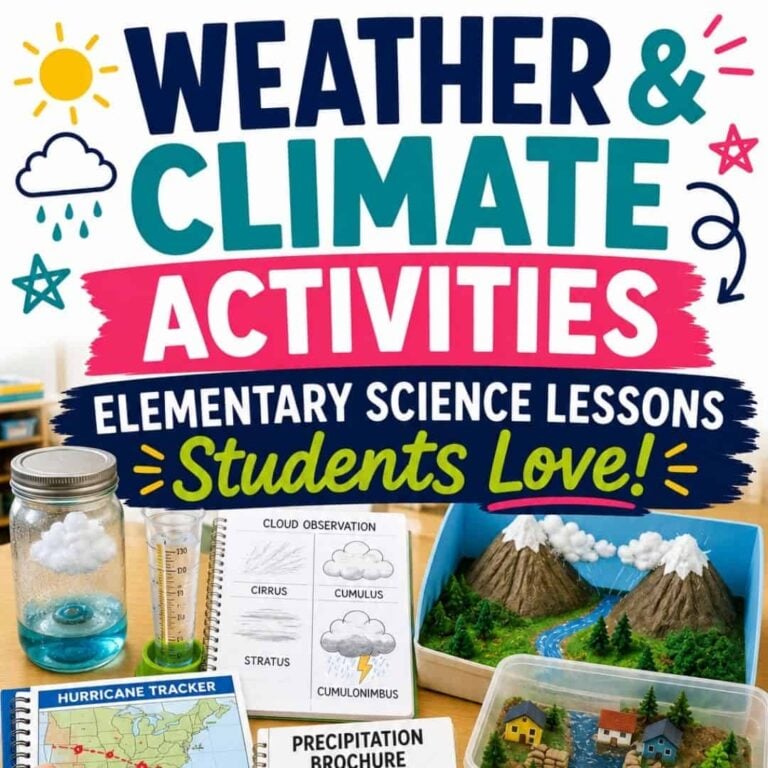
Weather activities for 3rd grade cover some of the most naturally engaging science content in the elementary curriculum. Students already have opinions about the weather, and NGSS standards 3-ESS2-1, 3-ESS2-2,…
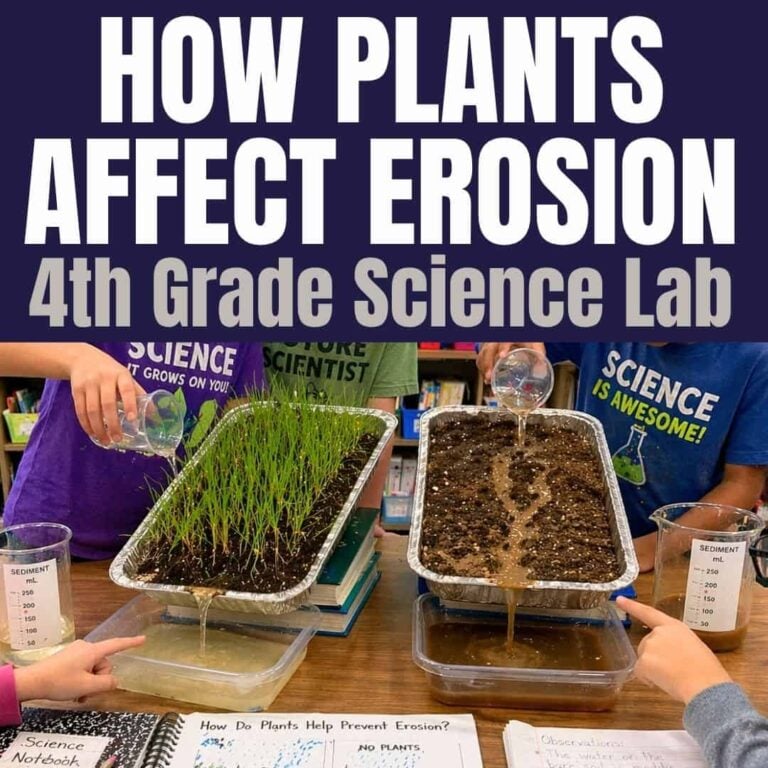
This prevent erosion science experiment has 4th graders compare bare soil to soil with plants, measure sediment in runoff, and draw diagrams to understand how vegetation protects against erosion.
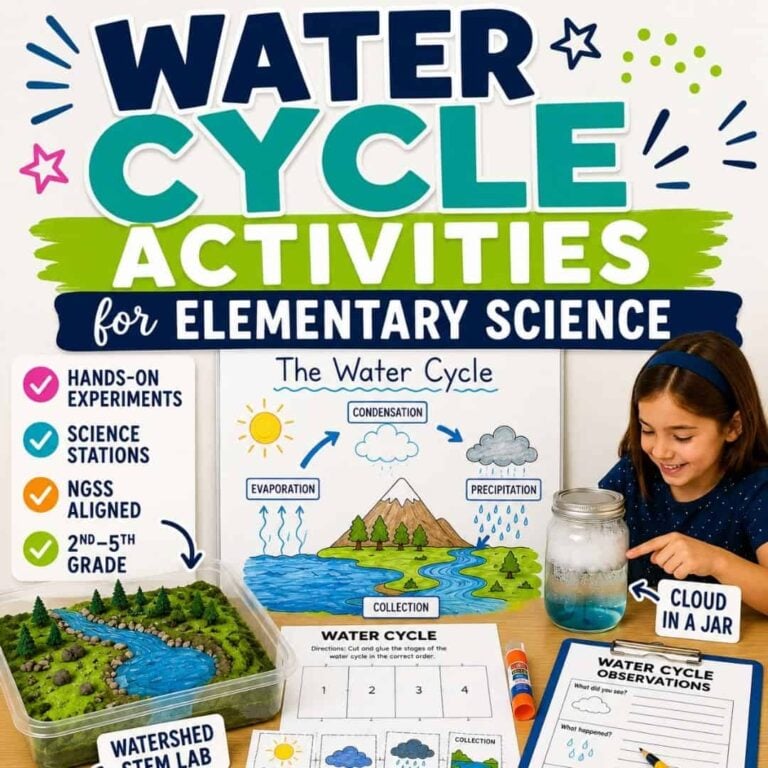
Teaching the water cycle for kids works especially well in elementary science because the topic recurs at multiple grade levels, each time with greater depth. Students encounter it first in…
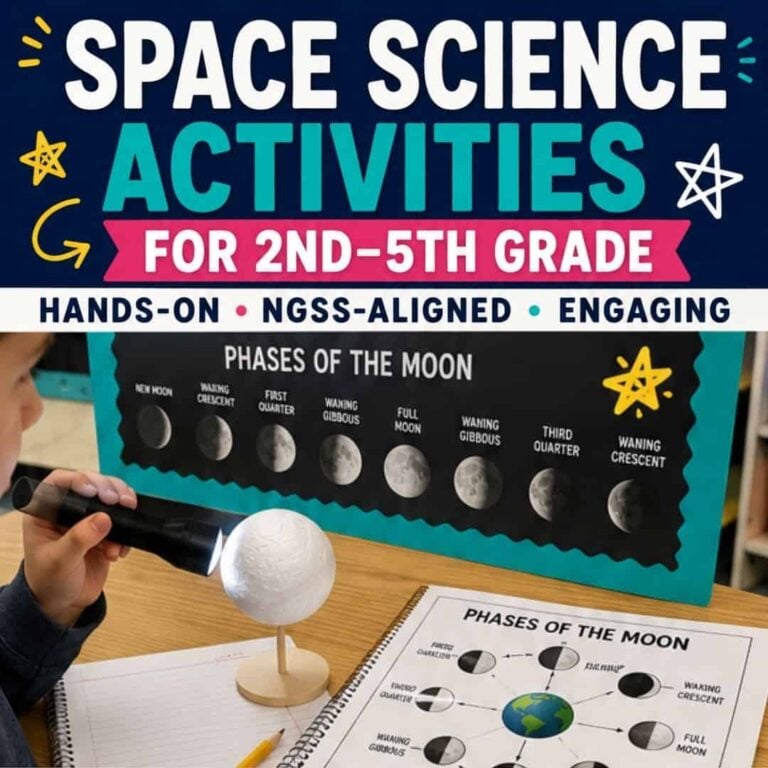
Space science for elementary students varies by grade. The NGSS sequence builds from patterns students can observe (shadows, seasons, day and night) to the physics behind those patterns (Earth’s rotation,…
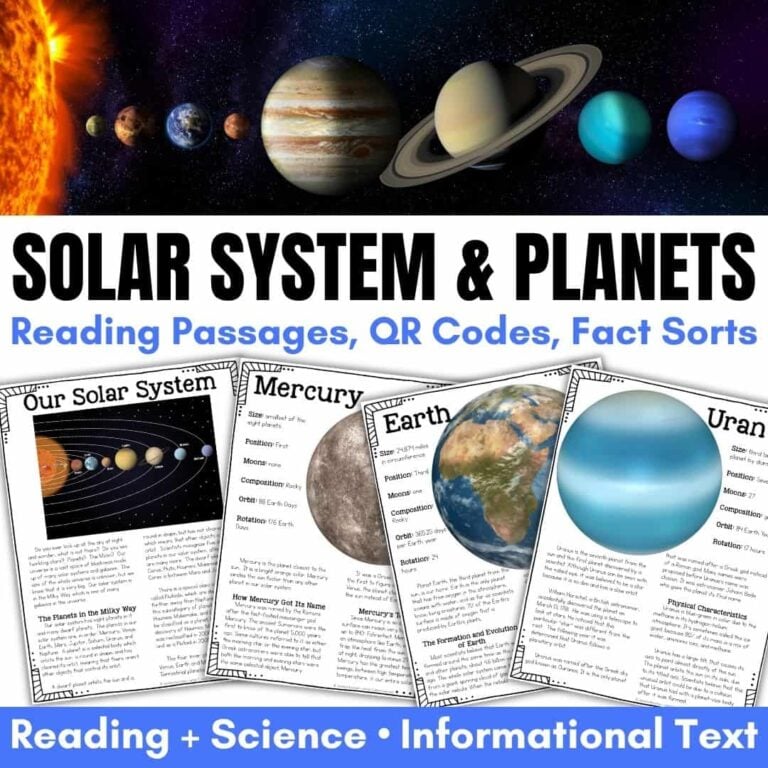
Teaching the solar system is one of those topics that instantly hooks students… until the reading gets too dense. Unlike passive solar system worksheets, these passages pair reading with organizers…
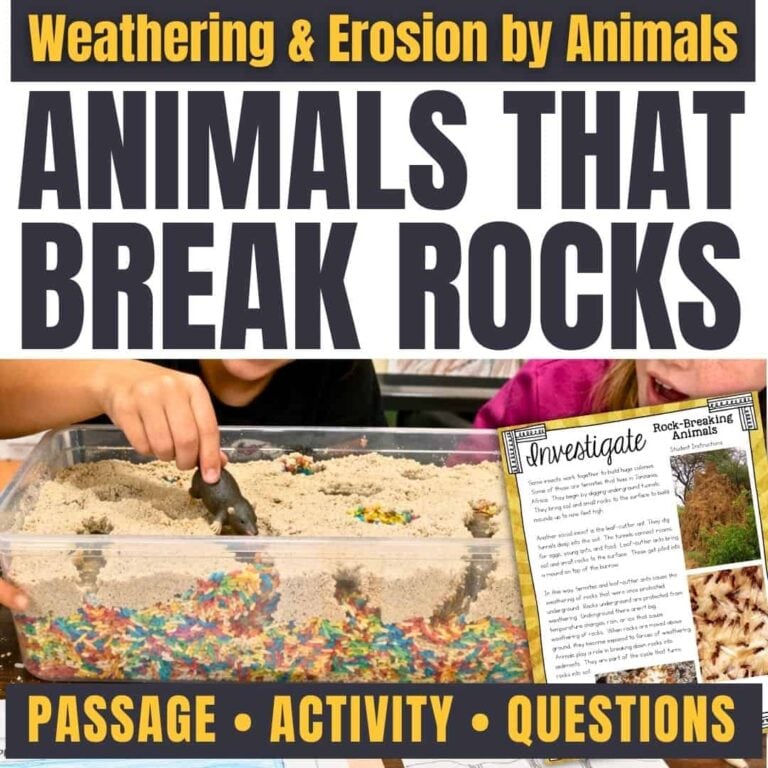
This animals that weather rocks activity has 4th graders model animal burrowing with kinetic sand to see how living things contribute to physical and chemical weathering. Includes 4 differentiated student sheet versions.
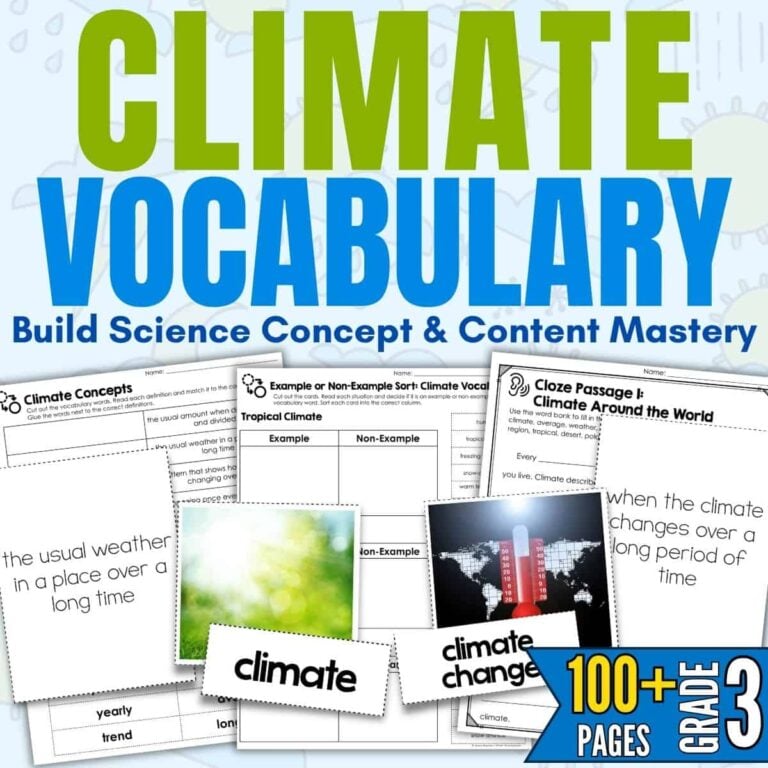
Climate vocabulary activities give 3rd grade students repeated, structured exposure to the terms they need to understand weather patterns, climate zones, and human impact, before those concepts show up on…
Earth science is one of those topics that feels enormous on paper but becomes immediately concrete the moment students pick up a rock, watch water carve a path through sand,…
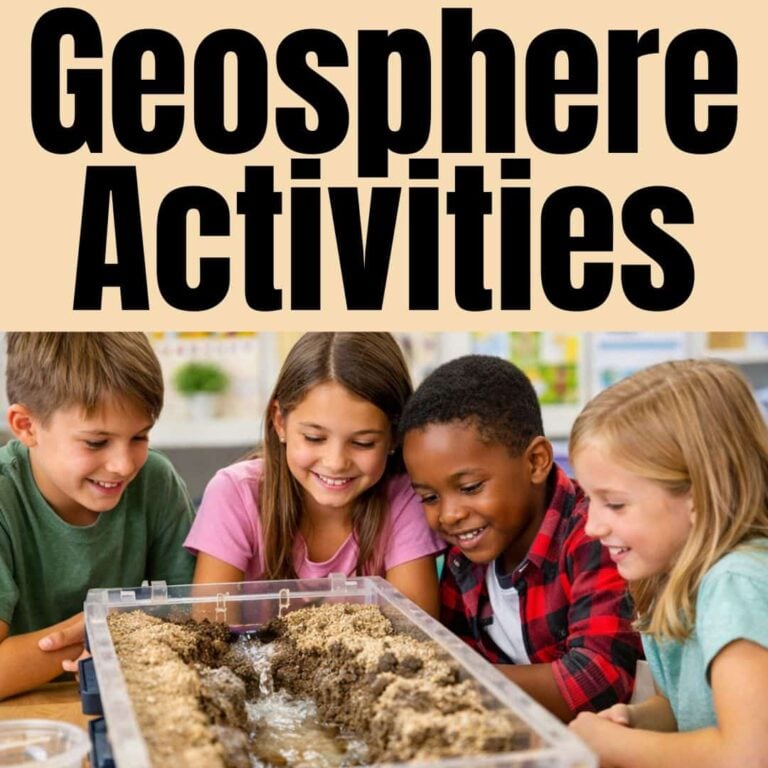
Teaching Earth’s spheres can feel abstract, especially when students are trying to picture how rocks form, how landscapes shift, and how living things interact with the ground beneath them. The…
End of content
End of content