
Earth’s Spheres Activities for Elementary Students: A Complete Resource Guide
When students learn about Earth’s spheres, they’re learning to see the planet as a system rather than a collection of separate facts. The atmosphere, hydrosphere, geosphere, and biosphere are constantly pushing and pulling on one another, which is what makes this topic genuinely interesting to teach. A volcanic eruption affects the atmosphere. A mountain range shapes rainfall patterns. Melting glaciers raise sea levels. These connections are what 5-ESS2-1 is all about.
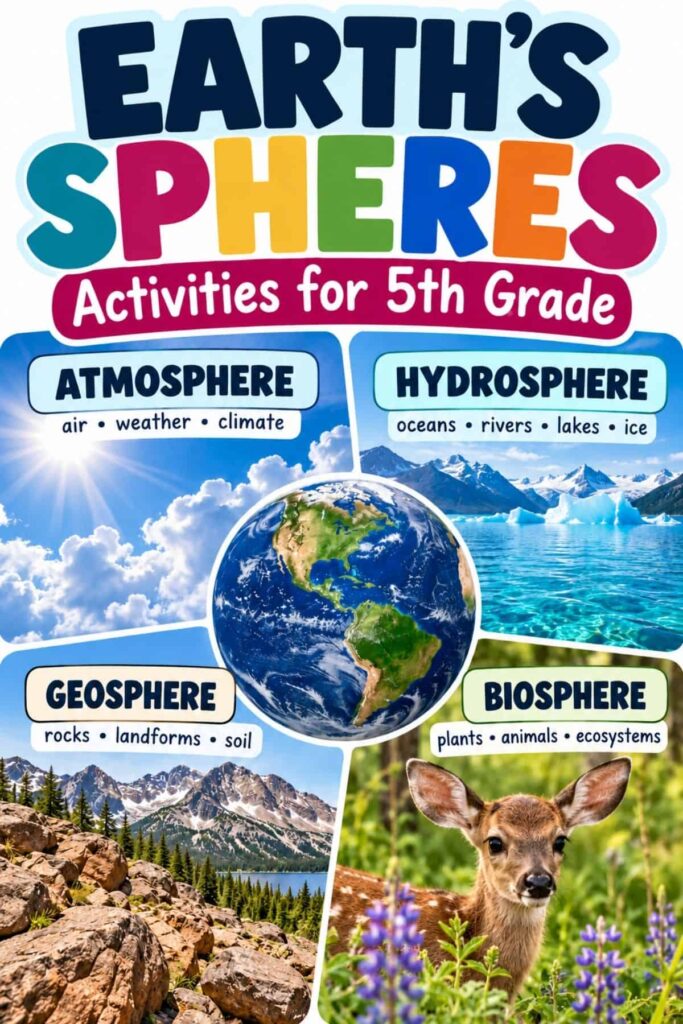
This post is a guide to all of my Earth’s spheres activities and resources. Each sphere has its own dedicated post with hands-on activity ideas, science stations, and product links. Use this page to find what you need quickly, or work through the unit sphere by sphere.
Earth’s Spheres and Systems Science Stations Unit
Before diving into each sphere, if you want everything in one place, my Earth’s Spheres and Systems Science Stations cover all four spheres in eight ready-to-use stations. Students explore how the spheres interact, the five layers of the atmosphere, the kingdoms in the biosphere, and the systems of the geosphere. The unit is aligned with 5-ESS2-1 and includes reading passages, hands-on activities, recording worksheets, and differentiated questions
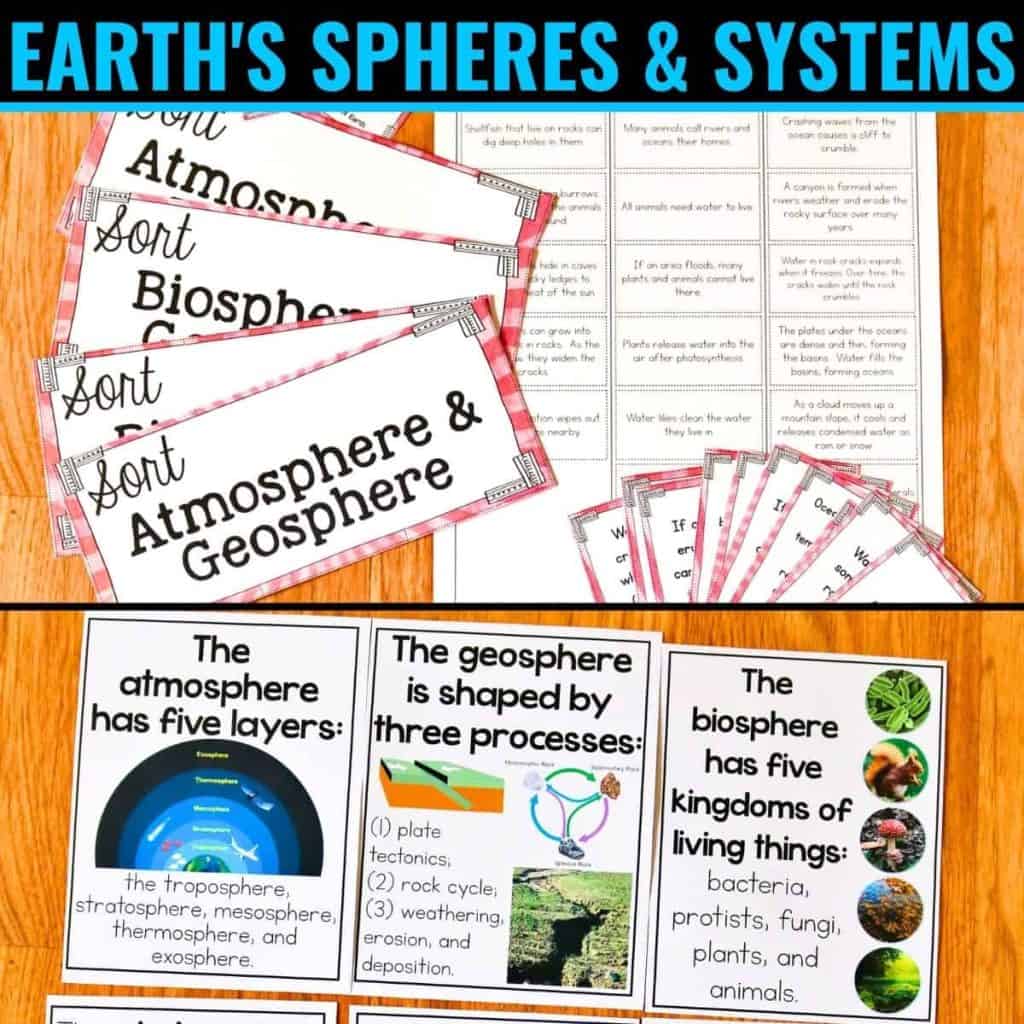
The unit aligns with 5-ESS2-1. See this post for a detailed look at each station.
Earth’s Spheres Activities
The Atmosphere
The atmosphere is the layer of air that surrounds Earth. It regulates temperature, drives weather, and protects life from solar radiation. For students, it’s also the most visible sphere. They can feel the wind, see clouds form, and watch the weather change day to day. That makes it a natural starting point for an Earth’s spheres unit.
The atmosphere activities post covers:
Links to additional NGSS-aligned resources from UCAR and the Smithsonian
- A video introduction to the layers of the atmosphere
- An Air Quality Index data collection activity that connects science to real-world environmental issues
- A layering activity that models the five atmospheric layers using liquids
- Science stations on weather, clouds, and meteorological tools

Need more ideas for the end of the day? Check out these routines to make that day just a bit calmer.
The Hydrosphere and Cryosphere
The hydrosphere includes all of Earth’s water: oceans, rivers, lakes, groundwater, and water vapor. The cryosphere is the frozen subset: glaciers, ice caps, and permafrost. Together, they shape coastlines, drive the water cycle, regulate climate, and support nearly every ecosystem on the planet.
The hydrosphere and cryosphere activities post covers:
- Water cycle simulations, including the classic water cycle in a bag and a cloud-in-a-jar investigation
- A watershed model that shows how water moves through landscapes and carries pollution
- A water filtration experiment where students design their own filtration systems
- An ocean acidification experiment that connects carbon dioxide levels to marine life
- Science stations on freshwater vs. saltwater, water distribution, floods, river systems, and water erosion
- Cryosphere activities including a melting ice investigation and a glacier formation model
- Science stations specifically on glaciers and glacial erosion
- Links to PBS Learning Media and NASA lesson plans

Take a look at the hydrosphere science activities.
The Geosphere
The geosphere is Earth’s solid land, rocks, soil, mountains, and everything beneath them. It’s a sphere students can hold in their hands, which makes it one of the easiest to make concrete. Activities range from sorting rock samples to modeling erosion in a tray to building a volcano and watching how the eruption affects the other spheres.
The geosphere activities post covers:
- Rock classification and the chocolate rock cycle activity
- A fossils in rock layers diagram that connects geology and the history of life
- An erosion simulation using a stream table
- A river erosion and deposition science station, and an ocean erosion extension for 5th grade
- A mountains and rainfall activity where students graph real precipitation data to see how landforms shape weather
- A landforms and biosphere modeling activity where students predict how geosphere changes affect living things
- A weathering-by-animals activity that bridges the geosphere and biosphere
- A soil composition analysis tied to plant growth science stations
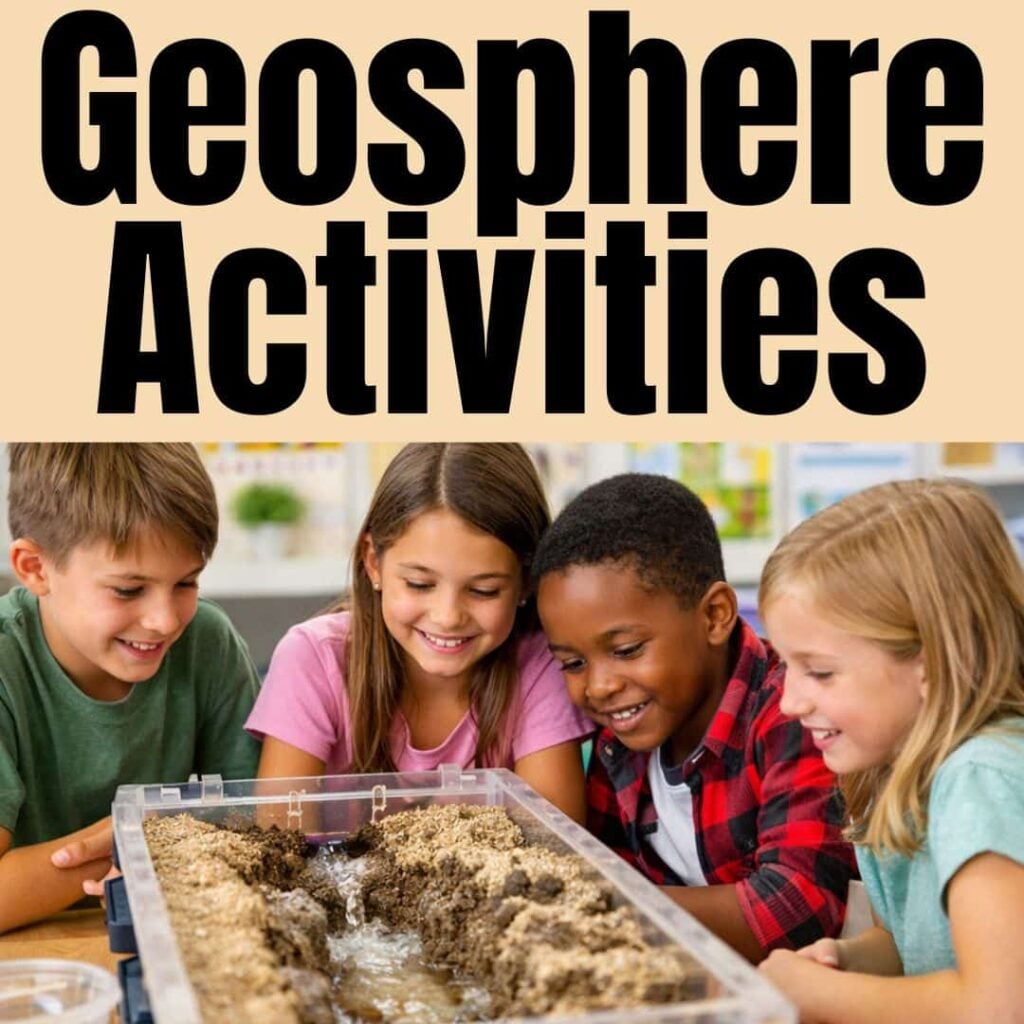
With these activities, students explore rock classification, how rocks form and break down over time through erosion, and how the other spheres affect the geosphere.
The Biosphere
The biosphere includes all living things on Earth and the environments that support them, from the bacteria in soil to the animals in a forest to the students in your classroom. It is the sphere most directly affected by changes in the others. Shifts in temperature, water availability, or landforms ripple through ecosystems almost immediately, making it one of the best spheres for teaching cause and effect across Earth’s systems.
The Earth’s biosphere activities post covers:
- An animal migration research activity tracing how migratory species respond to conditions across all four spheres
- A landforms and biosphere modeling activity where students analyze how a change in the geosphere affects organisms, then build a three-dimensional model of the landform after the change
- A food web disruption activity where students map an ecosystem’s food chains and predict how the web responds when a predator is removed, an invasive species arrives, or a drought hits
- An environmental change and natural selection investigation exploring how pollution drives changes in insect color traits over time
- A deforestation and conservation case study that examines how human activity affects biodiversity and what conservation efforts look like in practice
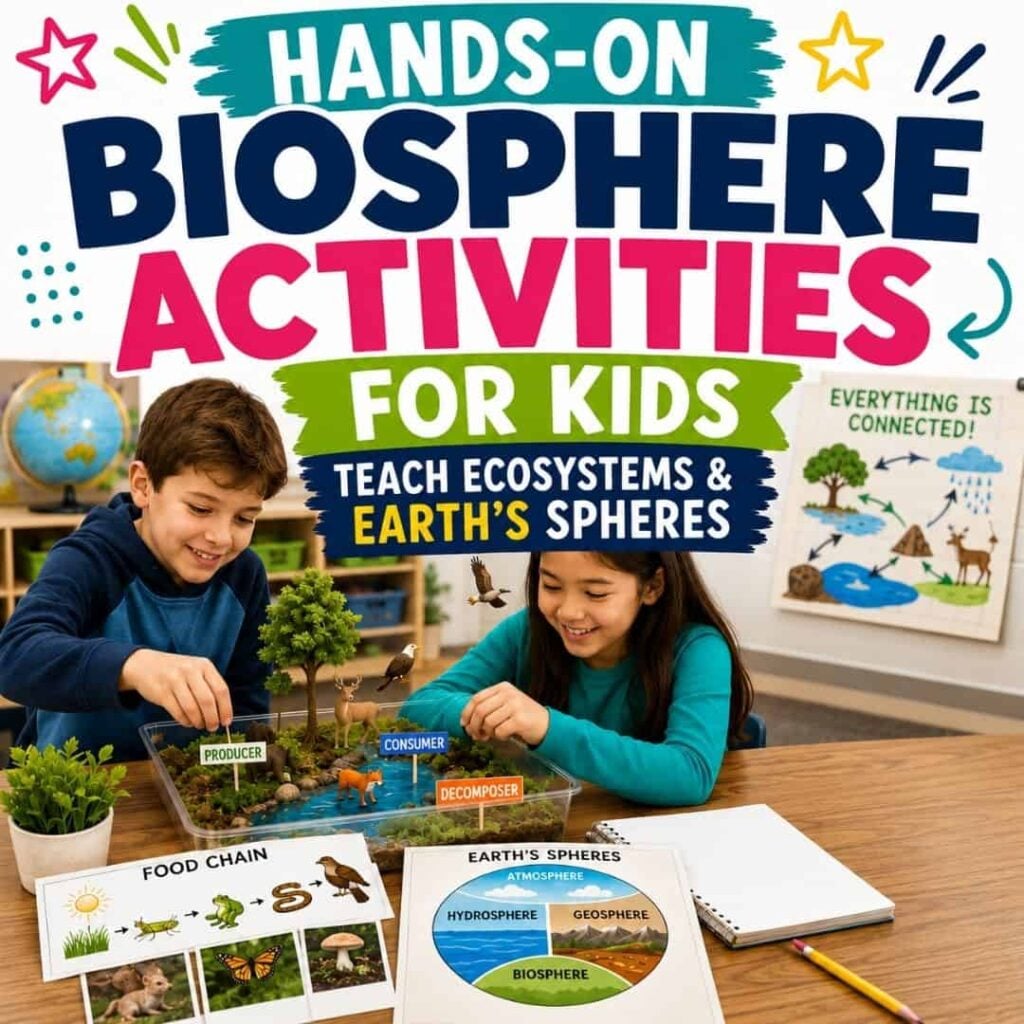
Help students explore how the biosphere interacts with the other speres through these hands-on activities.
Teaching the Sphere Interactions
The most important idea in this unit is not what each sphere is, but how they affect each other. A few activities that make those interactions visible:
- The watershed model (hydrosphere + geosphere + biosphere): students see how water shapes land and carries pollution into ecosystems
- The mountains and rainfall activity (geosphere + hydrosphere + atmosphere): students graph real data showing how landforms create rainfall patterns
- The ocean acidification experiment (atmosphere + hydrosphere + biosphere): students observe how carbon dioxide changes ocean chemistry and affects marine life
- The landforms and biosphere model (geosphere + biosphere): students predict how a change in the geosphere affects the organisms living there
These four activities together give students a strong foundation for understanding 5-ESS2-1 before diving into the sphere-specific work.
A Note on Sequencing the Earth’s Spheres Activities
There is no single right order for teaching these Earth’s spheres activities, but starting with the geosphere tends to work well because it’s the most tangible. Students can hold rocks, dig in soil, and watch erosion happen in real time. From there, moving to the hydrosphere makes the interactions among spheres feel immediate. Water is doing work on the land they just studied. The atmosphere and biosphere build naturally from there.
If you use the science stations unit, the stations are designed to be used in any order and include all the connections between spheres built into the reading and activity materials.
For a complete, standards-aligned unit with everything ready to print and use, take a look at the Earth’s Spheres and Systems Science Stations.
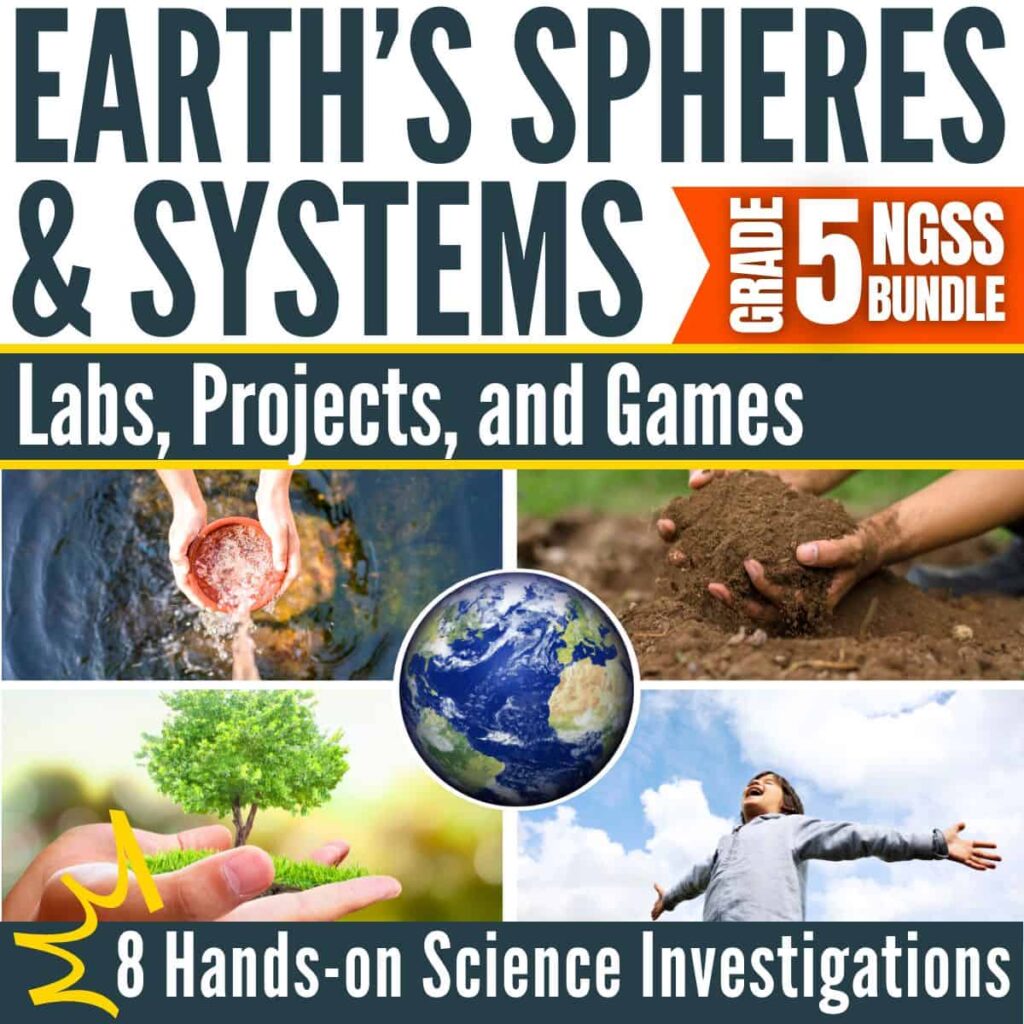
Earth’s Spheres and Systems Science Station UNIT BUNDLE
These Earth’s Spheres and Systems Next Generation Science Stations include eight different science stations where students deepen their understanding of the Earth’s Spheres, the five layers of the atmosphere, the kingdoms in the biosphere, and the systems in the geosphere. The focus is on 5-ESS2-1.
Jessica BOschen
Jessica is a teacher, homeschool parent, and entrepreneur. She shares her passion for teaching and education on What I Have Learned. Jessica has 16 years of experience teaching elementary school and currently homeschools her two middle and high school boys. She enjoys scaffolding learning for students, focusing on helping our most challenging learners achieve success in all academic areas.