Effective differentiation is not about creating entirely separate lessons for every student. It’s about making thoughtful adjustments to content, process, language, and support. From scaffolding academic language to flexible grouping and targeted interventions, differentiation allows teachers to maintain high expectations while honoring individual learning needs.
Below, you’ll find strategies organized into key areas of differentiation, including scaffolding, language support, special education collaboration, and differentiated instruction in core subjects.
Scaffolding & Differentiated Instruction
Scaffolding helps students access rigorous content with the right level of support. These strategies focus on adjusting instruction, modeling thinking, and gradually releasing responsibility so students can build independence.
Academic Language & English Learners
Language is central to learning. These strategies support students in developing academic vocabulary, structured responses, and clear explanations across content areas.
Explore All Differentiation Articles
-
You have a new student in your classroom, and she speaks very little English. She watches everything carefully, follows what other students do, and rarely raises her hand. You want…
-
Differentiation in reading instruction can feel like a constant balancing act. In one group, students need significant support to understand a text, while in another, students are ready to analyze…
-
If you have sat through a professional development session on scaffolding and differentiation and walked out less clear than when you walked in, you are not alone. The two strategies…
-
As a former teacher, I have a lot of teacher friends. And, as a parent to a disabled child, I know what it’s like to be on “both sides of…
-
Most math classes have students working at three or more different levels simultaneously. Some students are still building fluency with concepts from the previous year; others are ready for the…
-
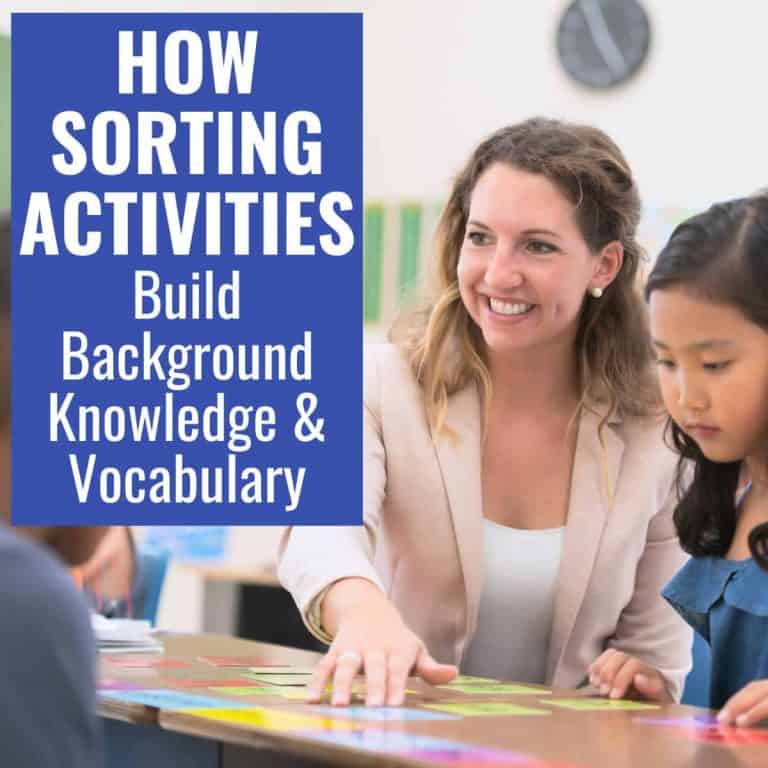
Sorting activities can be a great resource in the elementary classroom. They allow students to explore their background knowledge creatively and build upon new ideas and vocabulary words. These activities…
-
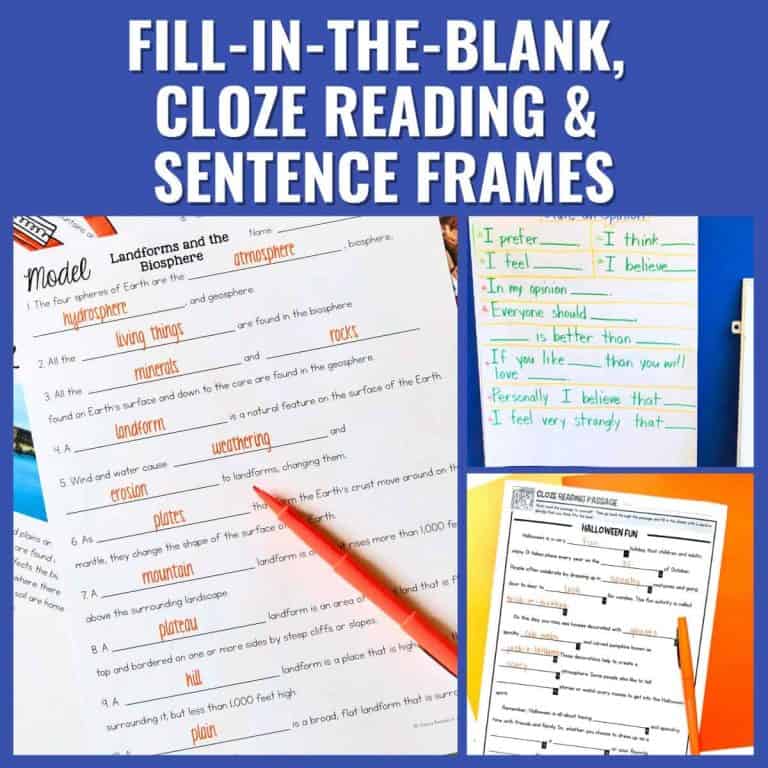
Are you looking for ways to help your students deepen their understanding of different texts? Many teachers use fill-in-the-blank worksheets, cloze reading strategies, and sentence frames as classroom activities. These…
-
Sentence stems and sentence frames are powerful tools for helping elementary school students, particularly English learners, learn academic language. Providing a scaffold of language to build on, sentence frames, sentence…
-
Many teachers have English learners in their classrooms. I have a particular group of second-grade English learners who are struggling with reading fluency. They can read the words but are…
-
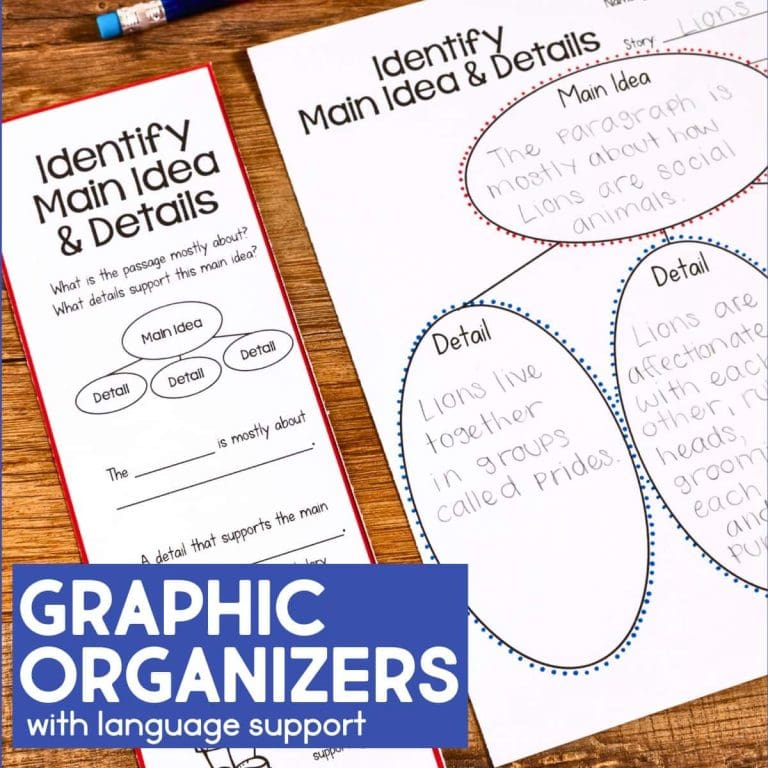
When students struggle to explain what they’ve read, the gap is usually not about understanding. They understood the text. What’s hard is organizing their thinking and putting it into academic…
-
Do your students struggle to express their thinking in math? Mine do! Developing students’ language skills by focusing on mathematical vocabulary and using sentence frames in math helps students learn the language…
-
Some students, including English learners or impoverished children, come to school not having the academic language at their fingertips to express their thinking. They have great things going on in…
End of content
End of content