
Graphic Organizers with Language Support
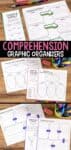
When students struggle to explain what they’ve read, the gap is usually not about understanding. They understood the text. What’s hard is organizing their thinking and putting it into academic language, especially in writing.

Teaching Academic Language Through Structured Practice
Academic language does not develop on its own. Most students, including strong readers, have to be explicitly taught the vocabulary and sentence structures used to talk and write about text. For English learners, that challenge is compounded, since they are simultaneously developing language fluency and learning the specific language of academic discussion.
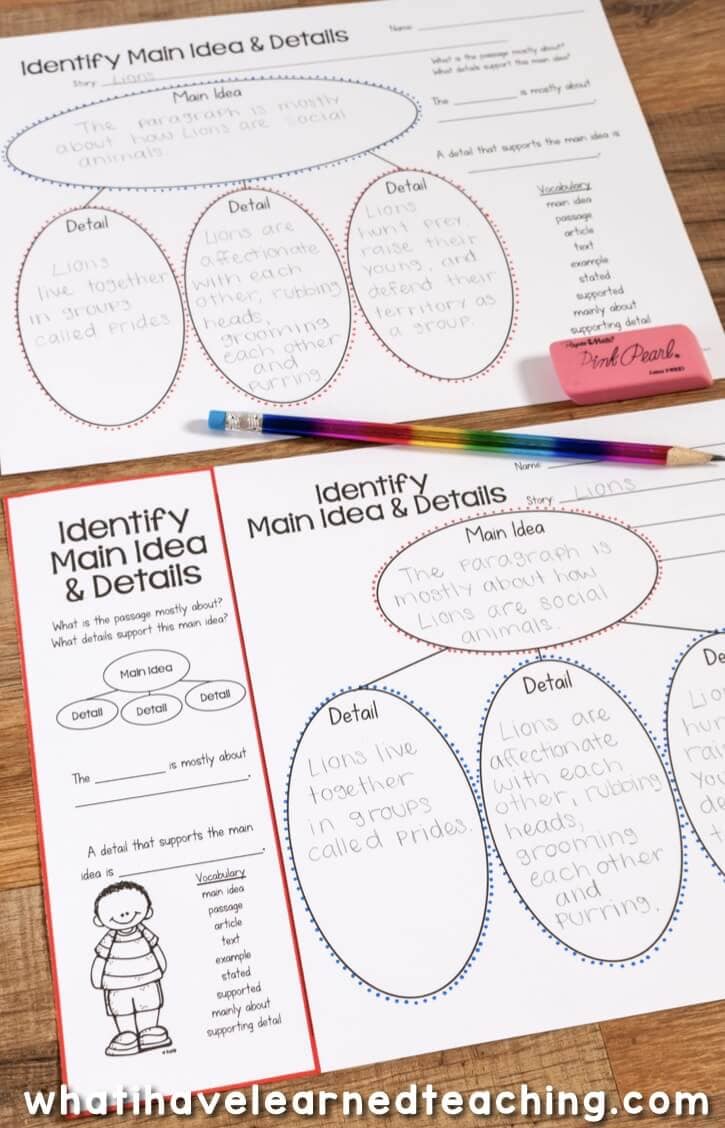
These graphic organizers address that directly. Each organizer is tied to a specific reading skill or strategy and includes language prompts like “The author wrote ____ to ____” or “One detail that supports the main idea is ____.” Students practice using the language of comprehension each time they complete an organizer, building familiarity with academic structures through consistent, repeated use.
I’ve written more about the components of academic language and how to develop academic language using familiar content if you want to dig into the research behind this approach. These organizers are one practical tool for putting that work into daily instruction.

What’s Included
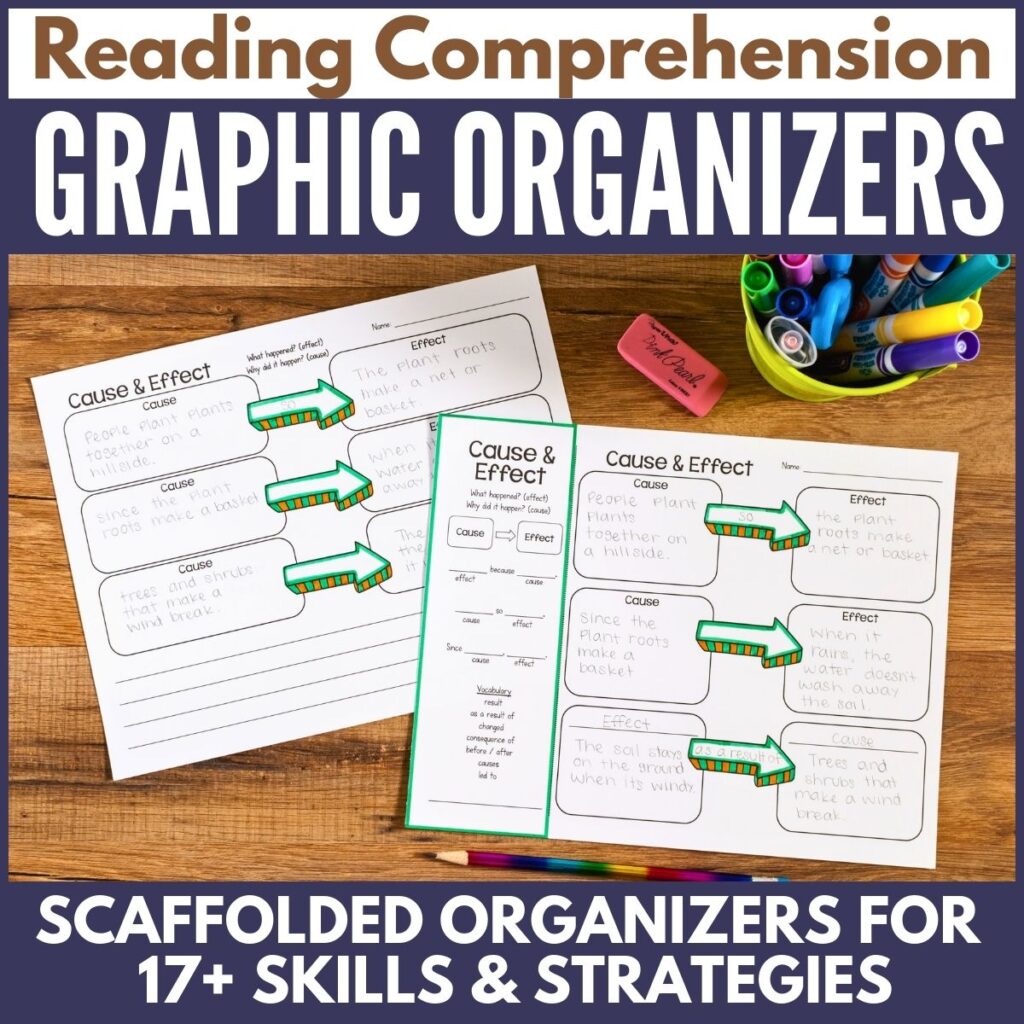
These Reading Comprehension Graphic Organizers include 40 organizers in two formats, for a total of 80 options. Each organizer targets a specific comprehension skill or strategy and can be used with any book or piece of text.
24 Reading Comprehension Skills
- Identify Main Idea & Details
- Determine Author’s Purpose
- Identify Cause & Effect
- Classify & Categorize
- Compare & Contrast
- Draw Conclusions
- Determine Fact & Opinion
- Describe Figurative Language
- Identify Genre
- Describe Plot
- Identify the Point of View
- Make Predictions
- Sequence Events
- Describe Story Structure
- Identify Explicit Information in Non-Fiction Text
- Determine Theme
- Summarize

7 Reading Strategies
- Make Connections
- Ask Questions
- Make Inferences
- Visualize
- Determine Important Information
- Monitor Comprehension
- Understand Text Structure
Some skills and strategies include more than one variation so you can choose what works best for your students.
Two Formats to Fit Your Classroom
Detachable Bookmark Version
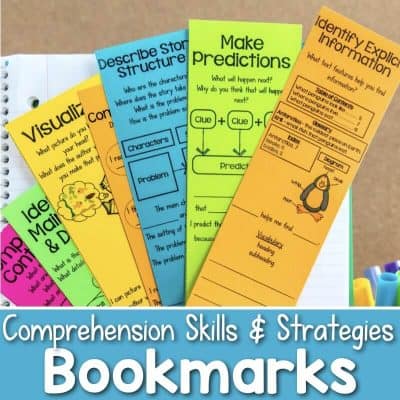
The bookmark format includes a visual organizer on the larger portion and a detachable bookmark students keep after the lesson. The bookmark contains sentence frames and skill-specific vocabulary students can return to when working with other texts. Language prompts like “The author wrote ____ to ____” help students internalize the language over time rather than just using it once. This format works well for interactive notebooks and small group lessons.

Full-Page Version
The full-page format has sentence frames and vocabulary built directly into the organizer. There’s nothing to cut or assemble, and students have everything they need right in front of them. This version fits well in guided reading, whole-group mini lessons, or independent practice where you want a clean, self-contained tool.
Both formats are included, so you can choose what fits the lesson and the group of students in front of you.

How to Use These Organizers Across Your Reading Block
In guided reading groups, these organizers give students the language and structure they need for a specific skill without requiring you to create additional materials. Model the thinking together with one paragraph or page, then gradually release students to complete the rest on their own. The sentence frames do a lot of the heavy lifting, especially for students who understand the text but struggle to put their thinking into words.
For whole-group mini lessons, use an organizer as a shared anchor during a read-aloud or shared text. Guide students through it together before asking them to try it independently. Students see what a strong response looks like before they write one on their own.
At literacy centers, these work well because the structure stays consistent even when the text changes. Set out a basket of picture books or nonfiction articles, choose one skill to focus on for the week, and let students select their own text and complete the matching organizer. Once students know the routine, the center runs itself.
For book clubs and literature circles, assign a skill each week and give students the matching organizer to complete before they meet. Students arrive at their group with their thinking already organized, which makes discussion easier and gives your quieter students a clear way in.
During independent reading, these organizers help students move beyond retelling and start explaining their thinking about a text. You can assign a specific organizer based on your current focus skill, or let students choose one that fits what they are reading. Over time, that repeated practice builds habits that carry into their writing even when the organizer is no longer in front of them.

Works with Any Text, Any Time
One of the biggest advantages of these organizers is flexibility. They work with picture books, chapter books, informational articles, reading passages, and student-created texts, which means you can pair them with whatever your students are already reading. There’s no need to find a specific book to match the lesson. Choose the comprehension skill you want to teach, like compare and contrast or making inferences, and use whatever text you have on hand.
The embedded sentence frames also support oral language development. When students practice using academic language structures during discussion, it carries over into their writing, which makes these organizers useful for both comprehension and language development goals.
Differentiated for Grades 2 through 5
These organizers were designed for a range of readers and are appropriate for grades 2 through 5. The scaffolded sentence frames make them accessible for students who are still building reading skills, while the skill-aligned structure keeps the thinking rigorous for stronger readers. A Google Slides version is included for classrooms using digital tools.
Reading Comprehension Graphic Organizers with Language Support & Bookmarks
Support deeper reading comprehension and academic language development with these Reading Comprehension Graphic Organizers. Featuring 40 comprehension-focused organizers in two formats for a total of 80 options, this resource helps students discuss, analyze, and write about any text using sentence frames, vocabulary support, and reading strategies.
How to Purchase
The Reading Comprehension Graphic Organizers are available on my website and on Teachers Pay Teachers. If you’d like to add this resource to a larger reading comprehension collection, the Reading Comprehension Bundle is also available.


Great Resources. Would love to know of more such things
Here are some reading comprehension bookmarks that are similar to the graphic organizers: https://whatihavelearnedteaching.com/reading-comprehension-bookmarks-to-support-academic-language/
I’m not sure what other resources you’re looking for.
Do you use these with books you give the students or books they are reading at the time of theirs?
I use the graphic organizers with whole-class or small group teacher-led interactions with text, usually focused on a specific comprehension skill that I’m teaching. If students are reading texts that they choose, I don’t ask them to use a graphic organizer with it.
Thank you for all these great ideas. I am a second grade teacher in VA and I truly love using interactive notebooks for most if not all my subject matter. This way the students have all their information in one location for all time. Also, your products look fun, innovative and great ideas. I look forward to using your products