Skip to content
Free printables and teaching tips Get them here
What I Have Learned Logo
  • AboutExpand
    • Frequently Asked Questions
    • Contact
    • Legal Policies
    • How to Teach Word Problems
  • Teaching StrategiesExpand
    • Classroom Management
    • English Learners
    • Differentiation
    • Goal Setting
    • Explore by GradeExpand
      • Kindergarten
      • First Grade
      • Second Grade
      • Third Grade
      • Fourth Grade
      • Fifth Grade
  • Teaching IdeasExpand
    • Math
    • Reading
    • Writing
    • Science
    • Seasonal
Shop on TPT
What I Have Learned Logo
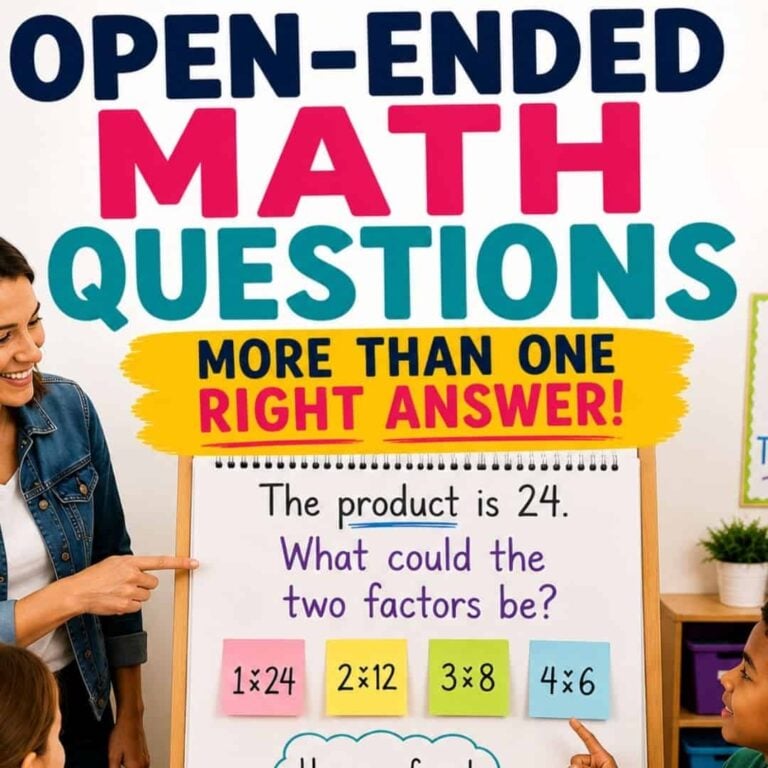
  • A teacher and student discuss a math problem on the board, searching for two numbers that multiply to make 24, with several example answers displayed below. Above them, a sign reads: “Open ended math questions for grades 3-5—more than one right answer!”, showcasing how these open-ended questions promote creative problem-solving.
    Math

    Open-Ended Math Questions: How to Use Them in Grades 3-5

    The first time I put an open-ended math question on the board for my third graders, half the class sat frozen. They kept asking, “But what’s the answer?” They had…

    Read More Open-Ended Math Questions: How to Use Them in Grades 3-5Continue

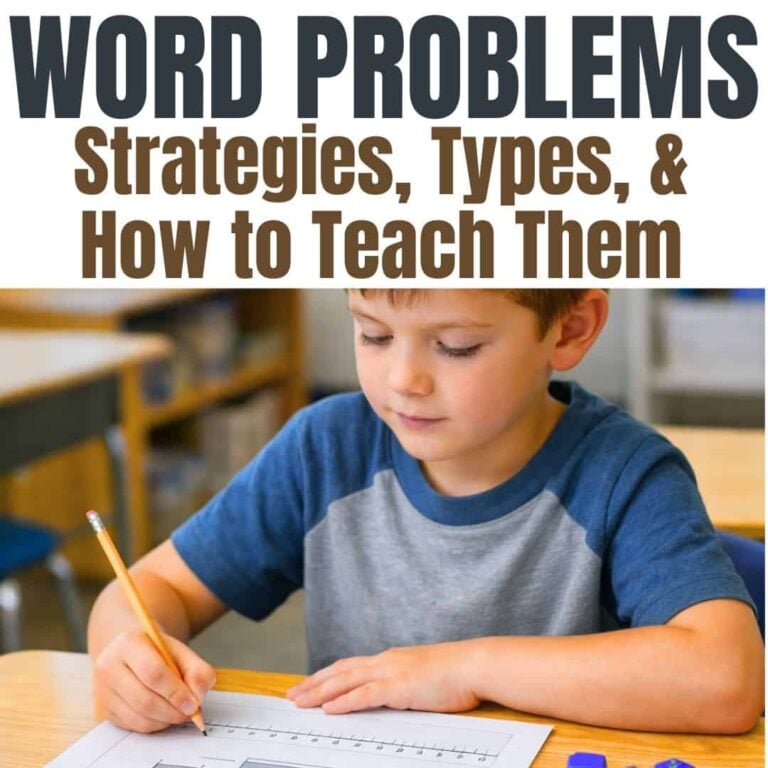
  • A young boy sits at a desk, solving problems with a pencil. Above him: SQUARE word-problems-in-math—Strategies, Types, & How to Teach Them. Classroom furniture appears in the background.
    Math

    Word Problems in Math: Strategies, Types, and How to Teach Them

    If you’ve ever read a student’s solution to a word problem and thought, “Wait… how did you even get that answer?”—you’re not alone. Word problems have a way of turning…
    Read More Word Problems in Math: Strategies, Types, and How to Teach ThemContinue

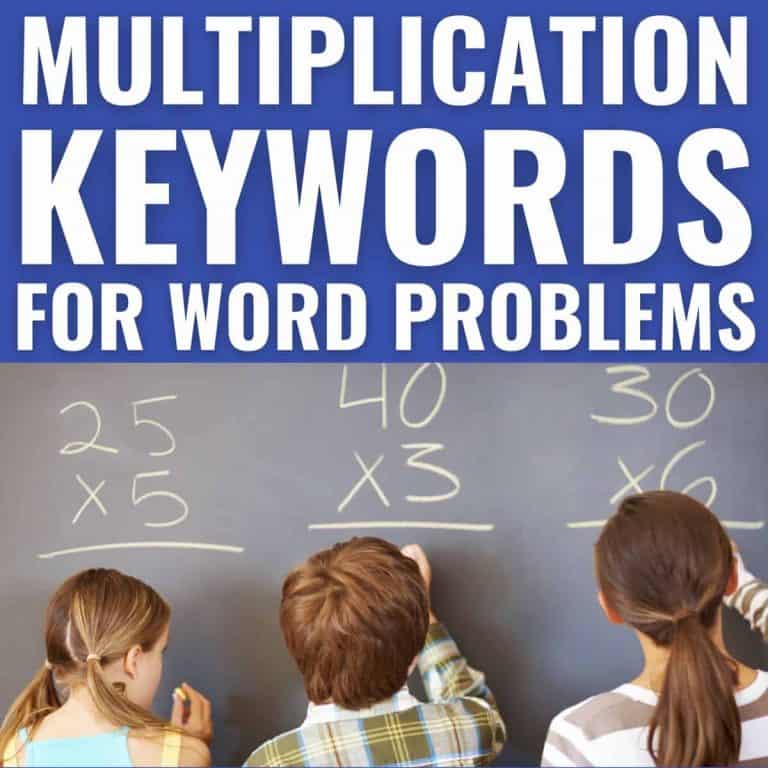
  • Three children solve multiplication problems on a chalkboard under the bold title "Multiplication Keywords," helping students recognize key words used in math word problems.
    Math

    Multiplication Keywords for Word Problems: A Grades 3–5 Teaching Guide

    A student reads a word problem, spots the word “each,” and immediately writes a multiplication equation. That shortcut works sometimes—but it breaks down the moment “each” appears in an addition…

    Read More Multiplication Keywords for Word Problems: A Grades 3–5 Teaching GuideContinue

  • Image with the text “How to use tape diagrams to solve word problems,” next to two tape diagram examples: one showing 3 + 3 + 3 + 3 = 12 and another showing 4 and a question mark combining to make 10, ideal for learning tape diagrams for multiplication.
    Math

    What Is a Tape Diagram? Examples for Every Math Operation

    Tape diagrams are visual tools that help students solve math word problems. They offer a simple way to understand complex mathematical concepts. In this post, I will discuss tape diagrams…
    Read More What Is a Tape Diagram? Examples for Every Math OperationContinue

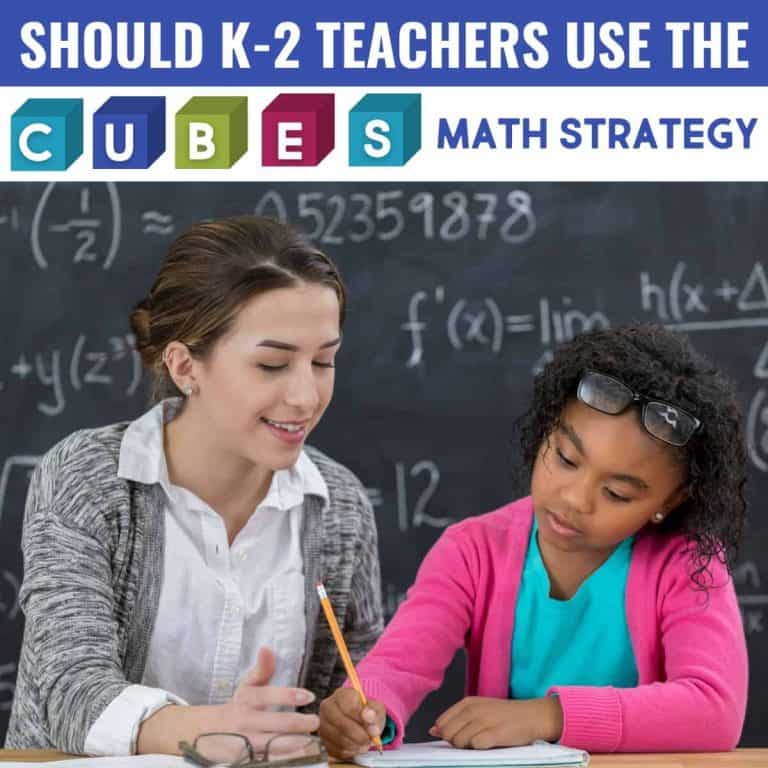
  • A teacher sits beside a young student working on math problems with a pencil in front of a chalkboard. Text above reads, Should K-2 teachers use the cubes math strategy?.
    Math

    CUBES Math Strategy: What It Is and What to Use Instead

    The CUBES math strategy is a word problem acronym that breaks problem-solving into five steps: Circle the numbers, Underline the question, Box the keywords, Evaluate what steps to take, and…
    Read More CUBES Math Strategy: What It Is and What to Use InsteadContinue

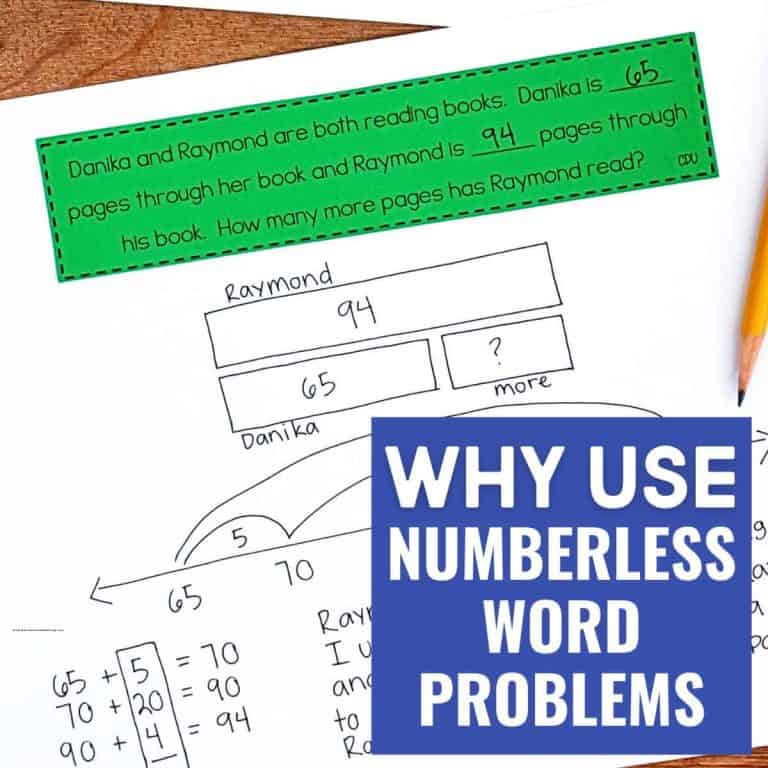
  • A math worksheet featuring Danika and Raymond reading books, number boxes, equations, and a blue box asking WHY USE NUMBERLESS WORD PROBLEMS. A pencil is on the side, illustrating the concept of numberless word problems for students.
    Math

    Why Numberless Word Problems Should Be Part of Your Math Instruction

    Teaching word problems can feel frustrating—for both you and your students. Students often jump straight to the numbers, guess an operation, and hope for the best. The result? Confusion, errors,…
    Read More Why Numberless Word Problems Should Be Part of Your Math InstructionContinue

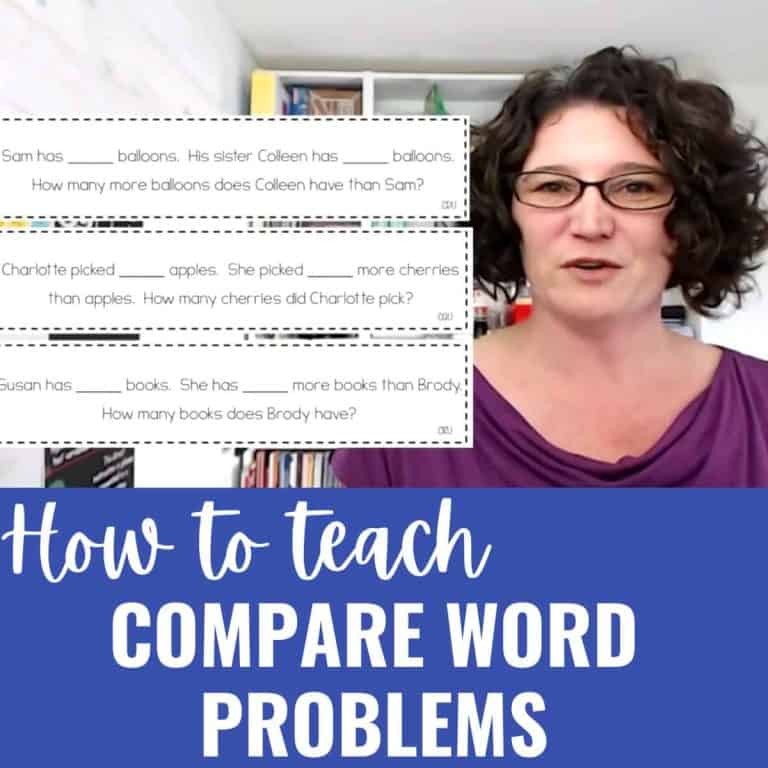
  • A woman with curly hair and glasses speaks in front of bookshelves. Overlaid text reads, “How to teach compare word problems,” with sample math questions about comparing quantities shown above.
    Math

    Compare Word Problems – How to Teach Students to Solve Them

    Compare word problems can be some of the most difficult addition and subtraction problems for students to solve. In this type of problem, students are asked to compare two groups…

    Read More Compare Word Problems – How to Teach Students to Solve ThemContinue

  • A worksheet titled Addition & Subtraction Word Problems features engaging addition and subtraction word problems about bracelets, complete with handwritten equations, a number line, and a pencil on a wooden desk.
    Math

    Addition and Subtraction Word Problems by Problem Type

    If your students can solve equations but get stuck on addition and subtraction word problems, you’re not alone. Many students look for keywords, grab numbers, and guess, without really understanding…

    Read More Addition and Subtraction Word Problems by Problem TypeContinue

  • A woman explains separate word problems with a whiteboard showing subtraction steps and a number line. Text on the image reads, How to teach SEPARATE WORD PROBLEMS.
    Math

    Separate Word Problems: Start, Change, and Result Unknown

    Solving word problems is difficult for students, but teaching them how to read the word problem and understand the context or situation of the word problem sets a good foundation for…

    Read More Separate Word Problems: Start, Change, and Result UnknownContinue

  • A teacher explains a math problem using a whiteboard with diagrams and numbers. Text reads “How to teach join word problems.” Bookshelves and a patterned wall are in the background.
    Math

    Join Word Problems – Solve Word Problems by Problem Type

    Of all the word problem types, join problems are the ones students usually meet first — and for good reason. They involve combining quantities, which is a concept most kids…

    Read More Join Word Problems – Solve Word Problems by Problem TypeContinue

  • A math notebook page displays a word problem routine about Sofia giving away dimes, with handwritten equations (42 - ___ = 17) and steps to solve it. A blue Word Problem Routine label partially covers the page.
    Math

    A Word Problem Strategy That Helps Students Analyze Before They Solve

    Do your students struggle to solve word problems?  I am a big proponent of helping students understand the context of a word problem and solve it while understanding what is going…

    Read More A Word Problem Strategy That Helps Students Analyze Before They SolveContinue

  • Colorful paper cutouts with math keywords are scattered, highlighting the issue of relying on keywords to solve word problems. A blue box reads: The problem with BLOG SQUARE Keywords for word problems—think it through!.
    Math

    Why “Keyword” Strategies for Word Problems Don’t Work

    As an elementary school teacher, you know all too well the importance of helping your students develop their math skills. As a result, many of us have embraced the use…

    Read More Why “Keyword” Strategies for Word Problems Don’t WorkContinue

Page navigation

1 2 Next PageNext

Become a part of the Email Community!

Sign up to get a free resource of your choice!

Click to Get a Free Resource
WIHL Footer Logo homepage.
  • Facebook
  • Pinterest
  • Instagram
  • Amazon
  • YouTube

Information

  • About
  • FAQ
  • Shop
  • Contact

Topics

  • Math
  • Science
  • Reading
  • Writing

Teaching Ideas

  • Seasonal
  • Differentiation
  • Management
  • English Learners
  • Privacy Policy
  • Refund Policy

© 2026 What I Have Learned

  • What I Have Learned
  • Learn
    • Math
    • Reading
      • Early Reading
    • Writing
    • Science
    • Instructional Strategies
      • Seasonal
      • Classroom Management
      • Goal Setting
  • Shop
    • Bundles
    • Animal Articles
    • Goal Setting
    • Craftivities
    • Math
    • Phonics
    • Social Studies
    • Science
  • About
    • Courses & Collections
    • FAQ
Search