
Multiplication Keywords for Word Problems: A List and Teaching Guide
A student reads a word problem, spots the word “each,” and immediately writes a multiplication equation. That shortcut works sometimes — but it breaks down the moment “each” shows up in an addition context. Multiplication keywords for word problems are genuinely useful tools for 3rd, 4th, and 5th graders learning to navigate word problems. The key is teaching them alongside context and meaning, not instead of it.
In this post, we’ll explore multiplication keywords, provide teaching strategies, and offer practical examples to make learning multiplication both fun and effective.
What Are Multiplication Key Words?
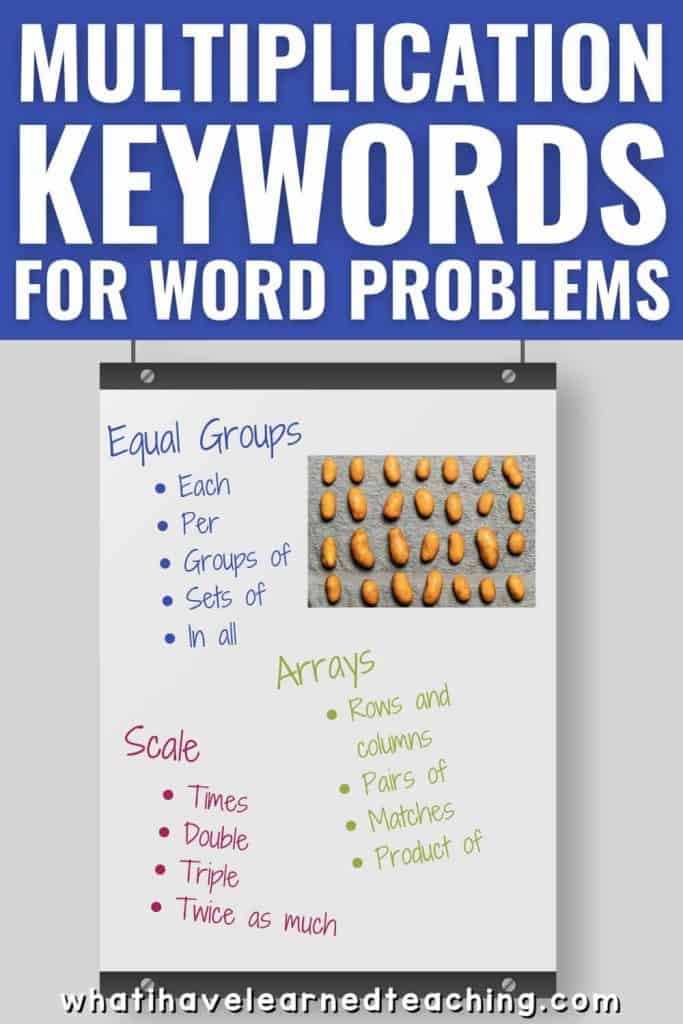
Multiplication keywords are words and phrases in math word problems that signal multiplication is the right operation. Common examples include each, per, groups of, times, double, and product of. Teaching students to recognize these words — alongside reading the problem for meaning — helps them approach word problems more strategically.
The Limitation of Teaching Keywords in Isolation
Teaching students to look for keywords in word problems without establishing a firm foundation in equal groups, scaling, and arrays or combinations sets them up for failure. Students need to learn how to read the word problem for its context BEFORE learning to look for math words.
Students may confuse multiplication keywords with those for other operations, especially addition. For instance, they might see “in all” and think they should add instead of multiply. To address this, teach students to consider the context of the problem and ask:
- Are we combining items (addition) or dealing with equal groups (multiplication)?
- Is there repetition or scaling involved?
Categories of Multiplication Key Words
To make learning easier, multiplication vocabulary words can be grouped into three main categories. Here is a multiplication keywords list:
1. Equal Groups
These words indicate repeated addition or grouping:
- Each
- Per
- Groups of
- Sets of
- In all
2. Scaling
These words imply multiplying to scale a number:
- Times
- Double
- Triple
- Twice as much
3. Arrays and Combinations
These words often appear in problems involving rows, columns, or pairing:
- Rows and columns
- Pairs of
- Matches
- Product of
By categorizing the words, students can better understand their meaning and application.
Examples of Word Problems Using Multiplication KeyWords
Here are a few examples to illustrate how multiplication keywords appear in real problems:
- Equal Groups:
“There are 6 baskets with 8 apples in each. How many apples are there in total?”- Key Words: “Each” and “in total.”
- Scaling:
“A bakery sells 5 cakes a day. How many cakes does it sell in 7 days?”- Key Word: “Times.”
- Arrays:
“There are 4 rows of chairs with 10 chairs in each row. How many chairs are there?”- Key Words: “Rows” and “in each.”
Encourage students to highlight or underline the key words to determine the operation. In fact, I encourage you to use numberless word problems when initially teaching multiplication word problems. This way, students are encouraged to look at the context of the word problem instead of the numbers.
Strategies for Teaching Multiplication Keywords
If you want students to master multiplication word problems, teach them to consider the context of the problem, not just the keywords. Here’s how you can shift the focus to understanding the story behind the math:
1. Use Numberless Word Problems
Introduce word problems that initially have no numbers. For example:
“A farmer has several baskets of apples. Each basket has the same number of apples. How many apples are there in all?”
Ask students to discuss what operation might be needed based on the scenario. This encourages them to think about relationships between quantities instead of relying solely on keywords.
Another example could be:
“A teacher is organizing chairs for an event. She arranges ____ chairs into ____ rows, with the same number of chairs in each row. How can you figure out how many chairs there are in total?”
This example encourages students to focus on the structure of the problem (equal rows with the same number of chairs) rather than getting caught up in specific numbers. It also opens up opportunities for discussion about multiplication as repeated addition or an array.
2. Focus on Visualizing the Situation
Encourage students to draw pictures or create diagrams to represent the problem. For instance, they could sketch groups of apples to visualize equal groups or draw out rows of chairs. This helps them connect the words to the math concept.
3. Discuss the Purpose of the Problem
Ask guiding questions like:
- Are we combining things into equal groups?
- Is there repetition or scaling happening here?
This approach shifts the focus from keywords to understanding the math context.
4. Practice Rewriting the Problem
Have students rewrite word problems in their own words to clarify their understanding. For example, they might rephrase:
“A store sells 4 boxes of pencils, each with 10 pencils”
to
“There are 4 groups of pencils, with 10 pencils in each group.”
This practice helps students internalize the meaning behind the problem.
By focusing on the context through activities like numberless word problems and visualization, students develop a deeper understanding of multiplication. This approach reduces reliance on keywords alone and prepares them for more complex math problems.
Resources for Teaching Multiplication Word Problems
If you want a ready-to-use resource that brings these keywords and strategies together, my Multiplication and Division Word Problems by Problem Type resource provides students with a structured reference for independent practice.
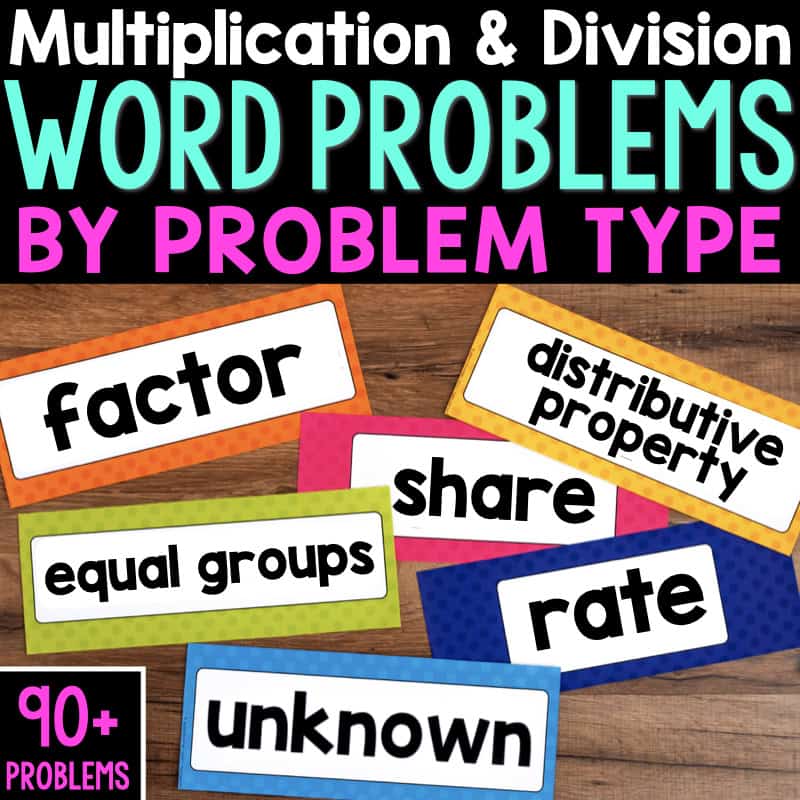
Multiplication and Division Word Problems
This multiplication and division word problems unit by problem type is a year-long resource for problem-solving. Use the multiplication and division word problems in a math journal or as stand-alone problem each day.
While specifically teaching multiplication keywords can equip students with some quick tools, students need to learn how to use those tools successfully within the context of deeper problem-solving.
For more on building that deeper understanding, see Why Numberless Word Problems Should be Part of Your Math Instruction.
Jessica BOschen
Jessica is a teacher, homeschool parent, and entrepreneur. She shares her passion for teaching and education on What I Have Learned. Jessica has 16 years of experience teaching elementary school and currently homeschools her two middle and high school boys. She enjoys scaffolding learning for students, focusing on helping our most challenging learners achieve success in all academic areas.