
Why Numberless Word Problems Should Be Part of Your Math Instruction
Teaching word problems can feel frustrating—for both you and your students.
Students often jump straight to the numbers, guess an operation, and hope for the best. The result? Confusion, errors, and very little real understanding.
That’s where numberless word problems come in.
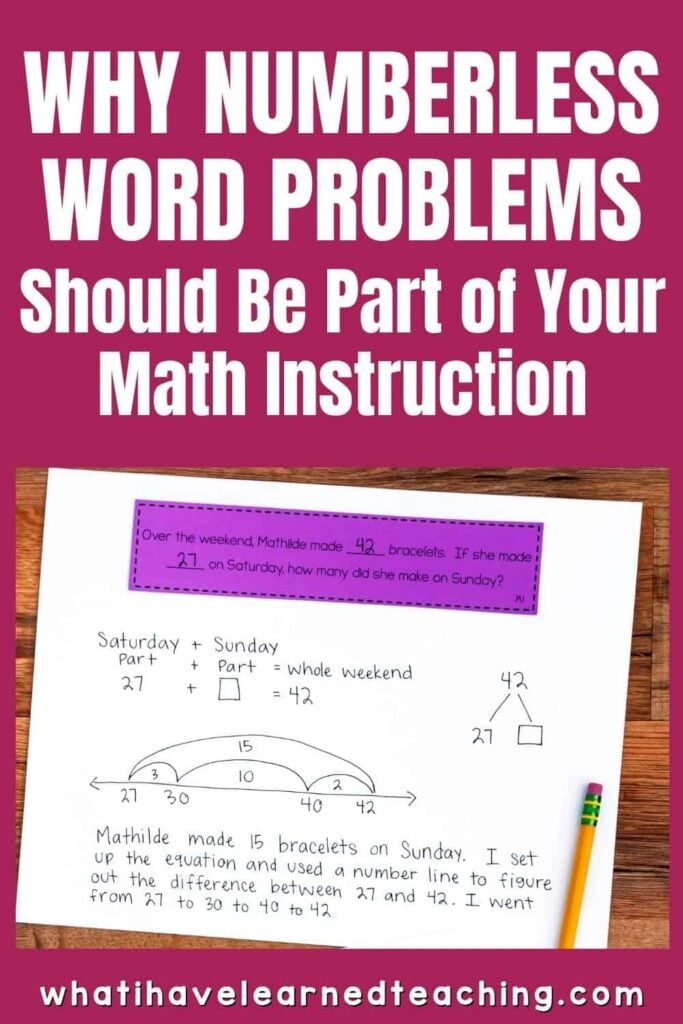
By removing the numbers, students focus on what actually matters: understanding the situation and identifying what’s happening in the problem.
If you want a full approach to teaching word problems, from problem types to strategies and visuals, take a look at this guide: Word Problems: Strategies, Types, & How to Teach Them
This is a simple strategy you can start using right away, and if you want ready-to-use examples, I’ve put together a free set you can use with your students.
What are Numberless Word Problems?
Numberless word problems are word problems with the numbers removed at first.
Instead of giving students all the information right away, you present the problem in parts:
- the situation
- the action or change
- the question
- and finally, the numbers
This allows students to think about what is happening before they try to solve it.
In a traditional problem, students often focus on the numbers first. In a numberless problem, they focus on:
- what is happening
- what is changing
- what they are trying to find
That shift builds deeper understanding.
Example of a Numberless Word Problem
Here’s what this looks like in practice:
Step 1: Present the situation (no numbers)
Sara has some apples. She gets more apples from a friend.
Alternatively, consider including blank spaces so that students can see where the numbers will go in the problem. For example, Sara has some apples. She gets ____ more apples from a friend. Now she has ____ apples. How many did she start with? or Sara has ____ apples. She gets ____ more apples. How many apples does she have now?
Ask students:
- What is happening?
- Is the amount increasing or decreasing?
Step 2: Add more detail
Now Sara has more apples than she started with.
Ask:
- What might we need to find?
- What operation might we use? Why?
Step 3: Add the question
How many apples does Sara have now?
Step 4: Add the numbers last
Sara has 4 apples. She gets 3 more apples. How many apples does she have now?
By the time students see the numbers, they already understand the structure of the problem.
This is where tools like tape diagrams can help students visually represent what’s happening.
Try Numberless Word Problems in Your Classroom
Want a simple way to get started right away?
I’ve created a free set of numberless word problems you can use with your students. It’s designed to help you introduce the routine step-by-step without extra prep.
Inside the free resource, you’ll get:
- ready-to-use numberless problems
- a simple structure you can repeat daily
- an easy way to build student understanding
Why Teach with Numberless Word Problems?
Numberless word problems help students slow down and think.
Instead of guessing, students begin to:
- analyze the situation
- identify the structure of the problem
- explain their thinking
Over time, this leads to better problem solving and fewer errors.
Here are a few key reasons to use them in your classroom:
1. They Make Differentiation Simple
Because the numbers are missing, you can adjust them for any student.
You might:
- use smaller numbers for support
- increase the size of the numbers for challenge
- give students different numbers while keeping the same problem
All students work on the same structure, but at a level that fits their needs.
2. You Can Use Them All Year Long
Numberless word problems are not just for one lesson or unit.
They work well:
- at the start of a unit to build understanding
- during lessons to model thinking
- in small groups for support
- as a daily routine or warm-up
As students progress, you can connect them to different types of word problems like join, separate, and compare.
3. They Strengthen Thinking and Vocabulary
When numbers are removed, students have to rely on language and meaning.
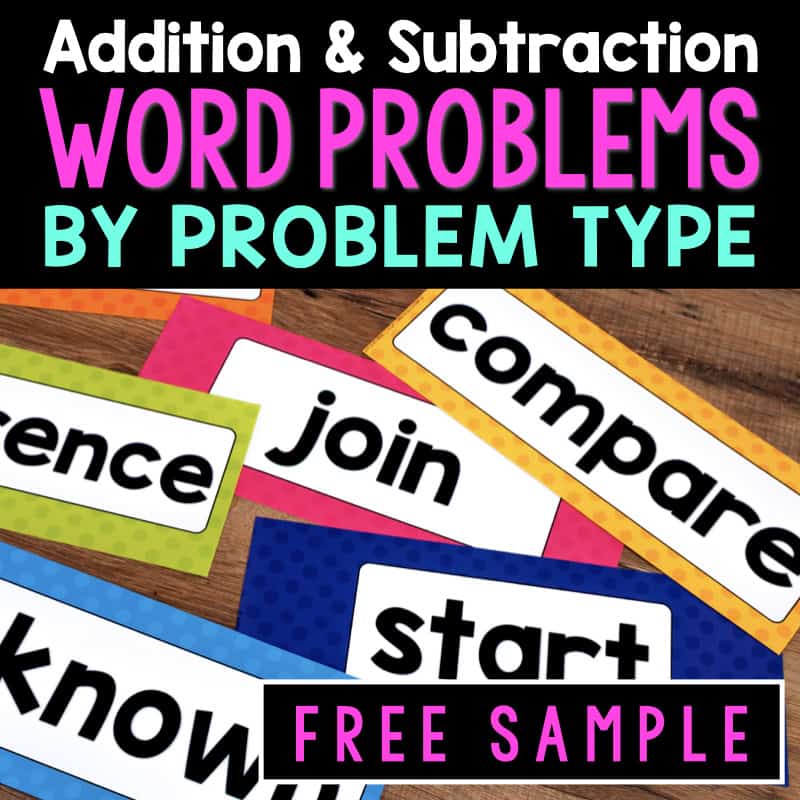
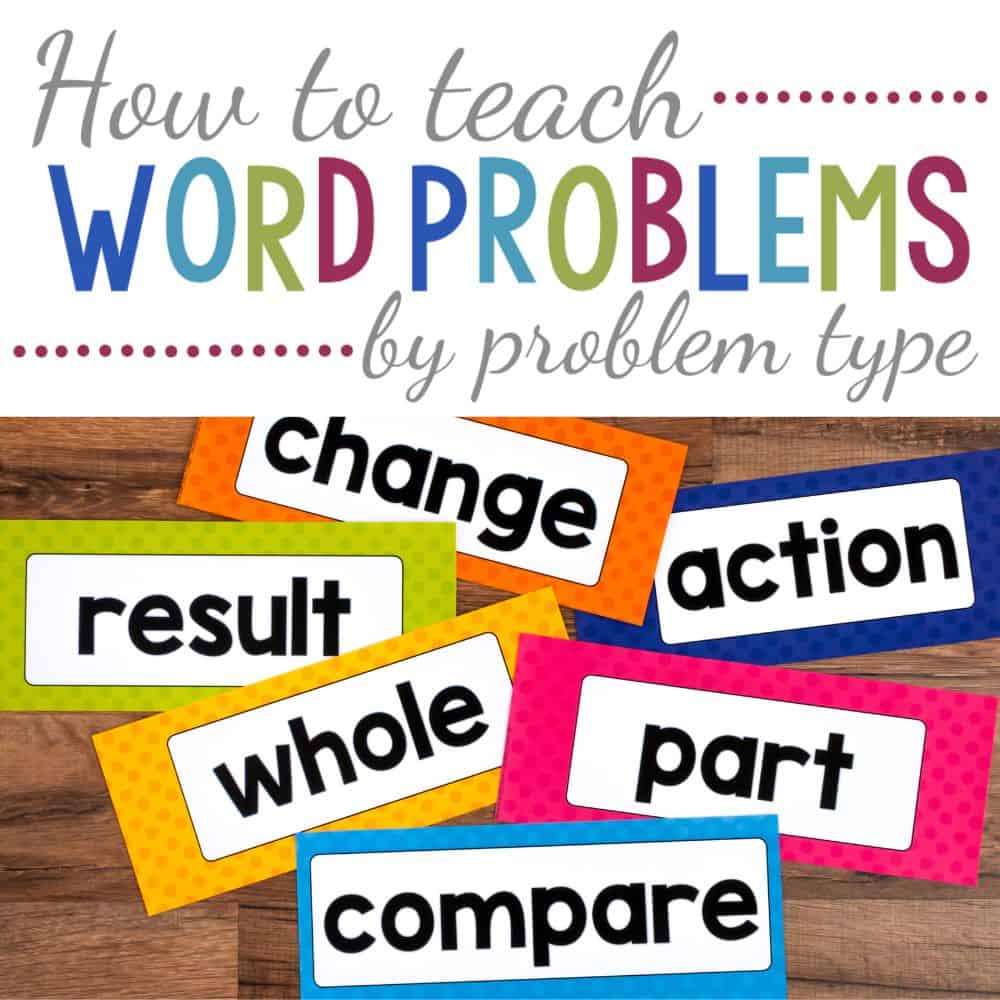
This is a great opportunity to build consistent vocabulary, such as:
- start
- change
- result
- part
- whole
- compare
Students begin to notice patterns across problems and connect those patterns to operations.
Instead of memorizing keywords, they understand how the problem works.
4. They Provide Built-In Scaffolding
Word problems can feel overwhelming, especially for struggling learners.
Removing the numbers reduces that pressure.
Students can focus on:
- understanding the situation
- deciding what is happening
- planning how to solve
Once they are confident, you add the numbers back in.
This step-by-step approach builds both understanding and confidence.
What Changes for Students
Without support, many students approach word problems like this:
- find the numbers
- pick an operation
- solve
With numberless word problems, the process becomes:
- understand the situation
- identify the structure
- choose a strategy
- solve
That shift leads to stronger reasoning and more accurate work.
How to Start Using Numberless Word Problems
You don’t need new materials to begin.
Start with a word problem you already use:
- Remove the numbers
- Read the situation with students
- Ask what is happening
- Add details slowly
- Introduce the numbers last
Even a short daily routine can make a big difference in how students approach problem solving.
Want More Support Teaching Word Problems?
Numberless word problems are just one piece of effective instruction.
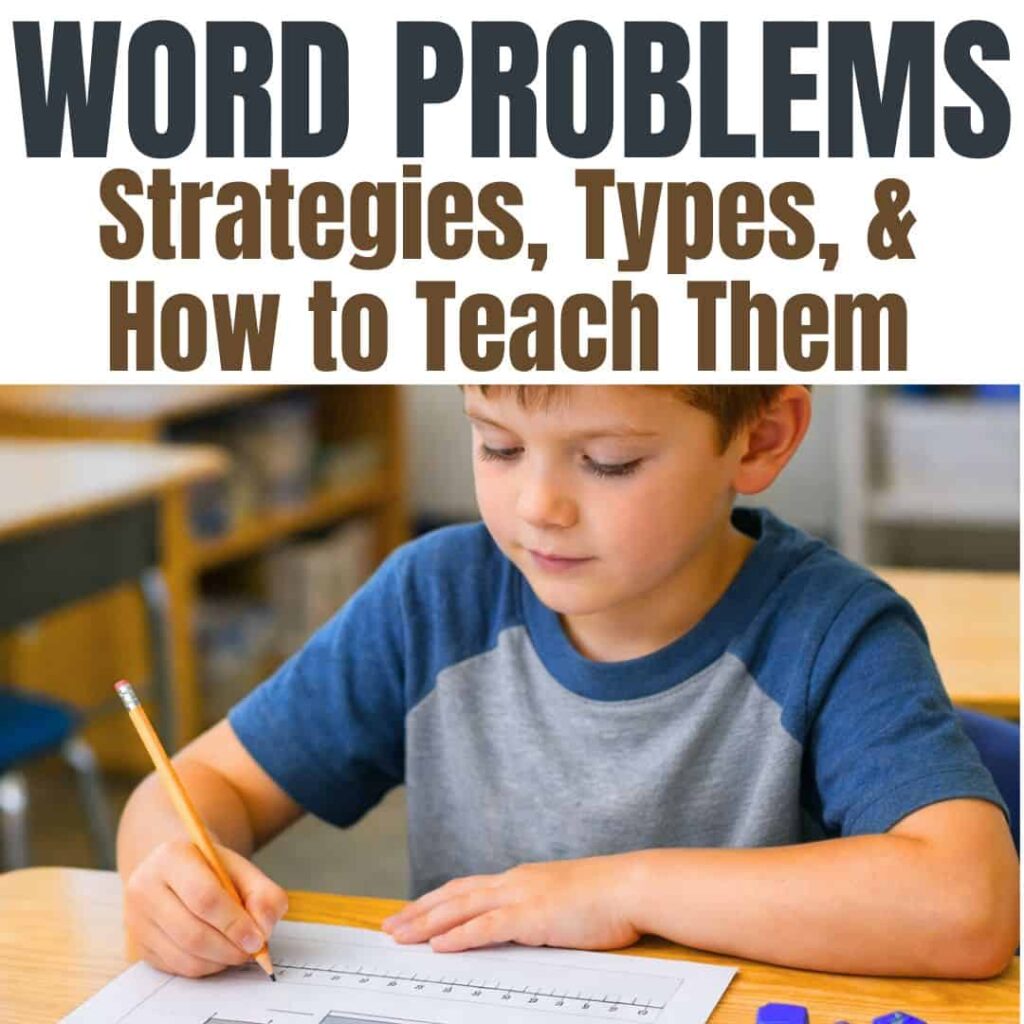
If you want to build a stronger system for teaching word problems, including problem types, strategies, and visuals, read this guide:
Ready for More Numberless Word Problems?
If you’ve tried numberless word problems and want more structured practice, I have a full resource that takes this strategy further.
This resource includes:
- a variety of numberless word problems across different types
- built-in progression from simple to more complex problems
- options for differentiation
- printable and classroom-ready materials
It’s designed to help you consistently build problem-solving skills throughout the year.

Addition and Subtraction Word Problems: Teach the Types of Word Problems
Master addition and subtraction word problems with this year-long resource! Covers all types of word problems, including first grade addition word problems and 2nd grade subtraction word problems, with built-in differentiation, models, and vocabulary support.
Ready to Go Further?
If you want step-by-step support for teaching word problems in your classroom, take a look at my Word Problems Course for Elementary Teachers.
Inside, you’ll learn:
- how to teach different types of word problems
- how to use visuals like tape diagrams and number lines
- routines that help students build consistent habits
- ways to support struggling learners
How to Teach Word Problems by Problem Type
Still seeing students guess instead of truly understanding?
In this course, you’ll learn how to teach word problems step-by-step using clear problem types, visual models, and simple routines your students can actually follow.
No more keyword guessing. No more confusion.
You’ll get practical strategies, examples, and tools you can use right away to move students from confusion to confidence.
Jessica BOschen
Jessica is a teacher, homeschool parent, and entrepreneur. She shares her passion for teaching and education on What I Have Learned. Jessica has 16 years of experience teaching elementary school and currently homeschools her two middle and high school boys. She enjoys scaffolding learning for students, focusing on helping our most challenging learners achieve success in all academic areas.