
Magnet Activities for Kids: Teaching Magnetism in 3rd Grade
Magnet activities for kids are some of the most naturally engaging science lessons you can teach. Students are endlessly curious about why some objects stick, and others don’t.
Third grade is the perfect time to dig into that curiosity with intention. NGSS standards 3-PS2-3 and 3-PS2-4 ask students to explore cause-and-effect relationships in magnetic interactions and to design simple solutions using what they know about magnets. These activities and resources will help you build a magnetism unit that gets students thinking, questioning, and building.
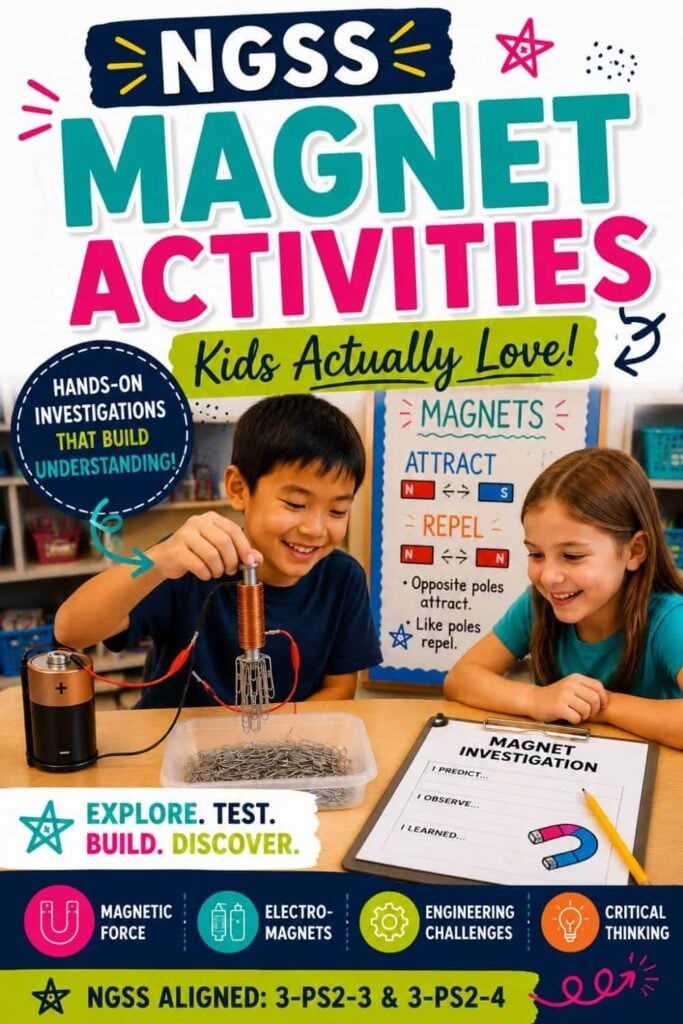
What Students Learn About Magnetism in 3rd Grade
Before jumping into activities, it helps to know what the standards actually expect. 3-PS2-3 focuses on cause and effect: students observe that magnets can push or pull objects without touching them, and they investigate what affects the strength of that force. 3-PS2-4 shifts to engineering: students use what they know about magnets to define and solve a simple design problem.
By the end of a well-structured magnetism unit, students should be able to:
- Identify which objects are attracted to magnets and which are not
- Explain that magnetic forces act at a distance (no contact required)
- Describe how the distance between magnets and their orientation affects force strength
- Understand that magnets have poles and that like poles repel while opposite poles attract
- Apply their understanding to a simple engineering design challenge
Hands-On Magnet Activities for Kids
The best way to teach magnetism is to get magnets in students’ hands as early as possible. These activities build conceptual understanding while keeping students engaged through direct investigation.
Magnetic and Non-Magnetic Sort
A sorting activity is the perfect entry point for a magnetism unit. Students test a collection of classroom objects with a magnet and sort them into “magnetic” and “non-magnetic” categories. This surfaces prior knowledge, gives students immediate hands-on experience with magnetic force, and sets up the conceptual question: why are some materials attracted to magnets?
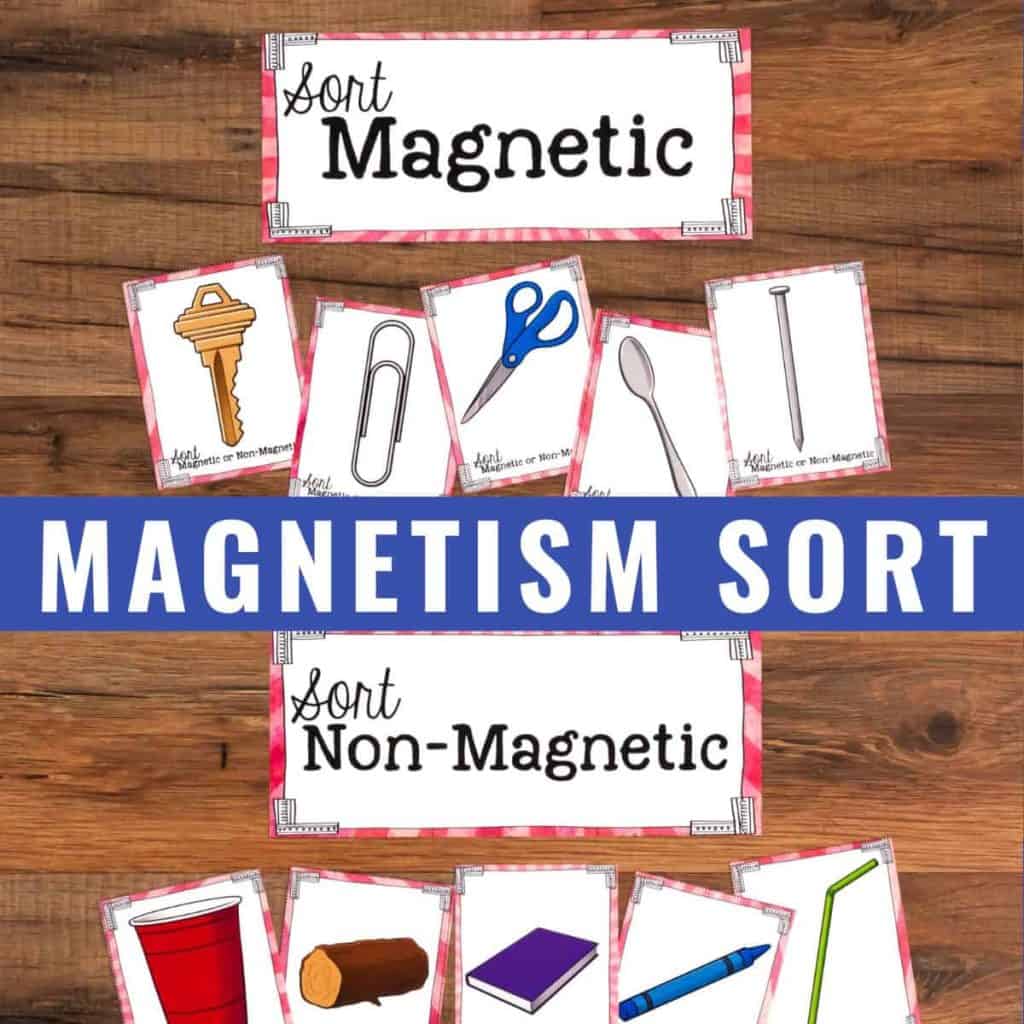
The Magnetism Sort for Third Grade Science Stations includes sorting cards aligned to 3-PS2-3. It works well as a science station, a partner activity, or an introductory whole-class lesson.
Make an Electromagnet
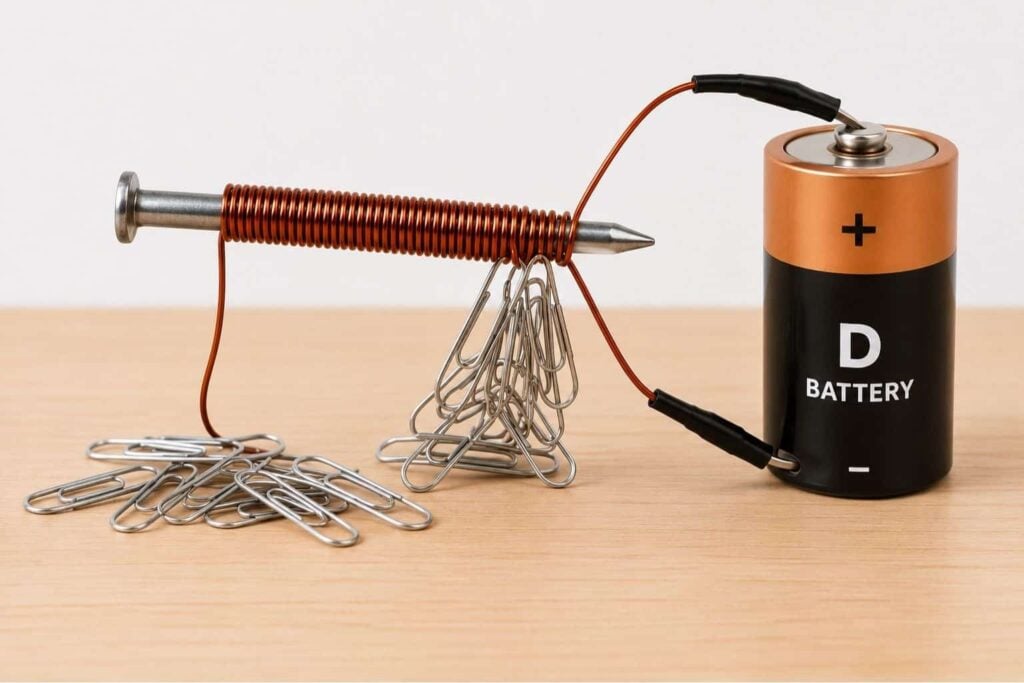
This is one of the most rewarding hands-on magnet activities because students actually build something that works. Wrap insulated wire around an iron nail, connect the ends to a battery, and the nail becomes magnetic. Students can test how many paperclips it lifts and investigate what happens when they add more coils or change the battery.
This directly addresses the relationship between electricity and magnetism — a great extension concept that previews later learning. This step-by-step guide from wikiHow clearly walks through the build. Materials needed: D battery, insulated copper wire, iron nail, paper clips.
If students ask why the nail becomes magnetic when current flows through the wire, HowStuffWorks has a clear explanation of how electromagnets work. It covers how coiled wire and electric current create a magnetic field, and it’s accessible enough to use as a reference when fielding student questions or to share with students who want to dig deeper.
Cup Speaker
Students build a simple speaker using a cup, coiled wire, and a magnet to discover how electromagnets power sound. The Exploratorium’s Cup Speaker activity is a reliable version of this investigation. Science Buddies also has a paper speaker build that connects directly to an audio device, which students tend to find especially engaging. Both are especially powerful for students who have made an electromagnet already — they see the same principle at work in everyday technology.
The real-world connection here is immediate: every speaker students have ever heard — in their phone, in a Bluetooth speaker, in their earbuds, in the classroom TV — works exactly this way. An audio signal sends changing electrical current through a coil of wire next to a magnet, causing the cone (or cup) to vibrate and produce sound. Building a cup speaker gives students a tangible model of technology they interact with every day.
Simple Electric Motor
For a true engineering design challenge aligned to 3-PS2-4, building a simple electric motor is hard to beat. Students use a D battery, a magnet, copper wire, and a rubber band to make a wire spin. The process involves testing, adjusting, and troubleshooting — exactly the kind of iterative thinking the NGSS engineering standards ask for. The Exploratorium’s Stripped-Down Motor is a well-tested classroom version, and Science Buddies has a homopolar motor build that requires just a battery, magnet, and wire — minimal materials, high payoff.
Electric motors are one of the most common devices in the modern world. Washing machines, refrigerators, fans, electric cars, and even the vibration in a phone all operate on the same basic principle that students apply when they build their classroom motor: a current-carrying wire inside a magnetic field experiences a force that causes it to spin. When students understand that, they can look around any room and start identifying the motors hidden inside the devices around them.
Electroscope
An electroscope helps students visualize charge and builds a conceptual bridge between static electricity and magnetism — both involve invisible forces that act at a distance. The Exploratorium’s electroscope activity is a simple, low-materials version that students can construct and use to detect static charge.
The electroscope connects to real-world technology that students encounter constantly. The same principle that underlies electric charge creating detectable forces also underlies touchscreens, which sense charge from a fingertip. Lightning rods work by providing a controlled path for a static charge to ground. Even photocopiers use static electricity to attract toner to paper in precisely the right places. Building an electroscope gives students a model for understanding why charge matters outside the science classroom.
Videos to Support Magnet Activities in the Classroom
Short videos are a great way to front-load vocabulary, spark questions before an investigation, or consolidate learning afterward. These are teacher-tested options:
- SciShow Kids has several magnet videos running about 3.5 minutes — perfect for a quick hook or review. Search their YouTube channel for “magnets.”
- How Stuff Works: Magnets — a clear explanation of how magnets work, good for building background knowledge before investigation.
- Mind-Blowing Magnets — fascinating demonstrations of magnetic force that generate great student questions and discussion.
- Monster Magnets — a more dramatic look at magnetic force in action; use as a discussion starter for how force changes with distance.
Books About Magnets for Elementary Students
Pairing read-alouds with hands-on investigations helps students build vocabulary and connect concepts across modalities. As students hear scientific language used in context, they begin to connect terms such as attract, repel, poles, and magnetic force to what they observe in experiments. Reading about magnets before or after investigations can spark curiosity, strengthen comprehension, and give students a stronger foundation for discussing their discoveries.

Check out this curated list of books about magnets for elementary students. This list of books is organized by grade band and includes both fiction and nonfiction options.
Ready-Made Resources for Teaching Magnetism
If you want structured labs, sorting activities, worksheets, and exit tickets that are already aligned to 3-PS2-3 and 3-PS2-4, these two resources cover the full unit:
Static Electricity and Magnetism Centers: This resource includes magnet stations, magnetic and non-magnetic sort activities, and worksheets covering magnetic fields and magnetic force.
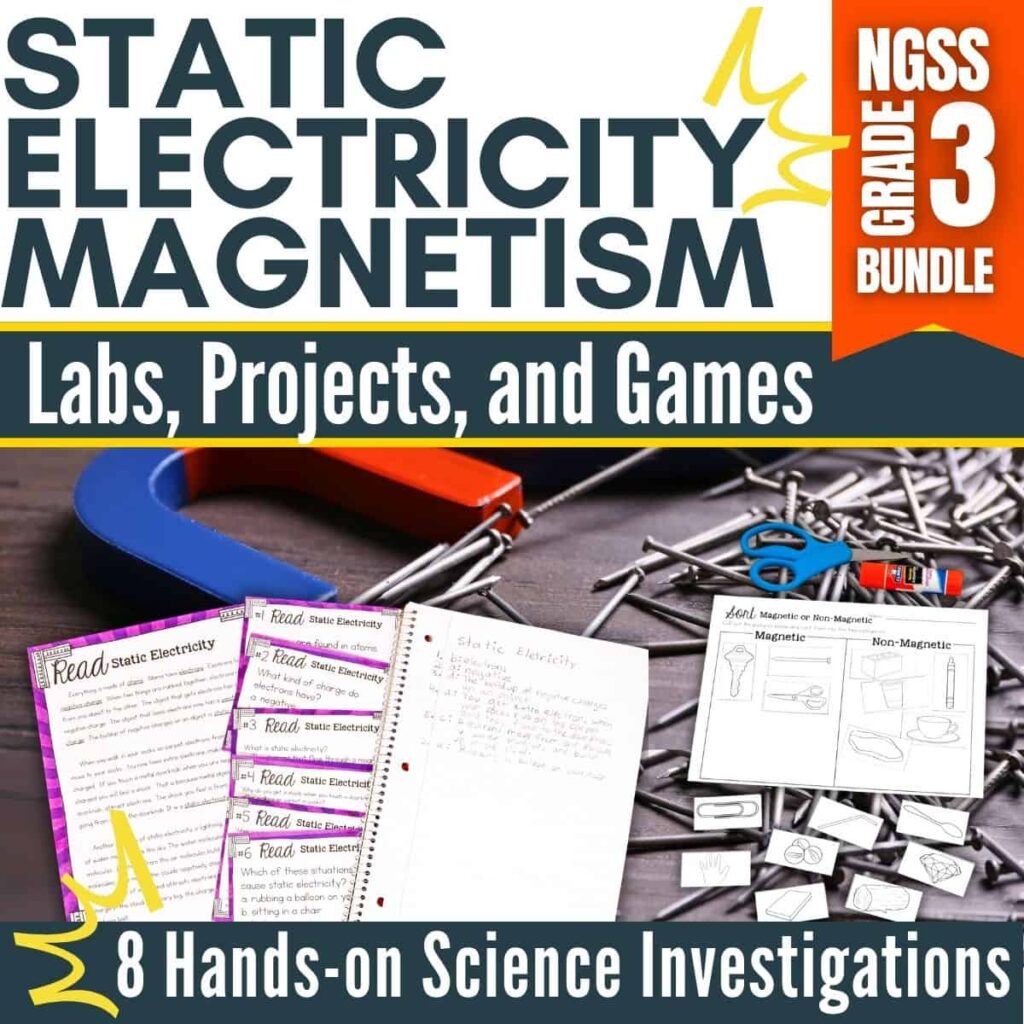
Static Electricity and Magnetism Third Grade Science Stations
The focus is on NGSS 3-PS2.B and includes concepts such as static electricity, magnets, and positive and negative charges.
Magnet Activities 5E Science Lessons: Built around the 5E instructional model, this resource walks students through engage, explore, explain, elaborate, and evaluate phases for magnetism. It includes labs, worksheets, and magnetic field activities.
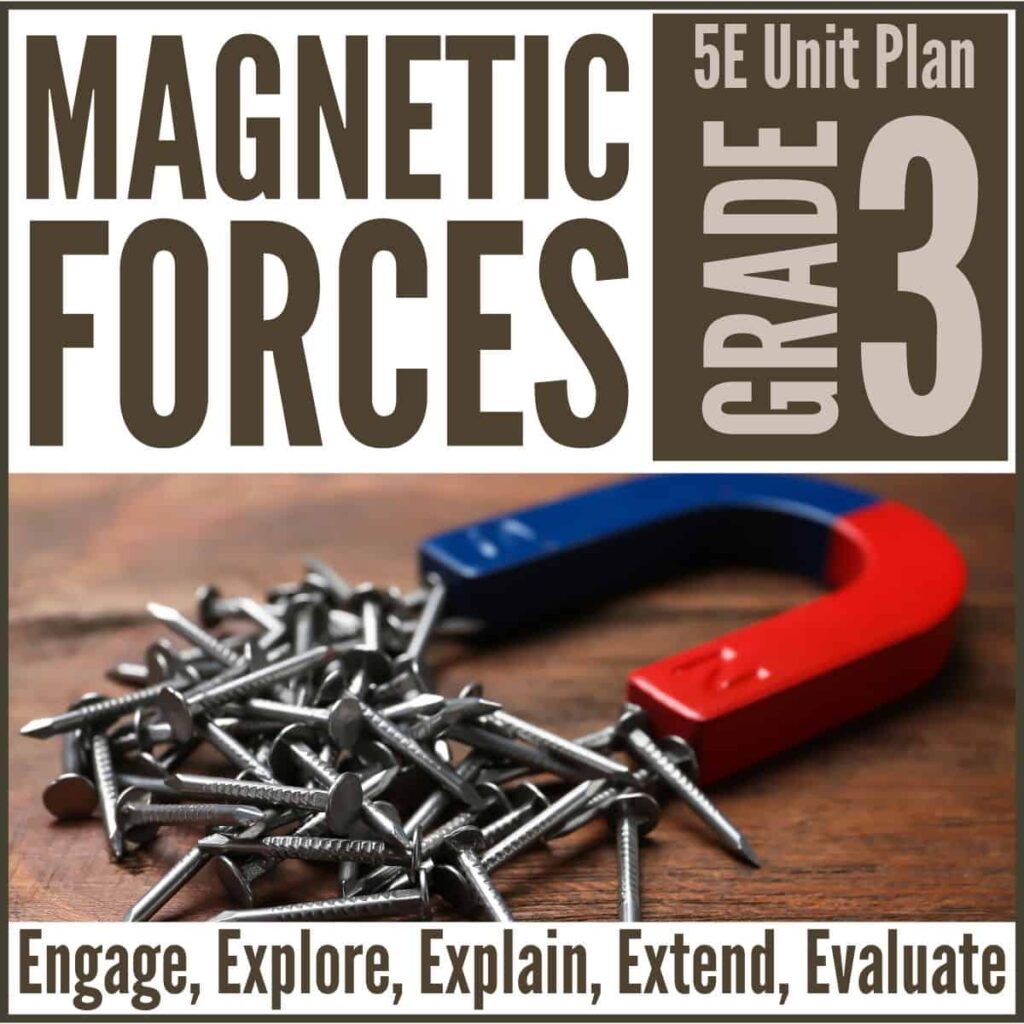
Magnetic Forces & Design Challenge 5E Unit Plan for Third Grade
This Magnetic Forces 5E Model Unit Plan is an inquiry-based unit using the 5E Model lesson plans.
How to Sequence a Magnetism Unit
One of the most common questions teachers have about magnetism is where to start. Here’s a sequence that builds understanding in a logical order rather than jumping straight to the most complex ideas.
Start with the magnetic and non-magnetic sort. This activates prior knowledge, gives every student immediate success, and raises the first big question: what do magnetic objects have in common? From there, move into investigating distance and orientation — students push and pull magnets toward each other, flip them around, and measure how strength changes as distance increases. This is where 3-PS2-3 really comes alive.
Once students have that foundation, bring in a video or two to help them connect what they observed to the bigger concept of magnetic fields. Then move into the engineering design challenge for 3-PS2-4. The key there is slowing down the “define the problem” step — students who rush to build without defining a clear goal end up troubleshooting aimlessly. Spend time up front asking: what is your magnet supposed to do, and how will you know it worked?
If time allows, the electromagnet and cup speaker make strong extension activities that connect magnetism to electricity and real-world technology.
Bringing It All Together
A strong magnetism unit provides students with both the conceptual foundation and hands-on experience they need to meet 3-PS2-3 and 3-PS2-4. Start with sorting and investigation, build toward the engineering design challenge, and use videos and read-alouds to reinforce vocabulary throughout. By the end, students won’t just know that magnets attract — they’ll understand why, and they’ll have built something to prove it.
This post is part of the Physical Science for Elementary Students series on What I Have Learned Teaching.
Jessica BOschen
Jessica is a teacher, homeschool parent, and entrepreneur. She shares her passion for teaching and education on What I Have Learned. Jessica has 16 years of experience teaching elementary school and currently homeschools her two middle and high school boys. She enjoys scaffolding learning for students, focusing on helping our most challenging learners achieve success in all academic areas.