
Static Electricity Lessons for Kids (Activities & Experiments for 3rd Grade)
Teaching static electricity is one of those science topics that instantly grabs attention. Rub a balloon on your head, and suddenly your classroom looks like a science lab and a hair salon at the same time.
If you’re planning a static electricity unit, you probably need more than one quick demo. You need hands-on activities, clear explanations, and lessons that align with NGSS standards.
This guide includes:
- Kid-friendly explanations of static electricity
- NGSS-aligned ideas for 3rd grade
- Anchor chart concepts
- Hands-on experiments and demonstrations
- Videos and extension lessons
- Structured 5E units and science stations
If you’re looking for static electricity activities that go beyond “rub a balloon and hope for the best,” you’re in the right place.
Static electricity is part of the 3rd grade standards on electric and magnetic interactions. My physical science guide for elementary students shows how it connects to the rest of the 3rd grade physical science standards and what comes next in 4th and 5th grade.
What Is Static Electricity? (Kid-Friendly Explanation)
Before jumping into experiments, students need simple vocabulary and clear visuals.
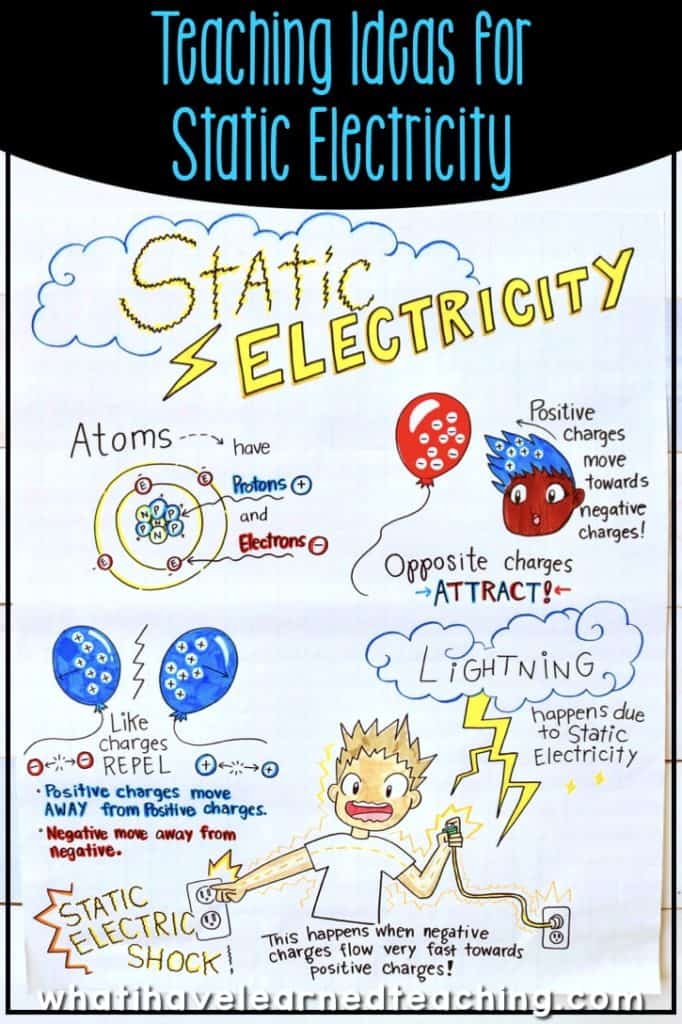
Static electricity is a buildup of electric charges on an object. It happens when electrons move from one material to another. When this transfer happens, one object becomes negatively charged, and the other becomes positively charged.
Opposite charges attract.
Like charges repel.
This is why a charged balloon can stick to a wall or make small pieces of paper jump.

Examples of Static Electricity for Kids (Real-Life and Classroom)
Students understand static electricity best when they see it in everyday life. Here are simple examples you can use in discussion or quick write prompts:
- A balloon sticking to a wall
- Hair standing up after rubbing a balloon
- Clothes sticking together in the dryer
- Getting a small shock after walking across the carpet
- Lightning during a storm
- Plastic wrap clinging to a bowl
Ask students:
- What objects are interacting?
- Are they touching?
- What caused the charges to build up?
These simple examples make abstract concepts easier to visualize before moving into hands-on experiments.
Static Electricity Activities and Experiments for the Classroom
Hands-on static electricity experiments help students see invisible forces in action. These activities work well for third-grade science and align with NGSS 3-PS2-3 because students observe cause-and-effect relationships between objects that are not touching.
Balloon and Hair Demonstration
Materials:
- Balloon
- Student volunteer
- Small paper pieces
- Wall
- Thin stream of running water
Rub the balloon on a student’s hair and hold it near small pieces of paper, a wall, or a thin stream of water.
Ask students to observe:
- What changed?
- What moved?
- What did not move?
- Were the objects touching?
This activity is perfect as an introduction before formal vocabulary instruction.
If you want students to go deeper, our Diagram Electric Balloons science station includes a short reading passage and comprehension questions that extend this demonstration into structured learning.
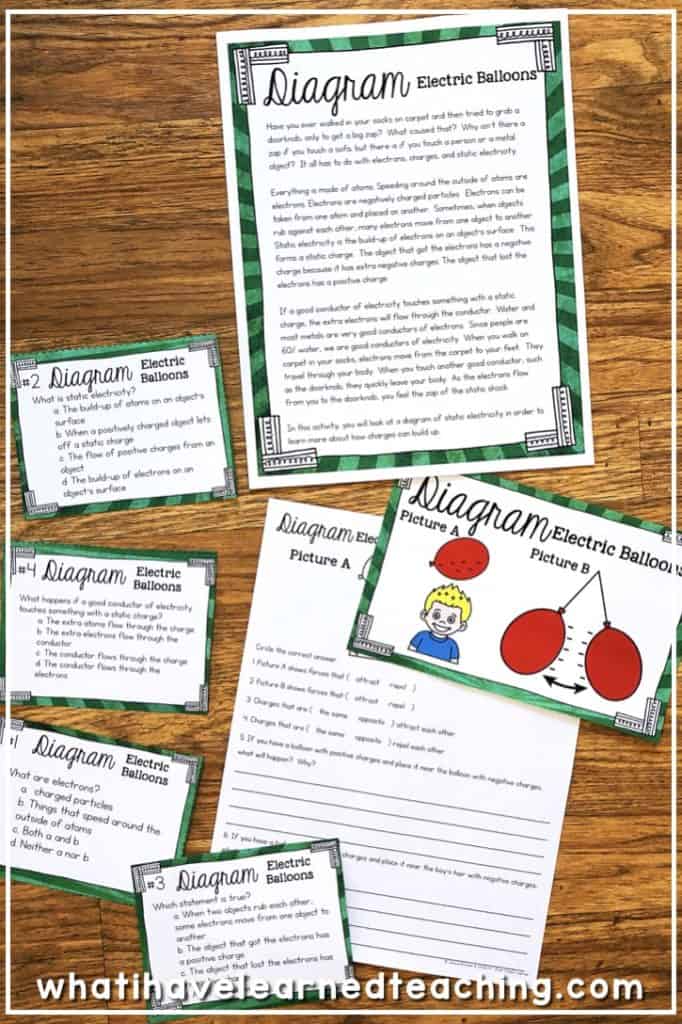
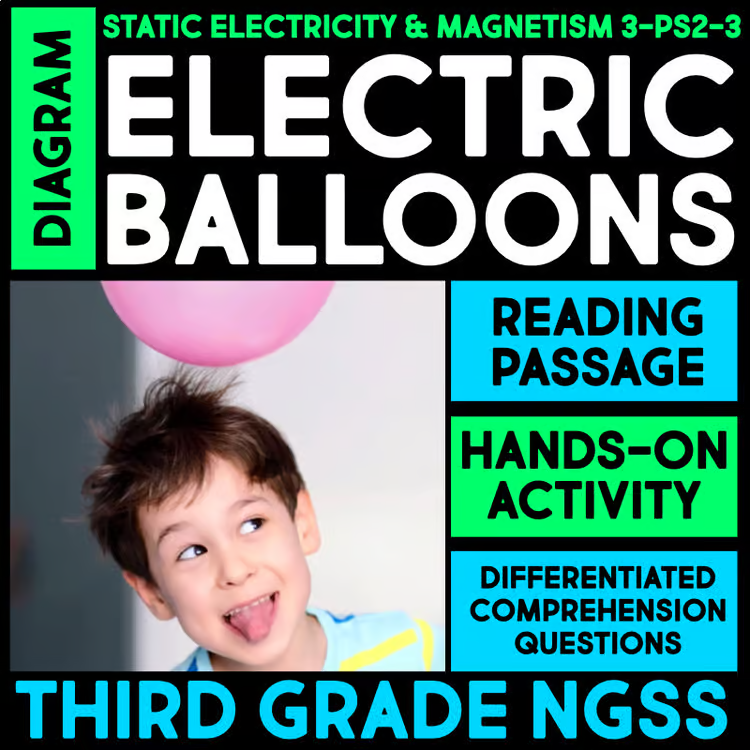
This station allows students to explore how charged objects interact with each other while they learn the concepts behind static electricity using balloons.
Bending Water Demonstration (Charge Detector)
With this classic experiment, students charge a balloon and bring it close to a thin stream of running water. The water bends toward the balloon.
This demonstration clearly shows electric forces acting at a distance.tions to the idea that electric forces do not require objects to be touching.

You can find instructions for building a simple charge detector here:

Variations of this activity, along with printed directions and student recording sheets, are included in both the 5E Unit and Science Stations below.
Static Electricity Experiment With a Lightbulb
In this experiment, students store up an electric charge and transfer it to light a small bulb. It reinforces the idea that energy can move and transfer between objects.
This activity works well after students understand the basic balloon experiments.

Static Electricity vs. Current Electricity
Students often confuse static electricity with electric circuits, so it helps to briefly compare the two.
- Static electricity is a buildup of electric charges in one place.
- Current electricity is the flow of electric charges through a closed circuit.
In static electricity activities, objects can attract or repel without touching. In a circuit, electricity must travel through a complete path.
If you’re also teaching circuits later in the year, you can extend this unit into simple circuit-building activities.
Videos for Teaching Static Electricity
- PBS has lessons, activities, and videos about electric circuits.
- The SciShow Kids Channel has many different videos on electricity.
Here are a few more static electricity videos on batteries and the science behind the concept.

Static Electricity and NGSS 3-PS2-3
These activities align with NGSS 3-PS2-3: Electric Interactions, which asks students to explore cause-and-effect relationships between objects that are not in contact.
In third grade, students should understand that:
- Objects can attract or repel without touching
- The strength of the force depends on distance and properties
- Observations lead to explanations
When students see a balloon attract paper or bend water, they are observing this standard in action.
If NGSS language feels overwhelming, we have a separate post explaining how to read and interpret the NGSS standards.
Anchor Charts for Static Electricity
Anchor charts help students visualize abstract ideas like electrons and electric forces.
When teaching static electricity for kids, our anchor charts focus on:
- Atoms have protons and electrons
- Opposite charges attract
- Like charges repel
- Static electric shock
- How lightning occurs
These charts stay posted throughout the unit and provide vocabulary support during labs and discussions.

Static Electricity Science Stations & 5E Units
If you’re looking for a complete static electricity unit with structured lessons, labs, vocabulary, and assessments, I’ve created both a 5E Unit and a Science Station set for third grade.

Static Electricity Science Stations
In this station set, static electricity is paired with magnetism. The resource includes 8 stations, four of which focus specifically on static electricity.
Students:
- Read informational passages
- Conduct hands-on investigations
- Answer comprehension questions
- Record observations
These stations increase engagement while keeping accountability high.

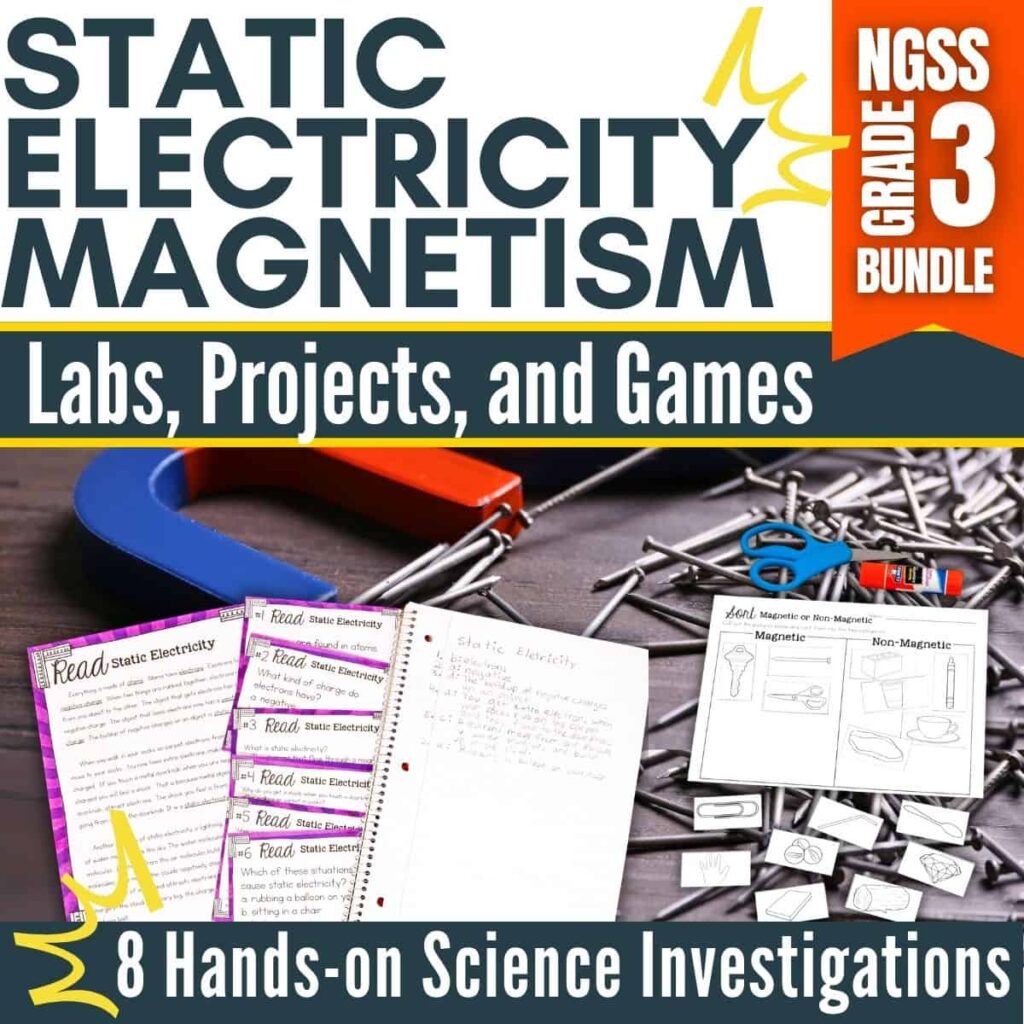
Static Electricity and Magnetism Third Grade Science Stations
The focus is on NGSS 3-PS2.B and includes concepts such as static electricity, magnets, and positive and negative charges.
5E Unit for Static Electricity
The 5E Unit for static electricity moves students through:
Engage – Demonstrations and discussion
Explore – Hands-on experiments
Explain – Reading passages and vocabulary
Elaborate – Deeper investigations
Evaluate – Assessments and written explanations
Students not only perform experiments—they explain what happened and why.

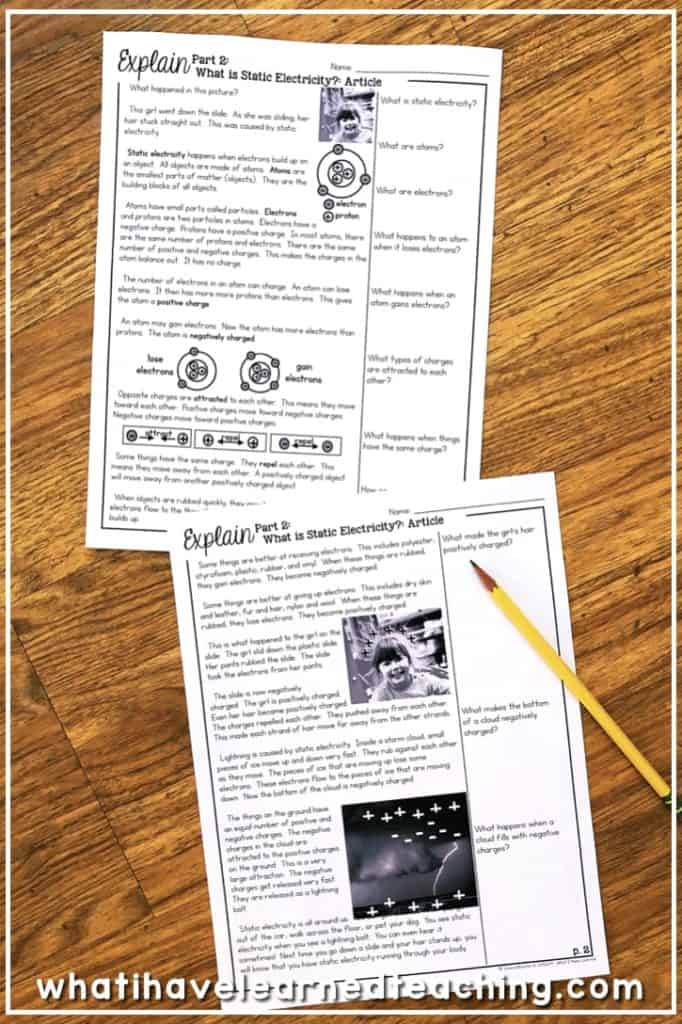
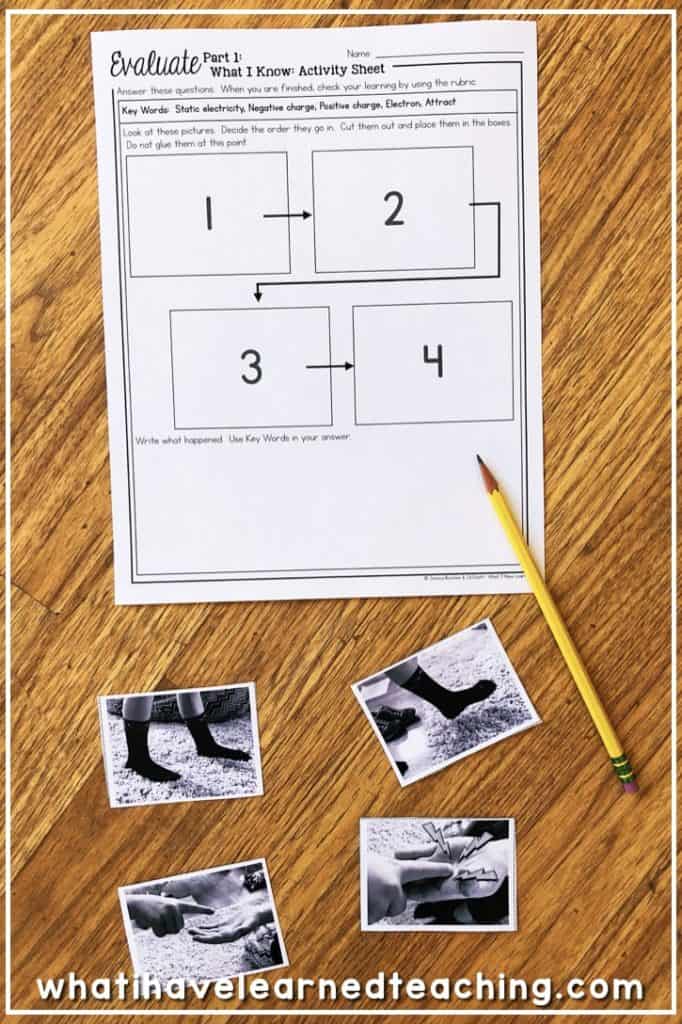
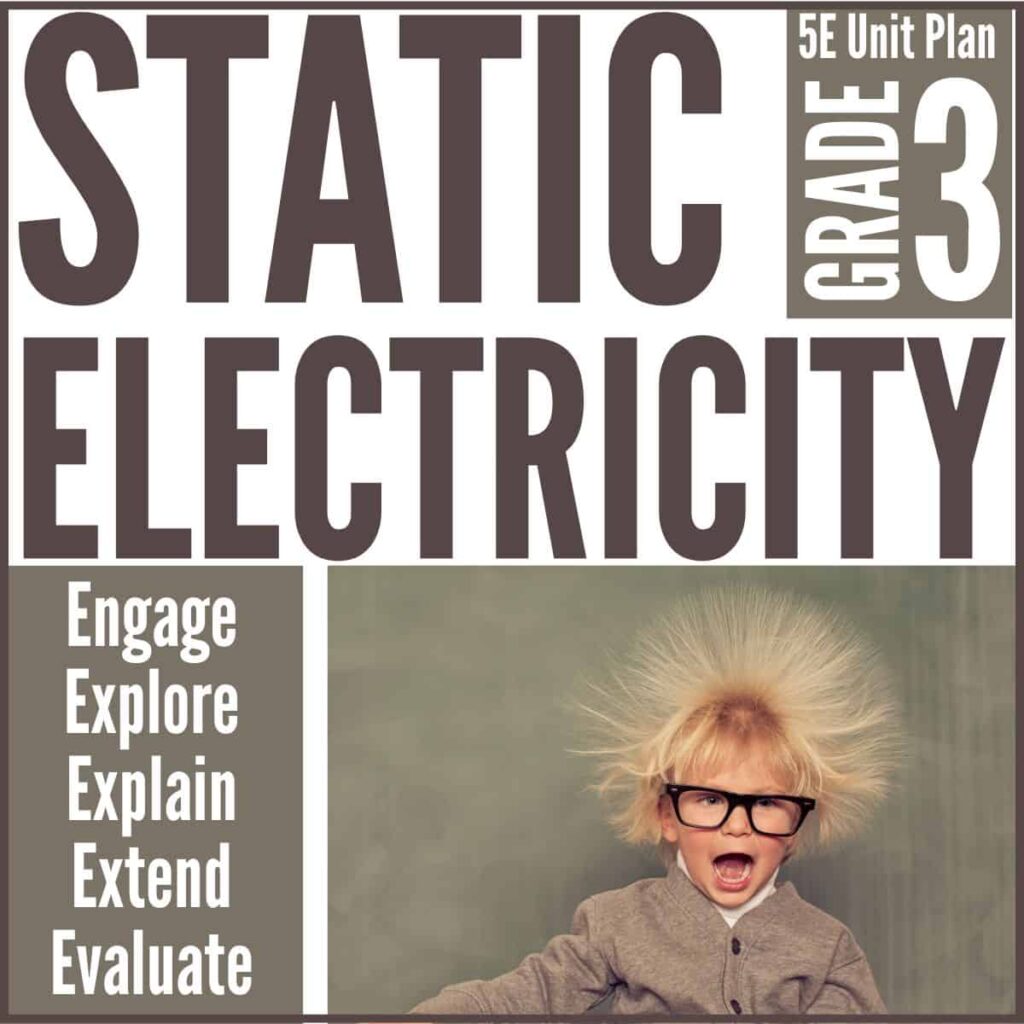
Static Electricity 5E Unit Plan for Third Grade
This Static Electricity 5E Model Unit Plan is an inquiry-based unit using the 5E Model lesson plans. It focuses on investigating static electricity, learning about what affects static electricity, and diagramming the flow of electrons in static electricity.
Jessica BOschen
Jessica is a teacher, homeschool parent, and entrepreneur. She shares her passion for teaching and education on What I Have Learned. Jessica has 16 years of experience teaching elementary school and currently homeschools her two middle and high school boys. She enjoys scaffolding learning for students, focusing on helping our most challenging learners achieve success in all academic areas.