
Energy Teaching Ideas for Elementary Students
Ever wonder how you could teach about energy in a way that brings science alive for your elementary students? Wish you had a ready-made list of helpful energy teaching ideas, resources, and lesson plans for teaching speed and energy, conservation of energy, and energy transfer that also aligns with Next Generation Science Standards?
Wonder and wish no more. I’ve got you covered.
This post contains links to affiliate websites, such as Amazon, and we receive an affiliate commission for any purchases made by you using these links. We appreciate your support!
This post is full of ideas, images, and fun experiments for your students to use while exploring energy. It may take a bit of time to load, but it’s worth the wait!
For all of our science resources, we follow the Next Generation Science Standards.
Why?
They are the national standards for science and many states have adopted them as their state standards. The NGSS also give us a solid foundation on which to build our grade level lessons that will meet the needs of most teachers across the US.
Here is an explanation of how we have used the NGSS to plan for our Force and Motion and Patterns in Motion Science Resources.
These ideas are organized around the 4th grade energy standards, which sit in the middle of a four-year physical science progression. For the full scope from 2nd through 5th grade, my physical science guide for elementary students is a good planning reference.
NGSS 4th GRADE ENERGY SCIENCE STANDARDS
We wrote a blog post on How to Read the Next Generation Science Standards that outlines where to start when reading, interpreting, and teaching the NGSS. It is a great place to start if teaching with the NGSS is new for you.
The ideas in this blog post align with the Next Generation Science Standards for Fourth Grade 4-PS3 Energy. This blog post covers 4-PS3-2 (Energy Transfer), 4-PS3-3 (Energy of Collisions), and 4-PS3-4 (Engineering Application).
Below is a description of how each individual Performance Expectation (PE) and Disciplinary Core Idea (DCI) align and relate to each other.
4-PS3-1 Speed and Energy: Use evidence to construct an explanation relating the speed of an object to the energy of that object.
It aligns with the first part of the first DCI:
- PS3.A: Definitions of Energy
- The faster a given object is moving, the more energy it possesses.
4-PS3-2 Energy Transfer: Make observations to provide evidence that energy can be transferred from place to place by sound, light, heat, and electric currents.
It aligns with the second part of the first DCI and all of the second DCI:
- PS3A: Definitions of energy
- Energy can be moved from place to place by moving objects or through sound, light, or electric currents
- PS3B:Conservation of Energy and Energy Transfer
- Energy is present whenever there are moving objects, sound, light, or heat. When objects collide, energy can be transferred from one object to another, thereby changing their motion. In such collisions, some energy is typically also transferred to the surrounding air; as a result, the air gets heated and sound is produced.
- Light also transfers energy from place to place.
- Energy can also be transferred from place to place by electric currents, which can then be used locally to produce motion, sound, heat, or light. The currents may have been produced to begin with by transforming the energy of motion into electrical energy.
4-PS3-3 Energy of Collisions: Ask questions and predict outcomes about the changes in energy that occur when objects collide.
It aligns with the second part of the first DCI and the first part of the second DCI, and the third DCI:
- PS3A: Definitions of energy
- Energy can be moved from place to place by moving objects or through sound, light, or electric currents
- PS3B: Conservation of Energy and Energy Transfer
- Energy is present whenever there are moving objects, sound, light, or heat. When objects collide, energy can be transferred from one object to another, thereby changing their motion. In such collisions, some energy is typically also transferred to the surrounding air; as a result, the air gets heated and sound is produced.
- PS3C: Relationship Between Energy and Forces
- When objects collide, the contact forces transfer energy so as to change the objects’ motions
4-PS3-4 Engineering Application: Apply scientific ideas to design, test, and refine a device that converts energy from one form to another.
It aligns with the fourth part of the second DCI and the fourth and fifth DCIs:
- PS3B:Conservation of Energy and Energy Transfer
- Energy can also be transferred from place to place by electric currents, which can then be used locally to produce motion, sound, heat, or light. The currents may have been produced to begin with by transforming the energy of motion into electrical energy.
- PS3.D: Energy in Chemical Processes and Everyday Life
- The expression “produce energy” typically refers to the conversion of stored energy into a desired form for practical use.
- ETS1.A: Defining Engineering Problems
- Possible solutions to a problem are limited by available materials and resources (constraints). The success of a designed solution is determined by considering the desired features of a solution (criteria). Different proposals for solutions can be compared on the basis of how well each one meets the specified criteria for success or how well each takes the constraints into account.
Okay . . . that is the technical stuff. Now that it is out of the way . . . we can focus on how to teach fourth graders about Energy.

ENERGY FOR 4TH GRADE SCIENCE RESOURCES
We have both science stations and 5E units for teaching fourth grade students about energy.
ENERGY SCIENCE STATIONS
We have 10 different science stations for NGSS Energy standard. The science station units include vocabulary cards and 10 stations. Each station engages students in hands-on activities designed to experience energy, energy transfer, and conservation of energy.

During the Energy Science Stations, students engage in the following activities:
- Watch one of two videos
- Play one of two video games
- Investigate Marble Mazes
- Diagram Thermal Energy Transfer
- Read about Sound Energy
- Model the Law of Conservation of Energy
- Model Electrical Energy in Batteries
- Explore Electrical Energy
- Explore Light Energy
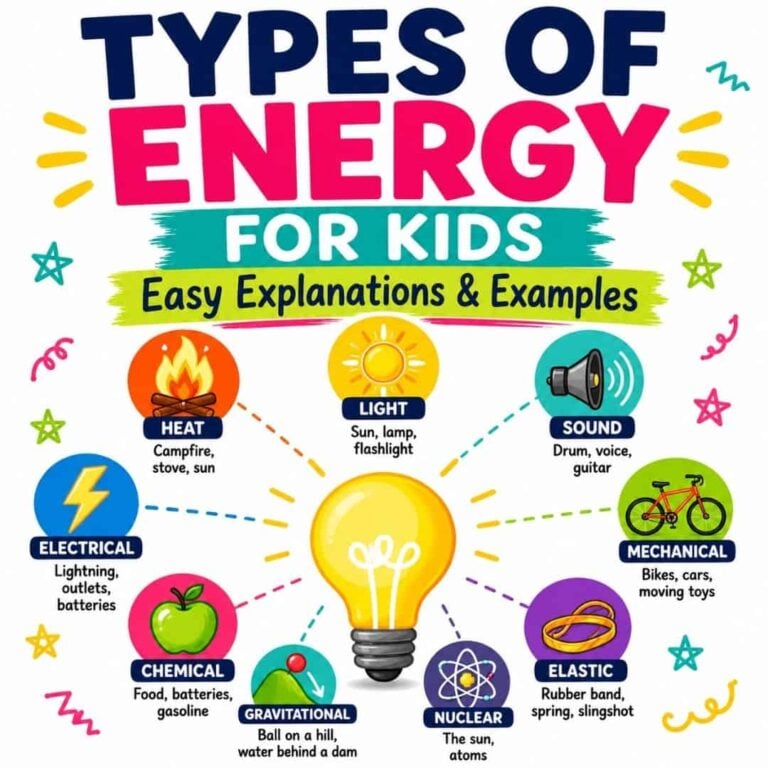
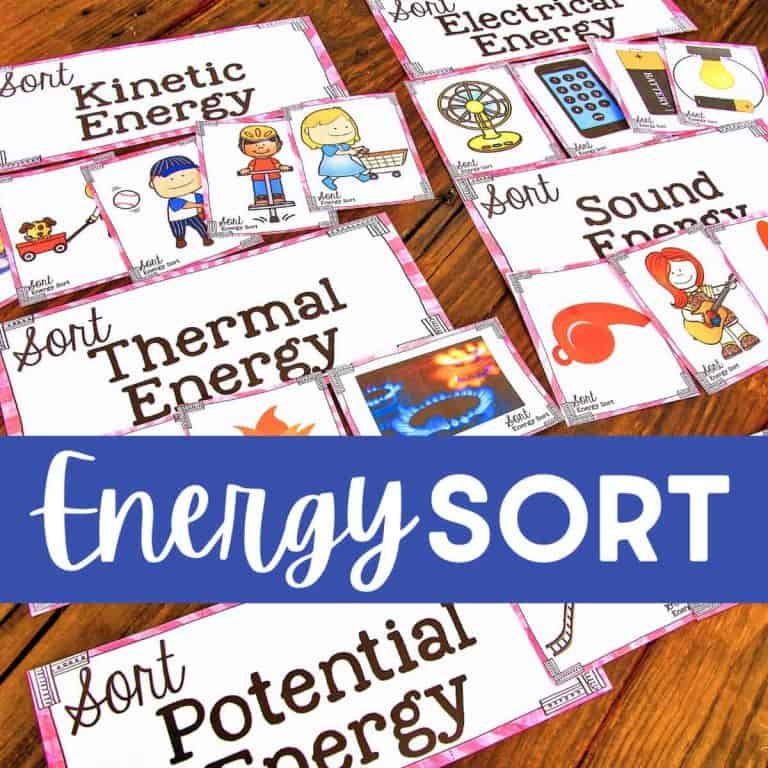
- Sort Different Types of Energy
Here is an example of the Marble Mazes. In this Investigate station, students investigate potential and kinetic energy by building marble mazes. They will then answer questions about their designs and what they learned during the investigation.

Find out more about the Energy Science Stations in this blog post.

ENERGY 5E UNITS
The Energy 5E Units use an inquiry method to engage students in learning about new science concepts.
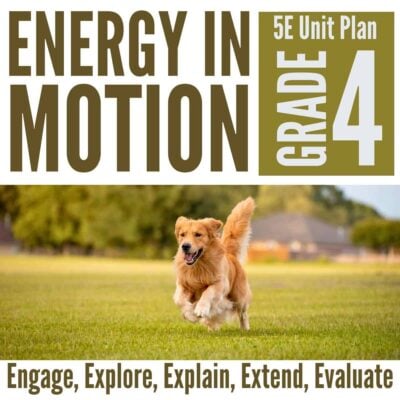
The 5E Units move through a process of engaging students, exploring the topic, explaining the scientific ideas, extending the learning, and evaluating student learning.
MORE INFORMATION ABOUT RESOURCES TO TEACH ABOUT ENERGY

ADDITIONAL ENERGY TEACHING IDEAS AND LESSONS
While we have written resources for teaching about Energy, there are many more energy teaching ideas that you can use in your classroom without purchasing our units and science stations. Below are ideas for demonstrations and experiments, books, and videos to enhance your science lessons.
DEMONSTRATIONS AND EXPERIMENTS FOR LEARNING ABOUT ENERGY
Below are several demonstrations and experiments for learning about energy that your elementary students will love.
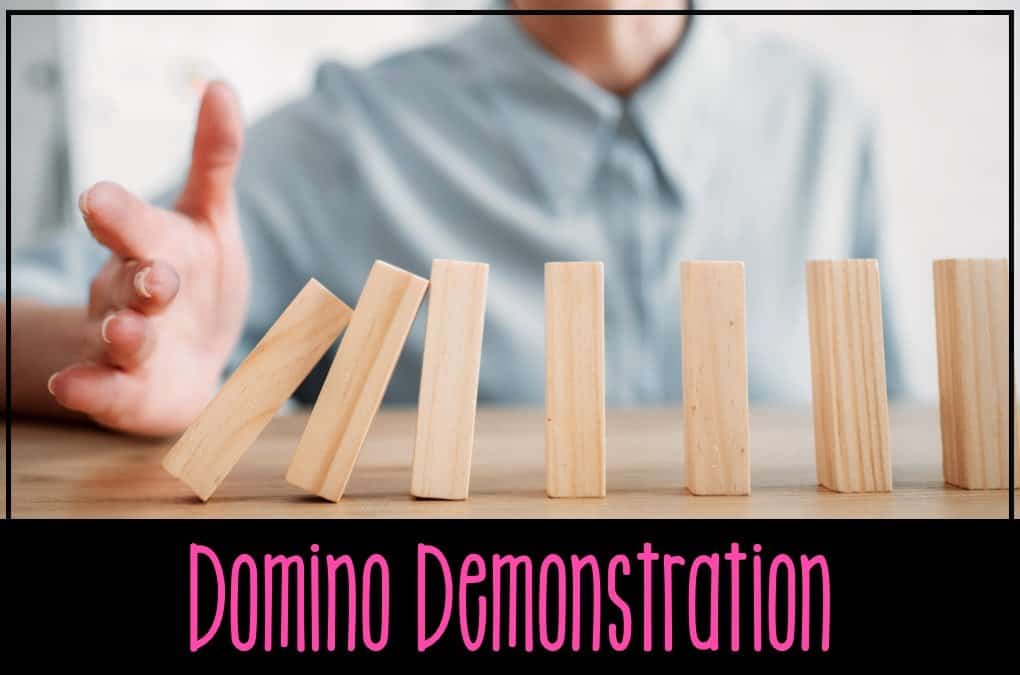
SET UP DOMINOES
Dominoes are a great demonstration of Energy Transfer. Students can learn hands-on about potential and kinetic energy.
LEMON BATTERY
This fun experiment from Steam Powered Family demonstrates how chemical energy can be converted into electrical energy.
SOLAR OVEN S’MORES
We have an in-depth science station where students make a solar oven and bake a sweet treat! This station is part of our Natural Resources Unit.
In this science station, students learn about light and thermal energy. It might be a little slow, but it’s worth the wait.

SOLAR UPDRAFT TOWER
This is another great experiment that demonstrates energy transfer. Here, students will learn how solar energy can be converted into kinetic energy. It’s simple and fun!
MAKE A CATAPULT
Catapults are easy and fun experiments that demonstrate the concepts of potential and kinetic energy. This is also a great STEM challenge for students to construct the best catapults under constraints and material limitations. Students can test different strengths of the catapult, different lengths of levers, and different weights of projectiles.
SHOOTING MARBLES
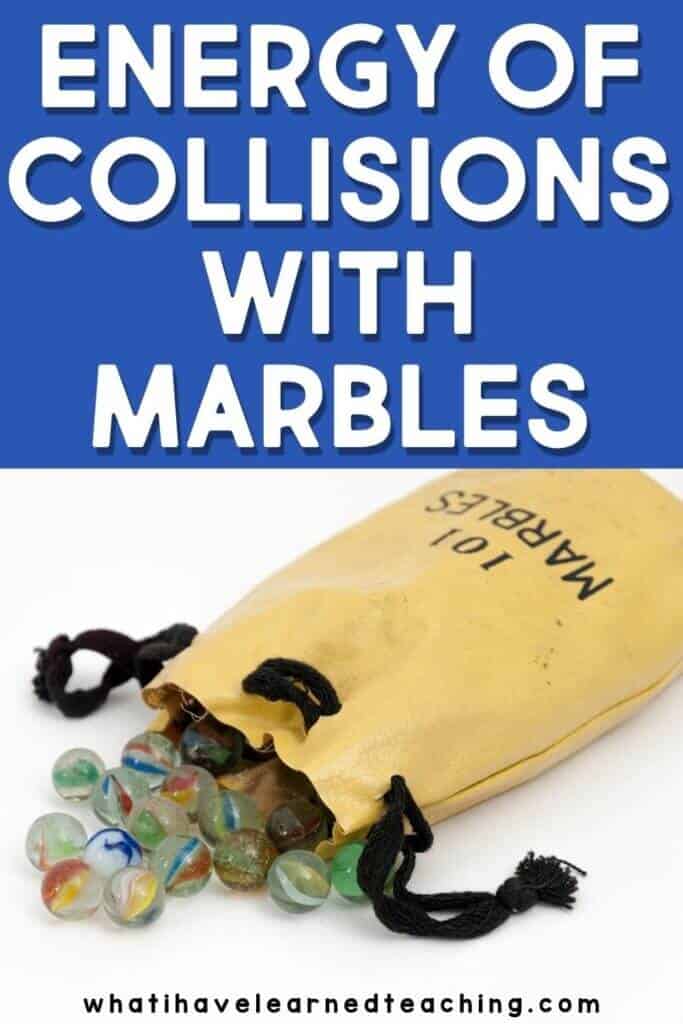
What happens when you play marbles and “shoot” one marble into another? This simple and fun game is a great demonstration on the Energy of Collisions and how kinetic energy can be transferred from one object to another.
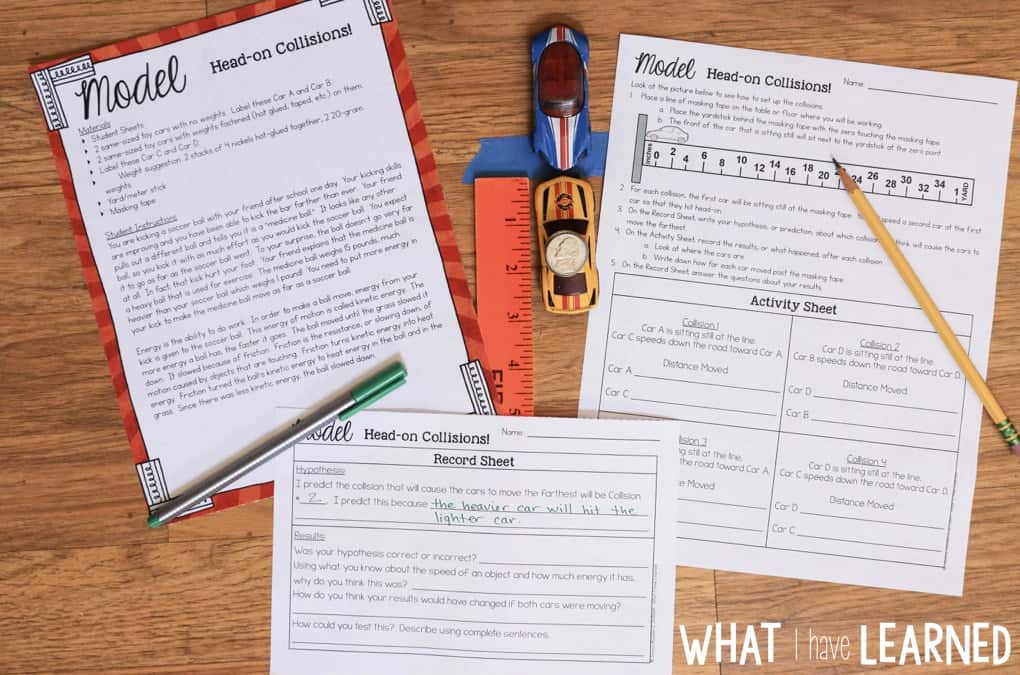
This “shooting marble” activity is similar to our science station about Head-On Collisions. In this station, students model what happens when cars hit each other, using model cars, of course! Students investigate the law of conservation of energy.
HULA HOOPS
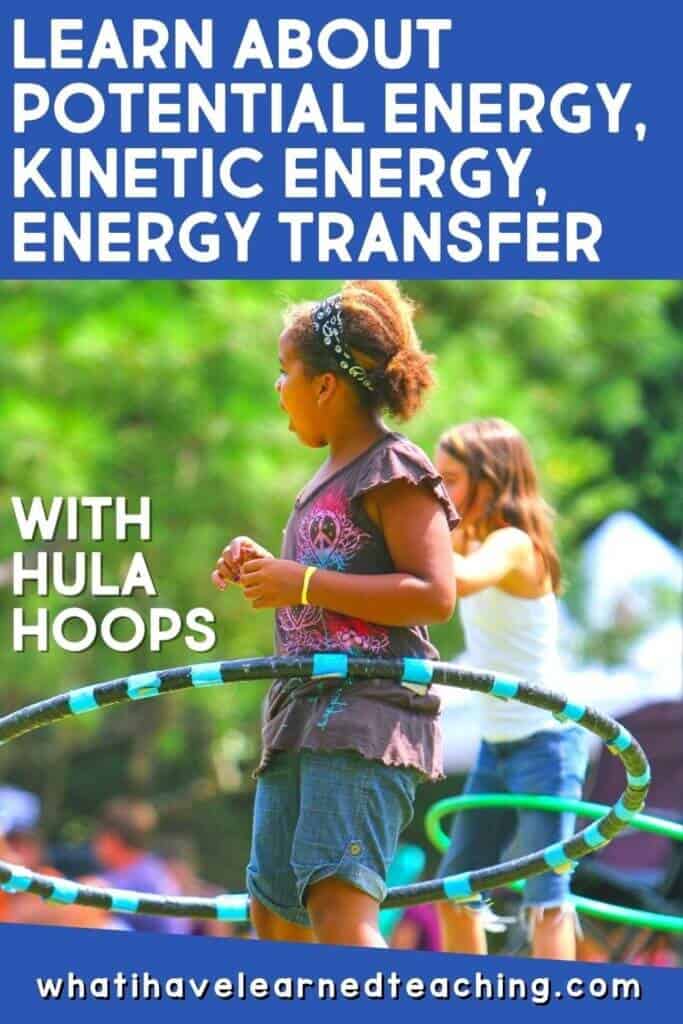
A hula hoop is a fun toy that can teach students a lot about energy. Students will learn about potential energy, kinetic energy, energy transfer, and the effect that an object’s speed has to the amount of energy it possesses.
BALLOON RACES
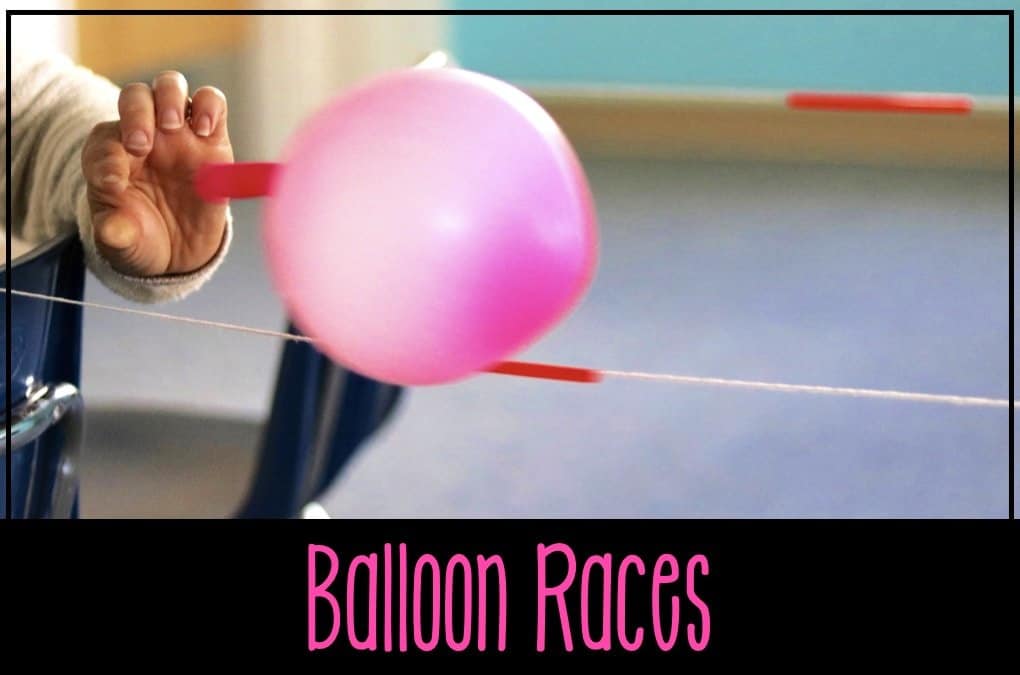
Balloon races are fun and great for demonstrating the relationship between speed and energy. After your students finish their race, they should know who won and why they won. What made one balloon go faster than the other?
We have a third-grade set of science stations about Force and Motion that complement the 4th grade Energy stations. One of the stations has students race balloons and analyze why one balloon wins the race.
COTTON BALL LAUNCHER
The cotton ball launcher is a great way to explore the concepts of potential and kinetic energy, energy transfer, and the conservation of energy. Your students will love this one.
RUBBER BAND CAR
This is another great demonstration of potential and kinetic energy. Students will have fun designing their cars and figuring out the best way to overcome obstacles with the material limits they have.
Lift a Load
Students can use the principles of kinetic and energy transfer to lift a load. Students use water to create energy and use hydropower to lift an object.
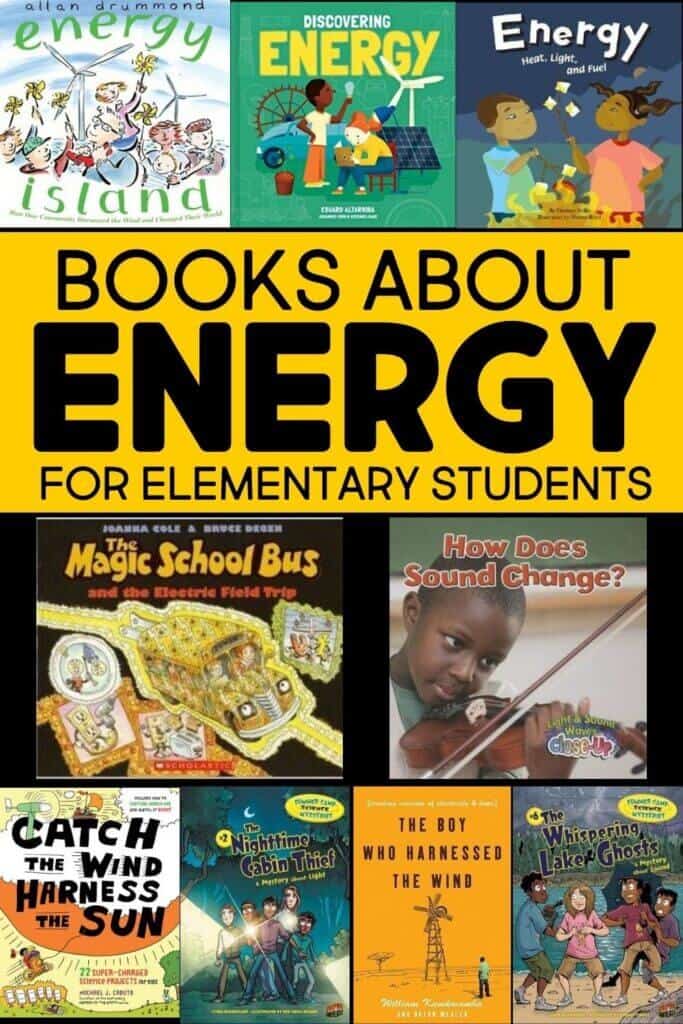
BOOKS TO TEACH ABOUT ENERGY
Read alouds are a great way to pique students’ interest in a new topic. They also help students develop vocabulary and build background knowledge. Consider building a library of books for each science topic and allow students some science reading time!
Here are a few of our favorite Energy science books!
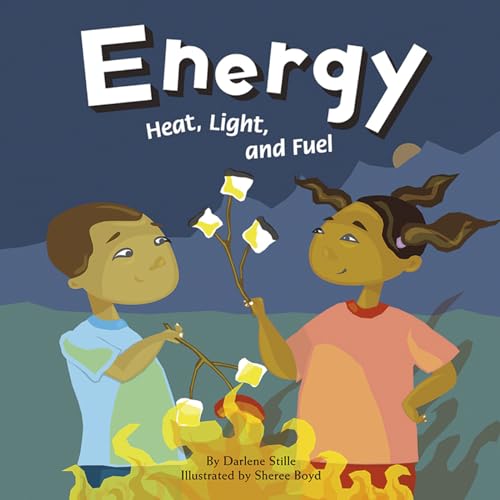
Energy: Heat, Light, and Fuel is a fun introduction to the basics of energy concepts. Students will learn all about the different types of energy including chemical energy, kinetic energy, and solar energy. It includes hands-on experiments to make the learning experience come alive.

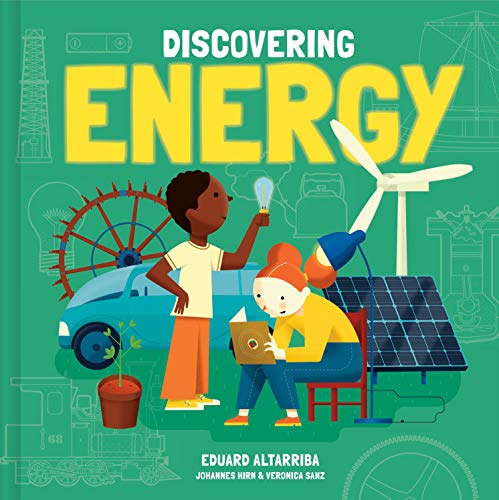
Discovering Energy (Discovering Big Ideas)
This in-depth exploration of energy is great for students ages 8-12. The wonderful illustrations and simple explanations cover a multitude of energy concepts including solar, potential and kinetic, wind, water, electricity, muscle movement, thermal, steam, fossil fuels, engines, electromagnetism, and more.
The Boy Who Harnessed the Wind
The inspiring true story of William KamKwamba and his dream of building a windmill to bring electricity and running water to his family farm is a must read for everyone. Not only will students learn about the concepts of wind energy and electricity, but they will experience William’s dreams and hope that drove him to never give up. His determination changed his world, and it might change your students’ world, too.

Do you know the science behind sound? Now you and your students will discover the world of sound waves, echoes, volume, and pitch. This is an awesome introduction to sound energy that students will enjoy.

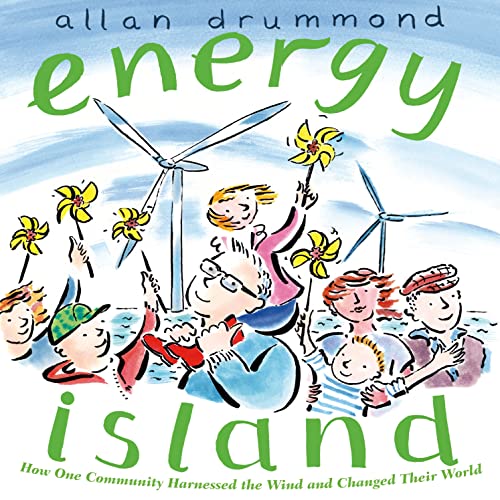
Energy Island: How One Community Harnessed The Wind and Changed Their World
The little Danish Island of Samso has become almost entirely energy-independent in only 10 years. Not only that, but they accomplished something the rest of the world hopes to achieve one day – they reduced their carbon emissions by 140%! Students will be inspired by this true story about how one windy island became known as Energy Island.
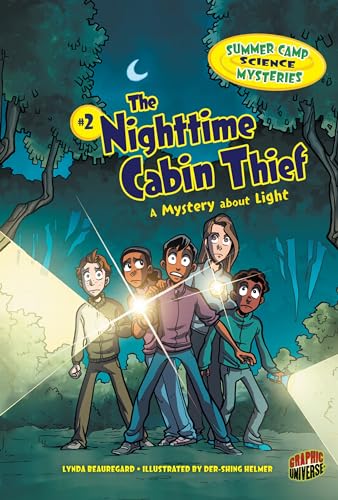
The Nighttime Cabin Thief: A Mystery About Light
Are your students ready to become “science detectives” and help Camp Dakota solve the Light Mystery? This engaging graphic novel includes experiments that students can do on their own to enhance their understanding of the concepts about light energy.
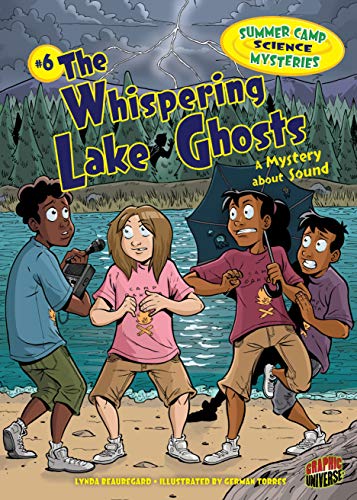
The Whispering Lake Ghosts: A Mystery About Sound
The kids of Camp Dakota are back with another mystery – this time, it’s ghosts! Or, is it? Students get to play “science detectives” again and help solve the mystery of sounds in this fun graphic novel. Experiments are included that students can do on their own and learn more about sound.
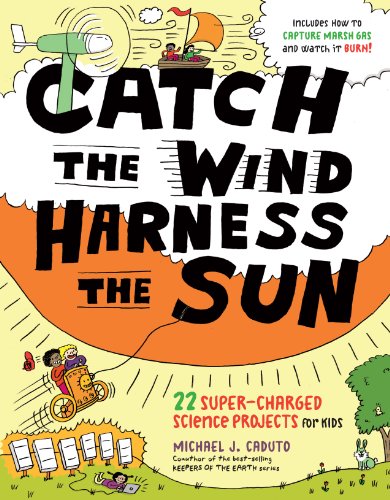
Catch the Wind Harness the Sun: 22 Super-Charged Projects for Kids
22 exciting projects to engage students in learning about and using renewable energy. The experiments will have students fighting climate change in practical, hands-on ways.
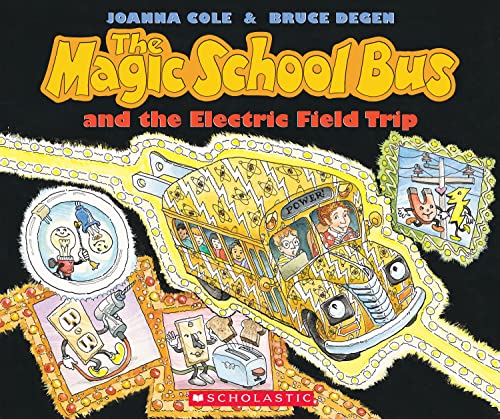
The Magic School Bus and the Electric Field Trip
Ms. Frizzle and her class are back to learn, and to teach, about electricity. A favorite of students for years, the Magic School Bus offers an exciting, engaging adventure as students learn all about the concepts of electrical energy. The 20th-anniversary re-release includes updated scientific concepts.
VIDEOS ABOUT ENERGY
We have included videos and activities for Energy in our Science Stations. Those activities include differentiated questions and ways for students to respond to the videos.
Here are links to other great videos that your students will enjoy as they learn more about Energy, Energy Transfer, and Conservation of Energy.
SciShow
SciShow offers a lot of great videos on a lot of different science concepts, including this one that gives an overview of Energy including Types of Energy.
SciShow Kids
Just like SciShow, Scishow Kids is a great set of videos on all types of science concepts that you’ll want to check out with your students. A couple that you might want to include in your Energy lessons are the ones on Sound and Heat.
TED-ED
This video from TED-ED is fabulous for teaching about batteries!
Learning Junction
Learning Junction is another good source of videos for a lot of different subjects. This video on Electricity is a great way to teach your students about electrical energy.
Dr. Binocs
Need a simple way to teach your students about Light Energy? Dr. Binocs is the answer! This video shares some important facts about light that your students will remember.
MYSTERY SCIENCE RESOURCES
Mystery Science is always a great place to go for videos to help enhance your lessons. Here are a few that help teach Energy concepts:
- Speed and Energy
- Collisions and Energy Transfer
- Energy Transfer and Engineering
- What if there were no electricity?
QUICK LINKS TO ENERGY TEACHING RESOURCES
-
 Product on sale4th Grade NGSS Science Station Yearlong BUNDLEOriginal price was: $287.57.$159.00Current price is: $159.00.
 -
-
-
-
-
-
-
-
-
-




Jessica BOschen
Jessica is a teacher, homeschool parent, and entrepreneur. She shares her passion for teaching and education on What I Have Learned. Jessica has 16 years of experience teaching elementary school and currently homeschools her two middle and high school boys. She enjoys scaffolding learning for students, focusing on helping our most challenging learners achieve success in all academic areas.