

Natural Resources – Fuel for the Future BUNDLE
$14.78
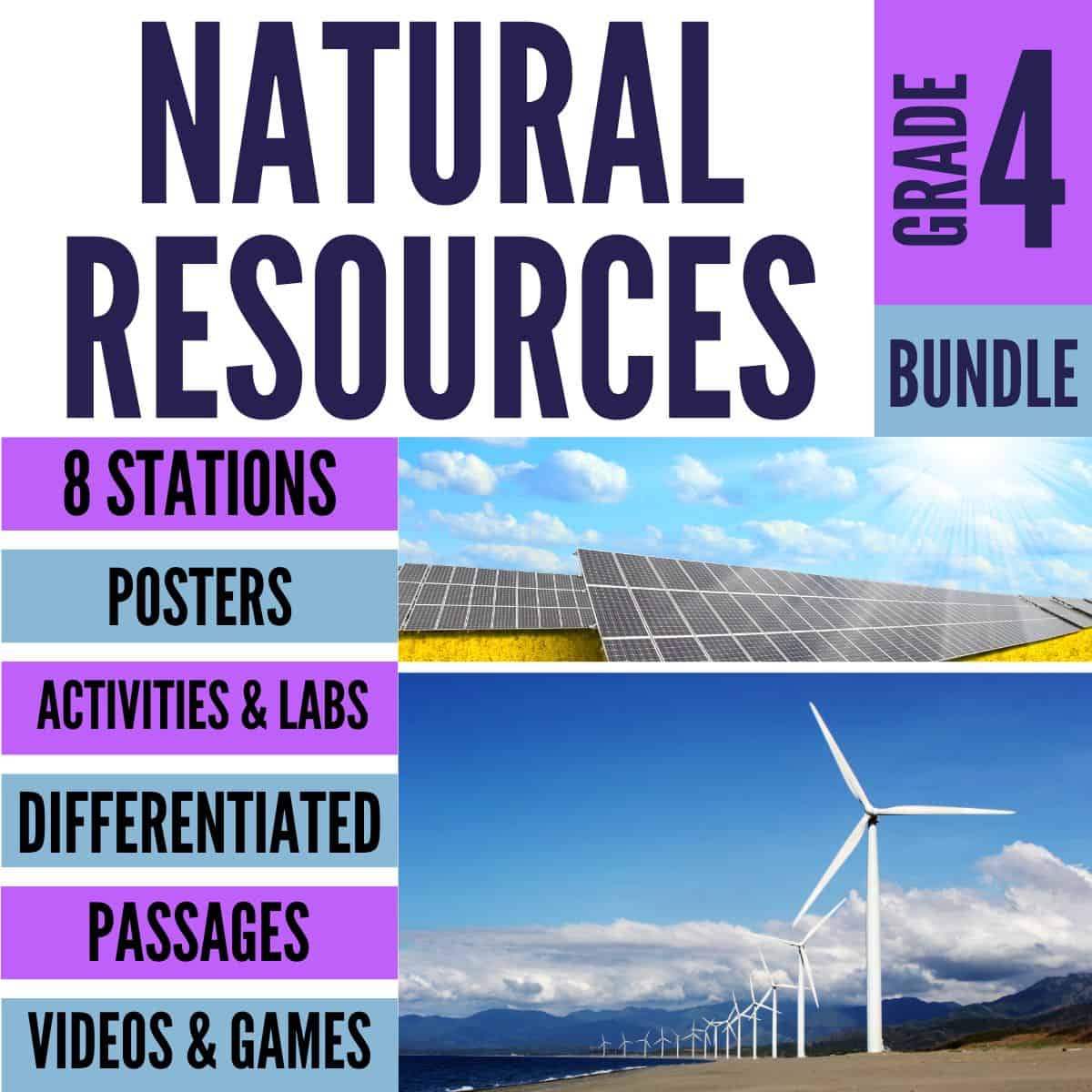
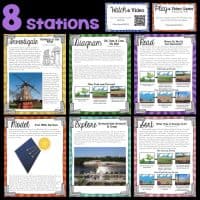
These Natural Resources Fourth Grade Next Generation Science Standards include 8 different science stations where students deepen their understanding of renewable and nonrenewable energy.

These Natural Resources Fourth Grade Next Generation Science Standards include 8 different science stations where students deepen their understanding of renewable and nonrenewable energy. The focus is on 4-ESS3.A. Concepts include different sources of energy, fossil fuels, alternative sources of energy, saving energy, wind power, renewable and nonrenewable energy, solar energy, and hydropower.
Natural Resources Stations Include
- Vocabulary Cards in two formats with and without pictures.
- Watch – Students watch one of two videos and then answer questions about the videos. Videos include: different sources of energy and fossil fuels.
- Play – Students play a video game and learn about alternative energy sources or sources of energy and how to save energy around the home. Students answer questions to reinforce the new learning.
- Investigate – Students read about wind power. They participate in a windmill design challenge in order to investigate this. Students then answer questions to reinforce the concepts learned.
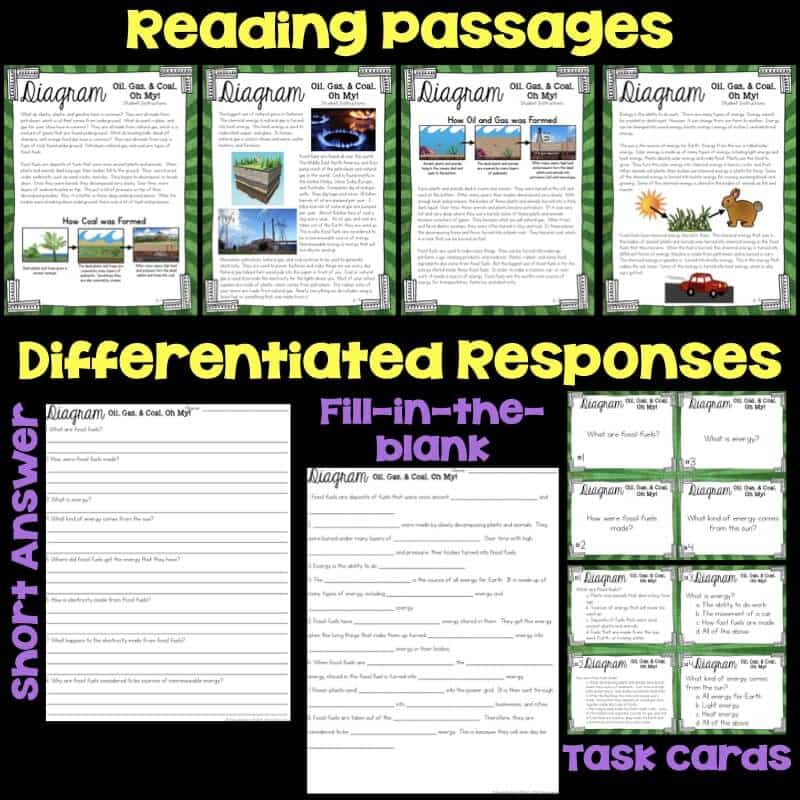
- Diagram – Students read about how fossil fuels are formed. They draw a diagram of the steps of fossil fuel formation and answer questions in order to reinforce what they have learned.
- Read a Passage – Students read about renewable and nonrenewable energy sources. They answer questions in order to reinforce what they have learned.
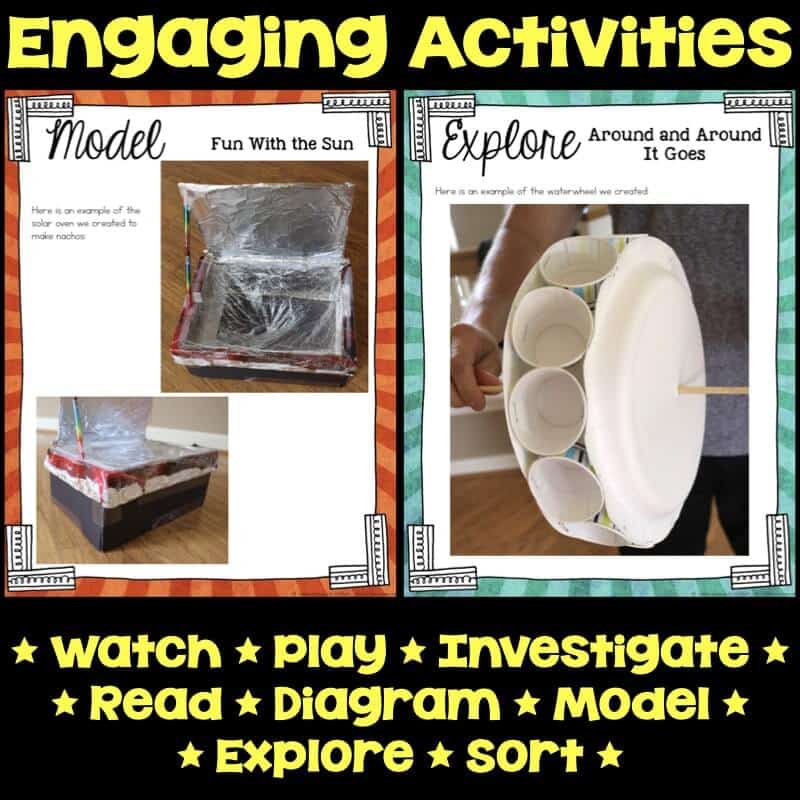
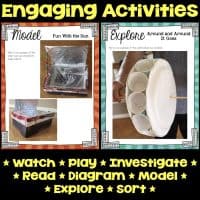
- Model – Students read about solar energy and model the use of solar energy by making a solar oven. They answer questions in order to reinforce what they have learned.
- Explore Students read about the history of the water wheel in order to explore hydropower. They construct a water wheel. They then answer questions about the exploration.
- Sort – Students read about sources of renewable and nonrenewable energy. They sort different sources of energy into categories. Students then answer questions in order to reinforce what they have learned.
Google Classroom™️ Components Include:
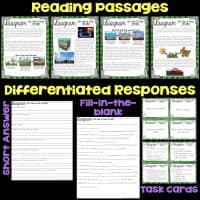
- Google Form™️ with Reading Passage & Differentiated Questions (for Watch, Investigate, Diagram, Read, Model, Explore and Sort)
- Google Slides™️ with Activity Directions & Worksheets (for Investigate, Diagram, Model, Explore, Sort)
Each station is designed to last about 15-20 minutes. Students may do one a day for eight days, two a day for four days, or any format that works for your classroom. Because there are additional activities for the Watch and Play stations, you can offer those as a choice within that station or offer them as an early finisher station, as well.
By working through this set of stations, students will gain a robust understanding of natural resources. Every Station in this set meets the Crosscutting Concept: Cause and Effect “Cause and effect relationships are routinely identified and used to explain change.” Each Station addresses how renewable and nonrenewable resources affect the environment and the available natural resources.
In Fourth Grade, students are expected to “obtain and combine information to describe that energy and fuels are derived from natural resources and their uses affect the environment” (4-ESS3-1). This correlates with the DCI 4-ESS3.A, which states, “Energy and fuels that humans use are derived from natural sources, and their use affects the environment in multiple ways. Some resources are renewable over time, and others are not.” All stations in this set meet the DCI, helping students gain an understanding of natural resources, how they make fuels, and how they affect the environment. The Engineering Practice of “Obtaining, evaluating, and communicating information” is part of each of the stations.
The Engineering DCI associated with this standard strand is ETS1.B, “Designing Solutions to Engineering Problems.” This DCI states, “Testing a solution involves investigating how well it performs under a range of likely conditions.” The Investigate station specifically addresses this standard, as students test different designs of windmills. The Model and Explore stations have options for STEM challenge that meets this Engineering DCI.
Jessica M. –
This was a great addition to our science unit. Students needed some background on natural resources and this was a great fit.
Jordan B. –
This is a great resource! I found it very helpful to my 4th graders learning, as it added onto our Natural Resources unit. Thank you!
Kasey Murphy –
Worked great with my kids! I would buy again! The absolute best!
Marialle Boles –
My students really enjoyed this and it continued to build on to their overall knowledge.
Jess Marquardt - Joy Maintained –
The activities in this bundle were wonderful for providing engaging learning opportunities for students while also embedding literacy skills into our science instruction!