Showing 1–15 of 128 resultsSorted by popularity
-

Rated 4.68 out of 5
$4.20
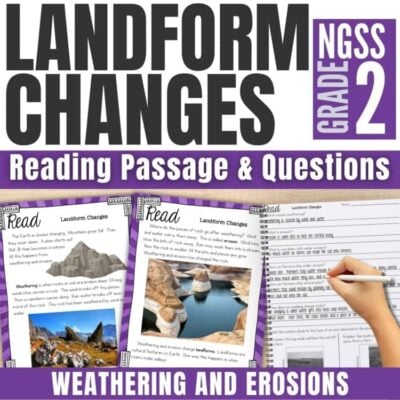
This changing landforms reading passage helps 2nd grade students understand how weathering and erosion shape Earth’s surface. Students read about how wind, water, ice, and gravity cause slow changes in landforms over time.
-
Rated 4.91 out of 5
$5.20
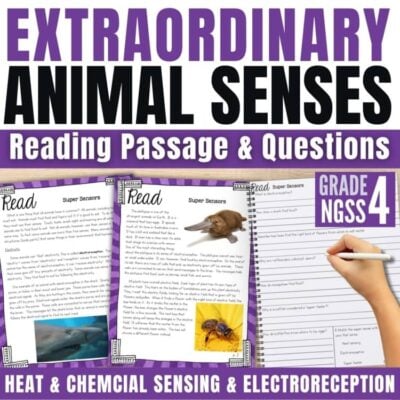
This animal senses reading passage, Super Sensors, is a READ science station for 4th grade in the Information Processing unit. Students learn about animals with enhanced senses while practicing reading comprehension skills.
-
Rated 4.72 out of 5
$3.50
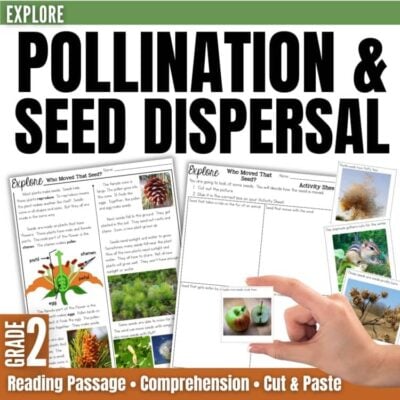
This seed dispersal sorting activity gives 2nd grade students a hands-on way to explore how seeds move by wind, water, animals, and more. Students read short informational passages and then match seed examples to how they travel.
-
Rated 4.80 out of 5
$3.95
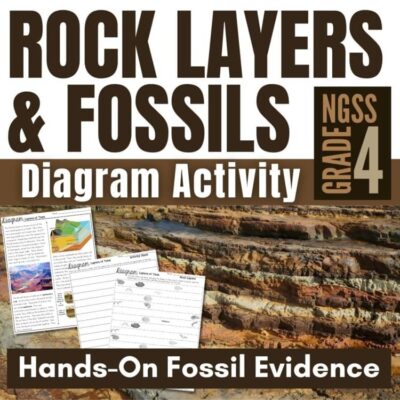
This rock layers and fossils activity helps 4th grade students understand how sedimentary layers and fossils give evidence of Earth’s past. Students read about the formation of the Grand Canyon, fossilization, erosion, and tectonic plate movement, then create a fossil rock layer diagram.
-
Rated 4.79 out of 5
$5.59
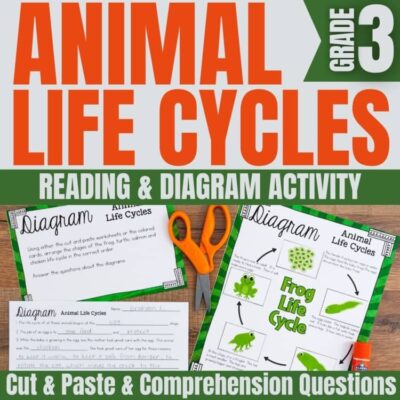
These animal life cycles diagrams help 3rd grade students explore the growth and development of frogs, sea turtles, chickens, and salmon. Students use cut-and-paste worksheets, color-coded cards, and comprehension questions.
-
Rated 4.81 out of 5
$4.13
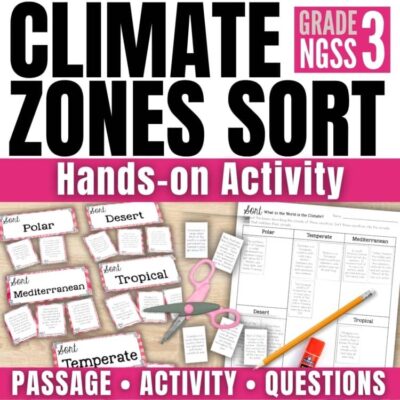
This climate zones activity helps 3rd grade students explore the world’s major climate zones through sorting, reading, and map work. It is a science station aligned to NGSS 3-ESS2.D that connects climate to living things and environments.
-
Rated 4.68 out of 5
$3.64
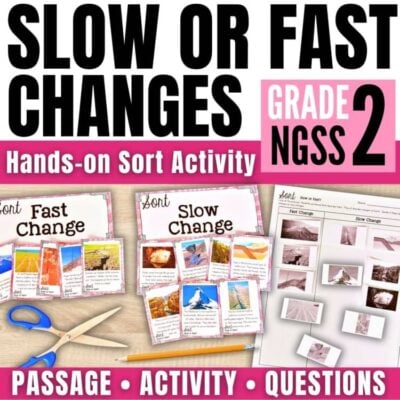
This fast and slow landform changes sort is a SORT science station from the History of the Earth unit for 2nd grade. Students read about slow and fast changes to Earth’s surface and then classify landforms as shaped by gradual or sudden forces.
-
Rated 4.91 out of 5
$3.50
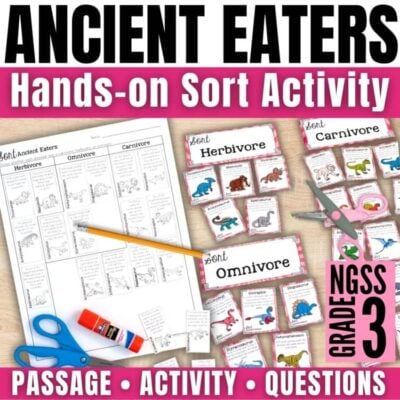
This herbivore carnivore omnivore sort helps 3rd grade students explore prehistoric life. Students analyze the diets, physical traits, and adaptations of dinosaurs and ancient animals through sorting, reading, and written responses.
-
Rated 4.67 out of 5
$3.25
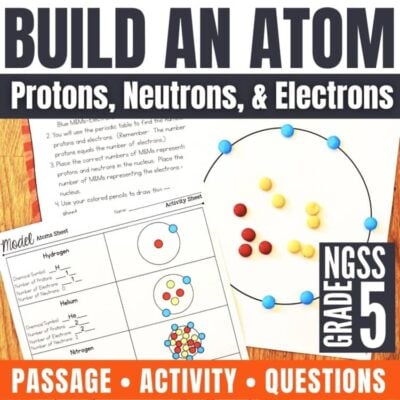
This build an atom activity helps 5th grade students explore the parts of an atom through hands-on modeling. Students use M&Ms or buttons to build models of different elements, and the station is aligned to NGSS 5-PS1-1 and 5-PS1-4.
-
Rated 4.88 out of 5
$9.50
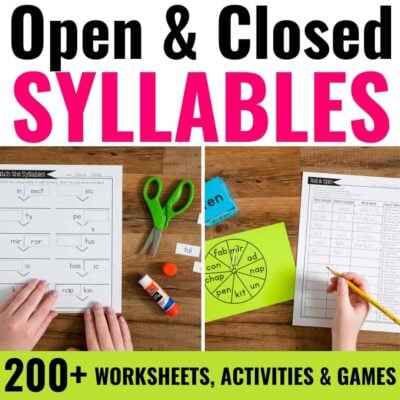
This unit focuses on syllabic patterns for VCCV, VCV, VCCCV. Included are some consonant digraphs and blends, as well as some VCE patterns in one of the syllables. This unit is perfect for students who know how to read cvc and vce words, but struggle with two-syllable decoding.
-
Rated 4.76 out of 5
$3.90
This types of energy sort helps 4th grade students classify the forms of energy they see in everyday life. It is an NGSS 4-PS3 science station that combines short reading passages with a hands-on sorting activity.
-
Rated 4.85 out of 5
$4.95
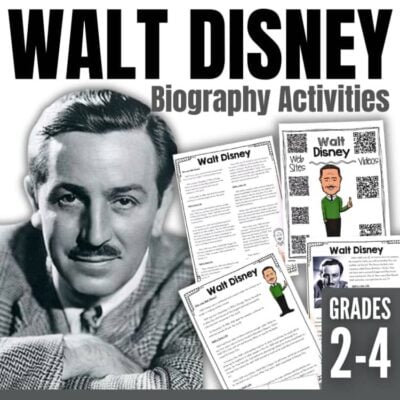
This Walt Disney biography resource combines reading comprehension, biography writing, vocabulary, and research skills in one cross-curricular pack. Students learn about Walt Disney’s life and accomplishments through a reading passage, graphic organizers, comprehension activities, and report writing pages, with print and digital versions included.