Showing 1–15 of 61 resultsSorted by popularity
-
Rated 4.77 out of 5
$5.24
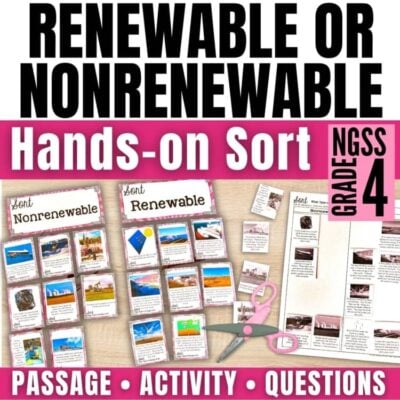
This renewable energy sort is a SORT science station for 4th grade. Students read a passage and then sort energy sources into two categories: renewable and nonrenewable.
-

Rated 4.68 out of 5
$4.20
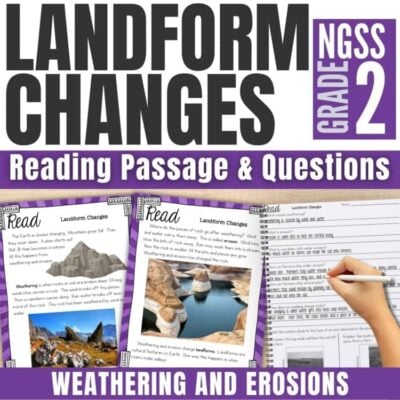
This changing landforms reading passage helps 2nd grade students understand how weathering and erosion shape Earth’s surface. Students read about how wind, water, ice, and gravity cause slow changes in landforms over time.
-
Rated 4.80 out of 5
$3.95
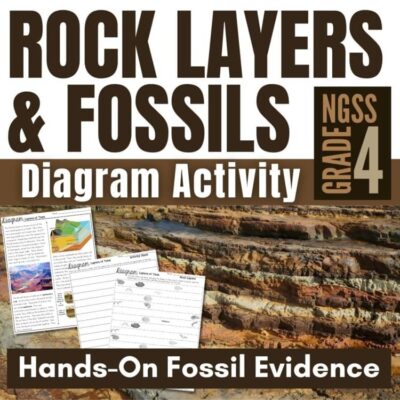
This rock layers and fossils activity helps 4th grade students understand how sedimentary layers and fossils give evidence of Earth’s past. Students read about the formation of the Grand Canyon, fossilization, erosion, and tectonic plate movement, then create a fossil rock layer diagram.
-
Rated 4.81 out of 5
$4.13
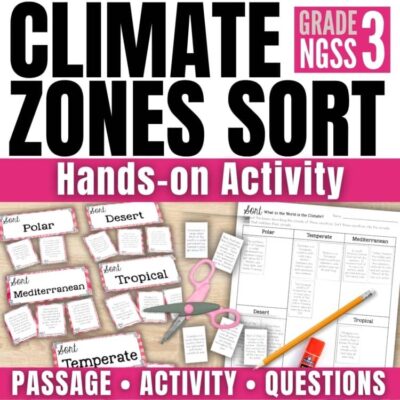
This climate zones activity helps 3rd grade students explore the world’s major climate zones through sorting, reading, and map work. It is a science station aligned to NGSS 3-ESS2.D that connects climate to living things and environments.
-
Rated 4.86 out of 5
$3.56
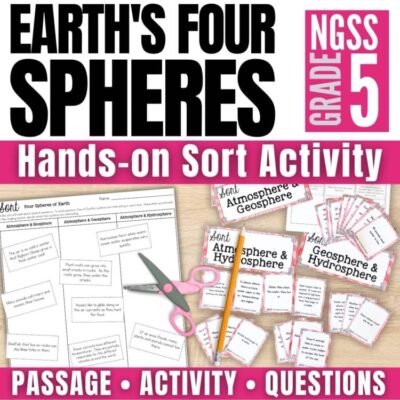
This Earth systems card sort helps 5th grade students understand the geosphere, biosphere, hydrosphere, and atmosphere through a hands-on sorting activity. It is aligned to NGSS 5-ESS2-1.
-
Rated 4.68 out of 5
$3.64
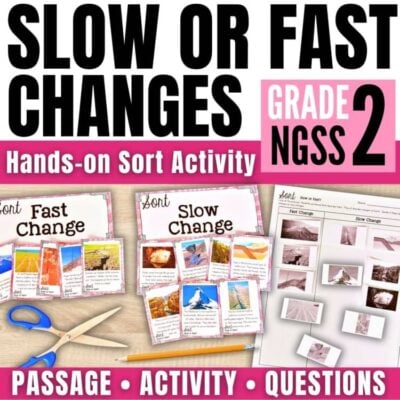
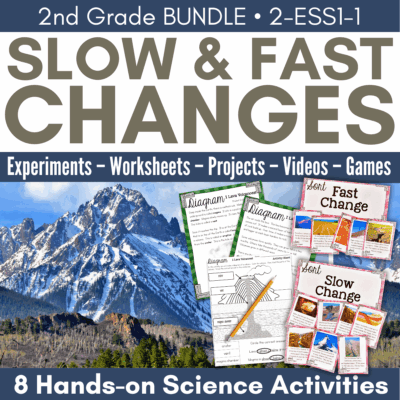
This fast and slow landform changes sort is a SORT science station from the History of the Earth unit for 2nd grade. Students read about slow and fast changes to Earth’s surface and then classify landforms as shaped by gradual or sudden forces.
-
Rated 5.00 out of 5
$3.45
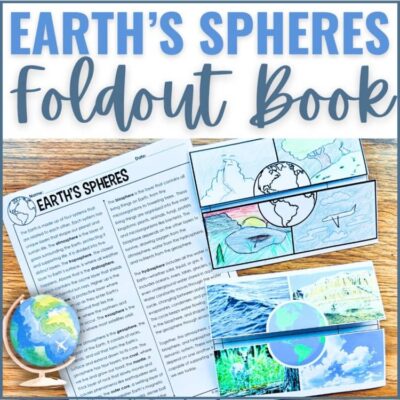
This spheres of Earth foldable gives 5th grade students a tactile way to learn about the atmosphere, biosphere, hydrosphere, and geosphere. Students cut, fold, and assemble their own hinge book, then fill it with what they learn.
-
Rated 4.94 out of 5
$11.88
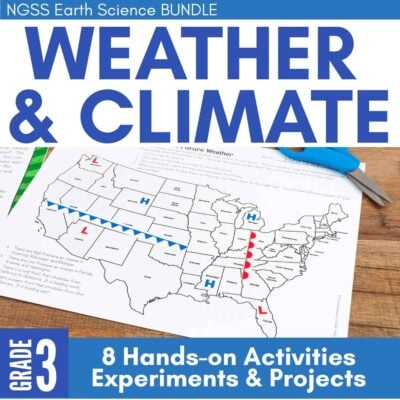
The focus is on NGSS 3-ESS2.D & 3-ESS3.B and includes concepts such weather, climate, severe weather, how clouds are formed, meteorology and weather maps, types of precipitation, meteorological tools, and climate zones.
-
Rated 5.00 out of 5
$5.00
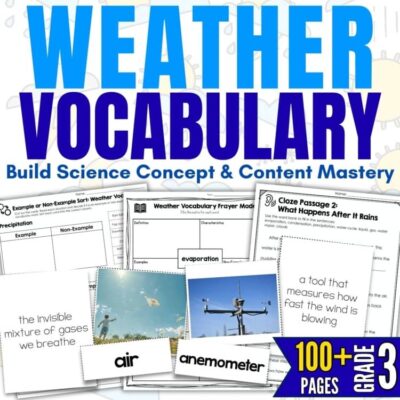
These weather vocabulary activities help 3rd grade students build a strong foundation in the language of weather. The 120+ page unit moves from introducing words to applying them in real-world scenarios and critical thinking tasks.
-
Rated 4.96 out of 5
$11.66
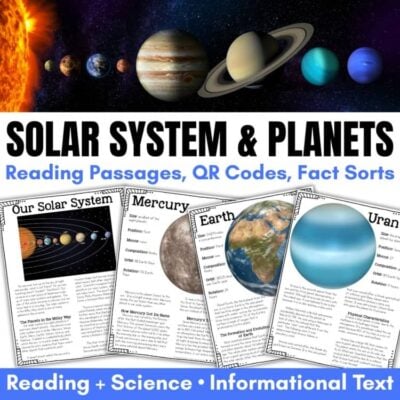
These solar system reading passages combine informational articles, graphic organizers, and research tools so upper elementary students can learn about the planets, stars, sun, and moon. Each article comes in two differentiated levels, which makes the unit work for reading, writing, and science at once.
-
Rated 4.82 out of 5
$15.94
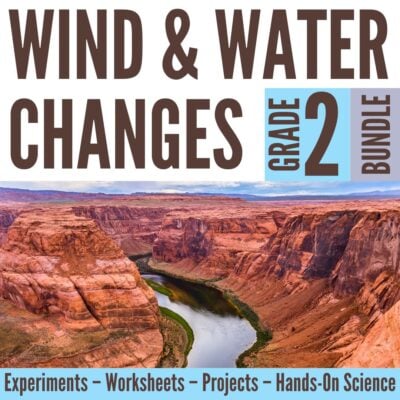
Teach how wind and water change the shape of the land with 8 hands-on second grade NGSS science stations. Students explore weathering, erosion, landforms, models, solutions, vocabulary, videos, games, and differentiated response options aligned to 2-ESS2-1 and DCI 2-ESS2.A.
-
Rated 4.63 out of 5
$12.93
In this set of science stations, students learn about how plate tectonics, earthquakes and volcanoes and how they affect the shape of the land around us. It includes 8 different science stations where students deepen their understanding of plate tectonics. All stations in this set meet the DCI 2-ESS1-1 and incorporate ETS1.A.
-
Rated 4.82 out of 5
$11.24
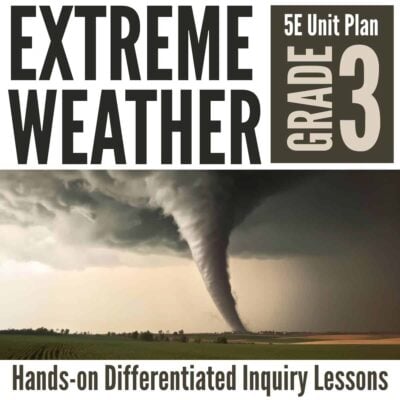
Engage your 3rd grade students with this NGSS-aligned 5E Extreme Weather Unit! Includes lesson plans, worksheets, vocabulary, experiments, and activities covering hurricanes, tornadoes, blizzards, and drought—perfect for hands-on science learning.
-
Rated 4.93 out of 5
$16.60
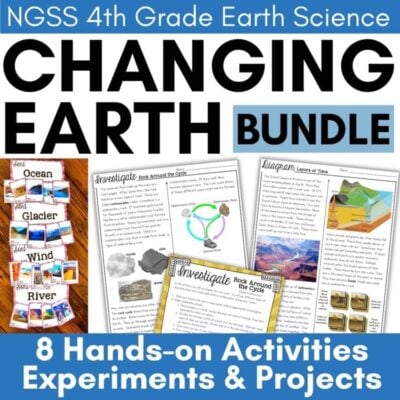
The Changing Earth – The History of Planet Earth Fourth Grade Science Stations includes 8 different science stations where students deepen their understanding of how the earth changes over time. The focus is on NGSS 4-ESS1.C and concepts include earthquakes, mountains, fossils, layers of sedimentary rock, weathering, rock cycle, types of rocks, geologists, fossilization, and erosion.
-
Rated 4.93 out of 5
$3.50
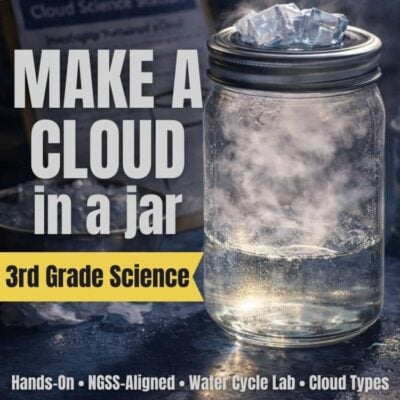
This cloud in a jar activity lets 3rd grade students watch the water cycle happen in front of them. It is an NGSS 3-ESS2.D weather and climate station that blends reading, hands-on observation, and science writing.