
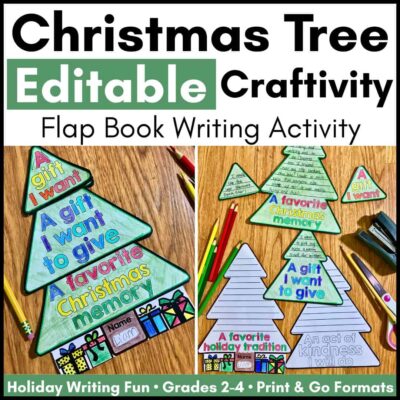
 Christmas Tree Craftivity Flap Book | Holiday Writing Activity
  The Real Me Halloween Craft for October
 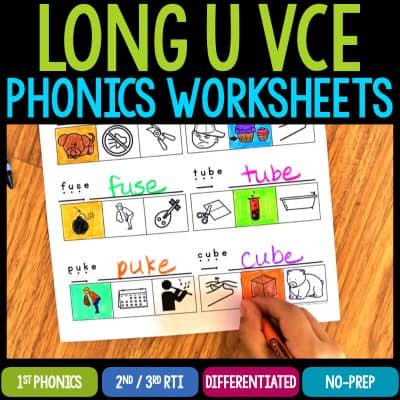 Long U VCE Worksheets and Activities No-Prep Phonics Worksheets
  Biography Research QR Codes for Scaffolding Students' Research


Wind and Water Changes Science Stations for Second Grade NGSS
$12.78
Teach how wind and water change the shape of the land with 8 hands-on second grade NGSS science stations. Students explore weathering, erosion, landforms, models, solutions, vocabulary, videos, games, and differentiated response options aligned to 2-ESS2-1 and DCI 2-ESS2.A.
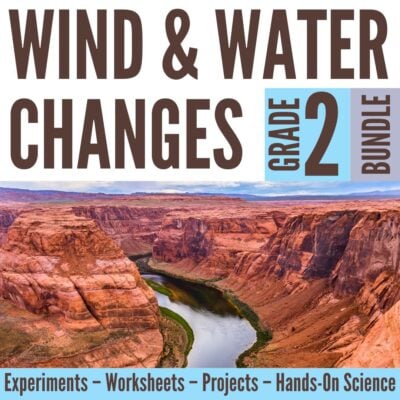
Help students build a deeper understanding of how wind and water change the shape of the land with this set of interactive second grade science stations. Through videos, games, hands-on investigations, diagrams, reading passages, modeling tasks, sorting activities, and response pages, students explore weathering, erosion, landforms, and solutions to slow or prevent land changes.
These stations are designed to support 2-ESS2-1 and DCI 2-ESS2.A, helping students understand that wind and water can change the shape of the land. The activities also incorporate engineering design as students think about erosion problems, test ideas, build models, and compare possible solutions.
What’s Included
This Wind and Water Changes science station resource includes:
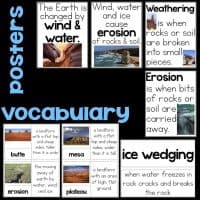
- Big Idea Posters that explain the core concepts
- Vocabulary cards in two formats
- Vocabulary cards with pictures
- Vocabulary cards without pictures
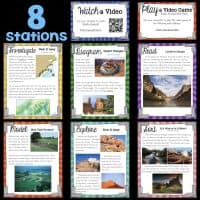
- 8 science stations
- Student response options for each station
- Worksheets and science journal response options
- MP3 audio for all text passages
- Hands-on activities
- Reading passages
- Sorting activities
- Modeling and diagram activities
- Video and game-based learning stations
Science Stations Included
Watch
Students watch a video about erosion or landforms, then answer questions to reinforce what they learned.
Play
Students play a game about weathering and erosion or landforms, then answer questions to review and apply the science concepts.
Investigate
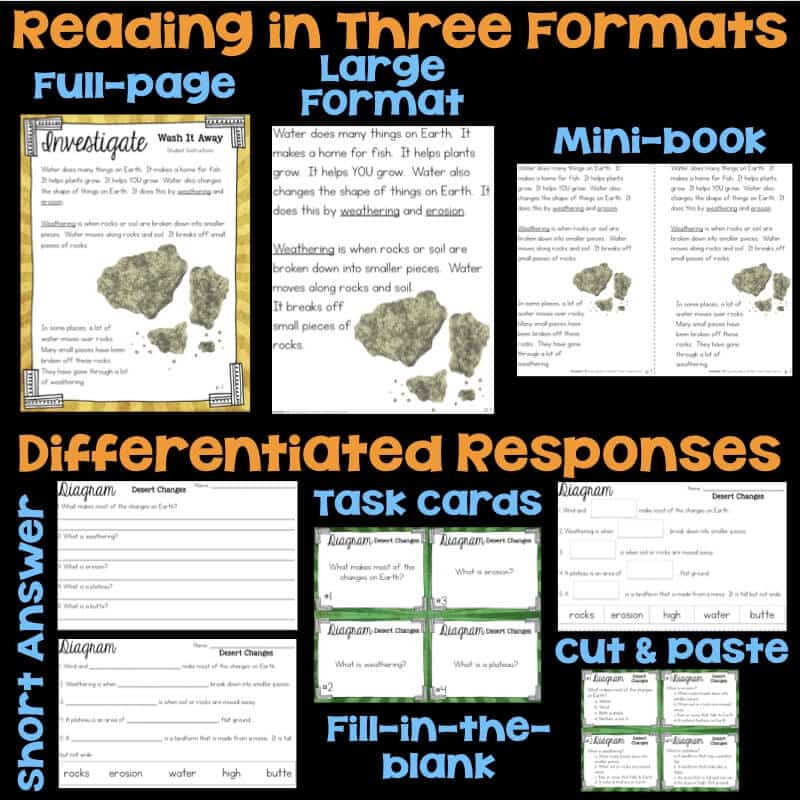
Students read about weathering and erosion caused by water, complete a hands-on investigation, and answer questions about their observations.
Diagram
Students read about changing desert landforms caused by weathering and erosion, assemble a diagram, and answer questions to show understanding.
Read a Passage
Students read about how weathering and erosion change landforms, then answer comprehension questions connected to the science content.
Model
Students read about problems caused by weathering and erosion, then draw models of possible solutions to erosion problems.
Explore
Students read about and explore wind erosion, then answer questions to connect their observations to the concept.
Sort
Students read about wind and water erosion, sort picture examples into wind erosion and water erosion categories, and answer follow-up questions.
MP3 Audio Included
This resource includes MP3 audio for all text passages. Audio can be accessed through a website or installed on classroom devices so students can listen to the texts read aloud.
This is especially helpful for supporting developing readers, multilingual learners, students who benefit from auditory input, and independent station work.
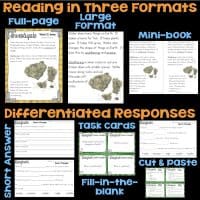
Differentiated Response Options
Each station includes four different response formats so you can choose what works best for your students:
- Short answer questions
- Fill-in-the-blank questions
- Task cards with short answers
- Task cards with multiple choice
The variations are similar, making it easy to differentiate without changing the station experience. Students may respond in science journals, or you can use the included worksheets.
Skills Covered
Students practice and build understanding of:
- Weathering
- Erosion
- Wind erosion
- Water erosion
- Landforms
- How land changes over time
- How wind and water shape the land
- Comparing solutions to erosion problems
- Developing and using models
- Designing solutions
- Making observations
- Reading science texts
- Sorting examples by category
- Using science vocabulary
- Communicating scientific understanding
Ways to Use This Resource
These science stations are flexible and can be used in many classroom formats:
- One station per day for 8 days
- Two stations per day for 4 days
- Science rotations
- Small group science activities
- Whole-class station rotations
- NGSS Earth Science lessons
- Science centers
- Review after a landforms or erosion unit
- Hands-on science investigations
- Science journal activities
Each station is designed to last about 15–20 minutes. The Watch and Play stations include additional activity options that can be used as choices within the station or as early finisher activities.
NGSS Standards Connection
This resource supports second grade NGSS Earth Science standards, especially:
- 2-ESS2-1: Compare multiple solutions designed to slow or prevent wind or water from changing the shape of the land.
- DCI 2-ESS2.A: Wind and water can change the shape of the land.
The Investigate, Model, and Explore stations also connect to engineering design as students think about solutions, compare ideas, and explore how designs may slow or prevent erosion.
Science and Engineering Practices
This station set supports key NGSS science and engineering practices, including:
- Developing and using models
- Constructing explanations
- Designing solutions
- Comparing multiple solutions to a problem
- Obtaining, evaluating, and communicating information
- Using observations and texts to answer science questions
The Investigate, Diagram, Model, and Explore stations give students opportunities to use models, observe simulations, and explain patterns of weathering and erosion.
Why Teachers Love It
Teachers love this resource because it provides a complete, engaging way to teach wind and water changes without relying on one activity type. Students read, watch, play, investigate, sort, diagram, model, and discuss as they build understanding of weathering and erosion.
The differentiated response formats and included MP3 audio make the stations easier to adapt for a variety of learners, while the NGSS alignment keeps the activities focused on important second grade Earth Science standards.
These Wind and Water Changes Science Stations are a hands-on second grade NGSS Earth Science resource for teaching how wind and water change the shape of the land. With 8 science stations, Big Idea Posters, vocabulary cards, MP3 audio, differentiated response pages, weathering and erosion activities, landform lessons, modeling tasks, and engineering design connections, this resource is perfect for 2-ESS2-1, science centers, Earth Science rotations, and NGSS-aligned classroom investigations.
maggie H. –
Hard to navigate
Bethani Leija Rutter –
I really love this resource. It's created well and offers hands on opportunities for students.
Katelyn M. –
This was such a fun unit to teach. My students loved it. I added some of my own hands on projects and it was perfect!
Mrs G's Classroom –
Great print and go resource - students loved working with it and it suited my unit perfectly.
Maria Andromeda D. –
Love the resource. easy to prepare. Its a print and go