


Structure & Function BUNDLE: How Organisms Live, Behave, Reproduce, Grow
$14.78
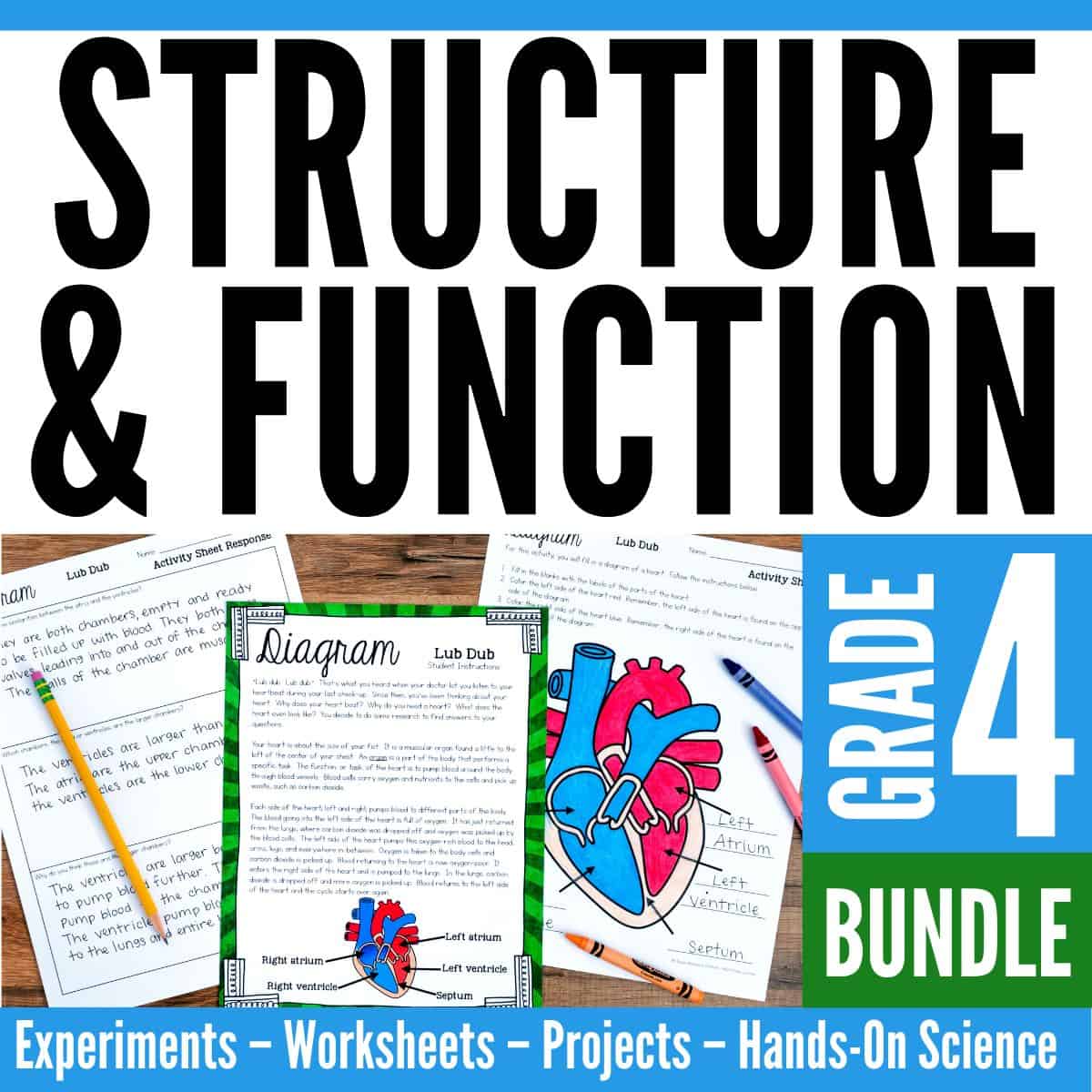
Structure & Function: How Organisms Live, Behave, Reproduce, Grow Science Stations for Fourth Grade Next Generation Science Standards include 8 different science stations where students deepen their understanding of internal and external structures and functions of plants and animals that support survival, growth, behavior, and reproduction.

Structure & Function: How Organisms Live, Behave, Reproduce, Grow Science Stations for Fourth Grade Next Generation Science Standards include 8 different science stations where students deepen their understanding of internal and external structures and functions of plants and animals that support survival, growth, behavior, and reproduction.
Structure and Function Stations Include
- Vocabulary Cards in two formats with and without pictures.
- Watch – Students watch one of two videos and then answer questions about the videos. Videos include: the structure and function of flowers and the structure and function of belly buttons.
- Play – Students play a video game and learn about the structures and functions of the muscular and skeletal systems or the structures and functions of plant growth and reproduction.
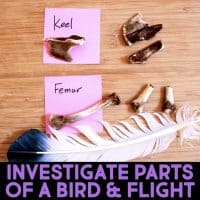
- Investigate – Students read about bird structures which suit them for flight. They examine a bird femur, sternum, and feather. Students then answer questions to reinforce the concepts learned.
- Diagram – Students read about the human heart. Students fill out a diagram of the human heart and answer questions in order to reinforce what they have learned.
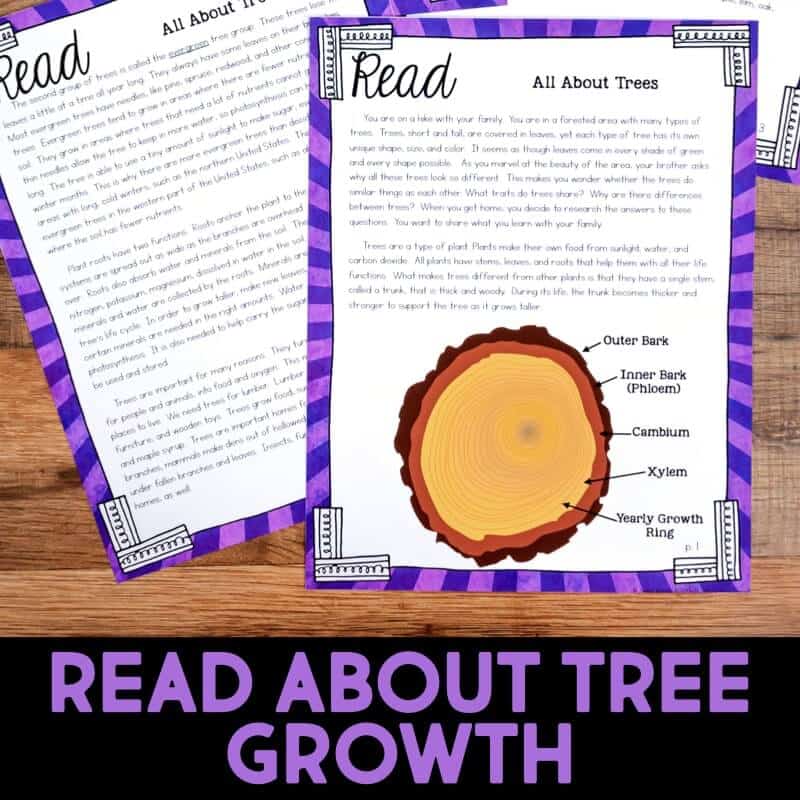
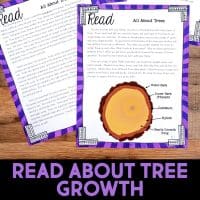
- Read a Passage – Students read about trees and learn how structures are adapted for their functions. They answer questions in order to reinforce what they have learned.
- Model – Students read about structures and function that enable some animals to live in arctic environments. They do an activity that models structures of these animals. They answer questions in order to reinforce what they have learned.
- Explore – Students read about structures and functions of leaves in order to explore photosynthesis. They answer questions in order to reinforce what they have learned.
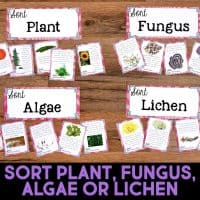
- Sort – Students read about plants and organisms that are commonly mistaken as plants. They sort the organisms into their kingdoms. Students then answer questions in order to reinforce what they have learned.
Google Classroom™️ Components Include:
- Google Form™️ with Reading Passage & Differentiated Questions (for Watch, Investigate, Diagram, Read, Model, Explore and Sort)
- Google Slides™️ with Activity Directions & Worksheets (for Investigate, Diagram, Model, Explore, Sort)
Each station is designed to last about 15-20 minutes. Students may do one a day for eight days, two a day for four days, or any format that works for your classroom. Because there are additional activities for the Watch and Play stations, you can offer those as a choice within that station or offer them as an early finisher station, as well.
By working through this set of stations, students will gain a robust understanding of the properties of structure and function. In Fourth Grade, students are expected to “construct an argument that plants and animals have internal and external structures that function to support survival, growth, behavior, and reproduction” (4-LS1-1). This correlates with the DCI 4- LS1.A, which states, “Plants and animals have both internal and external structures that serve various functions in growth, survival, behavior, and reproduction.”
All stations in this set meet the DCI, helping students gain an understanding of the biological principle that “form fits function,” or organisms’ structures are necessary for survival of the organism and of the species. The Investigate and Model stations go into more detail and help students construct arguments that specific structures are necessary for specific functions in the organism’s life, as outlined in the Performance Expectation.
Kellsie Aldi –
Very informative but I did have to simply the language so that my students could complete the activities. I used this resource to help with my MCAS ALTS.
Jordan B. –
I loved using this resource with my 4th graders. They were engaged and enjoyed the activities included. I found the instructions to be easy to follow, which helped ensure the lesson to continue smoothly.
Nanette C. –
I liked the articles and the questions with and without the word banks. I did like the options of the level of complexity to align with the reading passages.
Amanda M. –
I loved using this resource in my 4th grade classroom. My students were engaged and enjoyed the activities included. Instructions are easy to follow, which makes it a breeze to implement the lessons in the classroom.
Sparkles at 7220 feet –
Very helpful in teaching about organisms! Thank you!