
Word Problems in Math: Strategies, Types, and How to Teach Them
If you’ve ever read a student’s solution to a word problem and thought, “Wait… how did you even get that answer?”—you’re not alone. Word problems have a way of turning confident math students into guessers, skimmers, and “I just picked B” test-takers.
The tricky part isn’t always the math. It’s the reading, the interpreting, and figuring out what the question is actually asking. Students often latch onto random numbers or keywords instead of understanding the situation. That’s when things go off the rails.
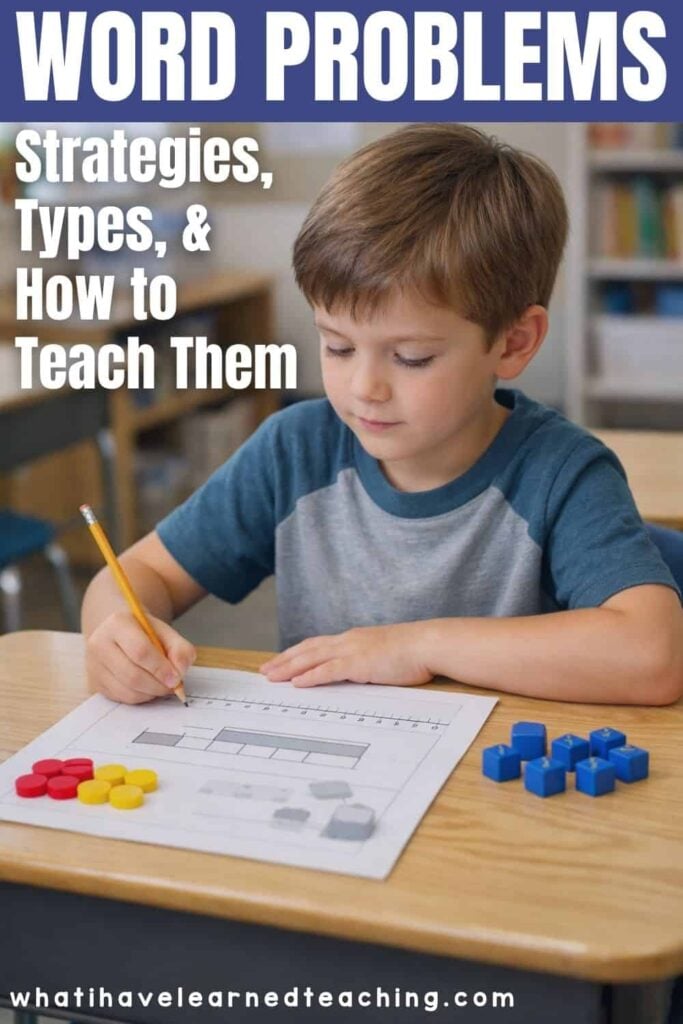
The good news? Word problems can become one of the most meaningful parts of your math block. With the right structure, strategies, and problem types, students start to make sense of the math, and their confidence grows right along with it.
What Are Word Problems in Math?
Word problems are math situations written in sentence form. Instead of just solving an equation, students must:
- read and understand the context
- identify what is happening
- decide which operation to use
- solve and explain their thinking
They connect math to real-life situations, but they also add an extra layer of complexity that many students struggle with.
Why Students Struggle with Word Problems
Students don’t struggle with these problems just because they “can’t do math.” There are a few common reasons:
- They focus on numbers instead of meaning
- They look for keywords instead of context
- They don’t understand the structure of different problem types
- They lack a consistent routine
If you’ve ever had students circle numbers and immediately add them together… you’ve seen this in action.
One helpful way to shift this thinking is to focus on understanding the situation before introducing numbers.
Word Problem Strategies That Actually Work
Teaching these types of problems gets much easier when students have consistent tools they can rely on.
Use a Structured Problem-Solving Routine
A clear routine gives students a step-by-step way to approach any problem instead of guessing.
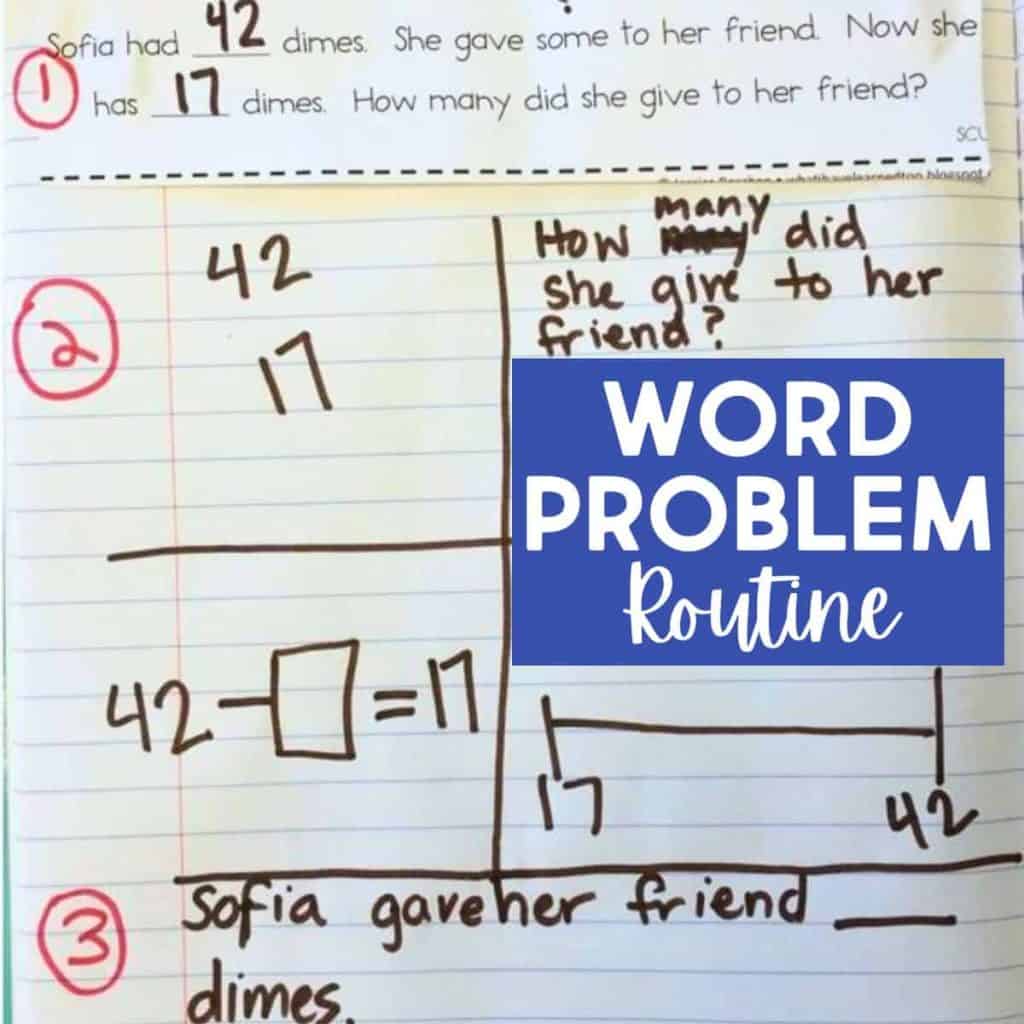
See the full word problem routine that will work for your students.
Try the CUBES Math Strategy
The CUBES strategy helps students break down problems into manageable steps:
- Circle numbers
- Underline the question
- Box keywords (with caution!)
- Evaluate and solve

Here is more information on the CUBES Math Strategy. This post includes suggestions on how to use and some of it’s pitfalls.
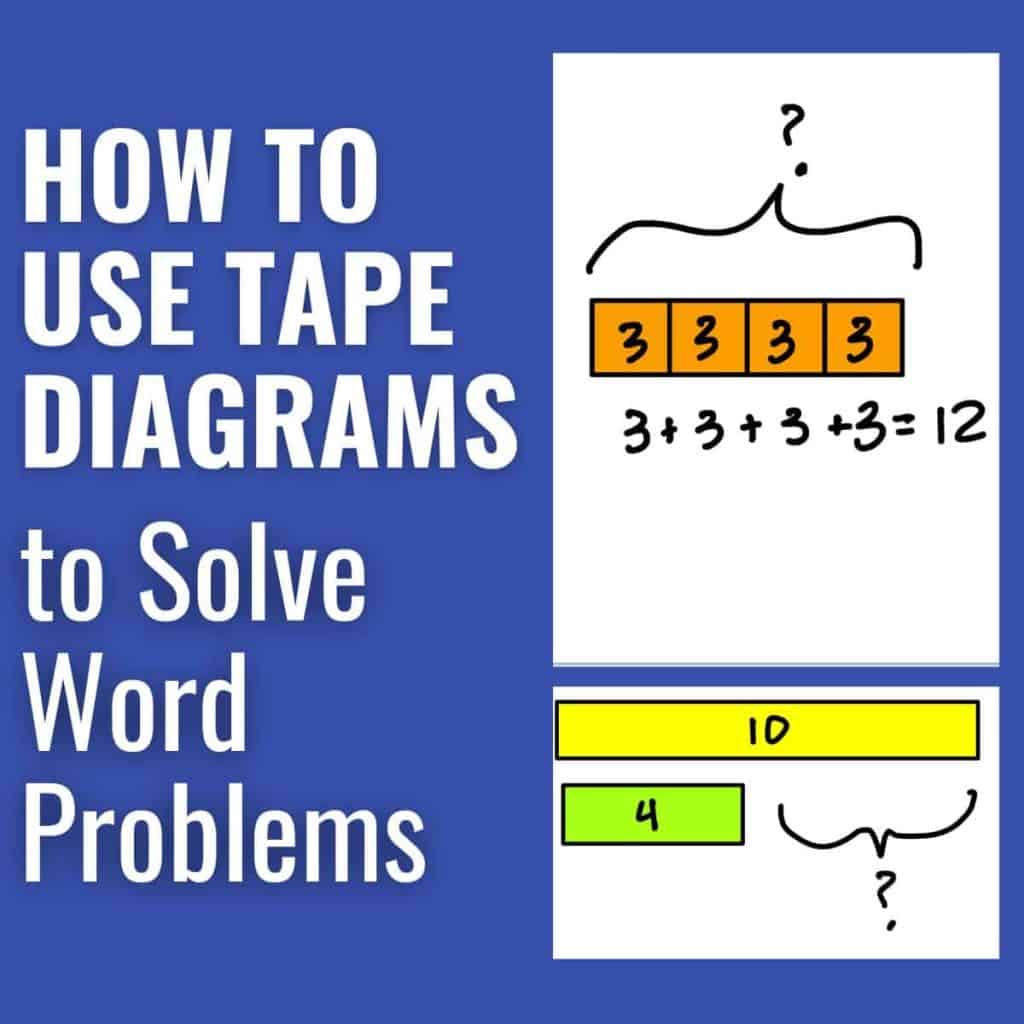
Model Thinking with Tape Diagrams
Tape diagrams help students visualize relationships between numbers, especially in comparison and multi-step problems.
Start with Numberless Word Problems
Before students even touch numbers, have them focus on:
- What is happening?
- Who is involved?
- What is changing?
This builds true understanding instead of shortcut strategies.
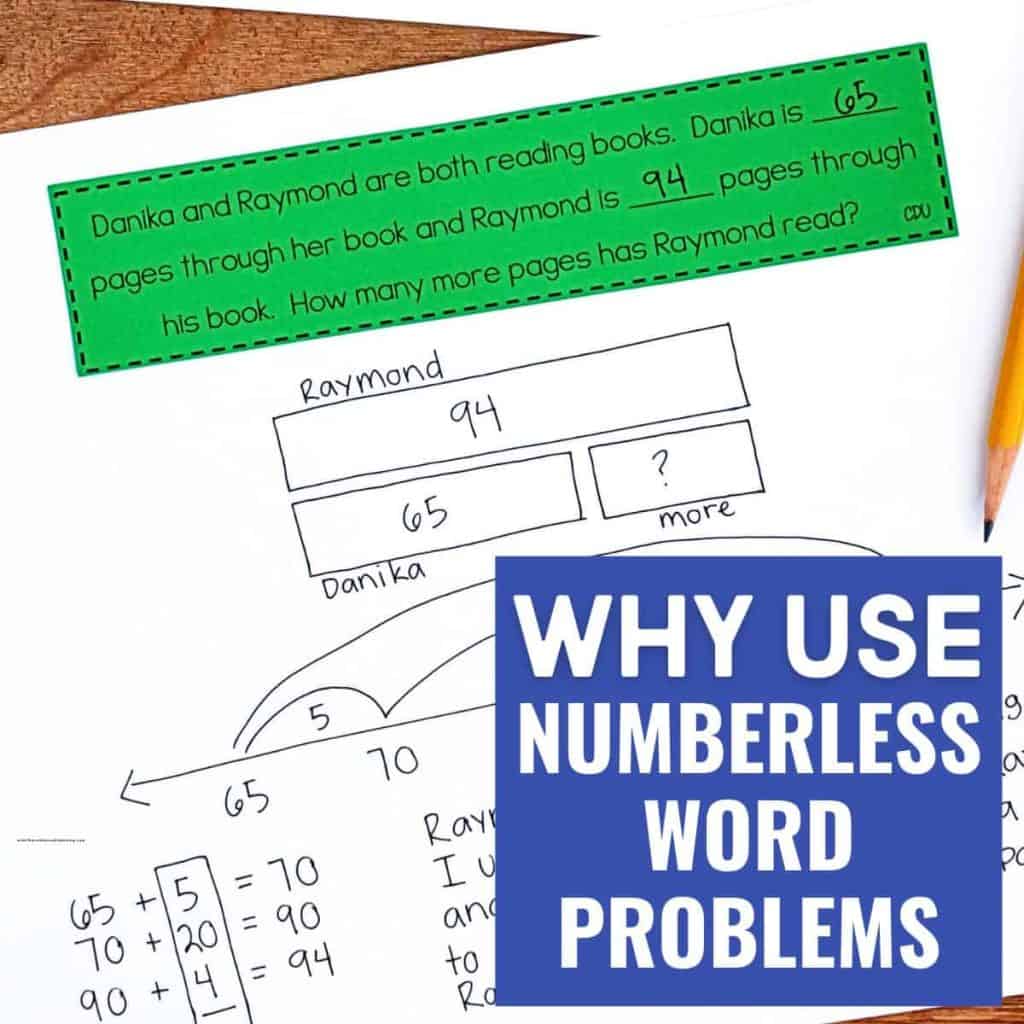
Learn how to use numberless problems to build student understanding:
Types of Word Problems (What Students Need to Know)
Not all problem types are the same, and that’s where many students get stuck.
When students understand problem types, they stop guessing and start recognizing patterns.
Addition and Subtraction Word Problems
These are the foundations in early elementary grades and include:
- Join problems (adding to a group)
- Separate problems (taking away)
- Part-part-whole problems
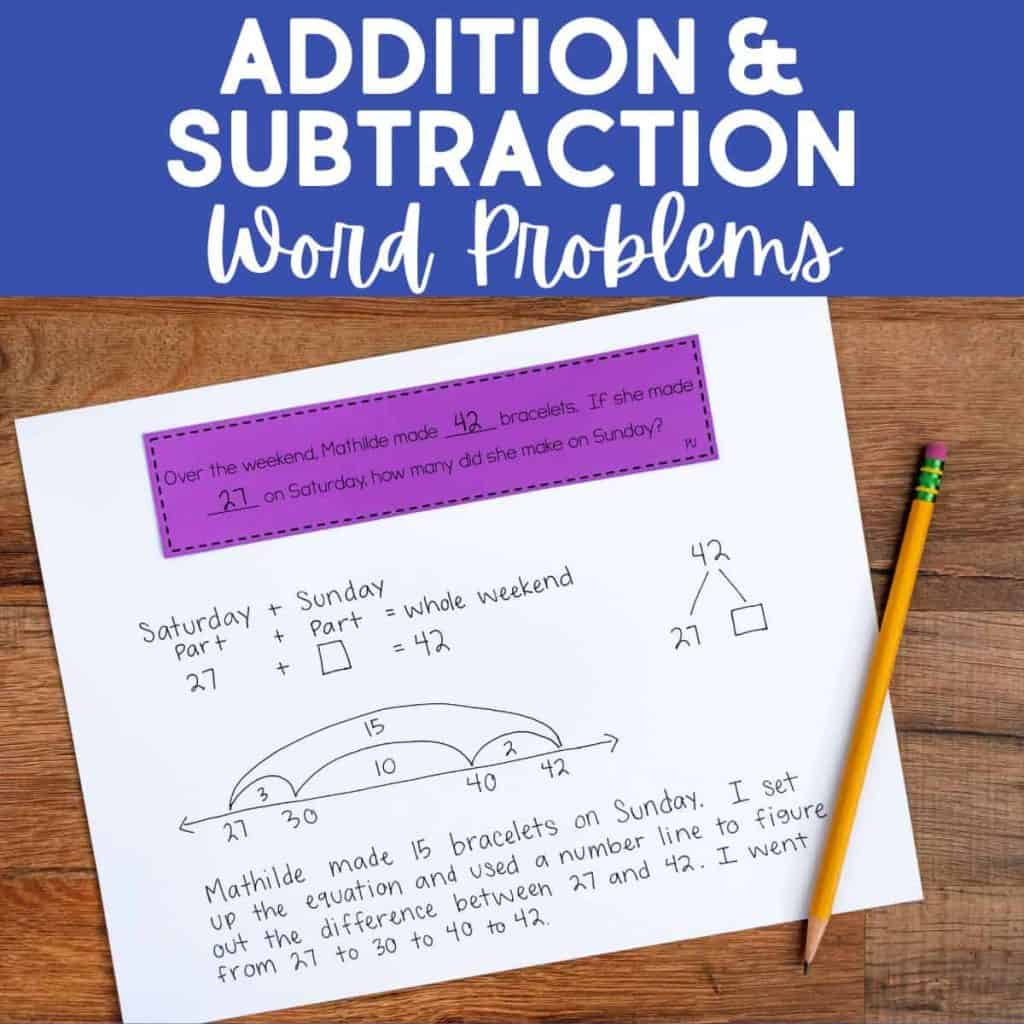
Explore addition and subtraction word problems in detail here:

Join Problems
These join word problems require students to figure out a missing part of a change. See examples here:

Separate Problems
Students work backward to determine what remains or what was taken away in these separate word problems. Learn more here:
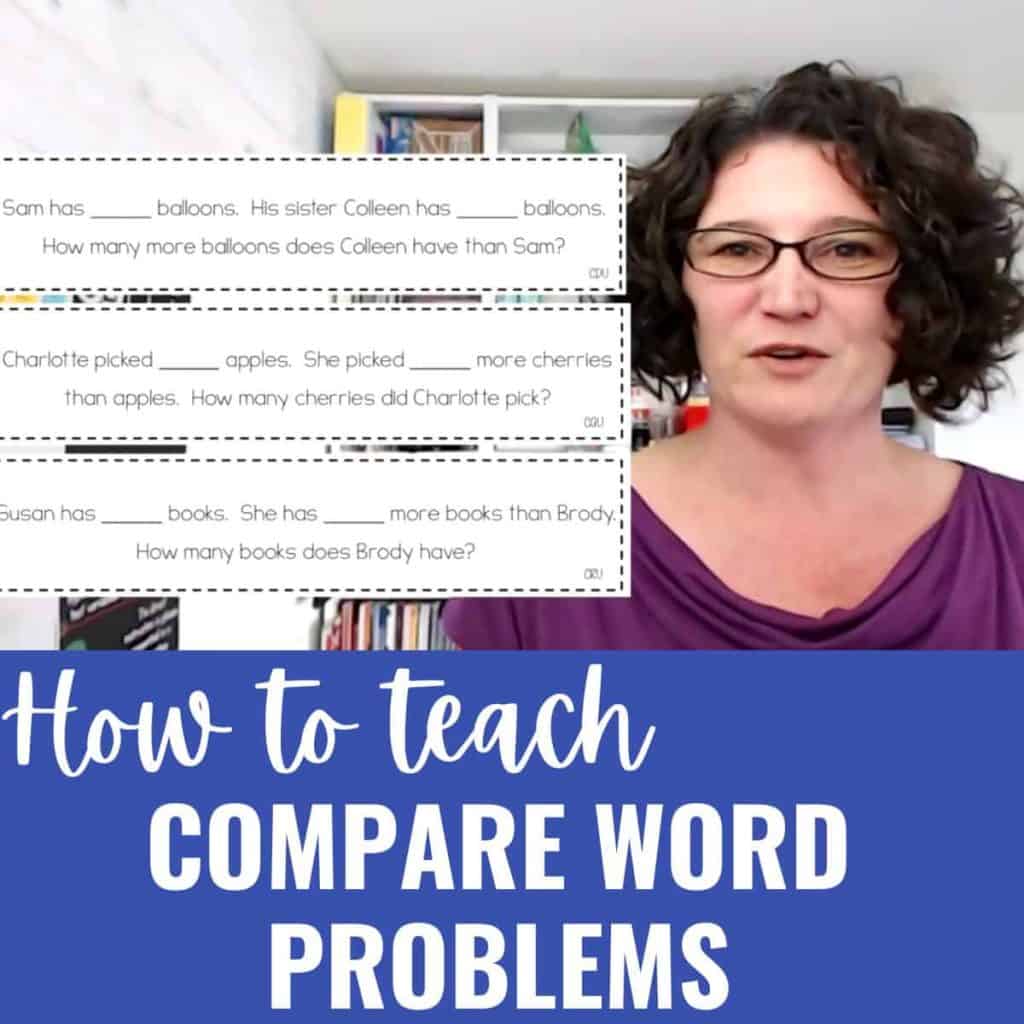
Comparison Word Problems
Comparison problems ask students to think about differences between quantities. These are often more challenging because they require relational thinking instead of straightforward operations.
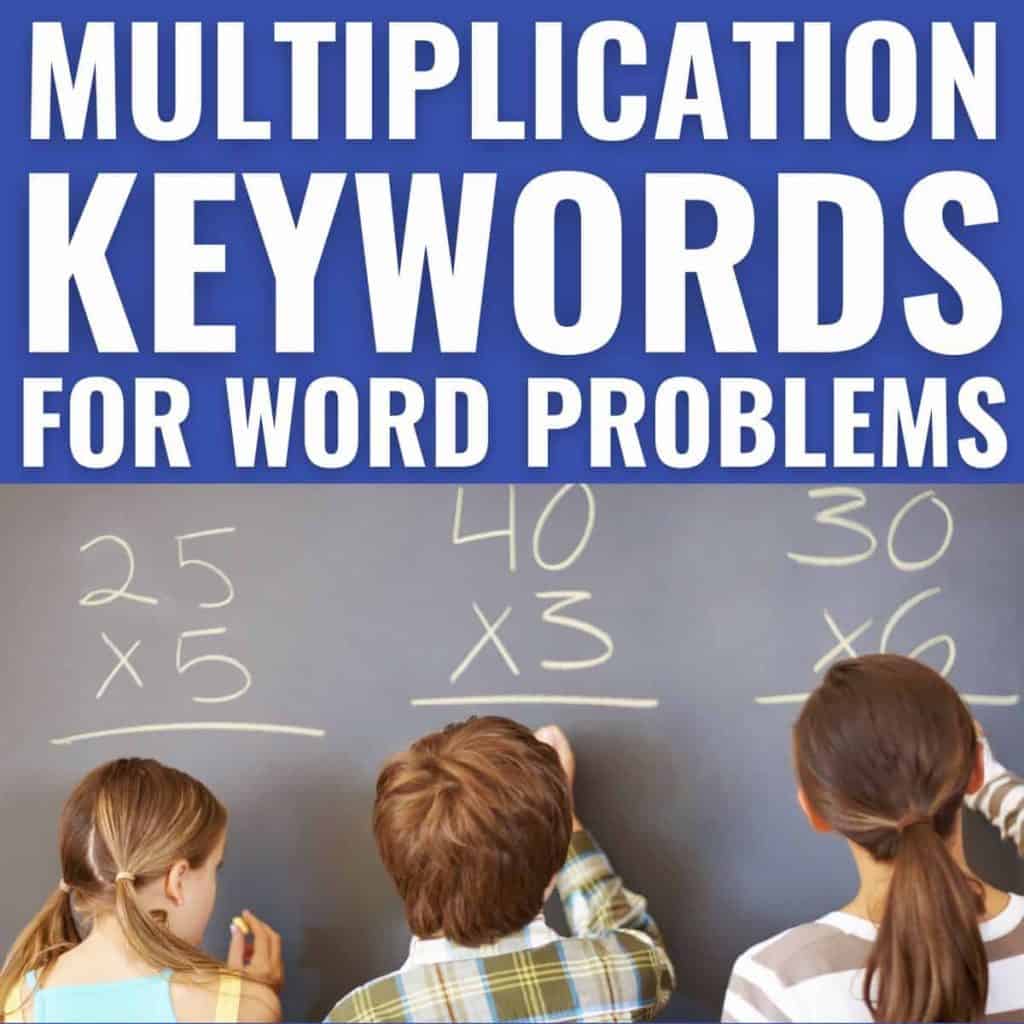
Multiplication and Division Word Problems
These multiplication word problems introduce equal groups, arrays, and scaling. Students often rely heavily on keywords here, but that approach can lead to mistakes. You can explore multiplication-related thinking here:
Should You Teach Keywords for Word Problems?
Keywords like altogether, difference, or left can seem helpful—but they often lead students in the wrong direction.
Students may:
- see the word “altogether” and always add
- see the word “left” and always subtract
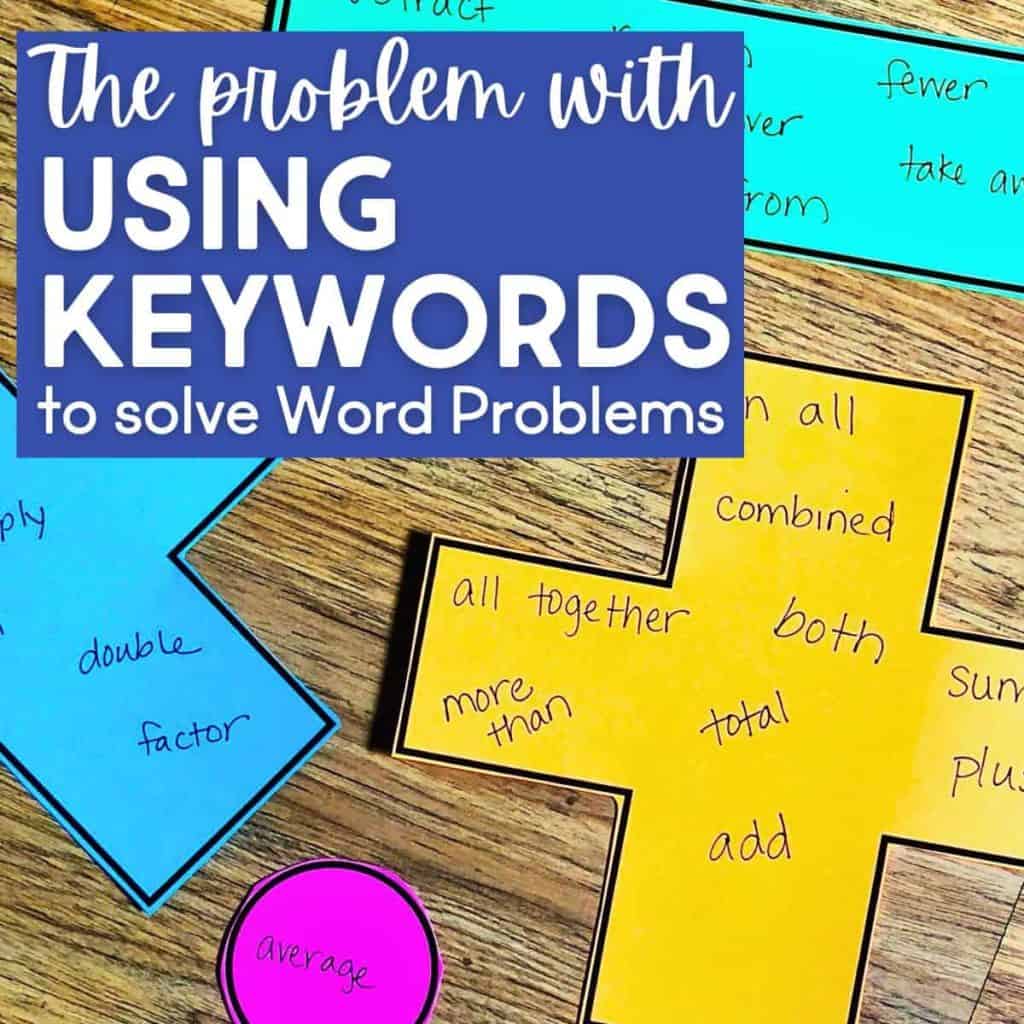
Instead of relying on keywords alone, students need to understand the problem’s situation and structure. Read more about why keywords can be misleading here:
How to Teach Word Problems to 2nd Grade Students
Second grade is where this type of problem-solving really takes off, and where students either build strong foundations or start developing misconceptions.
Effective instruction includes:
- modeling thinking out loud
- using consistent routines
- teaching problem types explicitly
- giving lots of structured practice

Learn to model word problem instruction and give structured practice.
Putting It All Together in Your Classroom
If this part of math feels overwhelming to teach, start simple and build over time.
A strong progression might look like:
- Begin with numberless word problems
- Introduce a consistent routine
- Teach one problem type at a time
- Use visuals like tape diagrams
- Gradually increase complexity
When students see patterns and have tools to rely on, their confidence grows—and so does their accuracy.
Word Problems Don’t Have to Be a Mystery
These problems can feel messy at first—for both teachers and students. But once you break them down into clear strategies and recognizable types, everything starts to click.
Students move from guessing… to explaining.
From circling numbers… to making sense of situations.
From frustration… to confidence.
And honestly, that’s when word problems become one of the most rewarding parts of your math block.
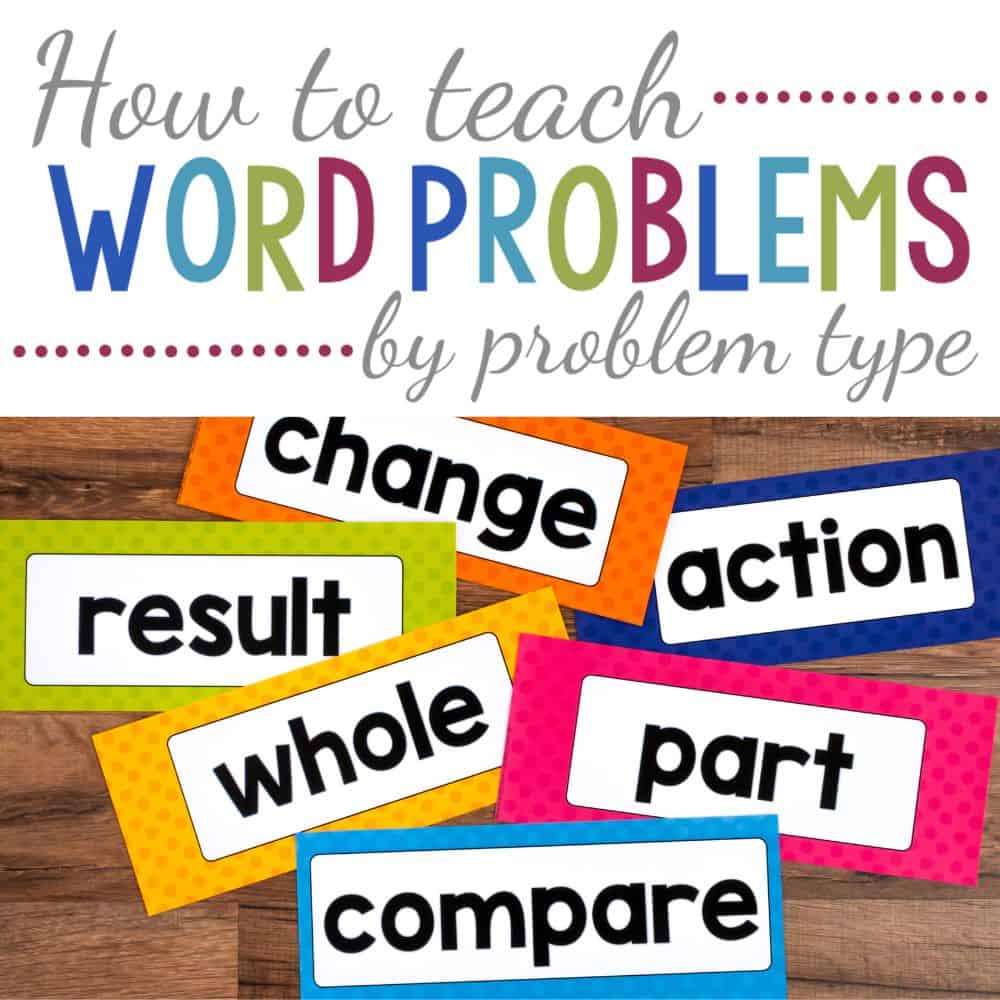
How to Teach Word Problems by Problem Type
Still seeing students guess instead of truly understanding?
In this course, you’ll learn how to teach word problems step-by-step using clear problem types, visual models, and simple routines your students can actually follow.
No more keyword guessing. No more confusion.
You’ll get practical strategies, examples, and tools you can use right away to move students from confusion to confidence.
Jessica BOschen
Jessica is a teacher, homeschool parent, and entrepreneur. She shares her passion for teaching and education on What I Have Learned. Jessica has 16 years of experience teaching elementary school and currently homeschools her two middle and high school boys. She enjoys scaffolding learning for students, focusing on helping our most challenging learners achieve success in all academic areas.