
Addition and Subtraction Word Problems by Problem Type
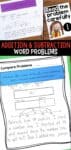
If your students can solve equations but get stuck on addition and subtraction word problems, you’re not alone. Many students look for keywords, grab numbers, and guess, without really understanding what’s happening in the problem.

That’s why teaching word problems by problem type makes such a big difference. When students learn to recognize the structure of a problem, they stop guessing and start making sense of the math.
This addition and subtraction word problems resource helps students focus on the context first, use models to represent their thinking, and solve problems with confidence.
Want a complete breakdown of strategies and problem types? Read this guide to word problems.
What You’ll Learn in This Post:
- types of addition and subtraction word problems
- how to teach problem types
- strategies and models that work
- how to use this resource in your classroom
What Makes This Addition and Subtraction Word Problems Resource Different?
This resource was designed to help students move beyond keywords and focus on understanding the situation in each problem.
Instead of jumping straight to numbers, students learn to:
- identify what is happening in the problem
- determine what is unknown
- choose a model that fits the situation
- solve using a strategy that makes sense
One of the most powerful parts of this approach is removing the numbers at first and focusing on the action of the problem.
What is Included in this Word Problem Resource
This is a year-long resource that can be used as a daily word problem routine or part of your math block. It includes:
- 156 addition and subtraction word problems by problem type
- 12 problems for each type
- 12 multi-step problems
- Differentiated number options for each problem
- Two formats:
- same problem repeated (easy printing)
- different problems per page
There are enough problems for daily practice all year long.

Addition and Subtraction Word Problems: Teach the Types of Word Problems
Master addition and subtraction word problems with this year-long resource! Covers all types of word problems, including first grade addition word problems and 2nd grade subtraction word problems, with built-in differentiation, models, and vocabulary support.
Easily Differentiate for Multiple Grade Levels
One of the most flexible features of this resource is the ability to differentiate the numbers. Blank spaces are provided in the problems so you can write in your own numbers.
You can:
- give one set of numbers to first graders
- give another set to second graders
- use the same problem structure across your class
This makes it ideal for:
- 1st grade
- 2nd grade
- intervention groups
- mixed-level classrooms


In the purple problem above is a Part-Part-Whole (PPW) problem with a Part Unknown (PU). Identified are the parts and the whole and what is unknown, one of the parts. I showed the inverted-V or number bond on the right and solved it using a number line. I also require students to write a few sentences about how they solved the problem.
The green example above is a Compare Difference Unknown (CDU), where students must figure out the difference between the two quantities in the problem. This problem type works well with a bar model. I solved it using a number line and showed the jumps in a series of equations on the bottom left.
How I Use These Word Problems in My Classroom
Each student keeps a math journal with blank pages.
Each day:
- I give students a problem
- We identify the problem type
- Students model the situation
- They solve using a strategy
- They explain their thinking in writing
This routine builds both math understanding and math communication.
Teaching Word Problems by Problem Type
There are several types of addition and subtraction word problems that students need to understand, including join, separate, part-part-whole, and compare problems.
Teaching these problem types explicitly helps students recognize patterns and choose the correct strategy instead of guessing.
Students learn to recognize different structures, such as:
- Part-Part-Whole
- Compare
- Join
- Separate
For example:
- A Part-Part-Whole problem helps students see how parts relate to a whole
- A Compare problem focuses on the difference between two quantities
In the problem below, students compare the number of cookies one child has to another. Students write out the equation and identify what is unknown in the problem. If students can figure out what is unknown and plug the numbers into a working model, it makes the word problem so much easier to solve.
A bar model is perfect for compare problems because it visually shows the quantity of one person or object compared with another. There is also a space that indicates the difference between the two quantities.
Using models like number lines and bar models helps students visualize these relationships and solve more accurately.

Models and Strategies Students Use
Students use a variety of models and strategies, including:
- number lines
- bar models
- number bonds
- place value strategies
You can read more about visual strategies here:
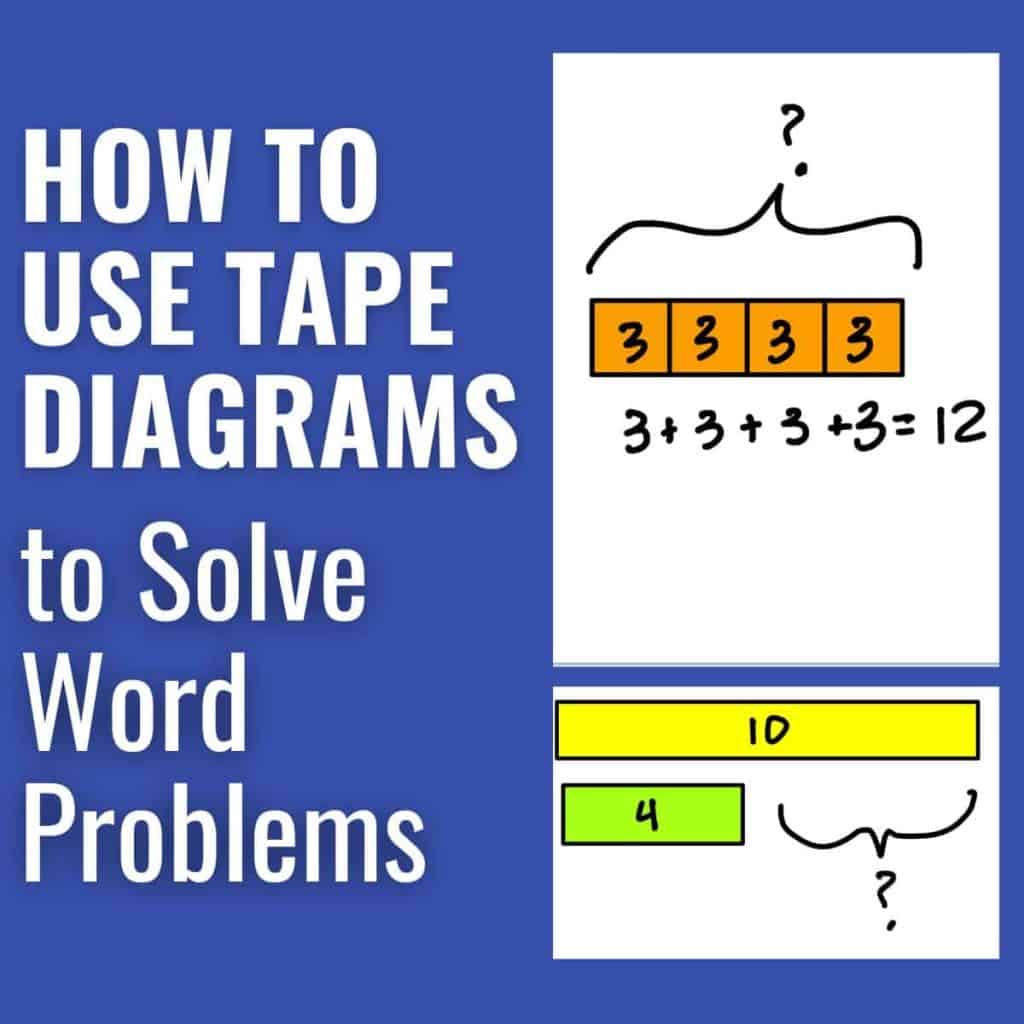
See tape diagram examples and teaching ideas here:
These tools help students represent their thinking instead of relying on guessing.
How Students Solve Different Problem Types
The example below is a Separate Start Unknown Problem, and I used a “break apart” place value strategy to solve the problem. You can find out more about the break apart strategy in this blog post about Models and Strategies.

In the below example, students are solving a Join Result Unknown (JRU) problem. This is the easiest problem type and is generally where I start when teaching students this process. Read more about where I start when teaching these join word problems in the below section.

Posters, Vocabulary, and Teacher Support
This resource includes:
- problem-solving procedure posters
- model and strategy posters
- math vocabulary cards
- Mathematical Practice Standards (student-friendly)
Students learn to talk about math using clear academic language, which supports deeper understanding.
Posters for Procedures
Here are the procedures that we use to solve word problems. We refer to these posters heavily at the beginning of the year as we learn the process for solving addition and subtraction word problems.

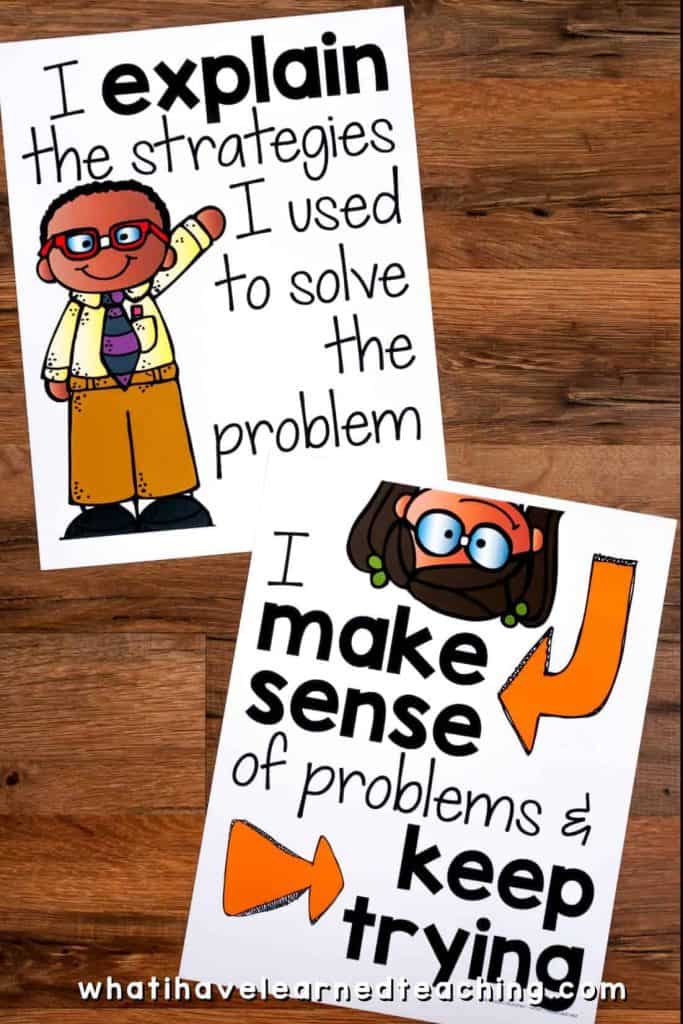
Posters for Mathematical Practice Standards
These are the Mathematical Practice standards, written in kid-friendly language, that we use throughout the year in our math processes.



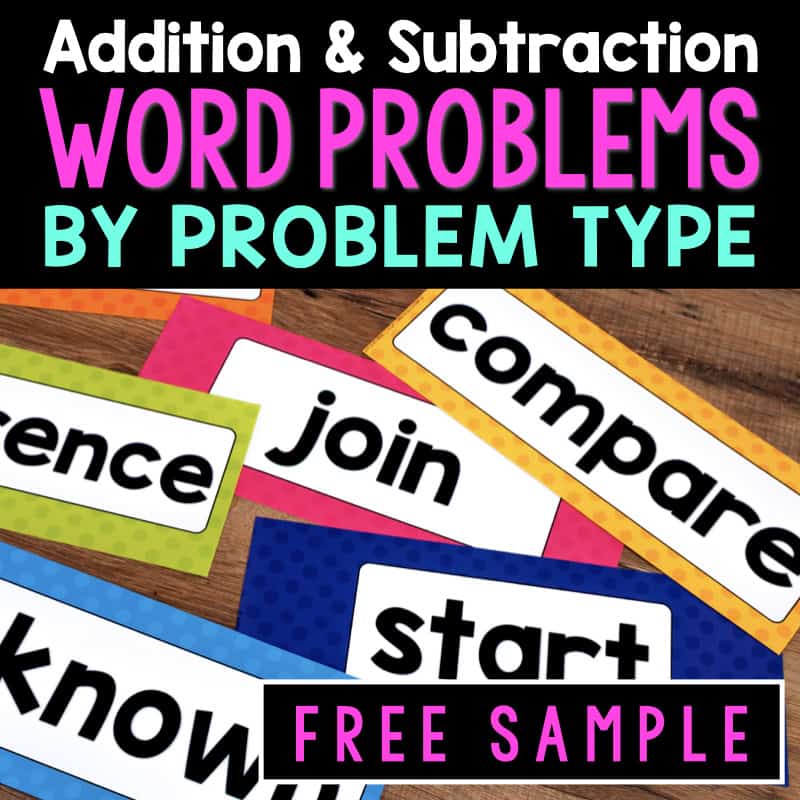
Vocabulary cards
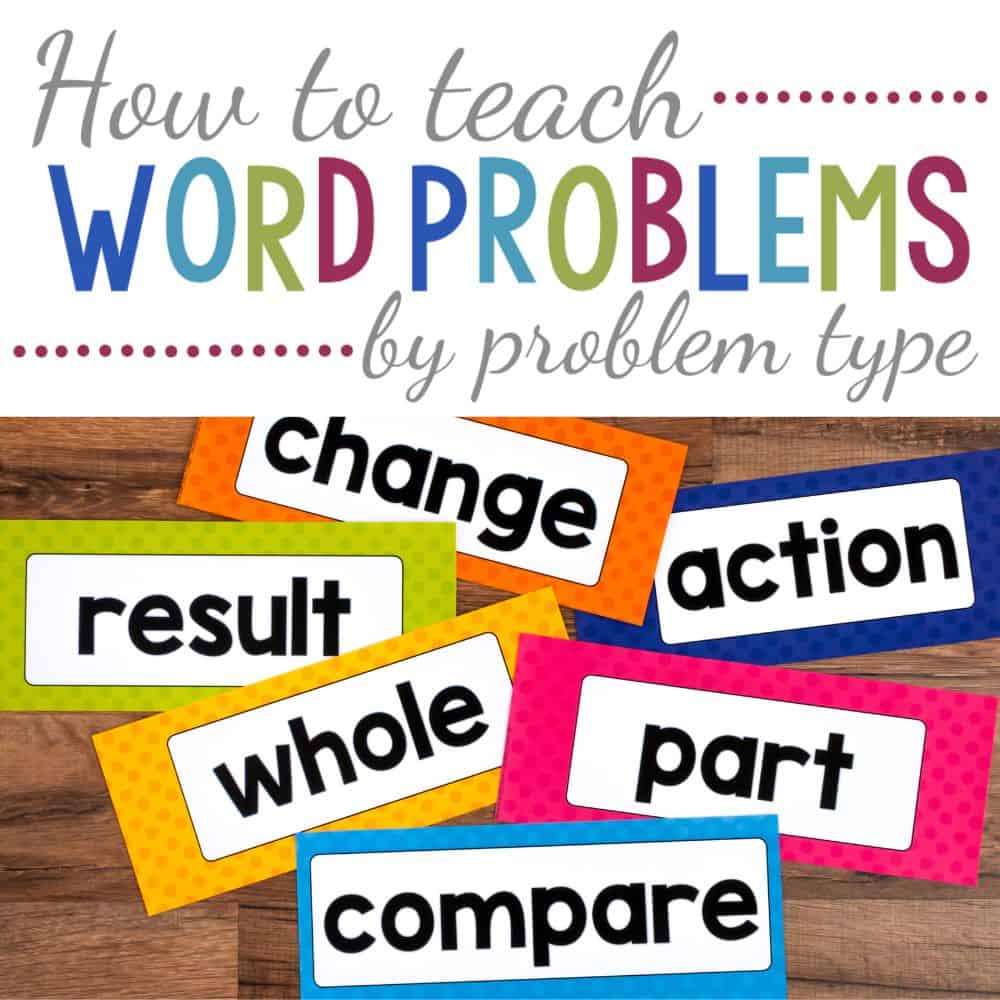
I don’t shy away from teaching students academic terms when solving word problems. Depending on the grade level, I generally don’t teach students the name of the problem type, but I definitely teach them words that we need to discuss the context of addition and subtraction word problems. These word cards are displayed in our room and I pull out the words that are needed for each problem type while teaching it.

Built-In Support for Teachers
You’ll also get detailed teacher notes that include:
- explanations of each problem type
- suggestions for choosing numbers
- guidance for differentiating instruction
- standards alignment
Word Problem Sorting Activity
Students can also complete an interactive sort where they:
- read a problem
- identify the type
- justify their reasoning
This activity builds strong discussions and helps students see the differences between problem structures.

What Order Should You Teach Problem Types?
There isn’t one perfect order.
Instead, I:
- start with simpler problem types
- adjust based on student understanding
- connect problem types to current math skills
For example:
during subtraction units → focus on separate problems
during addition units → focus on join problems
Ready to Make Word Problems Click?
If you’re looking for a way to help students truly understand addition and subtraction word problems, this resource gives you everything you need.
It gives you a clear structure, daily practice, and tools that actually help students understand what’s happening—not just solve it.
You can find this addition and subtraction word problems resource here:
Addition and Subtraction Word Problems: Teach the Types of Word Problems
Master addition and subtraction word problems with this year-long resource! Covers all types of word problems, including first grade addition word problems and 2nd grade subtraction word problems, with built-in differentiation, models, and vocabulary support.
Try a Free Sample
Want to see how this works in your classroom?
Grab a free sample of these addition and subtraction word problems and try them with your students.
How to Teach Word Problems by Problem Type
Still seeing students guess instead of truly understanding?
In this course, you’ll learn how to teach word problems step-by-step using clear problem types, visual models, and simple routines your students can actually follow.
No more keyword guessing. No more confusion.
You’ll get practical strategies, examples, and tools you can use right away to move students from confusion to confidence.

I want to know more about numberless word problems.
Here are some additional posts that may give you some ideas:
https://whatihavelearnedteaching.com/addition-subtraction-word-problems-problem-type-resource/
https://whatihavelearnedteaching.com/word-problems-problem-type-separate-word-problems/
https://whatihavelearnedteaching.com/word-problems-problem-type-join-problems/
https://whatihavelearnedteaching.com/the-problem-with-using-keywords-to-solve-word-problems/
I love this resource! May I make a suggestion? Your example with Raymond in the question has an error in the calculations and you might want to change it. It show 5 + 20 + 4 = 19 and it should be 29.
Thanks so much for letting me know! I appreciate it 🙂
Hi Jessica,
I just love all your resources. I seem to remember you offering a class/tutorial using the word problems resource. Is that still available? I don’t use Facebook and was hoping to see it on another platform
I do have a course. You can find out more info about it here: https://premium.whatihavelearnedteaching.com/word-problems-course/