
Types of Graphic Organizers for Reading Comprehension (2nd–5th Grade)
Graphic organizers are a common part of reading instruction, but not all types of graphic organizers support comprehension equally. The key is choosing the right one for the reading comprehension skill you’re teaching, so students organize their thinking rather than just fill in boxes.
In upper elementary classrooms, students are expected to move beyond retelling to analyze, compare, and explain their thinking. The right graphic organizer can make that shift easier by giving students a clear structure to follow.
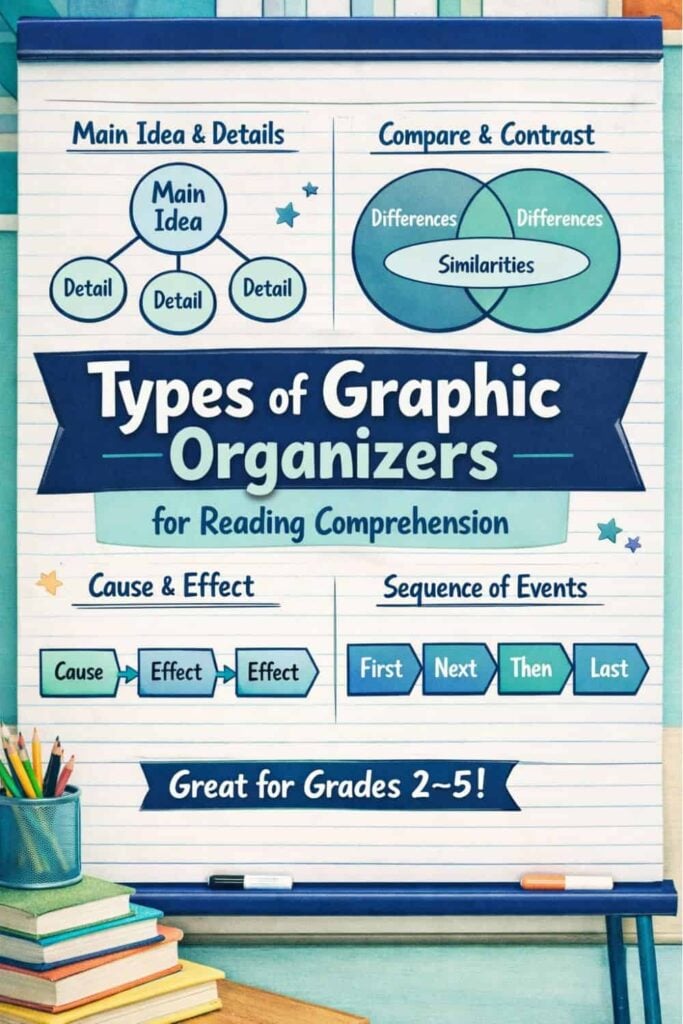
In this post, we’ll look at different types of graphic organizers for reading comprehension, grouped by skill. For each one, you’ll see how to use it and why it supports students in grades 2–5 as they build stronger comprehension skills.
To see how all of these pieces fit together, read this step-by-step guide on how to teach reading comprehension.
Why Graphic Organizers Support Reading Comprehension
Graphic organizers help students make their thinking visible. Instead of holding ideas in their heads, students organize information in a clear, structured way.
This is especially helpful when students are:
- learning a new comprehension skill
- working with complex texts
- explaining their thinking in writing
The key is using the right organizer for the right purpose.
If you want to see how these organizers work in real lessons, this guide on using graphic organizers walks through simple classroom examples.
Types of Graphic Organizers for Understanding Main Idea & Details
These organizers help students identify what a text is mostly about and how details support that idea.
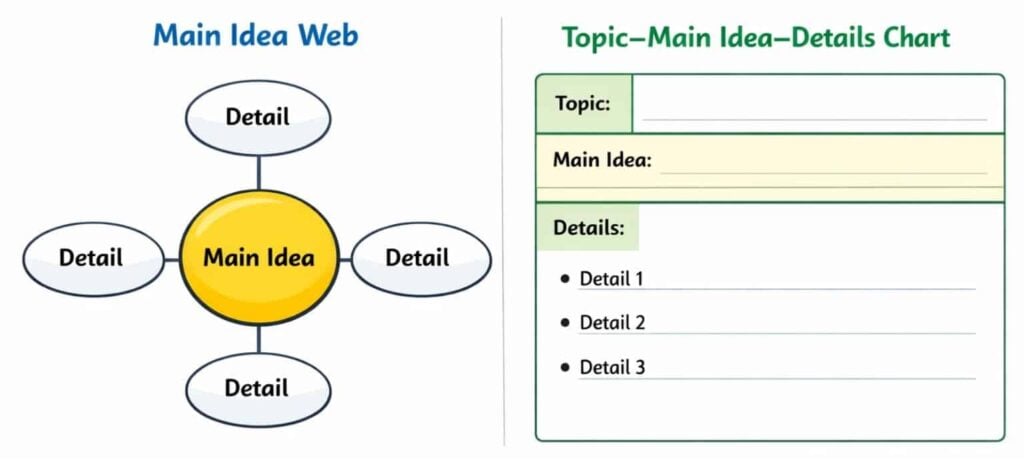
Main Idea Web
Students write the main idea in the center and supporting details around it.
How to use it:
After reading a passage, guide students in identifying the central idea and adding key details that support it.
Why it works:
It visually shows how details connect to the main idea, helping students avoid listing random facts.

Topic–Main Idea–Details Chart
Students list the topic, main idea, and several supporting details in a structured format.
How to use it:
Use during or after reading to help students distinguish between the topic and the main idea.
Why it works:
It clarifies the relationship between closely related concepts that students often confuse.
Types of Graphic Organizers for Comparing and Contrasting
These organizers help students analyze similarities and differences between ideas, texts, or characters.
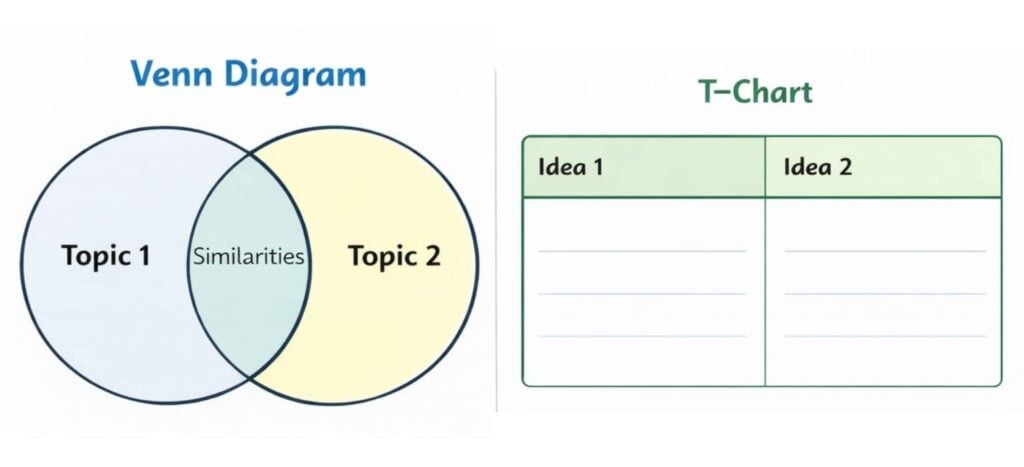
Venn Diagram
Students list similarities in the middle and differences on each side.
How to use it:
Use with two texts, characters, or topics to organize comparisons.
Why it works:
It provides a clear visual structure that supports both discussion and writing.
T-Chart
Students compare two ideas side by side.
How to use it:
Use for simpler comparisons or when introducing the skill before moving to more complex organizers.
Why it works:
It reduces complexity and helps students focus on one idea at a time.
Types of Graphic Organizers for Cause and Effect
These organizers help students understand relationships between events.
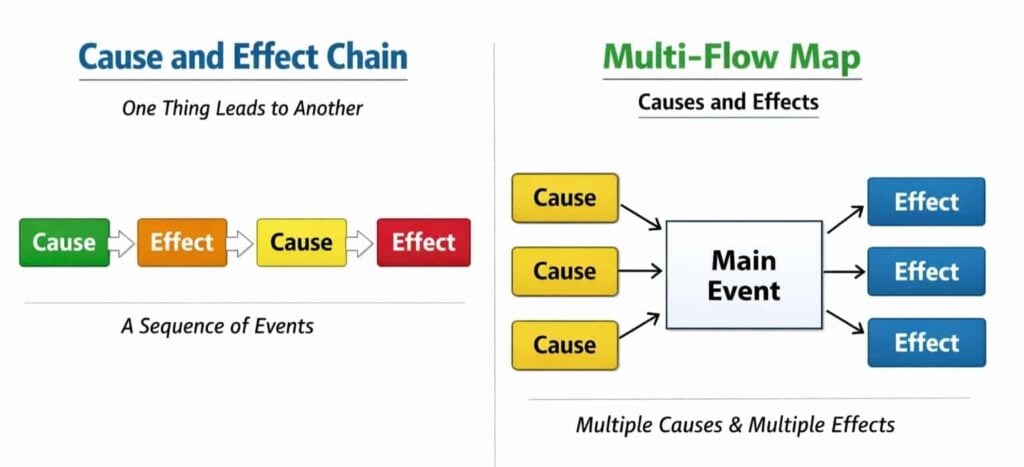
Cause and Effect Chain
Students map out a sequence of causes and effects.
How to use it:
Have students track events in order, showing how one leads to another.
Why it works:
It helps students see connections rather than viewing events in isolation.

Multi-Flow Map
Students identify multiple causes and multiple effects for a single event.
How to use it:
Use with more complex texts where events have several contributing factors.
Why it works:
It deepens thinking by showing that events are rarely caused by a single factor.
Types of Graphic Organizers for Sequencing and Summarizing
These organizers help students plan events and clearly retell information.
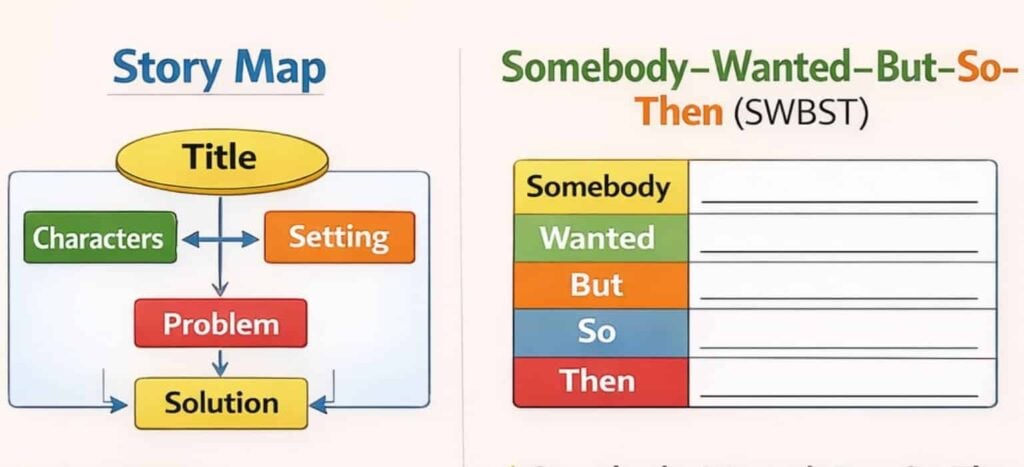
Story Map
Students identify characters, setting, problem, events, and solution.
How to use it:
Use during or after reading fiction texts to organize story elements.
Why it works:
It supports both comprehension and retelling.
Somebody–Wanted–But–So–Then (SWBST)
Students summarize a story using a structured sentence format.
How to use it:
Guide students to fill in each part after reading a story.
Why it works:
It simplifies summarizing and helps students focus on key events.
Timeline
Students place events in chronological order.
How to use it:
Use with nonfiction or historical texts to track events over time.
Why it works:
It reinforces sequencing and supports understanding of text structure.

Types of Graphic Organizers for Making Inferences
These organizers help students read between the lines and use evidence.
Inference Chart
Students list text evidence and what they infer from it.
How to use it:
Have students identify clues from the text and explain what those clues suggest.
Why it works:
It makes abstract thinking more concrete and supports evidence-based reasoning.
“It Says, I Say, So” Chart
Students combine text evidence with their own thinking.
How to use it:
Students write what the text says, what they think, and the conclusion they draw.
Why it works:
It clearly shows how inferences are formed.
Types of Graphic Organizers for Vocabulary and Word Meaning
These organizers help students understand and use new vocabulary.
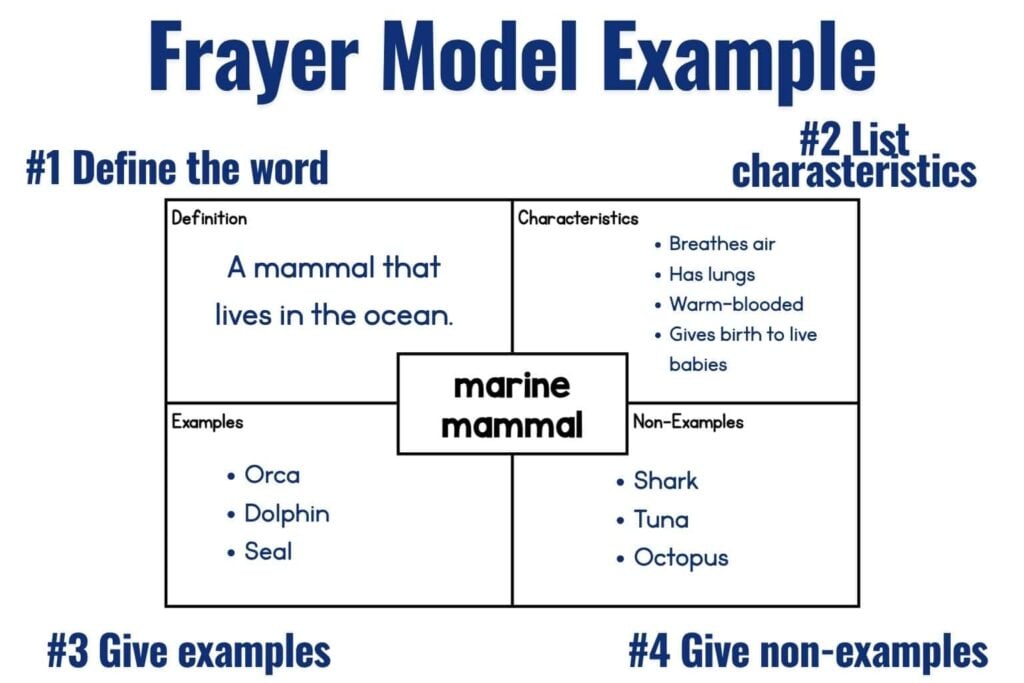
Frayer Model
In a Frayer Model, students define a word, provide examples and non-examples, and describe its characteristics.
How to use it:
Use when introducing key vocabulary before or during reading.
Why it works:
It deepens understanding beyond simple definitions.
Vocabulary Map
Students connect a word to synonyms, examples, and visuals.
How to use it:
Use for ongoing vocabulary practice.
Why it works:
It helps students build connections between words and concepts.
Types of Graphic Organizers for Text Structure
These organizers help students recognize how a text is organized.
Problem and Solution Chart
Students identify a problem and how it is solved.
How to use it:
Use with texts that present challenges and resolutions.
Why it works:
It helps students focus on key ideas and structure.
Compare and Contrast Matrix
Students compare multiple items across categories.
How to use it:
Use when comparing more than two ideas or texts.
Why it works:
It supports more complex comparisons and deeper analysis.
How to Choose the Right Graphic Organizer
The most important thing to remember is that the organizer should match the skill you are teaching.
Start by asking:
- What comprehension skill are students practicing?
- What kind of thinking do they need to do to show their understanding of how to use this comprehension skill?
Then choose an organizer that supports that thinking.
How Students Use Different Types of Graphic Organizers
There are many different types of graphic organizers, but they all serve the same purpose: helping students organize and explain their thinking.
When used intentionally, graphic organizers can support comprehension, strengthen writing, and build confidence. Over time, students begin to internalize these structures and rely less on the organizer itself—and more on their own thinking.
And that’s the goal.
Looking for Ready-to-Use Graphic Organizers?
If you’re looking for graphic organizers that are already organized by skill and ready to use with your students, having a consistent set can save time and make instruction more cohesive.
Instead of creating or searching for a new organizer each time you teach a skill, you can use a set that includes organizers for main idea, compare and contrast, cause and effect, summarizing, and more. This allows you to focus on modeling the thinking and guiding students, rather than planning materials.
These reading comprehension graphic organizers are designed to work with any text and include built-in support to help students explain their thinking more clearly. You can use them during small groups, whole-class lessons, or independent practice.
👉 Take a closer look at these reading comprehension graphic organizers here.
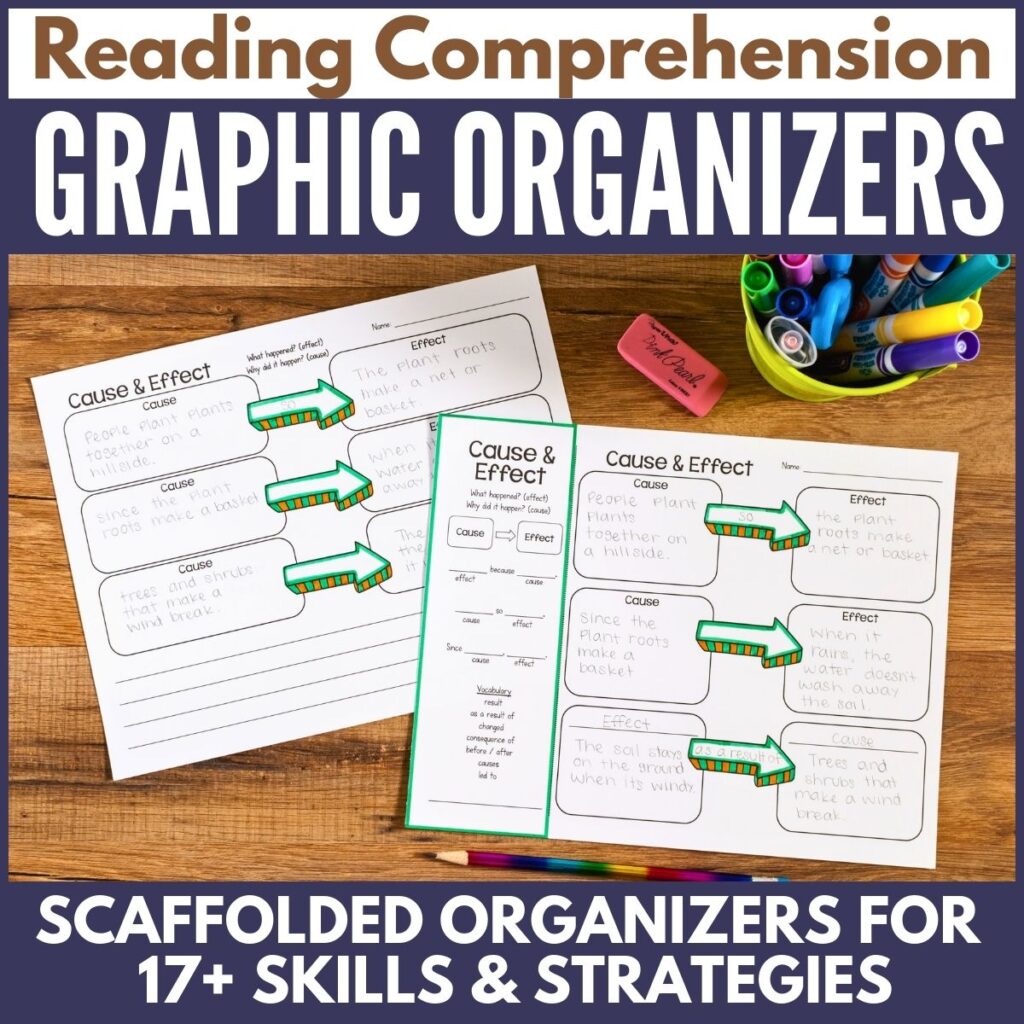
Reading Comprehension Graphic Organizers with Language Support & Bookmarks
Support deeper reading comprehension and academic language development with these Reading Comprehension Graphic Organizers. Featuring 40 comprehension-focused organizers in two formats for a total of 80 options, this resource helps students discuss, analyze, and write about any text using sentence frames, vocabulary support, and reading strategies.
Jessica BOschen
Jessica is a teacher, homeschool parent, and entrepreneur. She shares her passion for teaching and education on What I Have Learned. Jessica has 16 years of experience teaching elementary school and currently homeschools her two middle and high school boys. She enjoys scaffolding learning for students, focusing on helping our most challenging learners achieve success in all academic areas.