
Graphic Organizers for Biographies (Examples for Elementary Students)
When students research a historical figure, one of the biggest challenges is organizing all the information they find. That’s where graphic organizers for biographies come in. These tools help students break down information into manageable parts so they can better understand a person’s life and prepare to write a report or complete a project.
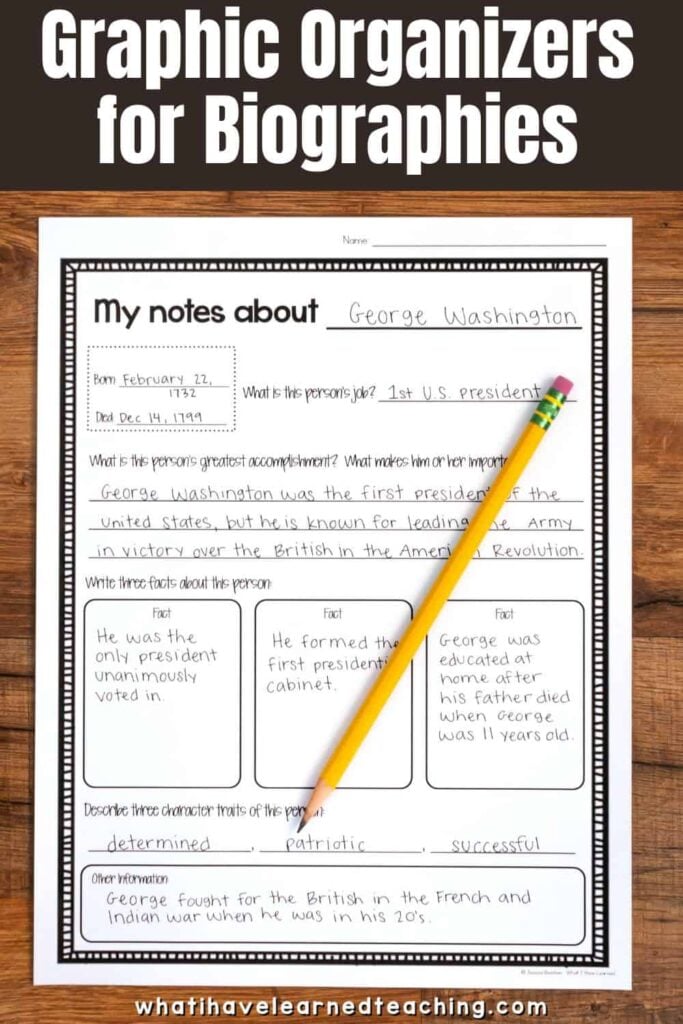
In elementary classrooms, graphic organizers for biographies provide the structure students need to move from reading and research to writing and presenting. Instead of staring at a blank page, students have a clear place to record facts, ideas, and details about their historical figure.
If you’re planning a full unit, this guide on biography projects for elementary students shows how organizers fit into the research and writing process.
What Are Biography Graphic Organizers?
Biography graphic organizers are visual tools that help students collect and organize information about a person’s life.
They guide students to focus on important details such as:
- early life
- major accomplishments
- important events
- challenges the person faced
- impact on history
Using organizers helps students avoid copying random facts and instead focus on organizing meaningful information they can use in their writing.
Types of Graphic Organizers for Biographies
Different organizers support different parts of the research process. Below are several types of biography graphic organizers that work well when students are completing a biography project.
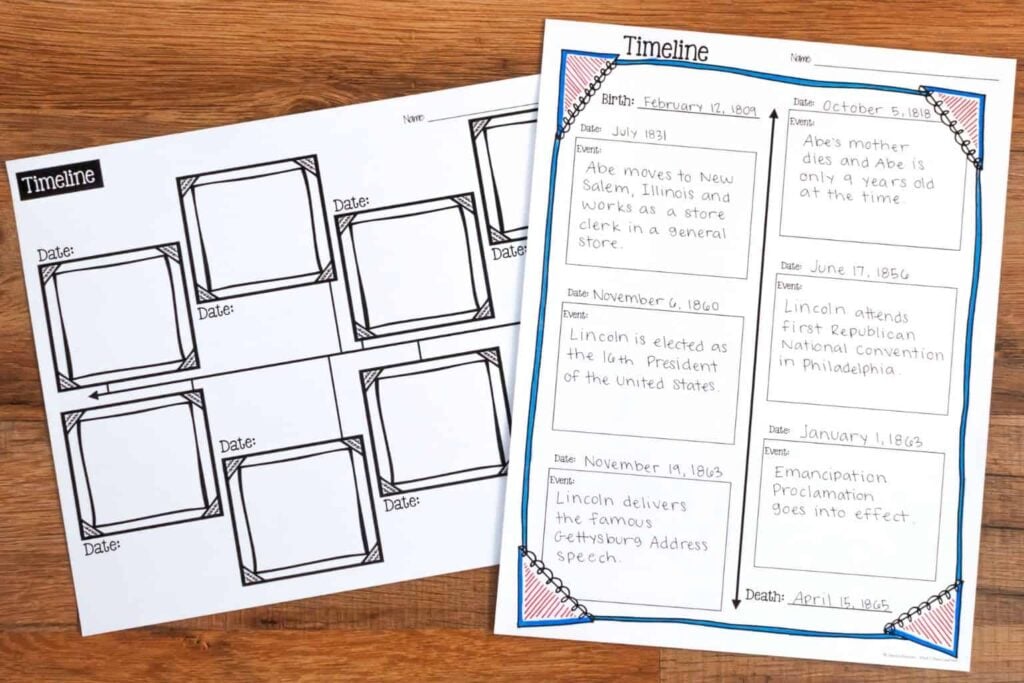
Timeline Organizer
A biography timeline organizer helps students list events from a person’s life in chronological order.
Students can include:
- birth and early life
- important life events
- major accomplishments
- later life
This organizer works well early in the research process and helps students understand how events are connected over time.
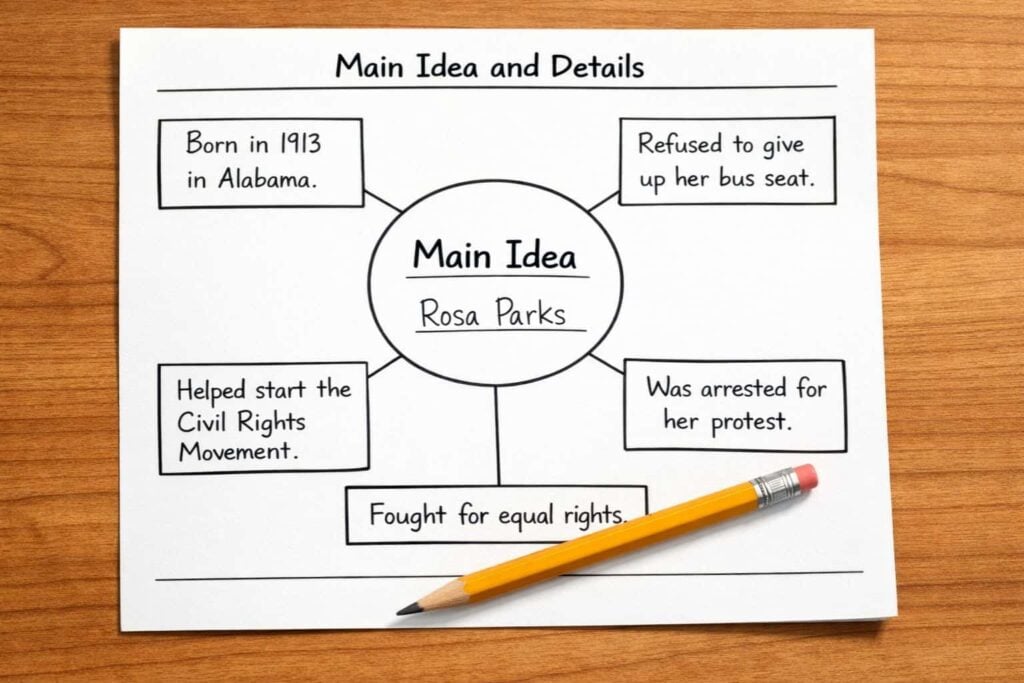
Main Idea and Details Organizer
This organizer helps students identify the most important ideas about a historical figure and supports them with details.
Students focus on:
- the main idea of the person’s life or contribution
- key details that explain why the person is important
This is especially helpful when students are reading multiple biography sources and need to determine what matters most.
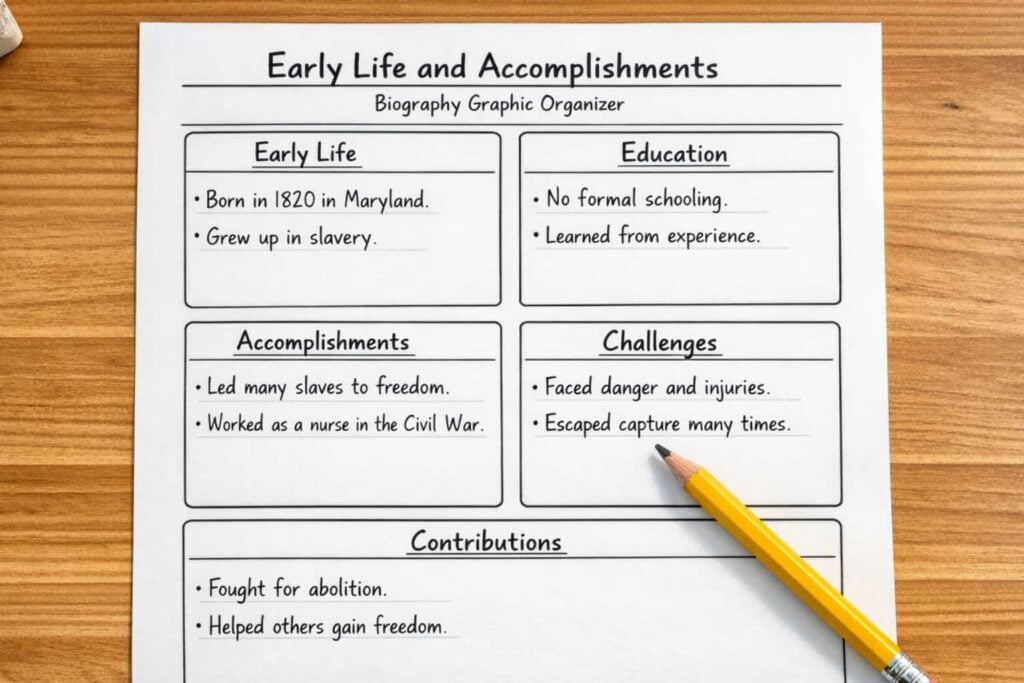
Early Life and Accomplishments Organizer
This organizer divides a person’s life into clear sections.
Common sections include:
- early life
- education
- accomplishments
- challenges
- contributions
This is one of the most useful organizers because it directly supports writing a structured biography report.
Cause and Effect Organizer
A cause and effect organizer helps students understand how events in a person’s life led to important outcomes.
Students can explore:
- what events influenced the person
- what happened as a result of their actions
This deepens understanding beyond simple facts.
Compare and Contrast Organizer
This organizer allows students to compare two historical figures.
Students identify:
- similarities
- differences
- shared contributions or experiences
This is useful when students study multiple people within the same unit.

Research Notes Organizer
A research notes graphic organizer for biographies gives students structured questions to guide their research. Instead of copying random facts, students focus on specific information such as when the person was born, what they did, and why they are important.
Many organizers also include sections for accomplishments, character traits, and interesting facts. This helps students collect meaningful information that they can later turn into a written report.
If you need guiding questions, these biography research questions for students can support this step.
How to Use Graphic Organizers in a Biography Unit
Graphic organizers are most effective when used as part of a structured process.
During a biography unit, students typically:
- Read about a historical figure
- Record information in a graphic organizer
- Organize their notes into categories
- Use the organizer to write a biography report
Organizers act as a bridge between reading and writing. They help students move from gathering information to explaining it in their own words.
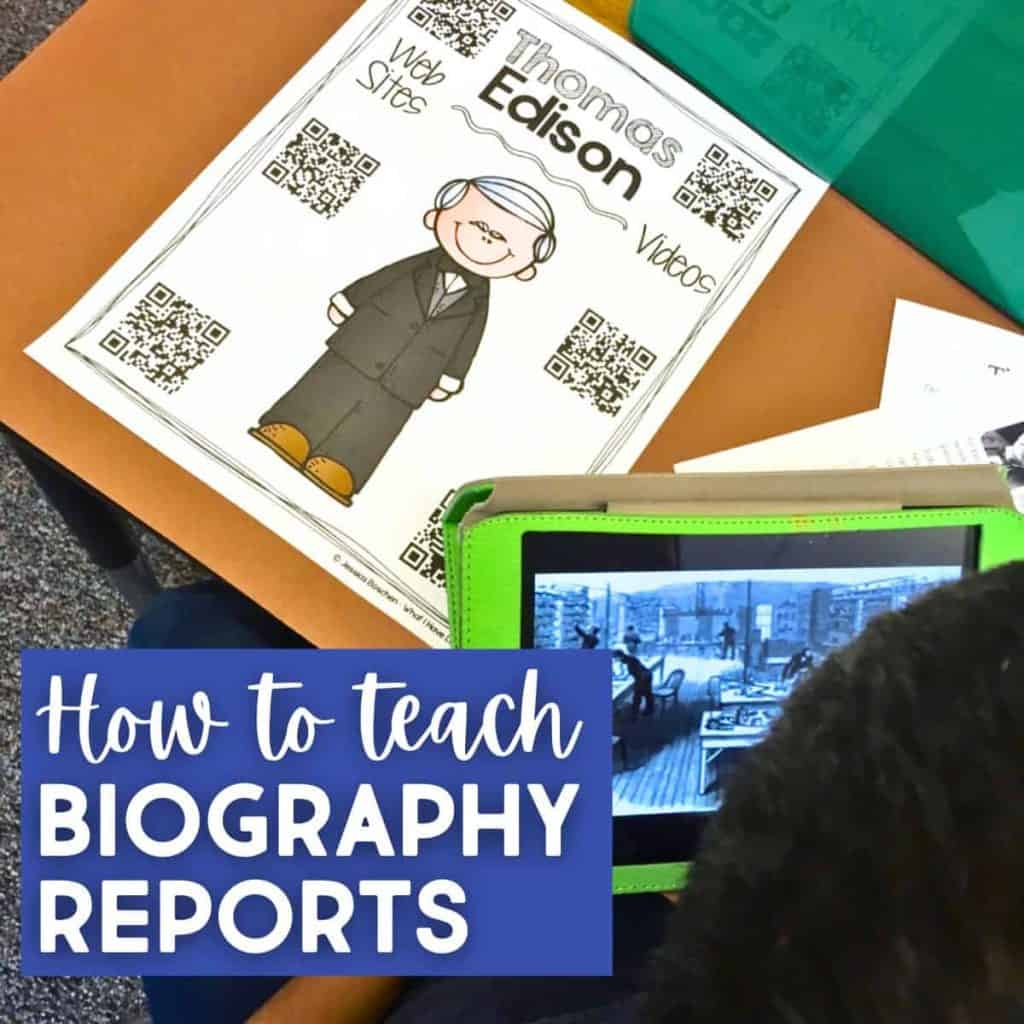
For a full breakdown of this process, see this guide, which explains how to teach a biography unit in elementary school.
From Graphic Organizer to Biography Report
Once students complete their biography graphic organizers, they are ready to begin writing.
The organizer becomes the outline for the report:
- timeline → sequence of events
- early life/accomplishments → body paragraphs
- main idea/details → introduction and conclusion
Students can use their completed organizers to write full paragraphs and develop a structured report.

These biography report templates provide additional support by turning organized notes into complete writing.
Using Graphic Organizers to Support All Learners
Graphic organizers for biographies are especially helpful for:
- younger students who need structure
- English learners who benefit from visual supports
- students who struggle with organizing information
By breaking information into smaller sections, organizers make research more manageable and writing more accessible.
Graphic Organizers Make Biography Projects More Manageable
When students have the right tools, biography projects become much more successful. Graphic organizers help students focus on important information, organize their thinking, and prepare for writing.
Whether students are completing a short research assignment or a full biography project, using graphic organizers supports every step of the process—from gathering information to writing and presenting their work.
If you’re planning a full unit, this guide to biography projects for elementary students integrates research, writing, and project ideas into a single, complete process.
Jessica BOschen
Jessica is a teacher, homeschool parent, and entrepreneur. She shares her passion for teaching and education on What I Have Learned. Jessica has 16 years of experience teaching elementary school and currently homeschools her two middle and high school boys. She enjoys scaffolding learning for students, focusing on helping our most challenging learners achieve success in all academic areas.