
How to Teach Fractions in Elementary School: Strategies, Models, and Activities
To teach fractions well in elementary school, conceptual understanding has to come before computation. The Number and Operations: Fractions (NF) domain builds steadily from 3rd grade through 5th, and each year’s fraction work depends on what students understood the year before.
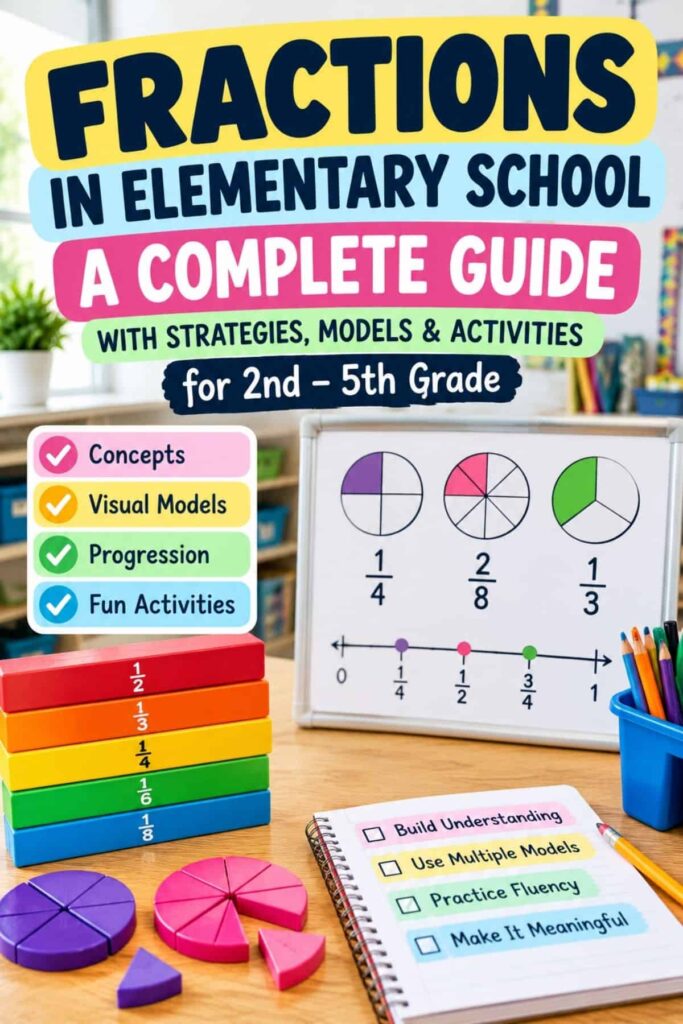
This guide walks through the major strategies, models, and activities that support that progression, with grade-level specifics and resources to make fraction instruction more concrete and effective at every stage.
How Fraction Understanding Develops Across Elementary Grades
The CCSS NF domain formally begins in 3rd grade, though many teachers lay the groundwork earlier by working with equal parts and fair shares in 2nd grade. Understanding how the standards build across the grades helps teachers make intentional choices about what to emphasize at each level rather than teaching fractions as if they start fresh every year.
In third grade, the core work is understanding fractions as numbers, not just as parts of drawings. Standard 3.NF.1 introduces unit fractions as one part of a whole divided into b equal parts. Standards 3.NF.2 and 3.NF.3 build on placing fractions on number lines and recognizing equivalent fractions. The big conceptual shift here is that 1/4 is a number with a specific location between 0 and 1 — not just a shaded region in a circle.
In fourth grade, the standards extend to equivalent fractions, comparing fractions with different numerators and denominators, adding and subtracting fractions with like denominators, working with mixed numbers, and multiplying fractions by whole numbers. Standards 4.NF.5 through 4.NF.7 connect fraction notation to decimals. The computational demands increase significantly in 4th grade, so the conceptual foundation from 3rd grade must be solid.
In fifth grade, students add and subtract fractions with unlike denominators, interpret fractions as division, and multiply and divide fractions. This is where fraction work becomes genuinely complex. Students who enter 5th grade without a flexible understanding of equivalence and the number line tend to struggle with procedures, even when they can follow the steps.
Fraction Models That Build Conceptual Understanding
Three models carry most of the instructional load in elementary fraction work: area models, number lines, and set models. Students who develop facility with all three end up with a more flexible understanding of fractions than students who work with only one. The IES Practice Guide on fractions identifies work with multiple representations, especially the number line, as one of the highest-impact moves in fraction instruction.
Area models (circles, rectangles, fraction bars) are where most students begin. They’re intuitive because they connect to the everyday experience of cutting something into pieces. Rectangular models are often easier for students to draw accurately on their own, which matters once students start generating their own visual representations rather than working from printed ones.
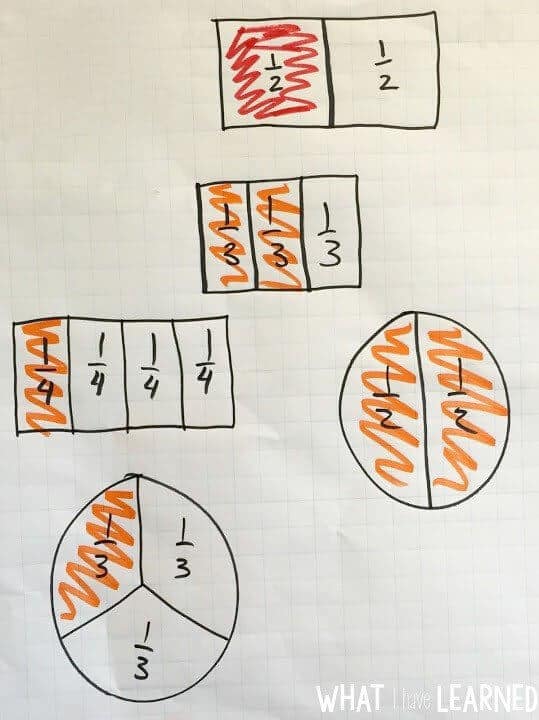
The number line is the most underused and arguably most important model in elementary fraction work. It connects fractions to measurement and to the broader number system in a way that area models can’t. Students who only work with area models tend to think of fractions as describing shapes rather than as numbers in their own right. Consistent work with number lines, starting in 3rd grade, corrects that before the computational demands of 4th grade take over.

Set models show a fraction as part of a group rather than part of a single whole. Students who have only seen fractions as parts of shapes are often confused when they encounter a problem like “3/4 of 8 objects.” Set models address that confusion directly by giving students practice identifying fractional parts of collections.
Teaching Fractions in 2nd and 3rd Grade
In 2nd and early 3rd grade, the goal is building the foundation: equal parts, naming fractions, and connecting the written form (1/4) to a visual model and a word form (one fourth). Students who understand that the denominator tells how many equal parts the whole is divided into, and the numerator tells how many of those parts are being counted, have the core idea they need for everything else.
Vocabulary tends to be the sticking point. Students learn the word “denominator” and promptly forget what it means, or they reverse numerator and denominator when reading a fraction. Building in sentence frames before any written fraction work helps — a frame like “This shape is divided into ___ equal parts. ___ of those parts are shaded. The fraction is ___.” makes the logic of fraction notation visible as students are forming it, not after the fact.
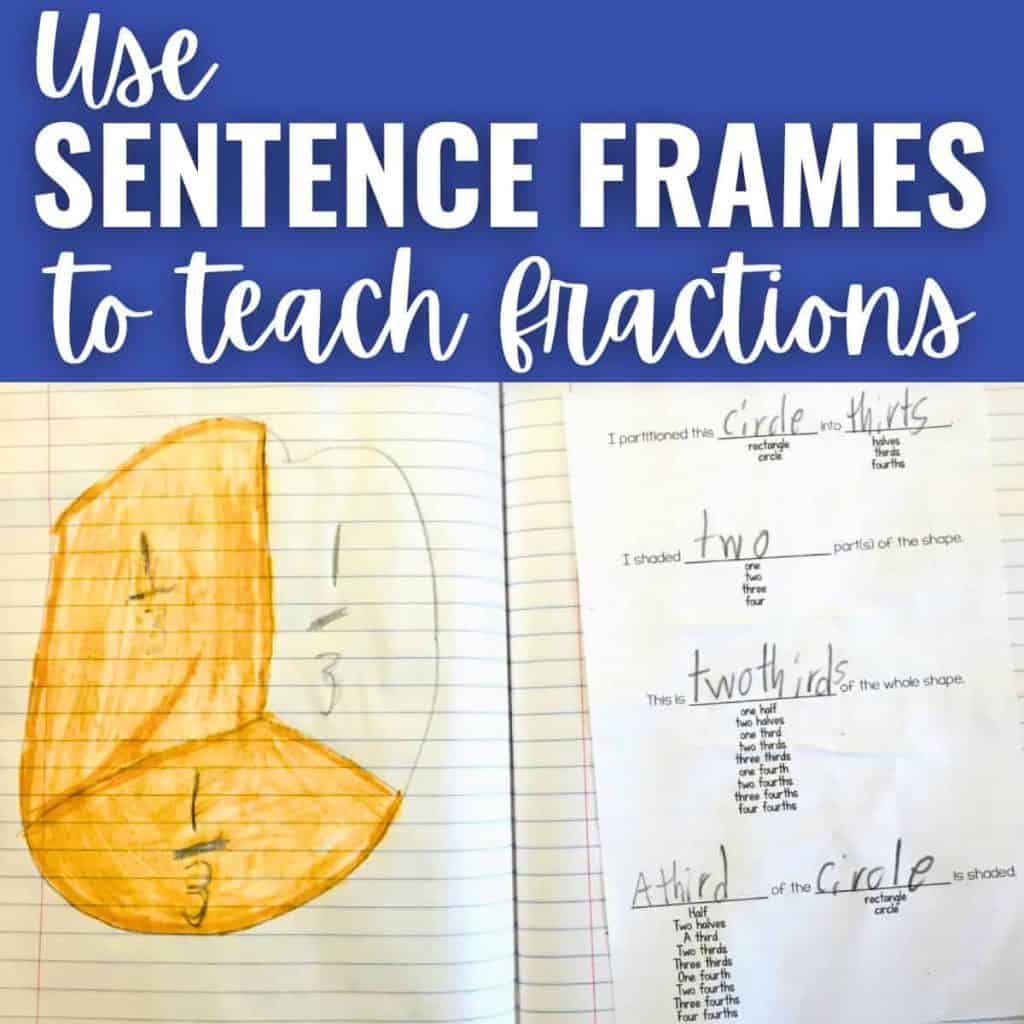
The post on using sentence frames to understand fractions walks through how this approach works across fraction concepts, including a fraction strips activity that connects language to visual models.
Games are especially effective at this stage because they build fluency with fraction representations without the pressure of a worksheet. Fractions Go Fish is a matching game where students find sets of cards showing the same fraction in four representations: the fraction form, a part-of-whole model, a part-of-set model, and the word form. The part-of-set cards are a key feature because they help students move past the “fractions are only about pieces of shapes” misconception before it takes hold.
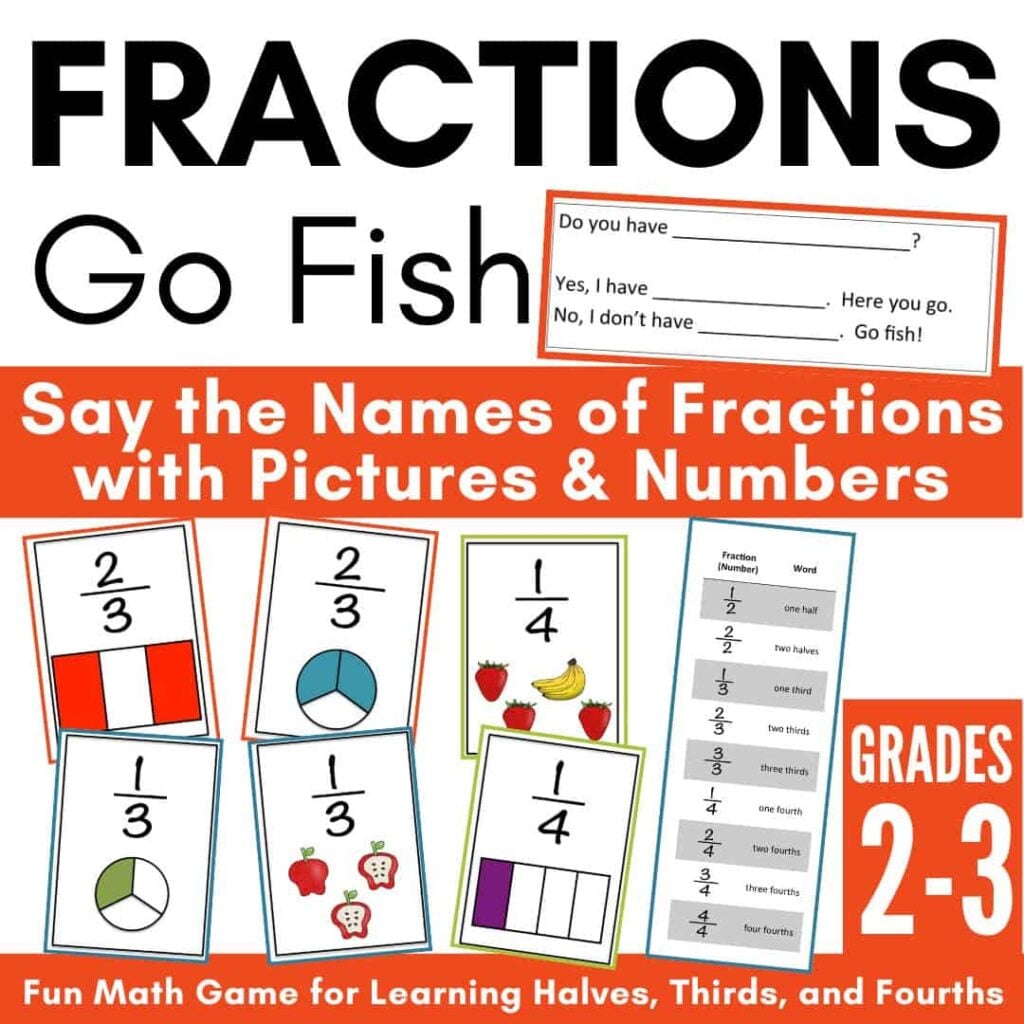
Fraction Go Fish Game | Fraction Recognition & Fraction Vocabulary Practice
Make learning fractions fun with this Fraction Go Fish Game! Students practice identifying, naming, and recognizing common fractions through an engaging card game that includes pictorial representations, fraction word forms, and sentence frames to support mathematical discussions.
For center work, the Simple Fraction Number Puzzles give students a hands-on option that works well in 2nd grade and into early 3rd. Each puzzle has students match the fraction in number form to a circle model, a rectangle model, and both word forms. The self-checking nature of puzzles is practical in a center: students know immediately whether their pieces fit together.
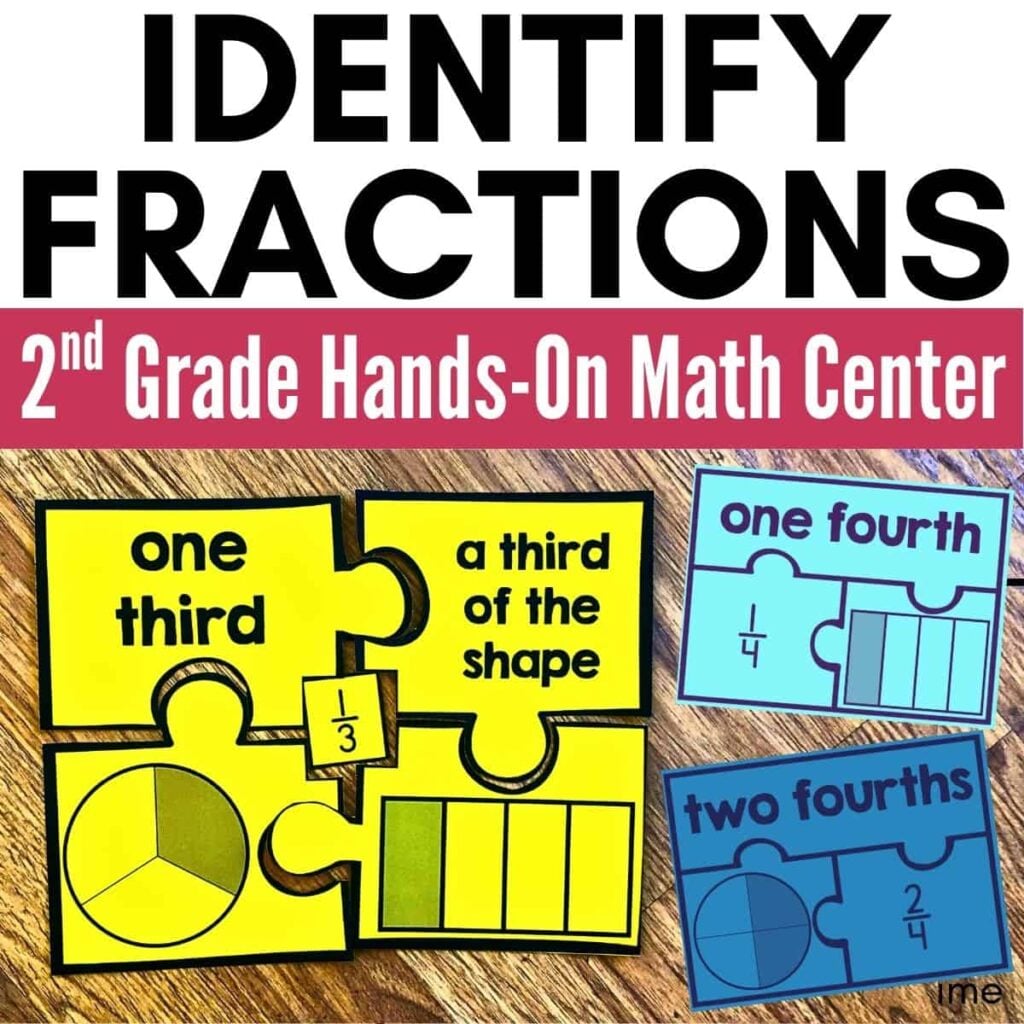
Fractions Number Puzzles | Fraction Form, Word Form & Models
Help students build fraction understanding with these hands-on Fractions Number Puzzles! Students match fractions in multiple forms, including fraction form, word form, part-of-a-whole models, circle models, and rectangle models. Perfect for math centers, small groups, review, and visual fraction practice.
As 3rd-grade students move into equivalence and the number line, the Fraction Number Puzzles for 3rd Grade cover all six NF standards through six differentiated puzzle sets: partitioned parts, placing fractions on a number line, creating number lines with fractions, matching equivalent fraction visual models, comparing fractions with numbers, and comparing fractions with visuals. The format gives students repeated exposure to the same concepts across different representations, which is exactly what builds durable understanding.
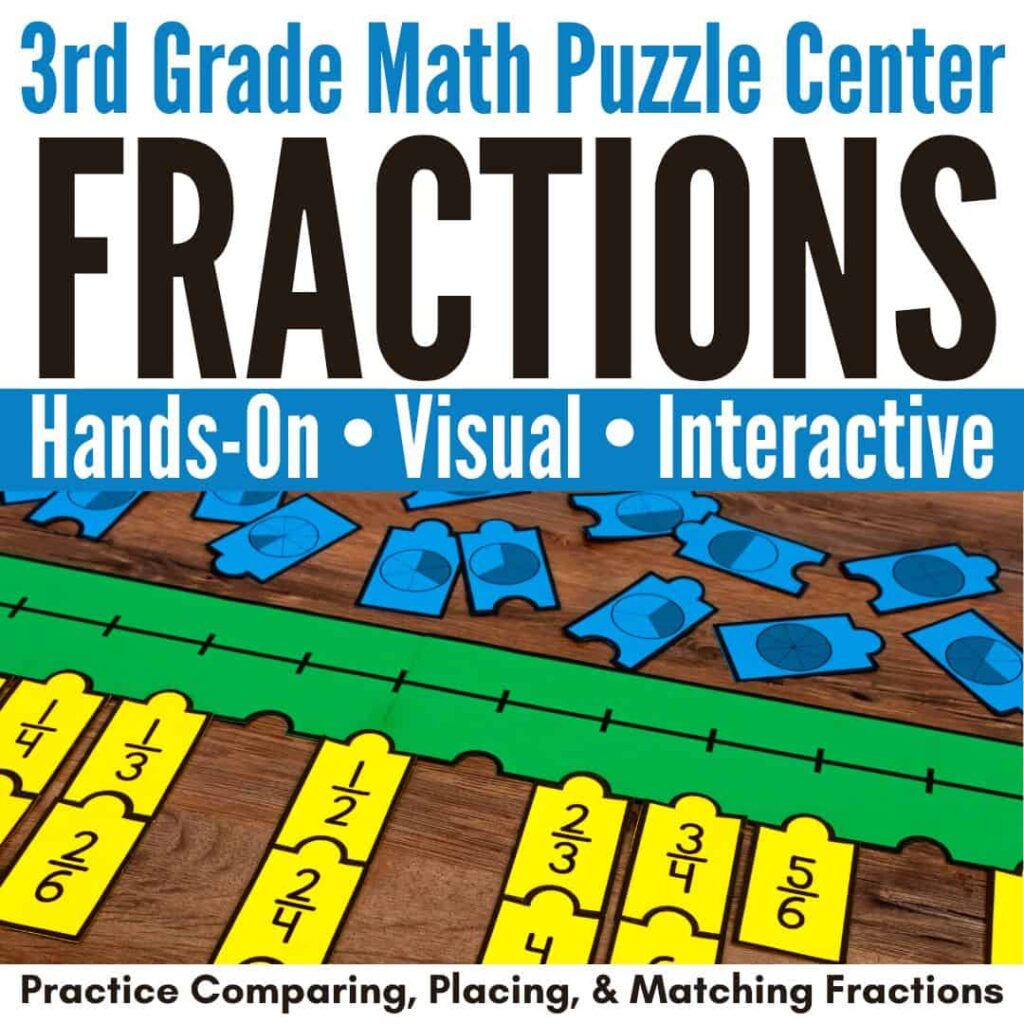
Fraction Number Puzzles 3rd Grade Hands-on Math Activity
Help students understand fraction relationships with both fraction-in-number-form and fraction visual models. This product includes a variety of number puzzles that reinforce equal parts, fractions on a number line, equivalent fractions, and comparing fractions. This covers all the Number & Operations Fractions Standards for third grade.
Teaching Equivalent Fractions and Comparing
Equivalent fractions are one area where conceptual and procedural understanding can diverge. Students who learn to multiply the numerator and denominator by the same number can produce equivalent fractions without understanding what they are doing. Students who understand that 2/4 and 1/2 represent the same amount because they occupy the same location on a number line have a much more durable understanding, and that understanding carries over to all fraction operations in 4th and 5th grade.
The Cover Up game builds that understanding from the ground up. Students construct their own paper fraction strips, partitioned into halves, fourths, and eighths. Then they roll a die marked with fractions and use the strips to cover their number line. The physical act of covering the same space with different-sized pieces makes equivalence visible rather than abstract.
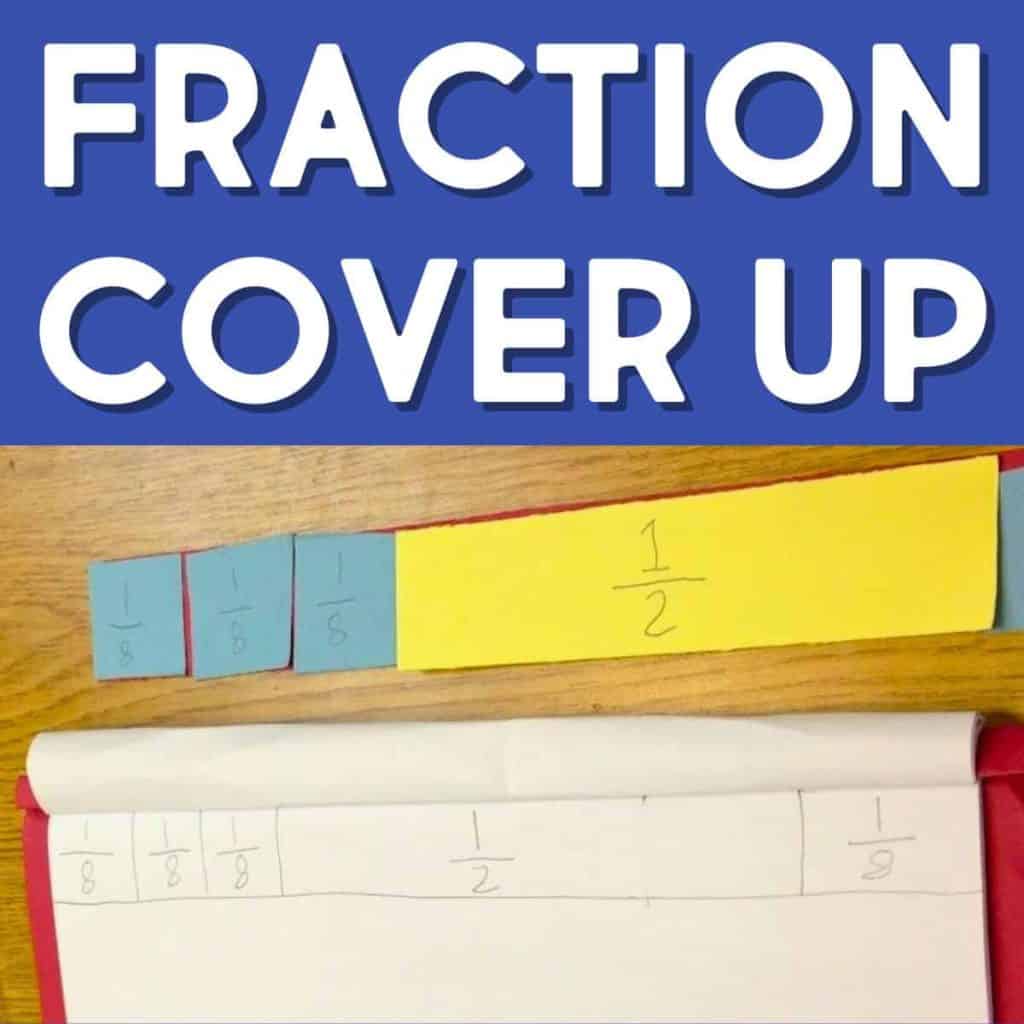
The Fractions Cover-Up post has complete directions, including how to extend the game to fraction addition for students who are ready.
For a free anchor resource, the equivalent fractions chart shows common fraction families side by side and works well posted in the classroom or kept in a student’s math folder during initial instruction.
Comparing fractions should emphasize reasoning before procedures. Students who know that 3/4 is greater than 2/4 (same denominator, compare numerators) and that 3/4 is greater than 3/5 (same numerator, more parts means each part is smaller) can reason about most fraction comparisons without needing a common denominator. Teaching these comparison strategies explicitly before moving to finding common denominators makes the procedural work more meaningful when it arrives.
Teaching Fractions in 4th Grade
Fourth grade is when the computational demands of fraction work really kick in. Students are adding and subtracting fractions with like denominators, decomposing fractions as sums of unit fractions, working with mixed numbers, and multiplying fractions by whole numbers. All of this should stay connected to models for as long as possible. Number lines and area models for addition and subtraction help students see what is actually happening when they operate on fractions rather than just following a procedure.
Students who struggle with 4th-grade fraction operations usually have a gap from 3rd grade: they don’t have a solid understanding of equivalent fractions, so they can’t work fluently with like denominators or compare fractions with confidence. Taking time to reinforce equivalence before moving into operations is almost always worth it. A brief review of number line placement and the benchmark fractions (0, 1/2, 1) at the start of a 4th-grade fraction unit can prevent much procedural confusion later.
For review and practice across all 4th-grade NF standards, the Fourth Grade Fractions Cut and Paste provides two pages per standard, 28 pages total. The cut-and-paste format has students match answers to problems and write an explanation for every standard. The written explanation piece is especially useful because it surfaces reasoning gaps that a matching activity alone wouldn’t reveal.
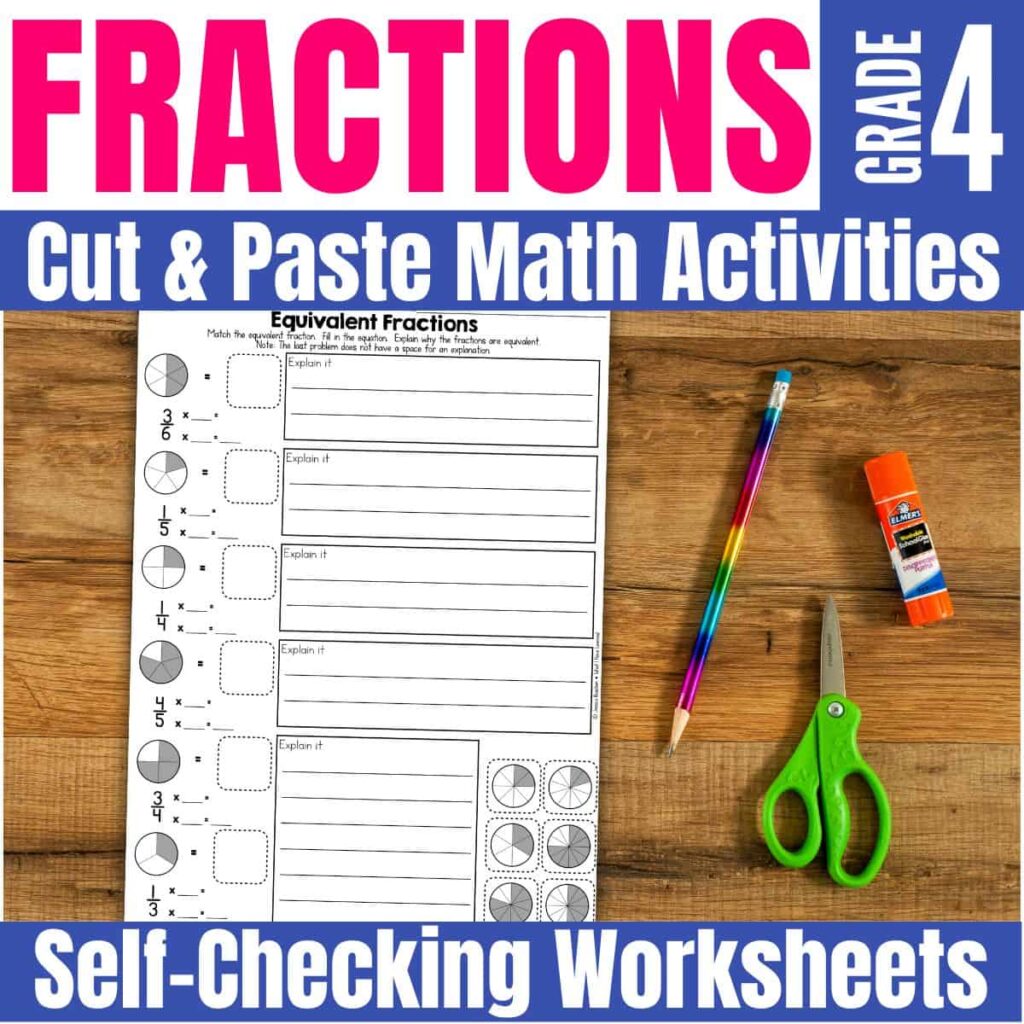
Fourth Grade Fractions Test Prep Cut and Paste Math Activities
Cut and Paste Match Activities for EVERY fourth grade Numbers and Operations – Fractions standard. The worksheets contain cut and paste problems as well as written answers and explanations.
Tips for Teaching Fractions in Elementary School
Always lead with models. Fraction computation without conceptual grounding does not tend to stick. Before students compute with fractions, they should be able to plot them on a number line, identify which of two fractions is larger, and explain what each numerator and denominator means. Models make the abstract concrete, and skipping them to get to procedures faster usually means going back later.
Build the vocabulary before the diagram. Students who don’t know what “denominator” means, or who confuse numerator and denominator, can’t make sense of fraction notation even when they’re looking at a clear picture. Sorting, sentence frames, and matching activities build the language before the symbolic work demands it.
Use the number line consistently. Every time students work with fractions, there should be a number line nearby, whether it’s drawn by the teacher, printed in a student reference folder, or built from paper fraction strips. The number line reinforces that fractions are numbers, not just descriptions of shapes, and it gives students a tool for reasoning about order and equivalence without procedures.
Name the misconceptions explicitly. Fractions come with well-documented misconceptions that don’t disappear by ignoring them: the belief that a larger denominator means a larger fraction, the idea that fractions only exist between 0 and 1, and the confusion between part-of-a-whole and part-of-a-set. Address them directly. Give students a chance to make the error, then build the experience that creates the cognitive conflict they need to revise their thinking.
Final Thoughts on How to Teach Fractions in Elementary School
Fraction understanding develops slowly and requires consistent attention to models, vocabulary, and number lines across multiple grade levels. The students who arrive at 4th grade ready for fraction operations got there because their 3rd-grade teacher made unit fractions and number line placement feel real, not just procedural. And the 5th graders who can add unlike denominators confidently are working from a conceptual foundation built over several years.
Start with what students can see and touch. Connect every procedure to a model. Ask students to explain their thinking rather than just compute. The investment in conceptual understanding pays off when students start treating fractions as numbers rather than as drawings of pie slices — and that shift makes every fraction standard that follows significantly easier to teach.
Jessica BOschen
Jessica is a teacher, homeschool parent, and entrepreneur. She shares her passion for teaching and education on What I Have Learned. Jessica has 16 years of experience teaching elementary school and currently homeschools her two middle and high school boys. She enjoys scaffolding learning for students, focusing on helping our most challenging learners achieve success in all academic areas.