
Water Cycle for Kids: A Teacher’s Guide for 2nd–5th Grade
Teaching the water cycle for kids works especially well in elementary science because the topic recurs at multiple grade levels, each time with greater depth. Students encounter it first in 2nd grade, when they begin identifying where water is found on Earth; deepen their understanding in 3rd grade, when cloud formation and precipitation connect to weather patterns; and arrive at a systems-level view in 5th grade, when they study freshwater distribution and watersheds. Each year adds a new layer rather than repeating the same lesson.
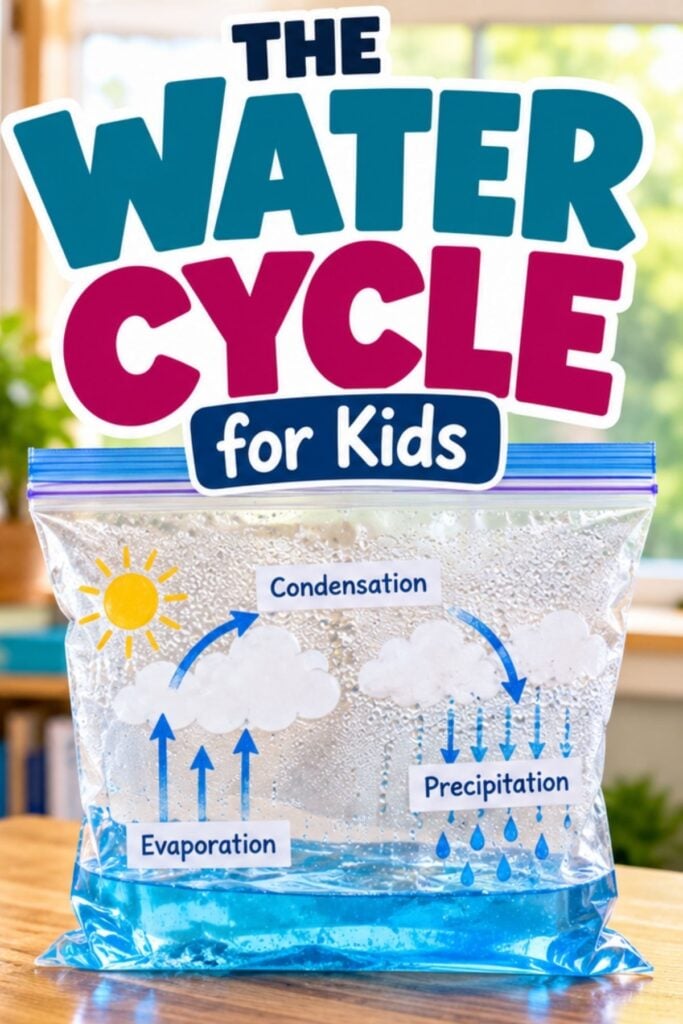
This guide walks through what to teach at each grade level, which NGSS standards apply, and what hands-on resources help students understand how Earth’s water moves.
What Are the Stages of the Water Cycle?
For elementary students, the water cycle is typically introduced with four core stages.
Evaporation is when liquid water from oceans, lakes, rivers, and puddles turns into water vapor and rises into the atmosphere. Heat from the sun drives this process — it’s why puddles disappear on a warm day even without anyone mopping them up.
Condensation is when water vapor cools and forms droplets, creating clouds and fog. Students who make a cloud in a jar watch this happen in real time — the moment when invisible vapor becomes visible cloud is genuinely memorable.
Precipitation is when water falls from clouds as rain, snow, sleet, or hail. The form it takes depends on the temperature at different altitudes as it falls.
Collection (sometimes called runoff) occurs when precipitation enters oceans, lakes, rivers, and groundwater — and the cycle begins again.
Upper-grade curricula often add transpiration (water vapor released by plants) and infiltration (water soaking into the ground) as students develop a more complete picture of the system in 4th and 5th grade.
How the Water Cycle Fits Into Elementary Science Standards
NGSS doesn’t introduce the entire water cycle at once. Understanding builds across grade levels, with each year adding a new lens.
In 2nd grade, the focus is on recognizing where water exists on Earth — as liquid in oceans, lakes, and rivers, and as solid in glaciers and ice caps. Students learn that water can change state between solid and liquid. In 3rd grade, students study weather patterns and cloud formation, connecting directly to evaporation and condensation. Fourth grade shifts toward how water shapes the landscape — erosion, weathering, and the movement of water across and through Earth’s surface. In 5th grade, students zoom out to a systems view: standard 5-ESS2-1 asks students to describe and graph the amounts and percentages of water and fresh water in various reservoirs, connecting the cycle to the real challenge of freshwater availability.
For a broader look at how these standards fit within elementary Earth science, the 2nd–5th Grade Earth Science Guide maps every standard across grade levels.
Teaching the Water Cycle in 2nd Grade
Second grade is where students begin building their mental model of Earth’s water. Standard 2-ESS2-3 asks students to obtain information to identify where water is found on Earth and that it can exist as a solid or a liquid. The goal at this stage isn’t mastery of evaporation and condensation — it’s giving students a framework they’ll fill in over the next three years.
The most effective approach at this level is to ground the cycle in places students already know: ponds, rivers, puddles, rain, and snow. Before students can think about water moving between states, they need to be able to name where it exists. Most 2nd graders are genuinely surprised to learn how much of Earth’s surface is covered by water — and that most of it is saltwater they can’t drink.
A video-based warmup is a useful entry point for building background knowledge before hands-on work begins. The Water Cycle and Freshwater Video Warmup gives 2nd graders a structured way to engage with footage about the water cycle, freshwater, and where water is found on Earth — with response prompts that check understanding before students move to diagrams and investigations.
Labeling activities help students connect vocabulary to the stages they’re learning. The Water Cycle Cut and Paste Diagram gives students a hands-on way to sequence and label the cycle — and the cut-and-paste format is self-checking in a way that worksheets aren’t. If a stage is in the wrong place, the diagram doesn’t make sense, and students catch their own errors.
For students who benefit from a concrete investigation, the Rain Cloud in a Jar activity for 2nd grade makes condensation visible using hot water, ice, and a container. Students observe water vapor cooling and forming droplets — a direct experience of the cycle that anchor charts reinforce later, rather than introduce.
The Bodies of Water and Water Cycle unit covers both where water is found and how it moves, connecting the water cycle to the habitats that depend on it — a natural bridge for 2nd graders beginning to see connections across science topics.
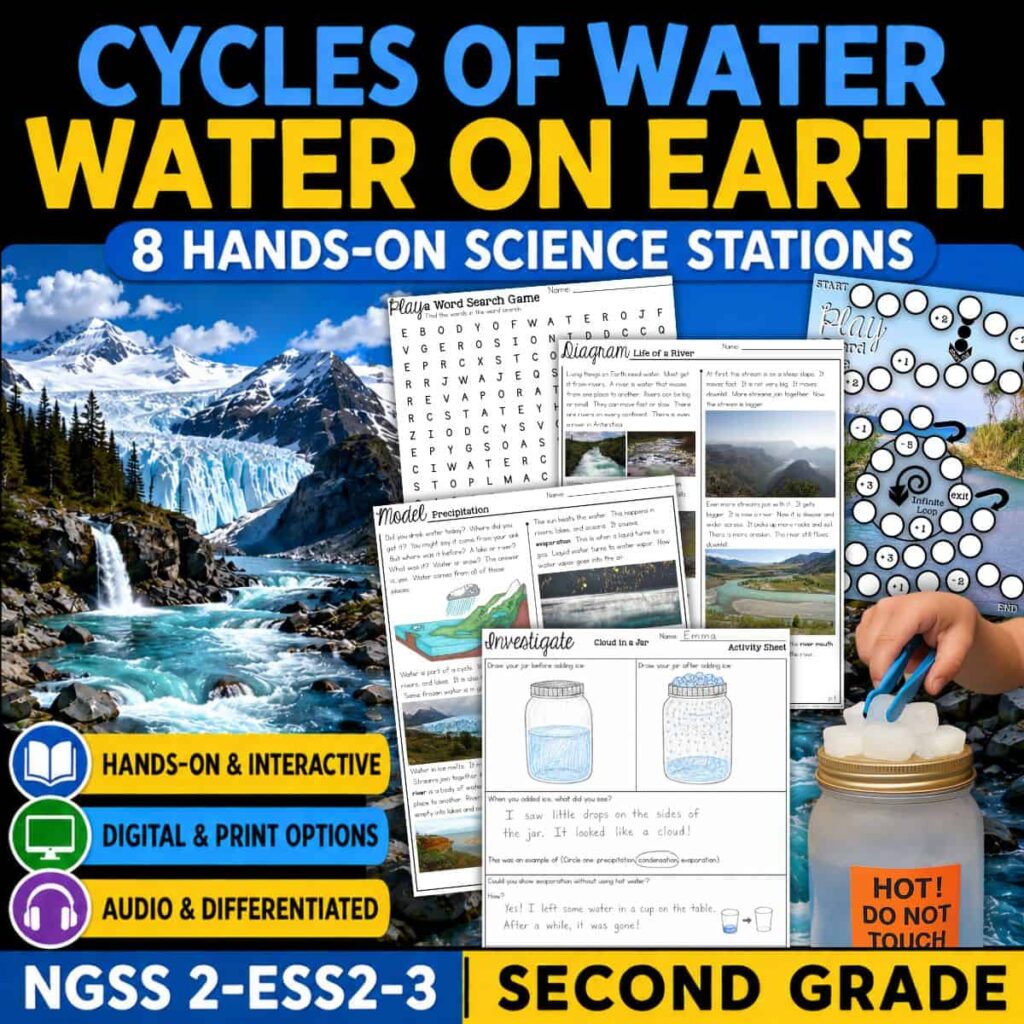
Water on Earth Science Stations | NGSS 2-ESS2-3
Engage your 2nd grade students with these interactive Water on Earth science stations aligned to NGSS 2-ESS2-3! Students explore where water is found on Earth, the states of water, glaciers, precipitation, river systems, and the water cycle through hands-on activities, reading passages, models, games, and investigations. Includes differentiated response sheets, vocabulary cards, MP3 audio support, and 8 engaging science stations perfect for centers or small groups.
Teaching the Water Cycle in 3rd Grade
In 3rd grade, the water cycle stops being abstract and becomes visible. Standard 3-ESS2-1 focuses on weather patterns, and understanding cloud formation and precipitation is central to that work. Students who built a mental model in 2nd grade are now ready to explain why clouds form and what conditions lead to different types of precipitation.
Cloud formation is where the most meaningful conceptual work happens at this stage. When students understand that water vapor rises, cools, and condenses around tiny particles in the atmosphere, they stop seeing clouds as background scenery and start seeing them as a stage in a cycle they already know.
A hands-on cloud formation investigation makes this concrete in a way that diagrams can’t match. The cloud-in-a-jar science station guides students through a structured investigation in which they read about cloud formation, create a cloud using hot water, ice, and aerosol particles, and record their observations and explanations. Students who watch condensation happen inside a jar carry that mental image into every future weather discussion.
After the investigation, connect what students observed to outdoor cloud observation. Having students sketch and name clouds over several days, then predict weather based on cloud types, applies the cycle to a context they can observe every day, which is exactly what the 3-ESS2-1 standard calls for.
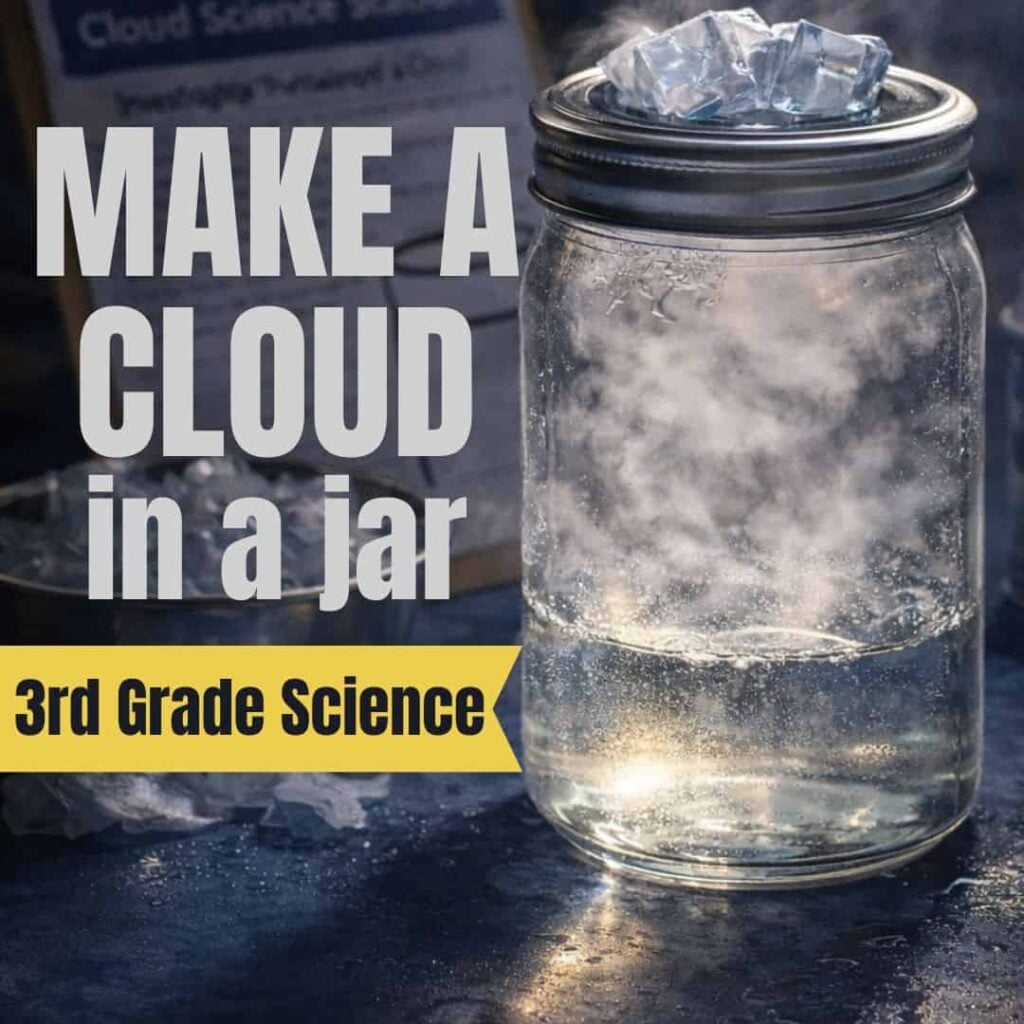
Take a look at this cloud and weather sceince activity.
Connecting the Water Cycle to 4th Grade Earth Science
Fourth grade doesn’t have a dedicated water cycle standard in NGSS, but the cycle still shows up in 4-ESS2-1, which focuses on weathering and erosion by water, ice, wind, and vegetation. Students who understand the water cycle are ready to think about what happens when precipitation hits land: does it run off into streams, soak into the ground, or slowly break down rock over time?
A brief review of the water cycle at the start of an Earth’s surface unit pays dividends. Students who can trace a water droplet from cloud to ocean to glacier to river have the conceptual foundation they need to understand erosion as a process driven by moving water — not just something that happens to rocks. The cycle provides the “why” behind the patterns they’ll observe in 4th-grade Earth science.
Teaching the Water Cycle in 5th Grade
Fifth grade is where the water cycle connects to one of the most important science questions students will encounter: where does freshwater come from, and why is it unevenly distributed? Standard 5-ESS2-1 asks students to describe and graph the amounts and percentages of water and fresh water in various reservoirs, and most students are genuinely surprised to discover how little of Earth’s water is accessible freshwater.
That surprise is worth leaning into. Before diving into data, ask students to estimate: what percentage of Earth’s water do you think is fresh? Their guesses are almost always too high, and the reality — that roughly 97% is saltwater and most of the remaining freshwater is locked in glaciers — lands differently when students arrive at it themselves rather than reading it off a slide.
Three resources work well together at this grade level. The Earth’s Water Cycle and Freshwater Systems reading activity builds content knowledge through a structured nonfiction passage that connects the cycle to where freshwater comes from and why it’s unevenly distributed across Earth’s surface.
The Watershed Science Station gives students a hands-on investigation of how water moves across a landscape and collects in drainage basins — making the abstract concept of a watershed concrete and visible. Students who understand watersheds understand why what happens in one part of a landscape affects water quality somewhere downstream.
The Water Distribution on Earth STEM Lab extends the investigation into a data-driven activity where students model the proportions of salt water, freshwater, and accessible freshwater — putting the scale of freshwater scarcity into a format students can see and reason about.
Together, these three activities move students from understanding the water cycle as a natural process to understanding why it matters for human communities and ecosystems.

Earth’s Water Supply Science Station UNIT BUNDLE
These Earth’s Water Supply Next Generation Science Stations include eight different science stations where students deepen their understanding of freshwater, the distribution of water on Earth, and the water cycle. The focus is on 5-ESS2-2.
Tips for Teaching the Water Cycle Across Grade Levels
A few approaches make a meaningful difference at every grade.
Start with what students already know. Most students have seen rain, puddles, fog, and snow. Asking them to describe where water comes from and where it goes before introducing any vocabulary activates prior knowledge and surfaces misconceptions you can address directly. Students who think clouds are made of steam, or that rain comes from the ocean, are telling you something important about the instruction they need.
Make evaporation visible before you name it. Wet a paper towel, mark the edge with a marker, and revisit it every 20 minutes. Ask students to explain where the water went. This low-prep demonstration gives students a direct experience of evaporation — and when you introduce the term afterward, it attaches to something real.
Build anchor charts with the class, not before. Rather than introducing a complete water cycle diagram at the start of a unit, build it with students as you teach each stage. Students remember information better when they watch it get added — and the finished chart reflects the work they actually did.
Connect the cycle to local water. What bodies of water are near your school? Where does your drinking water come from? Where does rain go after it falls in your neighborhood? Grounding the water cycle in local geography makes it feel like science rather than a vocabulary list.
Final Thoughts on Teaching the Water Cycle for Kids
The water cycle is one of those topics that rewards patient, layered instruction. What 2nd graders learn about where water exists on Earth becomes the foundation for 3rd grade cloud formation, which becomes the backdrop for 4th grade erosion work, which deepens into 5th grade freshwater distribution. Each year adds something new without repeating what came before — if instruction is sequenced deliberately.
Teach the stage your grade is responsible for, connect it explicitly to what students already know, and let the complexity build from there. Students who reach 5th grade with a clear mental model of the cycle are ready to think seriously about water scarcity, ecosystems, and the science behind weather — all of which trace back to the puddle that disappears on a sunny afternoon.
Jessica BOschen
Jessica is a teacher, homeschool parent, and entrepreneur. She shares her passion for teaching and education on What I Have Learned. Jessica has 16 years of experience teaching elementary school and currently homeschools her two middle and high school boys. She enjoys scaffolding learning for students, focusing on helping our most challenging learners achieve success in all academic areas.