

“Turn and Talk” is a powerful, quick-response discussion technique that gives students a chance to process their thoughts out loud, practice active listening, and connect with their peers.
If you’re already using “Think-Pair-Share,” you may wonder how “Turn and Talk” fits in. While the two strategies are similar, “Turn and Talk” offers unique benefits, particularly for spontaneous discussions and focused listening.
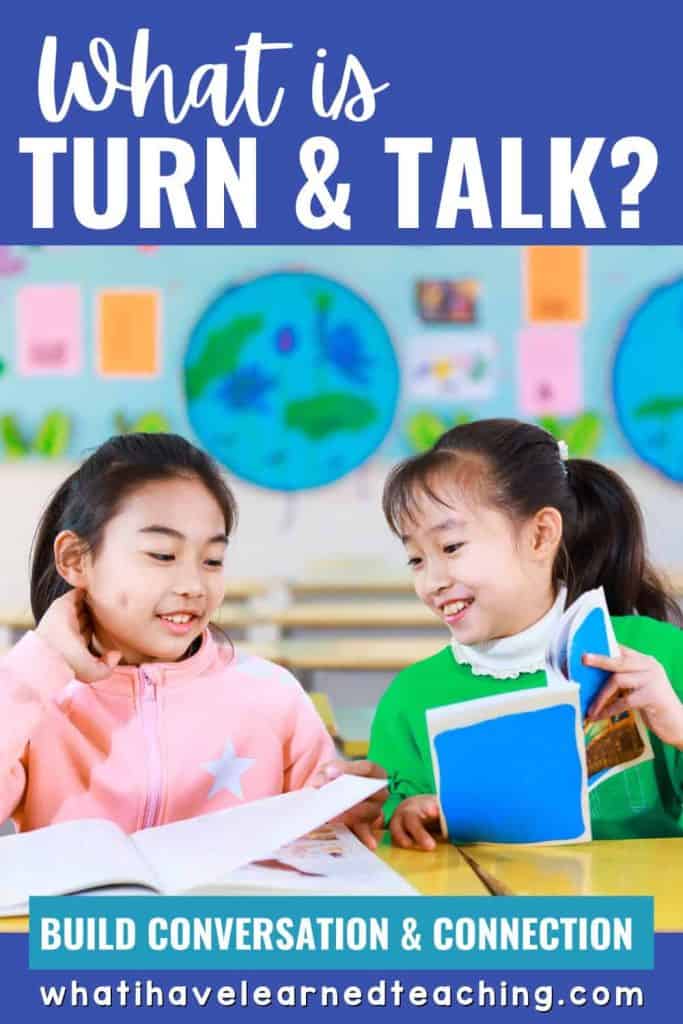
Turn and Talk vs. Think-Pair-Share: Choosing the Right Tool for the Job
Though similar, “Turn and Talk” and “Think-Pair-Share” serve different purposes. “Turn and Talk” is ideal for on-the-spot discussions, especially when you want students to share their immediate reactions or interpretations. With no “thinking” step beforehand, “Turn and Talk” encourages a spontaneous exchange that’s perfect for sparking excitement about a topic.
When to use each Strategy:
- Turn and Talk: Quick responses, immediate reactions, and situations where time is tight.
- Think-Pair-Share: Deeper conversations, structured reflection, and situations that allow time for students to think critically before speaking.
Select the strategy that best meets your goals and offers students more varied interaction experiences.
I use both strategies often and it mostly depends on how quickly I want to move onto the next part of the lesson vs. develop thinking and language around the current part of the lesson.
For instance, if my intention is to develop student’s language skills and use of the compare and contrast strategy, I will use think-pair-share. This will give them thinking time to construct their answer, sharing time to move the language from their brains to speaking, and then sharing time to hear each other’s answers.
However, if we are sharing the answer to a math question, I might have students quickly tell their neighbors how they solved the problem before we share it with the whole group.
Use Turn and Talk Across Subjects and Grades
The flexibility of “Turn and Talk” means it can be implemented across various learning contexts. Here are a few optimal situations:
- During Read-Alouds: Pause at a key moment to let students predict what might happen next.
- Quick Check-Ins: Use it after introducing a new concept or vocabulary word to gauge initial understanding.
- Reflection on Daily Lessons: At the end of a lesson, ask students to turn and talk about the most interesting thing they learned.
- Language Arts: Use “Turn and Talk” to discuss character motivations, plot predictions, or theme exploration.
- Science: Ask students to discuss hypotheses or describe observations after an experiment.
- Social Studies: Encourage students to share opinions on historical events or cultural practices.
By adjusting the prompts to fit the subject, you can make “Turn and Talk” relevant and engaging for every lesson.
Benefits of Turn and Talk for Different Student Needs
“Turn and Talk” offers several benefits that cater to the diverse needs of students, making it an invaluable tool in the classroom. This strategy provides a low-pressure setting for shy students or English learners to practice speaking with just one peer rather than the entire class.
This smaller audience helps build confidence and allows these students to express their ideas without the anxiety of speaking publicly. For students who excel at listening, “Turn and Talk” allows them to focus deeply on what their partner is saying, fostering meaningful, two-way interactions that enhance listening and response skills.
One key benefit of “Turn and Talk” is that it builds enhanced speaking skills. Students practice articulating their thoughts, explaining ideas, and responding to questions through regular, structured opportunities to talk with a peer. This frequent interaction boosts their confidence and improves their ability to communicate clearly and effectively.
Active listening practice is another essential skill that “Turn and Talk” cultivates. Students learn not only to express their ideas but also to pay close attention to their partner’s perspective, process what has been shared, and respond thoughtfully. This practice encourages a balanced exchange where both partners feel heard and understood.
Finally, “Turn and Talk” supports increased engagement in the classroom. Quick and focused interactions allow students to participate actively without requiring a long time commitment, keeping them engaged and energized. This strategy fits seamlessly into a variety of lessons, offering students regular chances to engage with each other and the material in a way that’s both structured and spontaneous.
How to Implement Turn and Talk Effectively
A successful “Turn and Talk” session requires a bit of setup. Follow these steps to help your students make the most of each conversation:
- Set Clear Expectations: Explain the goals of “Turn and Talk,” emphasizing listening as well as speaking.
- Provide Structured Prompts: Use prompts that guide students’ responses instead of open-ended questions.
- Teach Active Listening: Model what it looks like to listen actively (eye contact, nodding, responding) so students know what’s expected.
With a structured approach, “Turn and Talk” becomes more than just a casual conversation—it’s a purposeful exchange that builds communication skills.
Common Challenges
Like any teaching strategy, “Turn and Talk” comes with its own set of challenges. Here’s how to address some common issues:
- Off-Topic Conversations: Remind students to stay focused and use a visual cue to bring attention back to the topic if needed.
- Dominant Speakers: Encourage students to “share the air” and ensure both partners have a chance to speak.
- Overly Brief Responses: Provide prompts that require a bit more thought, encouraging students to elaborate on their answers.
Adding “Turn and Talk” to your teaching toolkit gives students more opportunities to express their ideas, practice active listening, and connect. While it might be less formal than “Think-Pair-Share,” “Turn and Talk” can be equally powerful in building a collaborative, communicative classroom culture.
Jessica BOschen
Jessica is a teacher, homeschool parent, and entrepreneur. She shares her passion for teaching and education on What I Have Learned. Jessica has 16 years of experience teaching elementary school and currently homeschools her two middle and high school boys. She enjoys scaffolding learning for students, focusing on helping our most challenging learners achieve success in all academic areas.