
Earth’s Biosphere: Hands-on Activities for Upper Elementary Students
The Earth’s biosphere is the sphere that students are already part of, making it a great anchor for teaching Earth’s systems. Every organism on the planet, from the bacteria in soil to the trees in a forest to the students in your classroom, belongs to the biosphere. That personal connection gives you a lot to work with when looking for Earth’s biosphere activities.
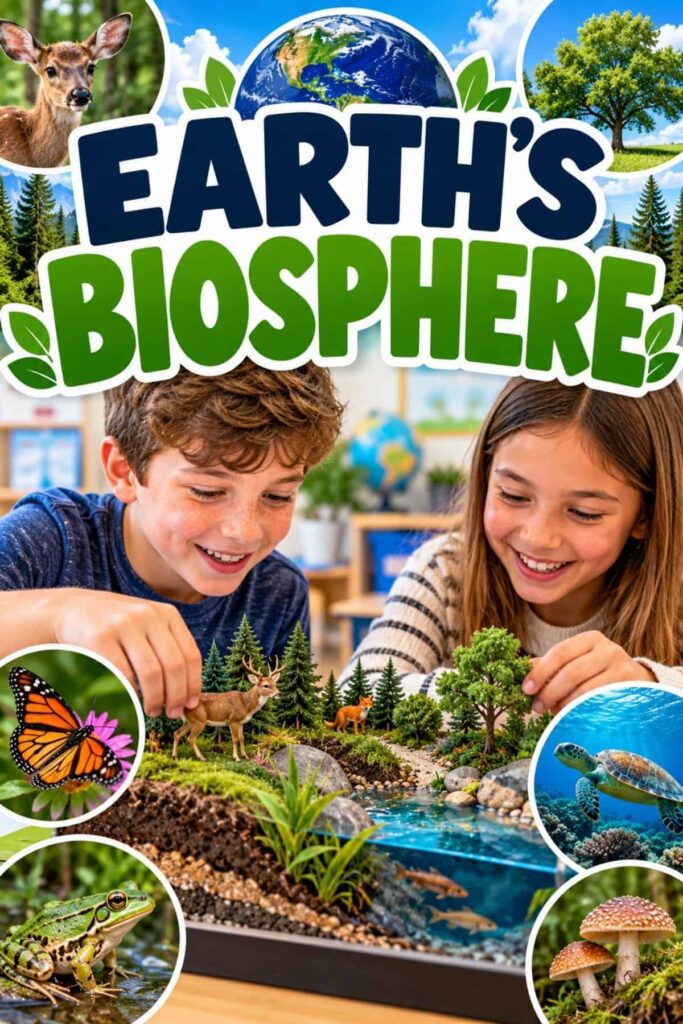
What makes teaching the biosphere interesting is the interactions. The biosphere does not exist in isolation; it is constantly being shaped by the atmosphere, hydrosphere, and geosphere, and it shapes them in return. These activities help students see those connections clearly, moving beyond “living things” as a category and toward understanding the biosphere as a dynamic part of Earth’s systems.
Find more Earth’s spheres resources in the complete Earth’s spheres activities guide.
What Is the Earth’s Biosphere?
The biosphere includes every living thing on Earth and the environments that support them. It spans from the deepest ocean trenches to the tops of mountains, anywhere life exists. That includes plants, animals, fungi, bacteria, and every other organism, as well as the ecosystems and food webs that connect them.
Because the biosphere overlaps with every other sphere, changes in one part of Earth’s system almost always show up in the biosphere. A shift in rainfall (hydrosphere) changes which plants can grow (biosphere). An earthquake (in the geosphere) reshapes a habitat. A rise in atmospheric carbon dioxide changes ocean chemistry and affects marine ecosystems. Helping students see the biosphere as a connected, responsive system is the core of this unit.
Hands-on Earth’s Biosphere Activities
Students will explore the biosphere, the sphere of life, through various activities covering ecosystems, food chains, and the relationships among organisms. By learning about weathering, soil composition, and plant support, students will develop a better appreciation of how living organisms interact with their environment. Several of the science activities explore the connections between the biosphere and other spheres. Here are a few more ideas.
Landforms and the Biosphere
The shape of the land determines what can live there. Mountains, plateaus, hills, and plains each support different plants and animals, and changes in the geosphere quickly ripple into the biosphere.
In this activity, each student is assigned a landform and uses a reading passage and research to describe both the geosphere and biosphere characteristics of that landform. In the second part, students analyze a scenario in which the geosphere changes and determine how organisms in the biosphere would be affected. They finish by creating a three-dimensional model of the landform after the change.
It is one of the most effective activities for making the sphere interactions concrete, because students have to think through cause and effect rather than just label the spheres.

This resource helps students develop models to describe how landforms and the biosphere interact.
Model Ecosystems with Food Chains and Webs
Building model ecosystems gives students a way to see how every organism in a community depends on the others, and what happens when that balance is disrupted.
Students research an ecosystem and map out its food chains and food webs. Then introduce a disruption: the removal of a top predator, the arrival of an invasive species, a drought, or a change in land use. Students predict how the disruption would ripple through the food web and discuss what recovery might look like.
This activity builds systems thinking and helps students understand that changes in the biosphere are rarely isolated. A disruption to one species affects producers, consumers, and decomposers throughout the web.
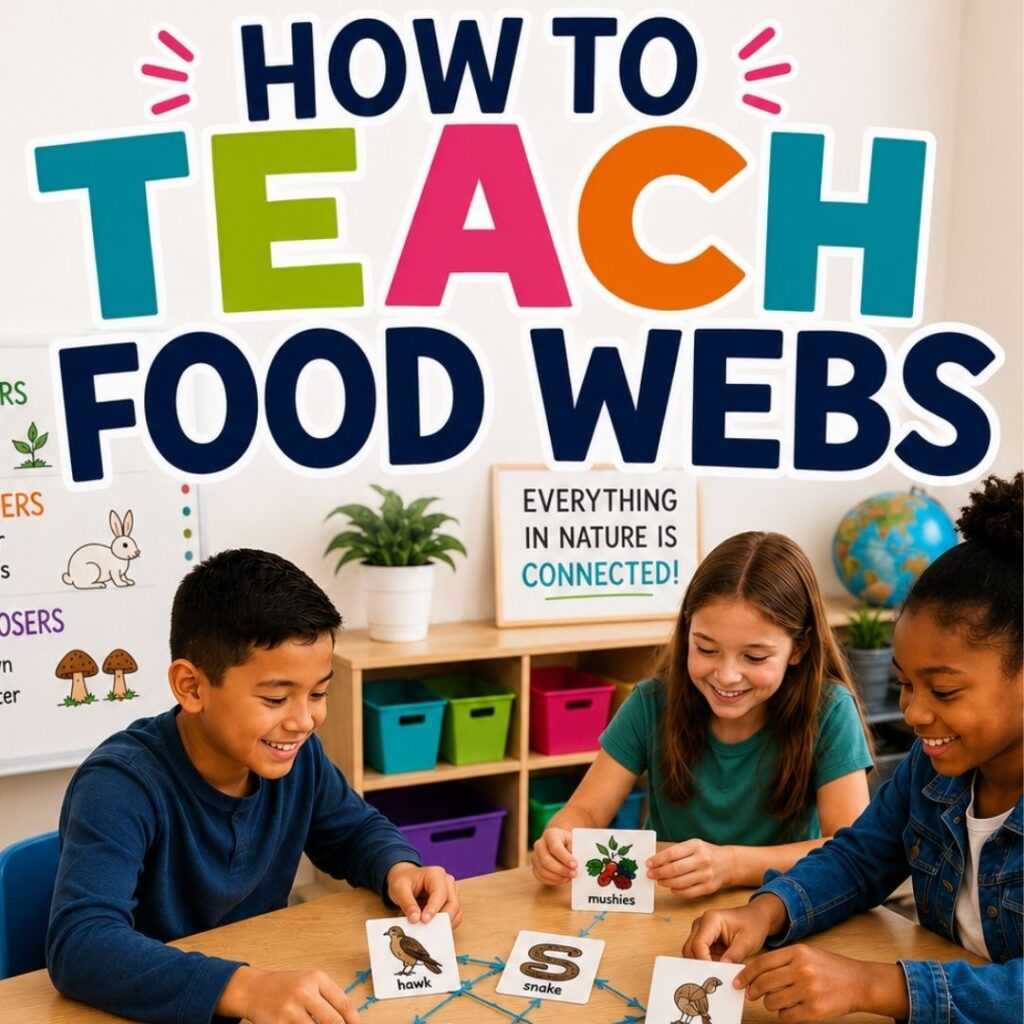
See more activities that teach food webs, including how disruptions affect the other spheres.
Human Impact on Biodiversity: Deforestation and Conservation
Human activities have a measurable impact on biodiversity, and this activity helps students grapple with both the problem and possible responses.
Students examine deforestation as a case study: what drives it, which species are affected, and what happens to an ecosystem when large sections of habitat are removed. The activity also explores conservation efforts and asks students to evaluate what has been done and what still needs to happen. It is a strong fit for connecting the science to real-world decision-making and is a natural extension of 5-ESS3-1.
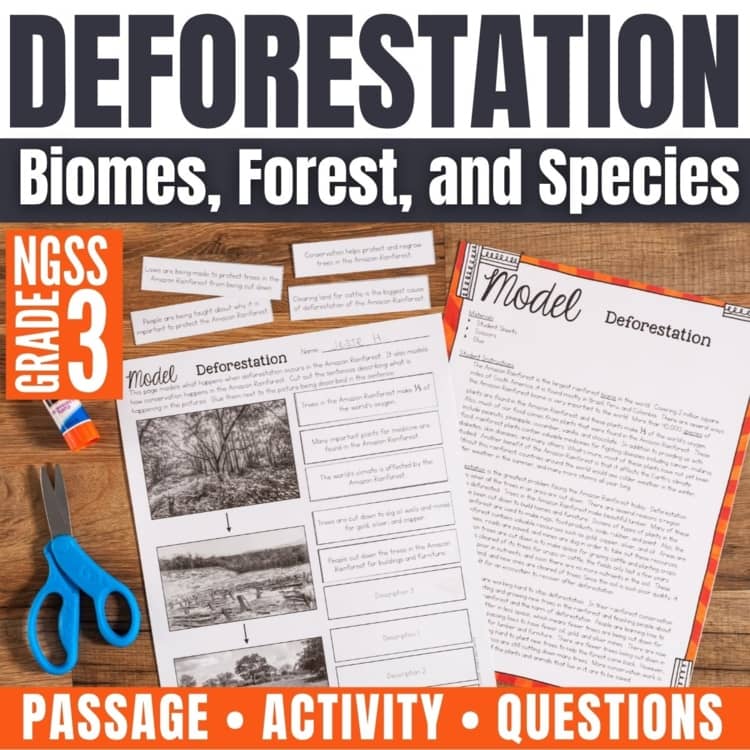
This 3rd-grade NGSS science station focuses on how environmental changes impact ecosystems, helping students build a deeper understanding of ecosystems and biodiversity.
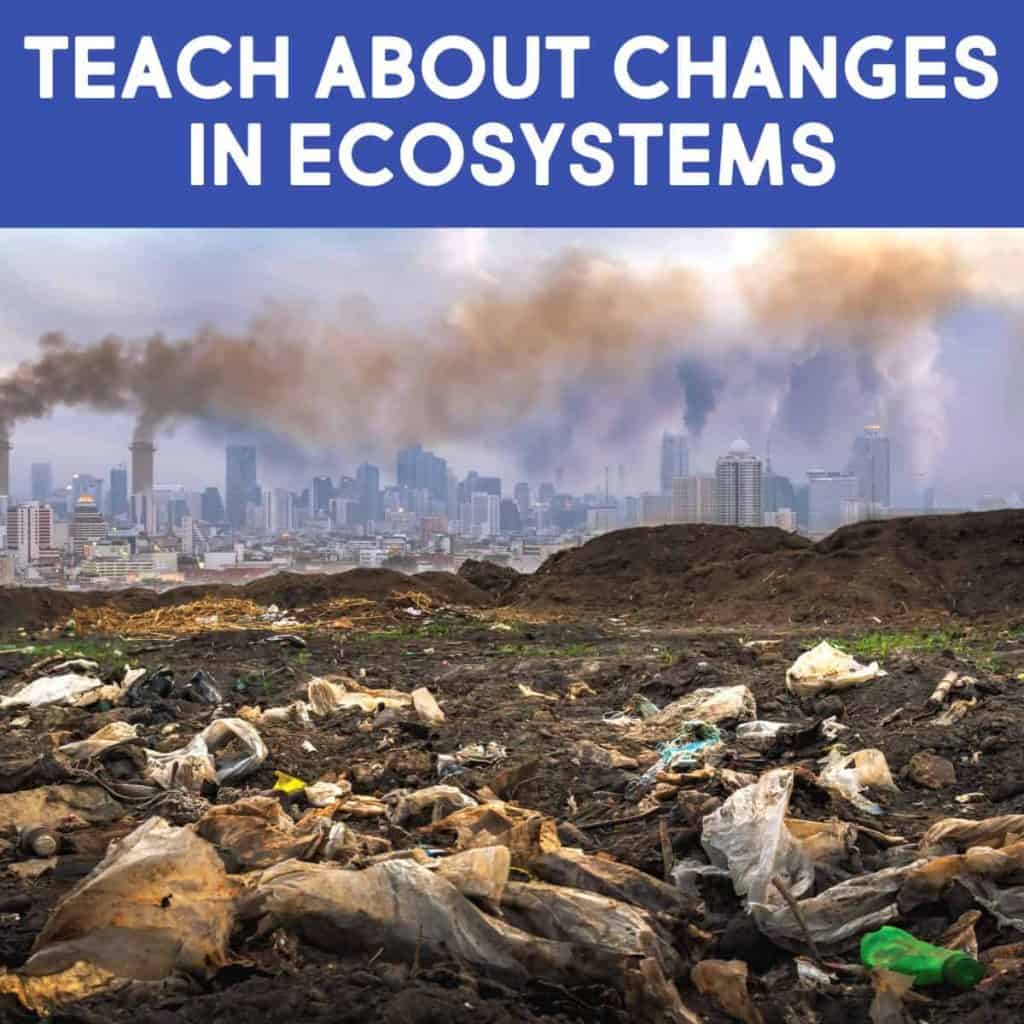
Ecosystems are constantly changing, and these changes can have a big impact on the plants and animals that live there. Here are some activities that explain those changes.
Environmental Changes and Natural Selection
This activity connects the biosphere to environmental change in a way that surprises students: by looking at how pollution can drive natural selection.
Students explore how changes in an ecosystem affect insect color traits over time. As the environment shifts, certain color variations become more or less advantageous, and the population changes accordingly. It is a tangible, visual way to show students that natural selection is not just something that happened in the distant past. It is a response to the conditions the biosphere is currently experiencing.

In this engaging investigation, students model how environmental conditions influence survival by simulating predator-prey interactions using colored insect squares and tree backgrounds.
Track Animal Migration
Migration is one of the clearest examples of organisms responding to conditions across multiple spheres. Animals time their movements around temperature changes in the atmosphere, the availability of water in the hydrosphere, and seasonal shifts in plant life in the biosphere.
Have students choose a migratory animal and trace its route using maps or online tracking tools. They research what drives the migration, what the animal needs from each sphere along the way, and how environmental changes have affected migration timing or routes in recent years. Students often find this one engaging once they start looking at real tracking data and realize how far some animals actually travel.


The Biosphere and the Other Spheres
A few connections worth highlighting as you teach this unit:
The geosphere determines where organisms can live by shaping habitats, providing soil for plant growth, and creating the physical structure of ecosystems. The Landforms and the Biosphere activity above addresses this directly.
The hydrosphere supports all life by providing water, and changes in water quality or quantity affect every level of a food web. The deforestation activity connects here, since forest loss affects local water cycles.
The atmosphere provides the oxygen and carbon dioxide that organisms depend on, and changes in atmospheric chemistry, whether from pollution or rising carbon dioxide levels, are already reshaping ecosystems around the world.
A Complete Unit for Earth’s Spheres
If you are teaching all four spheres, the Earth’s Spheres and Systems Science Stations include eight ready-to-use stations covering sphere interactions, the kingdoms of the biosphere, the layers of the atmosphere, and more. Each station includes a reading passage, a hands-on activity, a recording worksheet, and differentiated comprehension questions, all aligned with 5-ESS2-1.
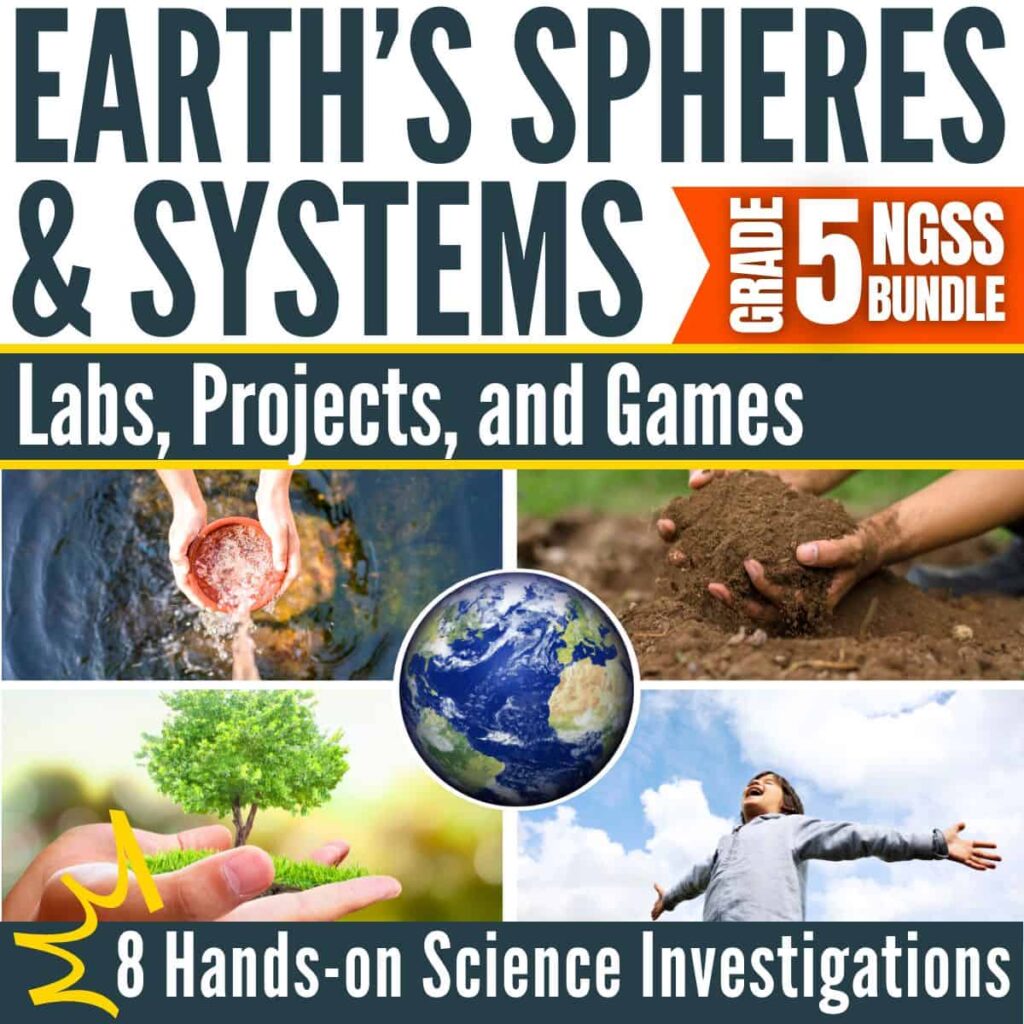
Earth’s Spheres and Systems Science Station UNIT BUNDLE
These Earth’s Spheres and Systems Next Generation Science Stations include eight different science stations where students deepen their understanding of the Earth’s Spheres, the five layers of the atmosphere, the kingdoms in the biosphere, and the systems in the geosphere. The focus is on 5-ESS2-1.
Jessica BOschen
Jessica is a teacher, homeschool parent, and entrepreneur. She shares her passion for teaching and education on What I Have Learned. Jessica has 16 years of experience teaching elementary school and currently homeschools her two middle and high school boys. She enjoys scaffolding learning for students, focusing on helping our most challenging learners achieve success in all academic areas.