
Human Impact on Ecosystems Activities for Kids
Teaching students how human activity changes ecosystems is one of the most relevant science topics I cover all year. When students understand they are part of these systems, the learning sticks.

Here are some tips for getting started teaching students about changes in ecosystems.
Teach Students about Ecosystems
Before teaching about changes in ecosystems, one of the most important things you can do is to help your students understand what an ecosystem is. Explain that an ecosystem is a community of living things and their physical environment.
Emphasize that all living things, from plants and animals to humans, rely on healthy ecosystems for their survival. Human activity can drastically affect ecosystems.
Teach about the Negative Consequences of Pollution
Pollution is one of those topics students have heard about, but few can explain clearly. What exactly is pollution, and how does it affect an ecosystem?
Pollution is when harmful materials are introduced into an ecosystem. These materials can be man-made, like toxic chemicals from factories, or naturally occurring, like minerals from mining operations. Either way, pollution can have devastating consequences for the plants, animals, and humans that live in that ecosystem.
Help your students understand how pollution can damage ecosystems and make it difficult for plants and animals to survive. You might want to show them pictures of polluted areas so they can see the effects firsthand. Address different types of pollution and how each affects the environment differently.
To help your students understand this complex issue, try having them draw a before-and-after picture of a polluted ecosystem.
Here is a great resource that focuses on the three types of pollution. Teachers can also use this resource for reading comprehension.
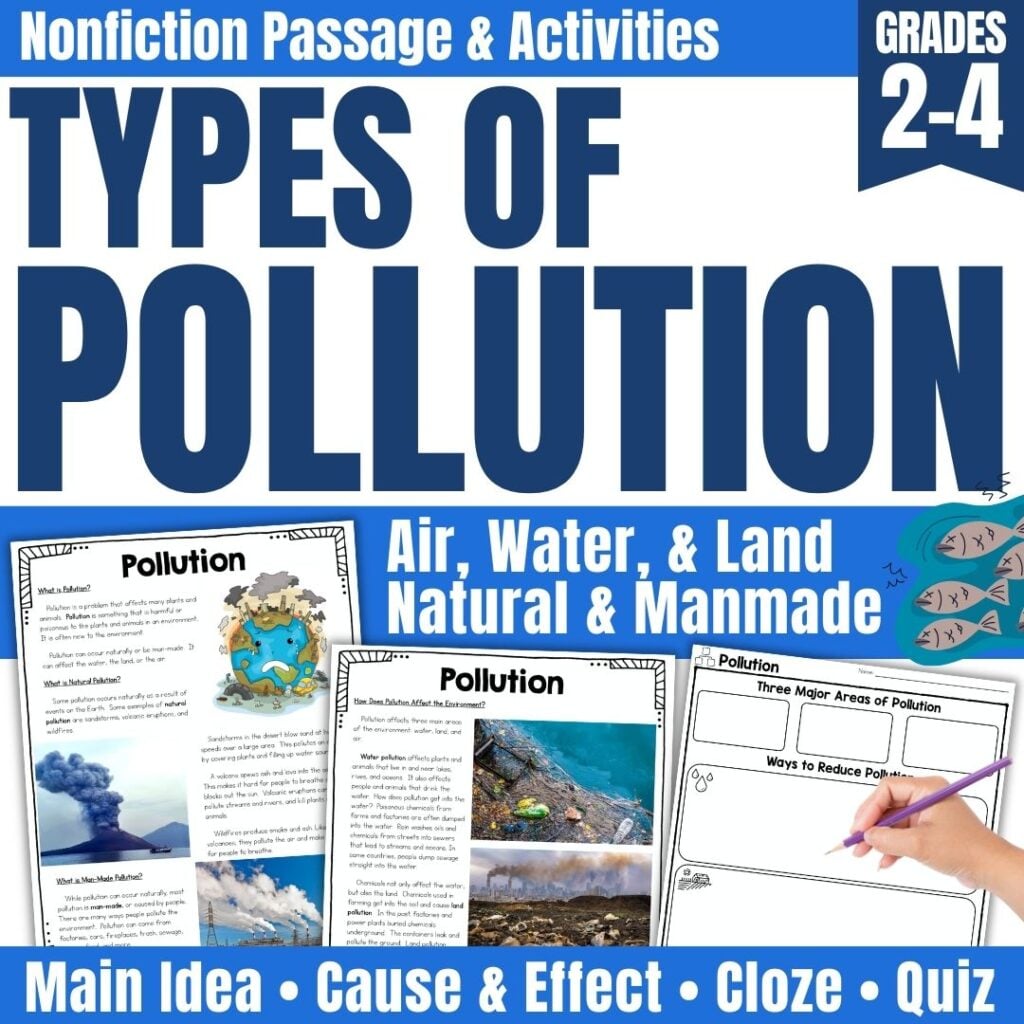
Pollution Reading Passage & Comprehension Activities | Earth Day Resource
Teach students about pollution and environmental responsibility with this engaging reading passage and comprehension resource! Perfect for Earth Day and environmental science lessons, students learn about water, land, and air pollution while practicing reading comprehension, main idea and details, cause and effect, writing, and critical thinking skills.
Show students how invasive species are a major challenge
Invasive species are another big threat to ecosystem health. Invasive species are plants, animals, or other organisms that are not native to an area and cause harm to the environment. When they’re introduced into new ecosystems, they can compete with native species for food and habitat, and sometimes even prey on them.
Invasive species can cause problems for ecosystems because they often have no natural predators and can quickly take over an area, crowding out native plants and animals. This can disrupt the entire food web and cause great harm to native plants and animals.
A great way to teach kids about this environmental issue is to have them research one specific species and give a presentation on it.

In addition to the science station above, check out this writing activity about Lionfish. It combines the science of learning about invasive species and an informational writing activity that helps students organize facts.
Teach Students about Ecosystem Changes with Deforestation
Deforestation is also a major threat to ecosystem health. Deforestation happens when trees are cut down and the land is converted for other uses, like farming or ranching. It has a ripple effect on the entire ecosystem. When forests are destroyed, the animals that live there lose their homes, and plant life is also impacted. This can lead to soil erosion and changes in local climate patterns.
Help your students understand how important it is to protect our forests and other ecosystems. Discuss ways that we can reverse deforestation, such as planting trees! You could even do a class-wide tree-planting project.

Teach about how Climate Change Affects Ecosystems
Climate change is one of the biggest environmental issues facing our planet today. It’s worth taking time to teach students what causes climate change and what simple actions they can take to reduce its effects.
Climate change can cause all sorts of changes in ecosystems, from shifts in local climate patterns to more extreme weather events. These changes can make it difficult for plants and animals to survive, and can even lead to extinction.
As the climate continues to change, teaching students about their role in protecting ecosystems is one of the most meaningful things I do.

Are you looking for some ways to teach your students about extreme weather patterns? I have several science stations and 5E units about climate change and weather events.

Help students understand how human activities can protect the environment
Talk about what people can do to help protect ecosystems. There are many ways we can all make a difference.
Here are 10 ways elementary students can help protect the environment:
- Reduce energy consumption by turning off lights and electronics when not in use.
- Reuse materials whenever possible, like shopping bags and paper towels.
- Recycle newspapers, plastics, glass, and cardboard.
- Ride bikes or walk instead of driving cars.
- Plant trees to help offset deforestation.
- Educate others about the importance of protecting the environment.
- Conserve water by turning off the faucet when brushing teeth and taking shorter showers.
- Buy eco-friendly products that don’t use harmful chemicals.
- Make a compost bin to recycle food waste into nutrient-rich soil.
- Support organizations that are working to protect the environment
Teaching students about changes in ecosystems gives them a foundation for understanding the world they live in. When they see how human activity connects to real consequences, they start thinking like scientists. If you are looking for activities to support this unit, the resources below are a great place to start.
Science Activities for Changing Ecosystems
Are you looking for science activities to teach students about changes in the environment? Take a look at these teaching resources.
Jessica BOschen
Jessica is a teacher, homeschool parent, and entrepreneur. She shares her passion for teaching and education on What I Have Learned. Jessica has 16 years of experience teaching elementary school and currently homeschools her two middle and high school boys. She enjoys scaffolding learning for students, focusing on helping our most challenging learners achieve success in all academic areas.