
Hands-on Ecosystem Activities for Elementary Students
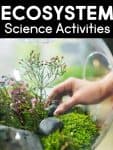
If you’re looking for fun and engaging ecosystem activities to teach your students about food webs and food chains, then you’ve come to the right place! In this blog post, we’ll share some of our favorite science experiments and activities that will excite your students about learning.

We know that finding interesting and engaging ways to teach science concepts can sometimes be difficult. But with our help, teachers can make learning about ecosystems a fun and exciting experience for their students.
Plants are the foundation of most ecosystems, so a solid understanding of how they grow and reproduce strengthens the whole unit. My guide to plant life cycle stages walks through each stage and how the standards build from 2nd through 5th grade.
Before we get started on the activities to teach about ecosystems, let’s take a look at how students move through the standards for this topic.
What are the NGSS Standards for Ecosystems?
The NGSS Standards for ecosystems span several elementary grade levels.
Second-grade students learn that plants need sunlight and water to grow and learn about how plants depend on animals for pollination or to move seeds around. Here is a link to second-grade NGSS about plants and pollination.
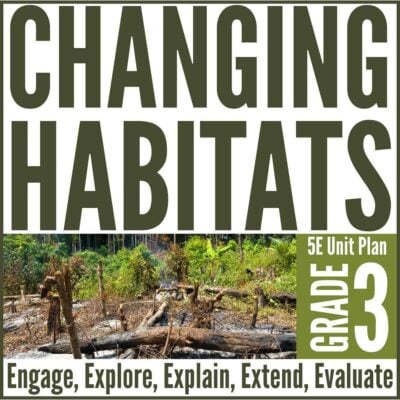
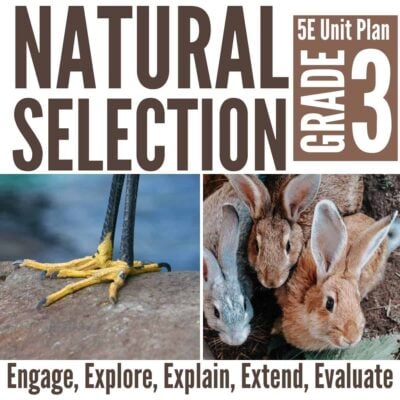
Third graders learn about how being part of a group helps animals survive, changing environments and populations within a habitat. Here is a link to the third-grade NGSS about Ecosystems and Biodiversity.
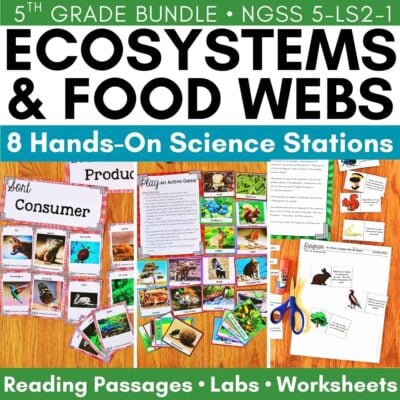
Fifth graders learn how organisms are related in food webs and how matter cycles between the air and soil and among plants, animals, and microbes. Here is a link to the standards for Energy Flow.
Early elementary students start out with simpler concepts and build on their knowledge of ecosystems as they progress through the grades. Ecosystems are woven throughout most elementary grades.
Ecosystem activities included in our Science Units and Science Centers
We have many science activities and resoruces to teach about ecosystems from second grade to fifth grade. Here are a few of our science units:
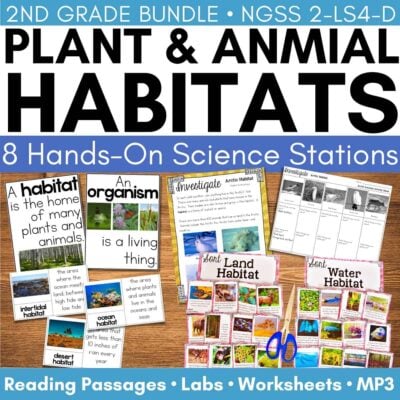
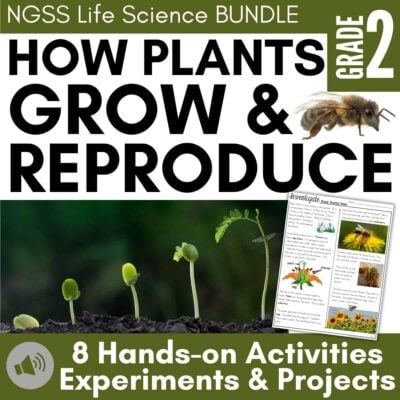
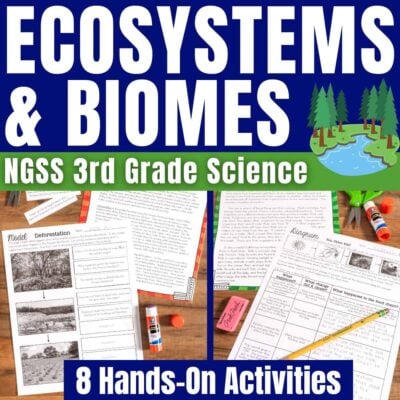
What are Ecosystems?
Ecosystems are all around us! An ecosystem comprises two parts: the living things in an area (plants, animals, fungi, and microbes)and the nonliving things in an area (air, water, and soil).
All living things are connected to their environment. They get energy from the sun, which flows through the food chain. Plants absorb energy from the sun and make their food. Animals eat plants and other animals for energy. And finally, decomposers break down plant and animal remains. This is how energy flows through an ecosystem.
How do you teach students about ecosystems?
A great way to introduce students to food webs is to take a walk around the school and observe the interaction between plants and animals. Engage students by discussing how an animal eats. Where does the food come from, and where does it go? Also, discuss changes in ecosystems and how humans can impact those changes!
Go more in-depth with these hands-on activities, teaching resources, and informational articles about food webs.
Hands-on Ecosystem Activities for the Science Classroom
Ecosystems and food webs are integral parts of biology and ecology. They can be studied in many ways, but one of the best ways to learn about them is through hands-on experiences. Below are some lesson ideas that can help students better understand these concepts.
Make a Food Chain
A food chain is a linear series of organisms in which each successive organism consumes the one before it. To study this science concept, students can create a simple food chain using magazine images or printed images of different animals. This will help them see how each animal in the chain depends on the one before it for food.
Students can also draw a food chain using pencil and paper. Draw different animals and plants on the paper. Connect them to create a chain. Ensure that the sun is the energy source for the food chain. Don’t forget to label the food chain with the names of the animals!
We also have some food chain activities for third grade that you can see below.

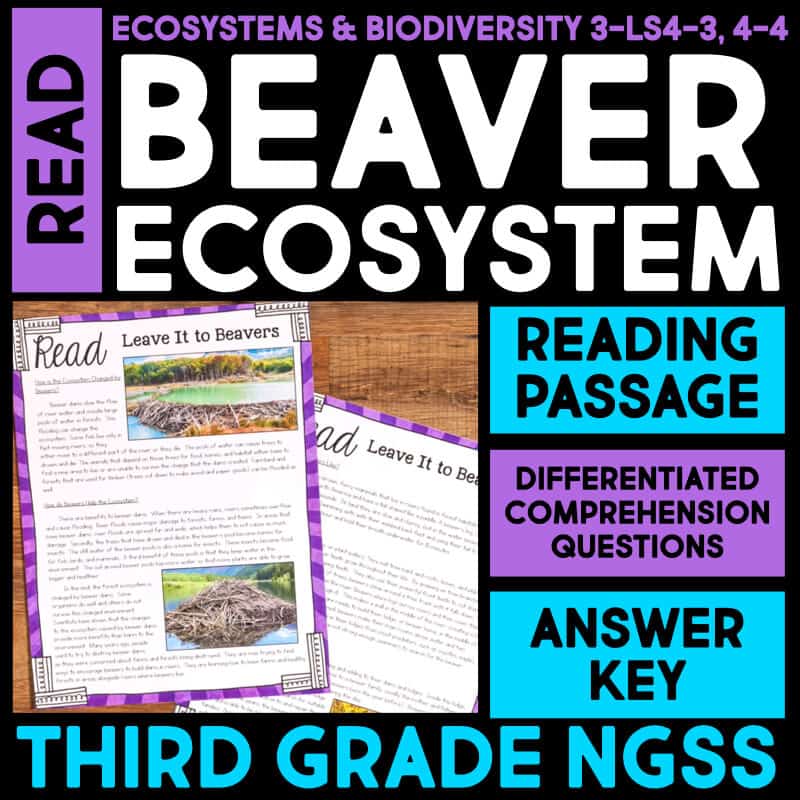
Create a Food Web
A food web is similar to a food chain, but it shows the interconnectedness of all the organisms in an ecosystem. It includes more than one predator and prey. Students can create a paper plate food web or a construction paper food web to study food webs.
You can create a food web using construction paper, scissors, and glue. Cut out different animals and plants from magazines or find images online. Glue them together to create a food web. Ensure that the sun is included as the energy source for the food web!
Students can also draw a picture of an ecosystem and label its different organisms. Once they have labeled the organisms, have them identify what each one eats and what eats them.
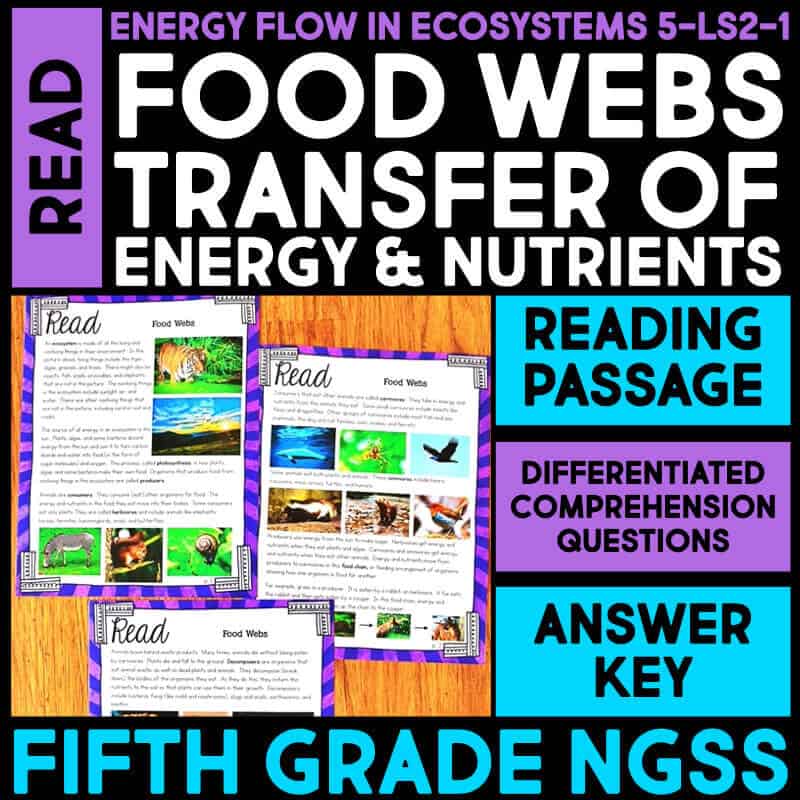
Fifth grade is where students learn about food webs. Here are some food-web resources:


Create an Ecosystem
In ecosystems, different plants and animals interact with each other and their physical environment to form a unique community. To study ecosystems, students can create their mini-ecosystems in a jar. This will help them to see how the different components of an ecosystem interact with each other.
Have students build a model ecosystem in a jar or aquarium. There are several methods for creating an ecosystem with bottles. Most simple terrariums are essentially closed terrariums that contain plants, either land or water, with some good sand and composting or pond water. They can use rocks, dirt, plants, and small animals to create their ecosystem. Once they have built their ecosystem, have them observe it over time to see how the different organisms interact with each other. If students create a closed terrarium, they may also be able to observe the effects of the water cycle!
Create a habitat Ecosystem Project
Have students create a physical habitat for one of the organisms in an ecosystem or pretend to create a habitat. They will need to research the organism’s needs and create a space that meets them. Once they have created the habitat, they can place the organism in it and observe it over time. Students can write about the habitat, the needs of the organism, and how the ecosystem can provide for those needs. Students can also write about how that animal interacts with other organisms within the ecosystem.
Study decomposition
Decomposition is an important process in ecosystems as it recycles nutrients into the soil. Many important ecosystem elements are microscopic but hidden beneath the soil surface.
To study decomposition, have students bury different materials in soil and observe them over time to see how they break down. Materials that decompose quickly will help to add nutrients back into the soil more quickly than those that decompose slowly.
We have some science stations all about decomposition. Creating a worm bin with your students demonstrates a part of the ecosystem. Click here for a worm bin science activity.

Plant a garden
Gardening is a great way for students to learn about ecosystems while getting their hands dirty! First, have students choose an area of your school grounds to plant their garden. They will need to prepare the soil and then plant seeds or seedlings. Once their plants are growing, have students water and weed them regularly. They can also add compost to their garden to help improve the quality of the soil.
Play “What’s Eating What?”
This game is played with two or more people. One person starts by saying “I am eating ____” and names any organism (plant or animal). The next person then says “I am eating ____” and names an organism that eats the first organism named (for example, if the first person said “I am eating grass,” the second person could say “I am eating a cow”). The game continues until someone makes a mistake or cannot think of an organism that eats the one named before them
Ecosystems Art Project
Another great way to teach students about food webs is to create a mural or collage representing different aspects of an ecosystem. For example, you could include images of different animals, plants, trees, sunshine, etc. As a class, brainstorm all the different interactions between these elements in an ecosystem.
For example, animals need plants for food, but they also help spread pollen so plants can reproduce. Sunshine is necessary for most life on Earth to survive, but too much sun can be harmful. By creating this visual representation of an ecosystem, students will begin to understand how everything is connected and dependent on each other for survival.
Owl Pellet Dissection
Owls are amazing predators that play an important role in ecosystem health. One way to learn about owls and their role in the ecosystem is to do a pellet dissection. Pellet dissection is a process where you dissect an owl’s pellet (the undigested part of their prey that they regurgitate) to learn what the owl has been eating. This is a great activity to teach kids about the importance of predators in the ecosystem. It also lets them get up close and personal with some owl bones!
Read about Ecosystems with these Picture Books
Ecosystem picture books are a fantastic way to introduce children to ecology’s complex and fascinating world. Through beautiful illustrations and simple text, these books can explain concepts like food webs and food chains, pollination, and the role of each species in an ecosystem. Perhaps best of all, ecosystem picture books can help instill a sense of wonder and appreciation for the natural world. These books can provide a gateway into a lifetime of discovery and learning about the incredible intricacies of nature.

Each of these lessons is a way that you can teach your students about food webs, food chains, and ecosystems. By doing experiments and activities like those mentioned above, your students will better understand how energy flows through an ecosystem and how everything is connected. They will be able to develop a deeper understanding of how they work and how they impact the world around us.
Life Science Curriculum for Teaching Ecosystems
What science curriculum can you use in your science classroom to teach students about the plants and animals that live in different habitats? We have several science centers, 5E lesson plans, and ecosystems unit bundles. Several resources will suit every need. Find what works best for YOU!
The units and yearlong bundles are available on my website, or Teachers Pay Teachers. Individual stations that can be used as quick and easy classroom activities are available on Teachers Pay Teachers.
Ecosystem 5E Units for Third Grade
Ecosystem Science Stations
Included in the science stations below are several different sorting activities.
Jessica BOschen
Jessica is a teacher, homeschool parent, and entrepreneur. She shares her passion for teaching and education on What I Have Learned. Jessica has 16 years of experience teaching elementary school and currently homeschools her two middle and high school boys. She enjoys scaffolding learning for students, focusing on helping our most challenging learners achieve success in all academic areas.