



2nd Grade Habitats Science Stations | NGSS 2-LS4-1 Activities
$12.78
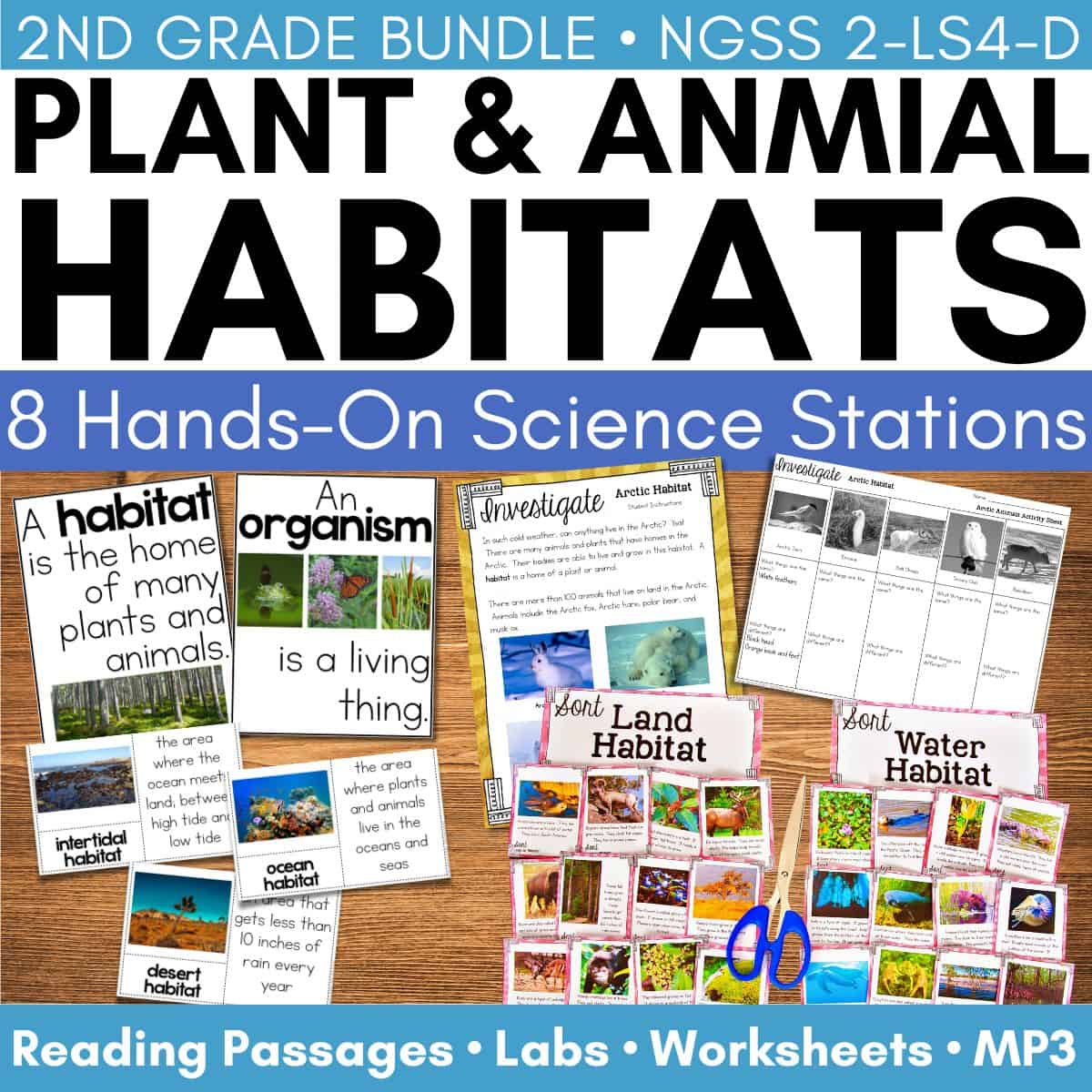
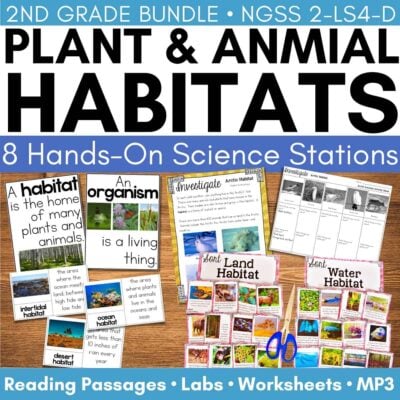
Help students explore habitats around the world with these engaging 2nd Grade Habitats Science Stations! Students learn how plants and animals live in arctic, temperate forest, intertidal, pond, desert, land, and water habitats through hands-on activities, reading passages, videos, games, models, sorting, diagrams, and differentiated response options. Aligned to NGSS 2-LS4-1 / DCI 2-LS4.D.
In this engaging set of 2nd Grade Habitats Science Stations, students will learn how animals and plants make their homes in a variety of habitats across the globe, including the Arctic, temperate forest, intertidal zone, pond, desert, land habitats, and water habitats.
This resource includes 8 different science stations designed to help students make observations, ask questions, gather information, compare living things, and deepen their understanding of the diversity of life in different habitats. Each station includes multiple response options, making it easy to differentiate for your classroom.
What’s Included
This habitats science resource includes everything you need to set up meaningful, hands-on science stations.
Included in this set:
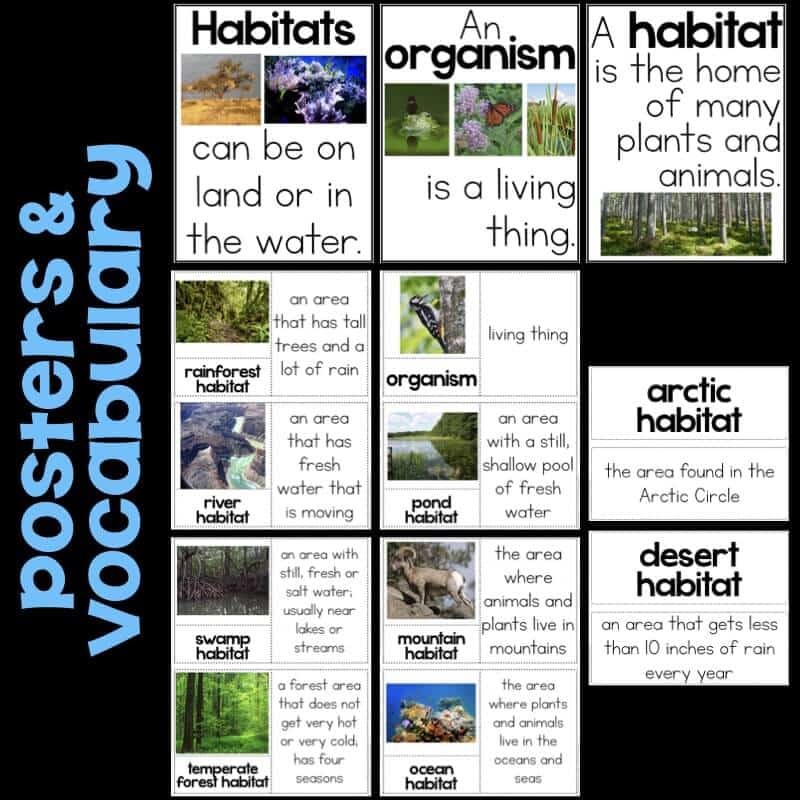
- Big Idea Posters that explain the core ideas of the stations
- Vocabulary Cards in two formats:
- With pictures
- Without pictures
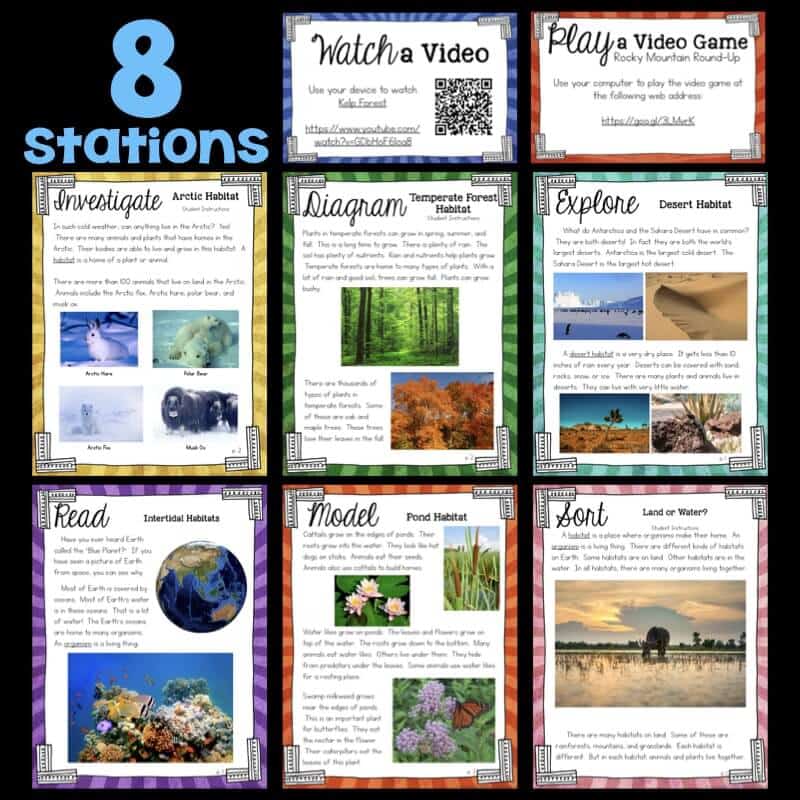
- 8 Science Stations
- Differentiated response sheets
- Task card response options
- Student worksheet options
- Science journal-friendly activities
Habitats Science Stations Included
Watch
Students watch a video to learn about animal homes or kelp forests. Then they answer questions to reinforce what they learned.
Play
Students play a game to learn about the Rocky Mountains or match animals with their habitats. They answer follow-up questions to show understanding.
Investigate
Students read about the Arctic habitat and observe pictures of Arctic plants and animals as they investigate this unique environment. Then they answer questions to reinforce their learning.
Diagram
Students read about the temperate forest habitat, create a diagram of the habitat, and answer questions to show what they learned.
Read a Passage
Students read about the habitats of the intertidal zone and answer comprehension questions connected to the passage.
Model
Students read about a pond habitat and construct a model of a pond food web. Then they answer questions to reflect on the habitat and relationships between organisms.
Explore
Students read about the desert habitat and complete an activity to explore what they have learned. Follow-up questions help reinforce key ideas.
Sort
Students read about land habitats and water habitats, then sort organisms into the two habitat categories. Students answer questions to explain and review their thinking.
Differentiated Response Options
Each station includes four different ways for students to respond, so you can choose the format that best fits your students and classroom needs.
Response options include:
- Short answer questions
- Fill-in-the-blank questions
- Task cards with short answer responses
- Task cards with multiple choice responses
All response variations are similar, so students can complete the same station experience while using the response format that works best for them. Students may respond in their science journals, or you can use the included worksheets.
Skills Covered
Students will practice important science and literacy skills, including:
- Identifying different habitats
- Comparing plants and animals in different environments
- Making observations from pictures, videos, and texts
- Gathering information about living things
- Understanding that plants and animals live in different places on land and in water
- Sorting organisms by habitat
- Creating diagrams and models
- Building a basic food web model
- Reading informational science passages
- Answering science-based questions
- Using science vocabulary in context
Ways to Use This Resource
These habitats science stations are flexible and easy to use in a variety of classroom formats.
Use them for:
- Science centers
- Small group rotations
- Whole-class station activities
- NGSS-aligned science lessons
- Science review
- Enrichment activities
- Partner work
- Early finisher activities
- Science notebook activities
- Sub plans
Each station is designed to last about 15–20 minutes. Students can complete one station per day for 8 days, two stations per day for 4 days, or follow any schedule that works best for your classroom.
Because the Watch and Play stations include additional activity options, they can also be used as student choice activities or early finisher stations.
Why Teachers Love It
Teachers love these habitats stations because they make science active, organized, and student-friendly. Instead of only reading about habitats, students get to watch, play, investigate, diagram, model, explore, sort, and respond in multiple ways.
The built-in differentiation makes it easier to support a range of learners while keeping all students focused on the same key science concepts. With posters, vocabulary cards, station activities, and response options included, this resource helps make planning your habitats unit simple and engaging.
NGSS Alignment
This resource supports second grade NGSS life science standards related to habitats and biodiversity.
NGSS Performance Expectation
2-LS4-1: Make observations of plants and animals to compare the diversity of life in different habitats.
Disciplinary Core Idea
2-LS4.D: Biodiversity and Humans
There are many different kinds of living things in any area, and they exist in different places on land and in water.
Engineering Design Connection
The Investigate, Diagram, and Explore stations also connect to ETS1.A, as students ask questions, make observations, and gather information.
Science and Engineering Practices
The Investigate, Diagram, Model, and Explore stations support students in planning and carrying out investigations by making observations from firsthand or media-based sources to collect information and make comparisons.
Perfect For Your Habitats Unit
These 2nd grade habitats science stations are a great way to help students explore arctic habitats, temperate forests, intertidal zones, pond habitats, desert habitats, land habitats, and water habitats. With differentiated responses, hands-on activities, vocabulary support, posters, models, diagrams, sorting, and reading passages, this resource gives students meaningful practice as they compare the diversity of life in different habitats.
Corina Camino –
This is a great resource to use in 1st grade. The students enjoyed the activities.
Blossoming Lilies –
Such a great resource to have to learn about plants and animals!
Kimberlee Burris –
This was a high quality product with high quality visuals and my students were very engaged when using it.
Kami M. –
We used this resource to integrate science standards with reading instruction.
Megan Cyrus –
This resource is great for having various lessons to teach the new science standards