
Preparing for a Substitute Teacher: What to Include and What Actually Works
Preparing for a substitute teacher is one of those things that can feel surprisingly stressful, especially when you’re dealing with it the night before or the morning of an unexpected absence. Whether you’re out sick, attending a training, or taking a planned day off, pulling together a plan that will actually work without you there takes real thought. The good news is that a little preparation in advance makes a big difference.
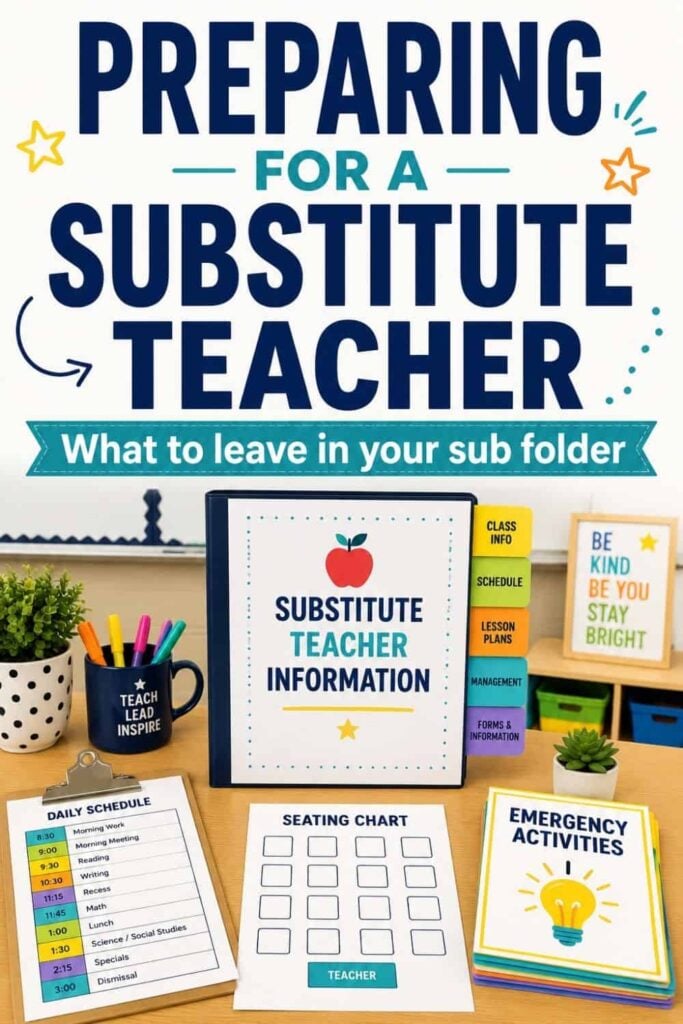
This post walks through what to put in your sub folder, what information to leave behind, and which types of activities hold up best when you’re not in the room.
What to Include When Preparing for a Substitute Teacher
Most substitute teachers walk into a classroom knowing very little about your students, your schedule, or how your day runs. Preparing for a substitute teacher means bridging that gap before the sub ever sets foot in your room.
Your sub folder or binder should cover these non-negotiables:
- The daily schedule: Include times, not just subject names. Add specials, lunch, recess, and any transitions that happen at unusual times.
- Classroom routines: Explain how students enter, what the morning routine looks like, how you handle lining up, bathroom procedures, and what students do when they finish work early.
- Student information: A seating chart is essential. Note any students with IEPs, behavior plans, or medical needs, and list which students pull out for services and when. Include any accommodations the sub should follow.
- Where things are: Note where to find pencils, paper, the attendance sheet, emergency procedures, and where to send students if they need help.
- Contact information: Include the name and room number of a nearby teacher the sub can go to with questions, plus any grade-level team or office contacts. Don’t assume the sub knows who to call.
- Trusted student helpers: Name two or three students who know the routines well and can answer the sub’s questions about where things are or how the class normally works.
The goal is for the sub to spend zero time hunting for information you could have written down in advance. A substitute who spends the first ten minutes confused has already lost the class before instruction begins.
Keep a Sub Binder Ready Year-Round
Rather than creating sub plans from scratch each time, keep a binder or tub that stays up to date with your schedule, seating chart, and emergency activities. Update it at the start of each semester and after any significant changes to your routine or student roster.
If you have a substitute folder ready to hand off, an unexpected absence becomes a minor inconvenience instead of a 10 p.m. scramble. Some teachers keep a physical binder on their desk with a sticky note on the cover that says “Sub Plans: Start Here.” Others use a digital folder shared with their team or admin so plans are accessible even if the teacher can’t make it in to leave them.
The emergency section of your binder deserves its own tab. Fill it with a full day of no-prep activities that require no context, so you’re covered when you’re out unexpectedly and didn’t have time to leave a customized plan. Keep it stocked and ready, so it never needs to be built on the fly.
Setting Your Classroom Up for Sub Days
The best preparation for a sub day happens long before you’re absent. When your classroom procedures are taught well, and students know exactly what to do, a sub’s job shifts from managing chaos to simply following a plan. How you prepare your students is a separate piece of this puzzle worth building intentionally. Their behavior expectations, their routines, and the jobs you assign them all shape how smoothly the day goes. If you want guidance on the student-prep side of sub days, this post on preparing your students for a substitute teacher covers exactly that.
On the classroom setup side, the biggest thing you can do is make your routines easy to find in writing. When a sub can read a note explaining that students get pencils from the supply table and do not sharpen them during instruction time, the whole day runs more smoothly, rather than having to figure that out mid-lesson. The more of your procedures you can capture on paper, the less your students have to explain and the less room there is for “well, our teacher lets us” negotiations.
Choosing the Right Activities for Your Sub Plans
Activity choice is where many sub days fall apart. Work that requires direct instruction, new content, or complex directions rarely goes well. What holds up is work that students already know how to do and can complete with a reasonable degree of independence.
When choosing sub-day activities, look for these qualities:
- Familiar format: Students should have done this type of activity before. Novel tasks require explanation; familiar formats mostly run themselves.
- Minimal subject-matter expertise required: A sub shouldn’t need to explain long division or model a reading strategy. Review work, application tasks, and practice activities are safer than new instruction.
- Clear written directions: Even if students know what to do, having it written down removes any “but the sub said” ambiguity at the end of the day.
- Meaningful but not high-stakes: Students should be engaged, but sub days aren’t the right time for major assessments or projects that require close teacher oversight.
Independent reading, writing practice, math fact work, and review activities all tend to hold up well. So do collaborative, hands-on activities where the task is clear and students are used to working without constant teacher direction.
Sub Day Activities That Actually Work
A few types of activities are consistently reliable when a substitute is running the room:
Cooperative Learning Activities
When students work together on a shared task, the group’s structure keeps everyone engaged without requiring the teacher to drive every step. According to research on student engagement, students stay on task longer when they have structured peer interaction. The key is that the cooperative structure needs to be already familiar. Sub day is not the time to introduce a new format.
STEM Challenges
Simple STEM activities with clear materials and a defined challenge hold student attention well and don’t require subject-matter expertise from the sub. The directions do the heavy lifting. For 2nd- and 3rd-graders especially, a hands-on building or design challenge can productively fill a significant chunk of the day.
Collaborative Puzzles
A community or collaborative puzzle, where each student contributes a piece to a larger whole, works well as a calm, purposeful activity that a sub can manage easily. Students know what to do, the task has a clear endpoint, and it feels special enough to keep them engaged. These work particularly well as a “when you finish your other work” option that the sub doesn’t have to explain or monitor closely.
If you’re looking for ready-made resources that fit these criteria, cooperative learning activities, STEM challenges, and collaborative puzzles are designed with independent student use in mind, which makes them a natural fit for sub days.
Final Thoughts on Preparing for a Substitute Teacher
The best preparation for a substitute teacher isn’t something you do the night before. It starts with a folder that’s always ready to hand off and a set of reliable activities students can complete without you having to drive every step. Put those pieces in place now, and the next unexpected absence will be a lot less stressful. If you want to work on the other side of this and prepare your students to follow routines and behave well even when you’re not there, this post is a good place to start.
Jessica BOschen
Jessica is a teacher, homeschool parent, and entrepreneur. She shares her passion for teaching and education on What I Have Learned. Jessica has 16 years of experience teaching elementary school and currently homeschools her two middle and high school boys. She enjoys scaffolding learning for students, focusing on helping our most challenging learners achieve success in all academic areas.