
Student Engagement Strategies: 29+ Practical Ideas for Elementary Teachers
Have you ever looked out at your class mid-lesson and seen blank stares, restless fidgeting, or students who’ve mentally checked out? Every teacher has been there. The good news is that student engagement strategies can transform those moments — turning passive classrooms into spaces where students are actively thinking, participating, and invested in their learning.
Student engagement goes beyond simple participation. It encompasses a student’s intellectual, emotional, and physical investment in what’s happening in the classroom. When all three are working together, students focus better, retain more, and actually enjoy coming to school.
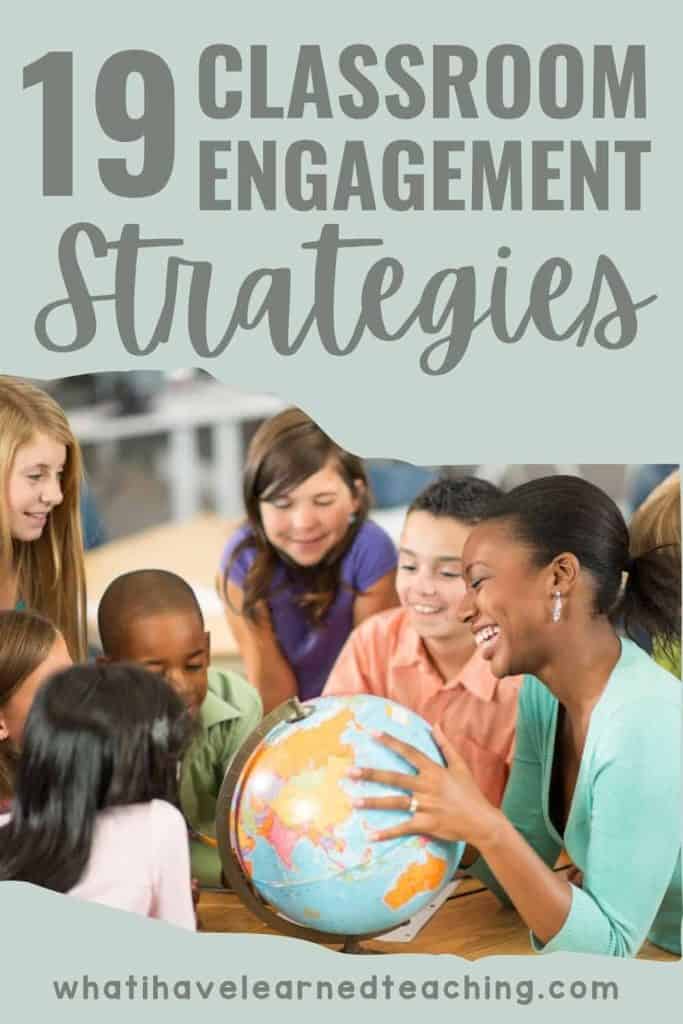
This post shares 29 classroom engagement strategies for elementary teachers, each with real classroom examples, so you have something concrete to try this week.
Quick Reference: 29 Classroom Engagement Strategies
Create a Personalized Learning Experience
- Interest Surveys
- Flexible Seating
- Choice Boards
- Personalized Learning Plans
- Student Voice and Choice
Use Active Learning Strategies
- Think-Pair-Share
- Jigsaw Method
- Gallery Walk
- Sponge Activities
- Brain Breaks
Strategies for Whole-Class Engagement and Accountability
- Cold Calling with Wait Time
- Exit Tickets
- Formative Assessment
Harness Technology and Multimedia
- Interactive Presentations
- Educational Videos and Podcasts
- Virtual Field Trips
- Digital Collaboration Tools
- Gamification Apps
Hands-On Learning
- Hands-On Learning and Manipulatives
Cultivate a Growth Mindset
- Embrace the Power of ‘Yet’
- Celebrate Effort and Process
- Normalize Mistakes
- Set Growth-Oriented Goals
- Provide Constructive Feedback
Bridge Learning to Real-World Applications
- Invite Guest Speakers
- Case Studies
- Community Service Projects
- Interdisciplinary Projects
- Career Exploration
Keep reading for a full description and classroom example for each strategy.
What is Student Engagement?
Student engagement reflects how invested students are in their learning. It includes three essential components: behavioral, emotional, and cognitive engagement.
- Behavioral engagement involves students’ participation in classroom activities, attendance, and adherence to classroom norms.
- Emotional engagement reflects their sense of belonging and interest in the learning process.
- Cognitive engagement is shown in the mental effort students put into understanding challenging material and concepts.
Students who are engaged on all three levels are more likely to succeed academically and develop skills that foster long-term growth and resilience.
Why Teachers Should Work on Their Student Engagement Strategies
The benefits of effective engagement strategies are significant for both students and teachers.
Research shows that engaged students demonstrate the following:
- Increased focus and attention during lessons
- Higher-level critical thinking skills
- Improved academic performance and success rates
- Greater hope and optimism for their future
Classroom engagement strategies foster genuine, active participation in learning, transforming classrooms into spaces where students feel motivated, challenged, and supported. By actively participating, they also develop critical thinking and problem-solving skills that prepare them for real-life challenges. Engaged classrooms foster student motivation, boosting self-confidence and a sense of accomplishment.
The result is a positive classroom atmosphere where students build strong relationships with peers and teachers, creating a sense of community that enhances the learning experience.
Create a Supportive Learning Environment
A solid foundation for engagement begins with creating a supportive environment. Clear expectations and objectives provide students with a roadmap, allowing them to understand what is required for success.
Establishing a safe space where students feel comfortable participating and taking risks without fear of criticism promotes confidence. This leads to a personalized classroom experience in which teachers acknowledge each student’s unique strengths and needs, fostering a sense of belonging and encouraging students to invest more in their learning.
The physical setup of the classroom also influences engagement. Flexible learning spaces, such as different seating arrangements, encourage students to choose where they feel most comfortable.
Craft a Personalized Learning Experience
Creating a personalized learning environment is one of the most effective ways to increase student engagement. This approach recognizes students’ unique interests, strengths, and learning styles.
Here are some strategies to implement personalization in your classroom:
1. Interest Surveys
One of the simplest ways to increase engagement is to teach content students actually care about. Interest surveys give you a window into your students’ worlds — their hobbies, favorite topics, pets, sports, and more — so you can weave familiar contexts into lessons across every subject.
Surveys don’t need to be elaborate. A half-sheet of paper at the start of the year (or the start of each unit) asking 5–8 questions is enough to give you material you can reference all year long. The act of filling one out also sends students a clear message: your interests matter here.
Ways to use interest survey data:
- Use a student’s love of soccer to frame a word problem (“If a player scores 3 goals per game…”)
- Pull book recommendations based on stated interests during independent reading
- Reference a student’s hobby when introducing a new concept to build an immediate connection
- Group students around shared interests for project-based work
Example: In September, you learn that half your class is obsessed with animals. For the rest of the year, you use animals as the context for everything from multiplication word problems to informational writing prompts. Students who once resisted writing now fill two pages because they’re writing about something they genuinely love.
2. Flexible Seating
Where students sit affects how they learn. Flexible seating means offering a variety of seating options — floor cushions, standing desks, wobble stools, bean bags, traditional chairs — so students can choose the environment where they focus best. It shifts the classroom from a one-size-fits-all setup to one that acknowledges that different bodies and learners have different needs.
Flexible seating works best when it comes with clear expectations. Students need to understand that the goal is to find where they do their best work — not just sit somewhere fun — and that seating choices can be adjusted if they’re not working.
Tips for implementing flexible seating successfully:
- Start with just 2–3 alternative options and expand gradually
- Teach students how to self-assess: “Am I more focused here or less?”
- Set clear norms about noise levels and movement in different seating zones
- Rotate who gets first choice so all students try different options
Example: During independent reading, you open the room to flexible seating. One student takes a floor cushion in the corner, another stands at the counter along the wall, and a few stay at their desks. At the end of the week, you ask students to reflect: “Where did you read the most pages?” The answers help students start to understand their own learning preferences.
3. Choice Boards
A choice board (sometimes called a learning menu) is a grid of assignment options — typically 9 squares arranged like a tic-tac-toe board — where every option covers the same learning standard but students choose how they demonstrate their understanding. This gives every student a path to success that plays to their strengths while keeping academic expectations consistent.
Choice boards are especially powerful for differentiation because you can design options at different complexity levels without making that obvious to students. A student who struggles with writing might choose to create a labeled diagram, while a student ready for a challenge chooses to write an analytical paragraph — both meet the standard and feel successful.
Ways to design effective choice boards:
- Vary the format (written, visual, verbal, hands-on) across the nine options
- Keep the learning objective the same across all choices — only the product changes
- Include at least one collaborative option and one independent option
- Let students circle their choice before starting so they commit to it
Example: At the end of a habitats unit, you give students a choice board with options like “draw and label a food web,” “write a paragraph explaining how an animal adapts to its habitat,” and “create a compare-and-contrast poster of two habitats.” Every student is assessed on the same science standard — but the room looks like a studio, with students working on nine different products simultaneously.
4. Personalized Learning Plans
A personalized learning plan is a simple document, often just one page, where a student records their current skill level, a specific learning goal, and the steps they’ll take to get there. Unlike a teacher-assigned goal, a personalized learning plan is built with the student, giving them ownership from the start.
These work best when revisited regularly. A goal written in September and never looked at again has little impact. But a goal students check in with weekly — even briefly — becomes a living part of how they understand their own growth.
How to make personalized learning plans work in an elementary classroom:
- Keep the format simple: “Right now I can ___. My goal is ___. I will get there by ___.”
- Use conference time (even 3–4 minutes per student) to set goals together
- Store plans somewhere students can access them independently — a folder, a journal, or a pocket chart
- Build in a monthly “goal check-in” where students reflect on their progress and adjust if needed
Example: During reading conferences in October, each student fills out a goal card with your help: “Right now, I can read chapter books independently. My goal is to stop more often to summarize what I’ve read.” At the end of November, students pull out their cards, reread their goal, and write two sentences about whether they’ve grown. Many are surprised — and proud — by how far they’ve come.
5. Student Voice and Choice
When students have a say in their learning — what they study, how they show what they know, or where they sit — they become more invested in the outcome. Voice and choice aren’t about giving up control of the curriculum; it’s about building in structured moments where students make real decisions within clear boundaries.
Choice increases engagement by shifting students from passive recipients of assignments to active participants in their own learning. Even small choices have a measurable effect on motivation and effort.
Ways to build voice and choice into your classroom:
- Choice menus: Offer 3–4 ways to demonstrate mastery of the same standard (write a paragraph, create a diagram, record a short video, build a model)
- Topic choice within a structure: “Choose any animal that lives in the ocean,” rather than assigning one
- Process choice: Let students decide whether to work independently or with a partner
- Seating choice: Allow students to choose their workspace during independent practice
Example: At the end of a biography unit, instead of assigning a single report format, offer a menu of options: students can write a traditional report, create a poster timeline, record a 2-minute “news broadcast,” or make a comic strip. Every student hits the same writing and research standards — but the ownership they feel over their format shows in the quality of the final product.
By personalizing the learning, you not only increase engagement but also foster a sense of ownership and autonomy in your students’ educational journey.
Use Active Learning Strategies
Active learning is a powerful approach that transforms students from passive recipients of information to engaged participants in their own education.
Here are some effective active learning strategies to implement:
6. Think-Pair-Share
Think-pair-share activities allow for quick discussions, so students can clarify their understanding with a peer before sharing with the class. This technique encourages individual reflection followed by collaborative student discussion time:
- Think: Pose a question and give students time to think independently.
- Pair: Have students discuss their thoughts with a partner.
- Share: Invite pairs to share their ideas with the larger group.
Example: After reading a paragraph about ecosystems, ask, “What do you think would happen if one animal disappeared?” Give 90 seconds of think time, then 2 minutes to discuss with a partner.”

Learn how to effectively teach think-pair-share to your students.
7. Jigsaw Method
This cooperative learning strategy divides content among student groups:
- Divide students into “home groups” and assign each group a different topic.
- Regroup students into “expert groups” to dive deep into their assigned topic.
- Students return to their “home groups” to teach their peers about their expert topic.
Jigsaw Method Example: During a unit on landforms, assign each small group a different landform (mountains, valleys, plains, plateaus). After students become “experts” in their assigned landform, they return to their home groups to teach the others — by the end, every student has learned all four.
8. Gallery Walk
Create a museum-like experience in your classroom:
- Post different problems or topics around the room.
- Have students rotate in groups to discuss and add their thoughts at each station.
- Conclude with a whole-class discussion of the insights gathered.
Gallery Walk Example: Post four different math word problems around the room. Groups rotate every 5 minutes, solve each problem on a sticky note, and add their work to the poster. Finish with a whole-class discussion comparing the different solution strategies students used.
9. Sponge Activities
Fill the small pockets of time with activities to encourage students to continue learning.
Sponge Activities Example: In the last 3 minutes before lunch, ask students to write one thing they learned that morning and one question they still have on a sticky note and place it on the “parking lot” board. This keeps the brain active and gives you valuable formative data.

Here is a list of 81 Sponge Activities for elementary classrooms.
10. Brain Breaks to Re-Engage Students
When students’ attention starts to fade, a short brain break can reset their focus and energy. Brain breaks are brief, structured pauses — typically 2–5 minutes — that give students a chance to move, breathe, or do something low-stakes before returning to the lesson. Research supports that short mental rest periods actually improve retention and focus, not undermine it.
Brain breaks work best when they’re predictable and quick. A few simple options:
- Movement breaks: Simon Says, stretch sequences, or a quick dance to one song
- Breathing exercises: Box breathing or “smell the flowers, blow out the candles.”
- Quick games: 20 seconds of rock-paper-scissors with a neighbor, or a fast round of “Would You Rather”
The key is to keep them short and return to the lesson with a clear re-engagement cue, like “3-2-1, eyes on me.”
Example: Forty minutes into a long math block, students are visibly fading. You pause, put on a 90-second movement video, then bring them back with “Shake it out — now let’s tackle the last two problems.” Students return to the task more focused than if they had pushed through.
These active collaborative learning strategies create a classroom environment that promotes student engagement, deeper thinking, and collaborative skills.
Strategies for Whole-Class Engagement and Accountability
Active learning structures are powerful, but they work best when every student stays accountable for their thinking. The strategies in this section help you check in with the whole class, keep all students tuned in, and gather real-time information about who’s with you and who needs more support.
11. Exit Tickets
An exit ticket is a quick, end-of-lesson check in which students respond to a single, focused question before leaving class or transitioning to the next subject. They take 2–3 minutes and give you immediate formative data about who understood the lesson and who needs more support — without waiting until a quiz or test.
Exit tickets work as an engagement strategy because they give students a clear purpose for paying attention throughout the lesson: they know something will be asked of them at the end. This low-stakes accountability keeps more students tuned in from start to finish.
Common exit ticket formats:
- One sentence: “Write one thing you learned today in your own words.”
- Quick question: A single content question directly tied to the day’s objective
- Muddiest point: “What is still confusing to you?”
- Rating scale: “On a scale of 1–3, how confident do you feel about today’s skill? Draw a star if you could teach it to someone else.”
Example: At the end of a lesson on place value, students write one 3-digit number on a sticky note and label the hundreds, tens, and ones place before sticking it to the door on the way out. You scan the notes in 60 seconds and know exactly which students are ready to move on and which need a small-group reteach tomorrow.
12. Cold Calling with Wait Time
Cold calling — calling on students who haven’t raised their hand — is one of the most effective ways to keep the whole class engaged, not just the eager hand-raisers. When students know they might be called on at any moment, they stay more actively tuned in. The key to making it feel safe rather than stressful is pairing it with a generous wait time.
Wait time is the pause you give after asking a question before calling on anyone. Research suggests waiting at least 5–10 seconds for complex questions. This simple shift gives every student time to formulate an answer, not just the fastest processors — which means more equitable participation and higher-quality responses.
Strategies to make cold calling feel supportive:
- Normalize it from day one: “In our class, I’ll call on everyone — not just raised hands — because everyone’s thinking matters.”
- Use “phone a friend”: If a student is stuck, let them ask a classmate for help before answering.
- Accept partial answers: “That’s a great start — who can add to what she said?”
- Use equity sticks (popsicle sticks with student names) so selection feels random and fair, not targeted.
Example: During a read-aloud, you pause and say “I’m going to give everyone 10 seconds to think — what do you predict will happen next, and why?” After the wait time, you draw a name stick. The student gives their prediction, and you follow up with “Who had a different prediction?” Now multiple students are engaged, not just one.
13. Formative Assessment
Formative assessment is how you check whether students are actually engaged with the content — not just sitting quietly. When students know a quick check-in is coming, they stay more tuned in throughout the lesson. And when you can see in real time who’s lost and who’s ready to move on, you can adjust before disengagement sets in.
The best formative assessment strategies for engagement are those that feel like activities rather than tests. A few quick options to weave into any lesson:
- Whip Around: Students each share one response to a question — everyone participates, no one is invisible
- Four Corners: Students move to the corner of the room matching their answer or confidence level, then discuss with peers nearby
- 3-2-1: At the end of a lesson, students write 3 things they learned, 2 interesting ideas, and 1 question they still have
- Triangular Prism (Red/Yellow/Green): Students show a colored side to signal their confidence level — a quick visual scan tells you exactly where the class stands
For a full list of classroom-ready ideas, check out 18 Formative Assessment Ideas to Check for Understanding in the Elementary Classroom.
Example: Midway through a science lesson on the water cycle, you pause and do a quick Four Corners check — corners labeled “evaporation,” “condensation,” “precipitation,” and “collection.” You ask “Which stage moves water from the ground to the sky?” Students move to their corner, briefly discuss with neighbors, and you instantly see that most of the class is solid — but a small cluster in the wrong corner tells you exactly who needs a quick reteach before moving on.
Harness Technology and Multimedia for Enhanced Engagement
Integrating technology into the classroom can greatly enhance engagement. Educational apps and digital tools provide interactive experiences that make learning fun and accessible.
A flipped classroom model allows students to explore content at home, using classroom time for deeper discussion and exploration. Multimedia resources like videos, infographics, and simulations bring concepts to life, catering to visual and auditory learners.
Here’s how you can leverage various tools and resources:
14. Interactive Presentations
Use tools like Mentimeter or Kahoot! to create interactive presentations allowing real-time student participation and feedback.
Example: Before introducing a science unit on weather, launch a Kahoot warm-up with 5 questions about what students already know. The results instantly show you where misconceptions are — and students are hooked before the lesson even starts.
15. Educational Videos and Podcasts
Supplement your lessons with carefully curated videos and podcasts that offer diverse perspectives or visual explanations of complex concepts.
Example: Before a social studies lesson on community helpers, play a 3-minute podcast episode featuring a real firefighter describing their day. Ask students to listen for two facts and one question they have, giving them a clear purpose for listening.
16. Virtual Field Trips
Utilize virtual reality or 360-degree videos to take your students on immersive journeys to historical sites, museums, or natural wonders.
Example: During a unit on habitats, use Google Earth to “visit” the Amazon rainforest, the Sahara Desert, and the Arctic tundra in a single class period. Have students record one animal and one plant adaptation they observe at each stop.
17. Digital Collaboration Tools
Implement platforms like Padlet or Google Jamboard for collaborative brainstorming and idea sharing.
Example: After reading a story together, open a class Padlet with three columns: “I wonder…”, “I noticed…”, and “This reminds me of…” Students add sticky notes to each column, then the class reads through the board together as a discussion starter.
18. Gamification Apps
Introduce educational games or gamified learning experiences using apps like Quizlet or Duolingo to make learning more enjoyable and competitive.
Example: Set up a Quizlet Live game to review vocabulary before a science test. Students are randomly grouped each round, which means they must work with different classmates — building both content knowledge and collaboration skills.
The key is to use technology purposefully to enhance learning, not just for its own sake. Align your tech choices with your learning objectives and your students’ needs.
Incorporate Hands-On Learning
Elementary students learn best when they can touch, build, and explore — not just listen and watch. The strategies in this section bring abstract concepts to life through physical interaction, making lessons more engaging for all learners and especially powerful for students who struggle to stay engaged during direct instruction.
19. Hands-On Learning and Manipulatives
Elementary students learn by doing. When students can touch, build, sort, and manipulate physical objects, abstract concepts become concrete — and engagement rises naturally because the activity itself is interesting. Hands-on learning isn’t just for science; manipulatives and tactile activities are powerful in math, literacy, and social studies too.
Beyond engagement, hands-on activities support multiple learning styles and give students who struggle with sitting and listening a productive way to access the content.
Simple ways to add hands-on learning:
- Math: Base-ten blocks, fraction tiles, geometric shapes, counters, number lines students can walk
- Literacy: Word-building tiles, sentence strips students physically rearrange, story-mapping with sticky notes
- Science: Simple experiments, sorting activities, observation journals with real objects
- Social Studies: Map puzzles, artifact analysis, timeline sequencing cards
Example: Instead of showing a slide about fractions, give each student a set of fraction tiles. Ask them to find two different combinations that equal one whole. Students are moving pieces, testing ideas, and talking to neighbors — the room buzzes with genuine mathematical thinking rather than passive note-taking.
Cultivate a Growth Mindset for Lasting Engagement
Social-emotional learning (SEL) builds essential life skills by encouraging students to understand and manage their emotions. Developing self-awareness and self-management skills helps students take control of their learning and behavior.
Fostering a growth mindset in your students maintains long-term engagement and resilience in the face of academic challenges.
Here’s how you can promote this powerful perspective:
20. Embrace the Power of ‘Yet.’
Encourage students to add ‘yet’ to statements about what they can’t do. For example, “I don’t understand this concept… yet.” This simple word shift opens up possibilities for future growth.
Example: When a student says, “I can’t do fractions,” respond with, “You can’t do fractions yet — let’s figure out which part is tricky.” Keep a class anchor chart where students write their own “yet” statements at the start of a unit and revisit them at the end.
21. Celebrate Effort and Process
Shift focus from outcomes to the learning process. Praise students for their hard work, strategies used, and perseverance rather than just their natural abilities or final grades.
Example: Instead of saying “Great job getting a 100%!”, try “I noticed you tried three different strategies before that clicked — that kind of persistence is exactly what makes you a stronger mathematician.” Make this specific praise visible by writing it on a sticky note that students can keep.
22. Normalize Mistakes
Create a classroom culture where mistakes are seen as learning opportunities. Share your own mistakes and what you learned from them to model this mindset.
Example: Start Monday mornings with a “Mistake of the Week” — share a mistake you made in your own life or work, explain what you learned, and invite students to share one too. Over time, this ritual builds a classroom culture where errors are data, not failures.
23. Set Growth-Oriented Goals
Help students set personal learning goals that focus on improvement rather than perfection. Regularly revisit and adjust these goals throughout the year.
Example: At the start of a writing unit, have each student fill out a simple goal card: “Right now I can ____. By the end of this unit, I want to ___.” Students keep the card in their writing folder and check back in at the end of the unit to see their growth.
24. Provide Constructive Feedback
When giving feedback, focus on specific actions students can take to improve. Use phrases like “Have you considered…” or “What might happen if you tried…” Ask open-ended questions to promote deeper thinking.
Example: Instead of writing “Good job” on a paper, try: “Your topic sentence is strong. Have you considered adding a specific detail in paragraph two to support your main idea? What evidence from the text could you use?” This gives students a clear next step.
By consistently reinforcing a growth mindset, you’ll help your students develop resilience, embrace challenges, and maintain engagement even when faced with difficult material or setbacks.
Bridge Classroom Learning to Real-world Applications
One of the most powerful ways to engage students is by demonstrating the relevance of their learning to the world beyond the classroom.
Here’s how you can make those connections and implement project-based learning:
25. Invite Guest Speakers
Bring in professionals from various fields to discuss how they use the concepts you’re teaching in their daily work. This can inspire students and provide context for their learning.
Consider having your students’ parents or community members serve as guest speakers. This builds the school-home relationship and helps anchor the school into the wider community.
Example: During a unit on economics, invite a parent who runs a small business to spend 15 minutes answering student-generated questions. Have students prepare questions in advance using a class Google Doc — this gives the speaker context and gives students ownership.
26. Case Studies
Use real-world events that illustrate the application of classroom concepts. Encourage students to analyze and propose solutions to real problems faced by local businesses or their neighborhoods.
Example: During a math unit on data and graphing, present students with a real scenario: the school cafeteria wants to know which lunch option is most popular. Students collect data from classmates, create graphs, and write a recommendation letter to the principal — real math for a real audience.
27. Community Service Projects
Engage students in projects that benefit their local community. For example, a science class could conduct a local environmental study, or a math class could help a local nonprofit with budgeting.
Example: During a science unit on plants, partner with a local community garden. Students research which plants grow best in your region, plant seedlings to donate, and write informational cards explaining how to care for each plant. Science, writing, and civic engagement in one project.
28. Interdisciplinary Projects
Design projects that span multiple subjects, reflecting the interconnected nature of real-world challenges. For instance, our local community grows apples, so we look at the whole apple-growing process, which involves science, social studies, math, and language arts.
Example: Combine reading, science, and art by having students read a nonfiction text about an animal, research one adaptation in depth, and then create a labeled diagram explaining how that adaptation helps the animal survive. One project, three standards.
29. Career Exploration
Discuss how the skills and knowledge gained in class relate to various career paths. Consider organizing a career day or job shadowing opportunities. This is another great opportunity for parent and community involvement.
Example: At the end of a geometry unit, share three careers that use geometry daily — architect, game designer, and landscape artist. Show a short example of how each person uses shapes and spatial reasoning on the job. Ask students: “Which one sounds most interesting to you, and why?”
By consistently linking classroom learning to real-world applications and engaging students in meaningful projects, you’ll increase engagement and help students develop critical thinking, problem-solving, and collaboration skills essential for their future success.
Sustain Engagement Long-Term
Student engagement isn’t a problem you solve once. It’s something you build and maintain all year long. The 29 classroom engagement strategies in this post give you a toolbox to draw from, but the real work is in noticing what your students respond to and adjusting as you go.
Some strategies will click immediately with your class. Others might need tweaking. A few might not be a good fit for your students this year, and that’s okay. The teachers who sustain engagement long-term aren’t the ones who do everything; they’re the ones who know their students well enough to reach for the right tool at the right moment.
Start small. Pick two or three strategies from the Quick Reference List above, try them this week, and see what happens. Once those feel natural, add more. Over time, these strategies stop feeling like extra effort and start feeling like just the way your classroom works.
Jessica BOschen
Jessica is a teacher, homeschool parent, and entrepreneur. She shares her passion for teaching and education on What I Have Learned. Jessica has 16 years of experience teaching elementary school and currently homeschools her two middle and high school boys. She enjoys scaffolding learning for students, focusing on helping our most challenging learners achieve success in all academic areas.