
10 Back to School STEM Activities for the First Day of School (Grades 2–5)
The first day of school is the perfect time to hand students a challenge and see what they do. Back to school STEM activities give students a reason to introduce themselves, talk through a problem, and work as a team before routines are even established. That energy sets the tone for the rest of the year.
These 10 back to school STEM challenges are designed for grades 2–5. Each one can be completed in 30 minutes or less, requires only basic classroom supplies, and naturally builds the kind of collaborative habits you want students to carry into every subject.

Why use STEM Activities on the First Day of School?
The first day of school sets the tone for the year. A STEM challenge gives you an immediate read on how students approach problems, work with new people, and handle setbacks — before any classroom norms are in place.
When students work together on a challenge before routines are established, they figure out how to communicate and compromise on their own. That hands-on negotiation is hard to replicate once classroom dynamics are set.
10 Back to School STEM Challenges for the First Day of School
By starting the school year with a school STEM challenge, we engage students and equip them with the collaborative tools they need to succeed all year long!
Paper Bridge Challenge
Give each group of 2-4 students one sheet of paper, 12 inches long and 4 inches wide. Their goal is to build a bridge that can support a toy car or a small book. The catch? The bridge must be able to stand without any additional support. You can set a time limit of 30 minutes or less.
Egg Drop Challenge
Provide each group of students with a raw egg, a sheet of newspaper, and some cardboard. Their mission is to design and build a contraption that can protect the egg from breaking when dropped from a height of 10 feet. After everyone has completed their designs, go outside and drop the eggs one by one.
Tower Building Challenge
Give each group of students some materials such as straws, toothpicks, spaghetti, marshmallows, or clay, and ask them to construct the tallest tower they can build in 20 minutes. The tower must stand on its own, and cannot be taped or glued to the table.
Here is an example of the marshmallow tower STEM challenge. I used it as a team-building activity after switching seats. Students had to make a spaghetti tower that had to be free-standing with the marshmallow on top. There are a few conditions and a restriction on the supplies, which is what made it challenging!
We did the task on one day and followed up the second day with some modifications. I added one more supply to their buckets and we talked about the need to plan. I gave groups specific time to plan before they started building.

Boat Building Challenge
Provide each group of students with aluminum foil, popsicle sticks, or plastic straws, and challenge them to build a boat that can float in a tub of water. You can also set an additional boat stem challenge, such as seeing which boat can hold the most pennies or other light objects.
Paper Airplane Challenge
Have each student make a paper airplane and see whose plane can fly the farthest or the most accurately. You can introduce different folding techniques and encourage students to experiment with their designs.
Slime Making Challenge
Give each group of students the ingredients to make slime (white glue, liquid starch, food coloring, glitter) and see who can come up with the most creative slime design. This activity is messy but fun!
Popsicle Stick Bridge Challenge
Provide each group of students with a bag of popsicle sticks and some glue. They have to use these materials to build a bridge that can hold a certain weight. You can introduce different types of bridges and materials to inspire creativity.
Marble Run Challenge
Provide each group of students with cardboard tubes, marbles, and tape. They have to use these materials to build a maze or marble run. You can encourage them to experiment with different angles and speeds.
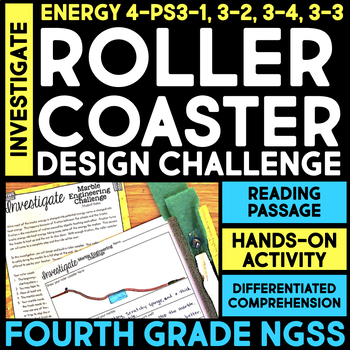
If you want to add a focus on kinetic and potential energy or gravitational force, I have two science station activities that come complete with a reading passage, activity directions, worksheets to record student work, and comprehension questions. The fourth-grade version focuses on potential and kinetic energy, while the fifth-grade version focuses on gravitational force.

Catapult Challenge
Give each group of students a popsicle stick, a rubber band, and a spoon. They have to use these materials to build a catapult that launches a small object (such as a pom-pom or a small ball) as far as possible.
While we have written many science teaching resources for teaching Force and Motion and Patterns in Motion, there are many fun force and motion project ideas that you can use in your classroom without purchasing our units and science stations.
This post has more than 10 awesome force and motion activities, demonstrations and experiments, books, and videos to enhance your science lessons about force and motion.

Rube Goldberg Challenge
This challenge combines a few of the challenges above and is a great whole-class challenge.
Provide each group of students with a variety of materials such as dominoes, marbles, popsicle sticks, cardboard tubes, balloons, string, and any other materials you feel appropriate.
The challenge?
They have to use these materials to create a complex Rube Goldberg machine that performs a simple task (like ringing a bell or popping a balloon) in the most convoluted way possible. This activity not only engages students but also builds creativity, perseverance, and problem-solving skills. Plus, it’s sure to create a lot of excitement and laughter in the classroom.
Which Back-to-School STEM Activities Work Best by Grade?
All 10 of these challenges work for grades 2–5, but a few are especially well-suited to specific grade levels.
For 2nd- and 3rd-graders, the Paper Bridge, Paper Airplane, and Tower Building challenges are great starting points. The directions are simple enough that students can dive in without much setup, and the hands-on trial-and-error builds confidence early in the year.
For 4th- and 5th-graders, the Rube Goldberg, Marble Run, and Catapult challenges add complexity and give students room to plan before they build. These work especially well when you pair them with a quick reflection on what the group tried, what failed, and what they changed.
The Boat Building and Egg Drop challenges sit right in the middle — they’re accessible to younger students with guided material constraints and open-ended enough to challenge older groups.
Engaging students in engineering design processes during back-to-school creates an environment that promotes cooperative learning and problem-solving. These activities not only help students develop their analytical and critical skills but also teach them how to think outside the box and innovate. Learning should be fun and exciting, and the first day of school should set the tone for the rest of the year.
Jessica BOschen
Jessica is a teacher, homeschool parent, and entrepreneur. She shares her passion for teaching and education on What I Have Learned. Jessica has 16 years of experience teaching elementary school and currently homeschools her two middle and high school boys. She enjoys scaffolding learning for students, focusing on helping our most challenging learners achieve success in all academic areas.