
Collaborative Learning – Teach Students to Work Together in Small Groups
Learning how to work together is SO important. Students need purposeful activities that engage them in team building and group work. Most of what the workplace requires these days is collaboration. Very rarely will you find a job that is done in isolation.

Here’s an idea of what we’ve done in the classroom to prompt collaboration and FUN. There’s a freebie at the end, so read on!
Community Building Puzzle
On the first day of school, I took a risk and let students choose where to sit. The only thing on their desks was a box of crayons and a puzzle piece. These puzzle pieces are part of my Community Building Puzzle, another great way to get students working together in groups.

Students made okay choices about where to sit, but after a week and a half, I realized that they needed a change. There were a few combinations that weren’t working so well. So, we changed seats.
Changing Seats Means New Table Partners
When we change our seats we immediately do some sort of fun group task, something that isn’t too difficult, but that brings the group together and teaches them how to work together.
I’ve been investigating STEM projects and love the engineering projects that ask students to work together to create something. I decided to use the Spaghetti Tower STEM Challenge that I saw last year on Sunny Days in Second. She’s got some awesome directions on her blog and tells you all about her experiences. I pretty much followed what she wrote for our STEM Challenge.
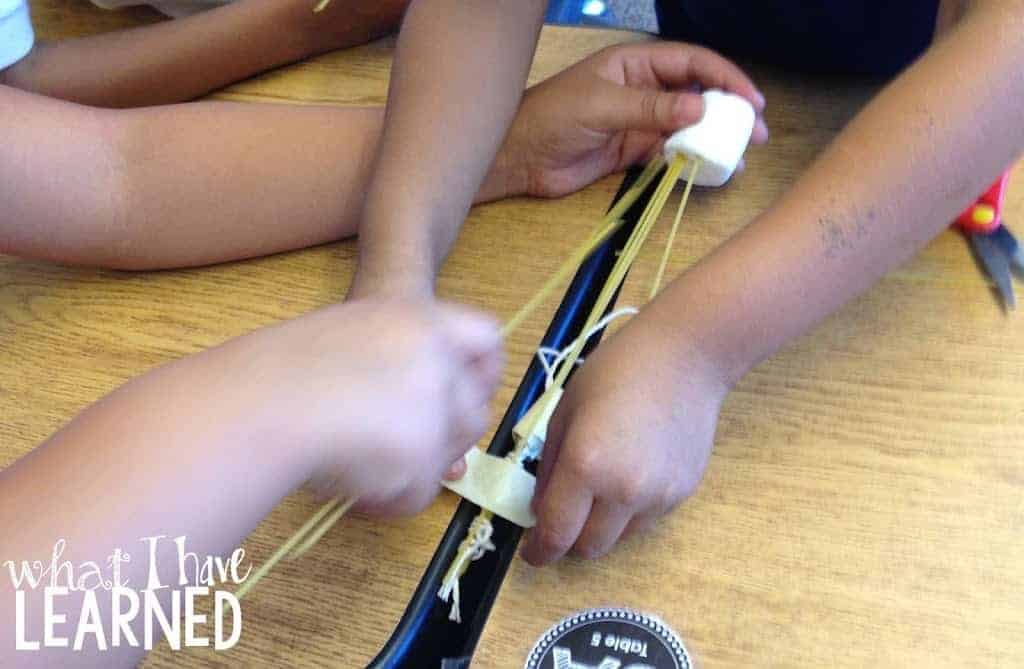
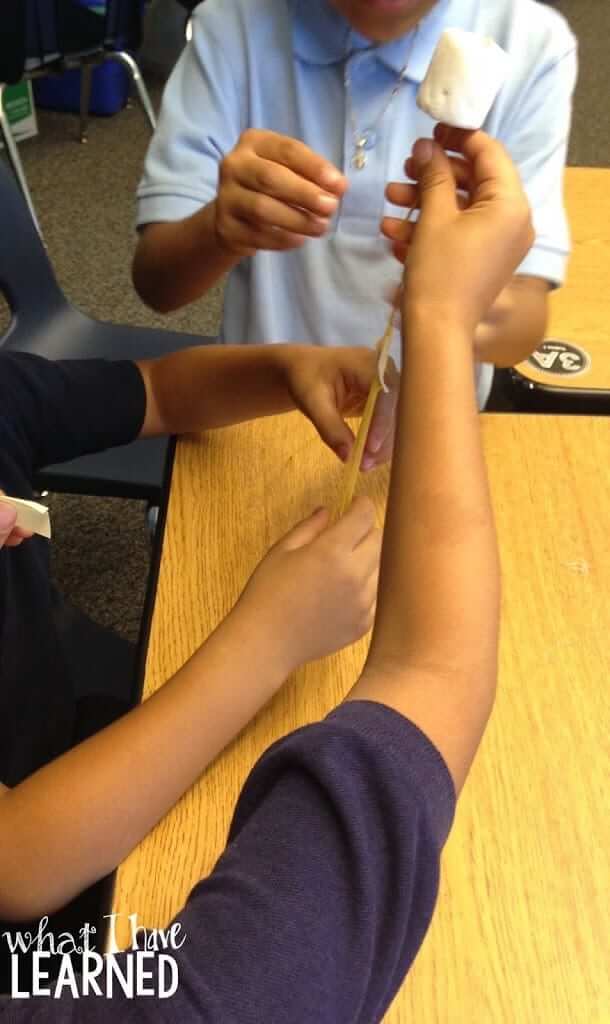
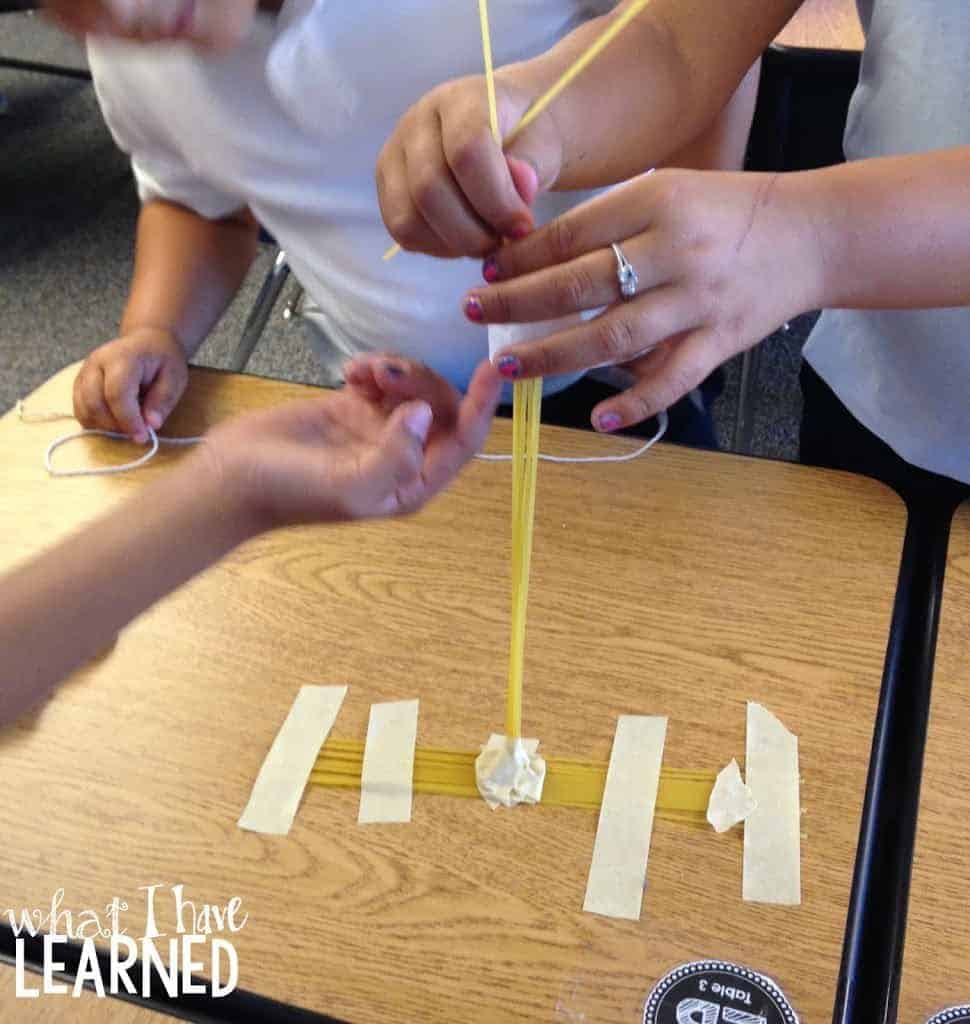
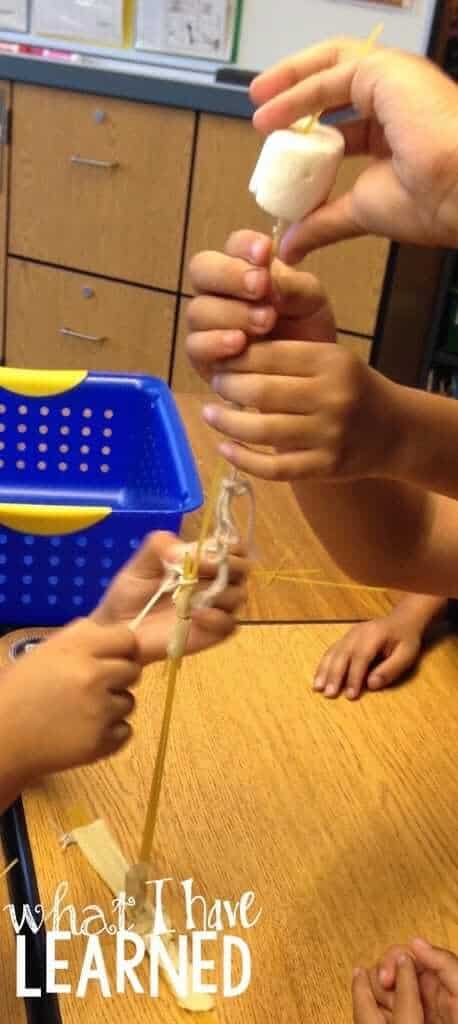
Students had to make a spaghetti tower that had to be free-standing with the marshmallow on top. There are a few conditions and a restriction on the supplies, which is what made it challenging!
Here are a few examples of the groups working.
Reflect as a Whole Group
At the end of Day 1, only two groups were successful. We debriefed about what went right, what went wrong, what was useful and what tool they wanted more of. It was a wonderful discussion!
My biggest goal was for groups to learn to work together. This activity provided students with an opportunity to negotiate how to work together.
Adjust the Task on Day 2
The next day, I gave students 10 mini-marshmallows.
The other thing I did, which wasn’t included in the original directions, was talk about the need to plan. I gave students a piece of paper and gave them four minutes to make a plan.
Given their experience the previous day, the planning went well. I’m not sure the planning would have gone as well on the first day, without the experience of building a tower first. Students needed some experience before they had enough background knowledge to plan out what they were going to do.
Here were a few plans that students created:
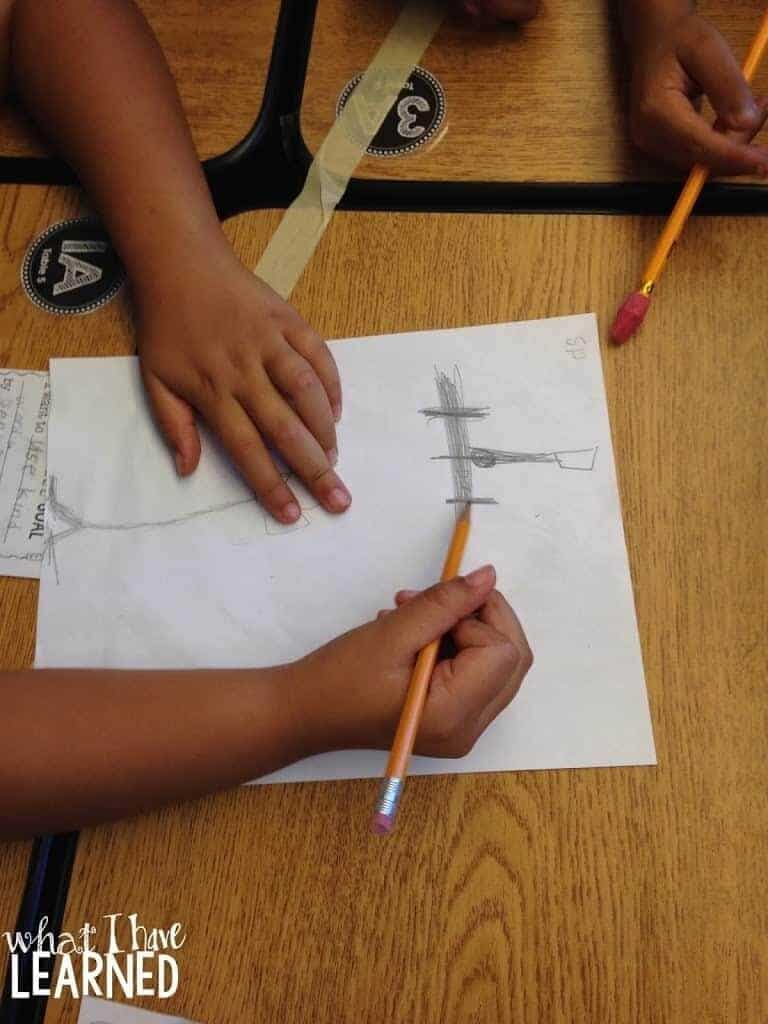

The second day, only one of the groups was successful, but, again, it’s about the experience of working together.
There were a few tears and bouts of frustration, and a “this is boring” from my most challenging kiddo because their group’s tower didn’t stay up. Overall, though, I’d say the two days successfully gave students the experience of working together with their peers.
I plan on doing one of these type of STEM engineering projects once a month (hopefully). I do need more ideas though. If you know of some good engineering resources for second graders, leave me a comment! I’d love to hear about them!
Cooperative Learning Through Problem Solving
The other thing that we do to build teamwork is Cooperative Learning through Problem Solving.
I’ve written a previous post on it, so I’m not going to go too in-depth about it, but I did repackage a part of it to offer you today for free. Click on the image below or this link to access the file

How do you build community in your classroom and teach students to work together? I’d love to hear about it in the comments below!

Thank you for the fun and challenge of the cooperative problem solving tasks.
Are you aware of the blog/facebook “Get Caught Engineering”? Great STEM ideas there.