
Cooperative Learning Strategies: How to Use Cooperative Learning During Direct Instruction
Cooperative learning strategies are simple routines that help students think, talk, and learn together during classroom lessons. Instead of listening quietly during instruction, students pause to discuss ideas, explain their thinking, and process new information with classmates.
These structured discussions fit naturally into direct instruction. Teachers can stop at key moments in a lesson and give students a quick opportunity to talk with a partner or small group. These short conversations help students stay engaged and deepen their understanding of the content being taught.
In this post, I explain what cooperative learning is, how it works during direct instruction, and share my top cooperative learning strategies that you can start using in your classroom.
What Is Cooperative Learning?
The cooperative learning definition refers to an instructional approach where students work together in structured ways to learn academic content and support one another’s understanding.
Instead of students working independently or competing against one another, cooperative learning organizes students into pairs or small groups that discuss ideas, solve problems, and explain concepts together.
The cooperative learning model centers on shared responsibility. Each student contributes to the group’s learning while still being accountable for understanding the material.
Many teachers associate cooperative learning with group projects. In reality, most cooperative learning strategies are short discussion structures that can be used during everyday lessons.
Cooperative Learning in the Classroom During Direct Instruction
Teachers often think of cooperative learning as something used during centers or projects. In many classrooms, it works best when it is woven into whole-group instruction.
During a lesson, teachers can pause at key points and ask students to briefly discuss a question with a partner or group. These short conversations help students process the information they just heard.
Examples of when cooperative learning works well during direct instruction include:
- predicting what will happen next in a story
- explaining a math strategy
- summarizing a science concept
- identifying the main idea of a paragraph
- reviewing vocabulary terms
These quick moments of discussion keep students engaged and give teachers immediate feedback about students’ understanding.
Cooperative Learning vs Collaborative Learning
Teachers sometimes use the terms interchangeably, but there are some differences between cooperative learning vs collaborative learning.
Cooperative learning usually involves structured routines where students have specific roles or steps to follow. Many of these routines were developed through the work of Kagan cooperative learning structures, which provide clear formats for student interaction.
Collaborative learning is often more open-ended. Students work together on a shared task or project without a specific discussion structure.
| Feature | Cooperative Learning | Collaborative Learning |
|---|---|---|
| Structure | Uses structured routines or discussion formats | More open-ended group work |
| Organization | Students follow specific steps or roles | Students decide how to work together |
| Teacher Role | The teacher provides the task, students organize the process | The teacher provides the task, and students organize the process |
| Examples | Turn and Talk, Think Pair Share, Numbered Heads Together, Quiz Quiz Trade | Group projects, research tasks, long-term assignments |
| Student Accountability | Individual students may be randomly called to respond for the group | Responsibility is usually shared across the group |
| Classroom Use | Often used during direct instruction to process ideas | Often used for projects or extended activities |
In many elementary classrooms, cooperative learning strategies work especially well during whole-group lessons because the structure helps guide student conversations and keeps all students involved.
Cooperative Learning Benefits
There are many cooperative learning benefits for students when these strategies are used regularly in lessons.
Students benefit because they:
- explain their thinking aloud
- hear different perspectives
- clarify misunderstandings
- practice academic language
- stay actively engaged during instruction
These conversations help students process new information and strengthen their understanding of the content being taught.
Cooperative learning can also support English learners because students have time to rehearse ideas with a partner before sharing with the whole class.
Cooperative Learning Structures You Can Use During Lessons
Many teachers teach a small set of cooperative learning structures that they use repeatedly throughout the year. When students learn the routines, these strategies can be used quickly without interrupting the flow of instruction.
Here are several cooperative learning strategies that work especially well in my classroom during direct instruction.
Turn and Talk
Turn and Talk is one of the easiest cooperative learning activities to introduce. It is a quick-response discussion technique intended to be used for short answers vs. a longer discussion.
Students briefly turn to a partner and respond to a question or prompt before sharing with the class. This structure works well when teachers want every student to think about an answer rather than calling on only a few volunteers.
Examples of prompts include:
- “Turn and talk about what the character is feeling.”
- “Turn and talk about which strategy you used to solve the problem.”
- “Turn and talk about the main idea of this paragraph.”

To learn how to train your students on Turn and Talk, see this post.
Think Pair Share
Think-Pair-Share is one of the most widely used cooperative learning teaching strategies. Think-Pair-Share is more structured and used for longer discussions.
Students first think about a question independently. Then they discuss their ideas with a partner before sharing responses with the class.
This routine works especially well when students need time to process a deeper question.
Example:
During a reading lesson, students might first think about why a character made a certain decision. They then discuss their ideas with a partner before several pairs share their thinking with the class.

Learn how to teach your students Think-Pair-Share.
Numbered Heads Together
Numbered Heads Together is a cooperative learning strategy that encourages group accountability.
Students work in small groups, and each student is assigned a number. After discussing a question together, the teacher randomly calls a number. The student with that number answers for the group.
Since any student might be called, groups must make sure every member understands the answer.
This structure works well for reviewing concepts, solving math problems, and discussing reading comprehension questions.
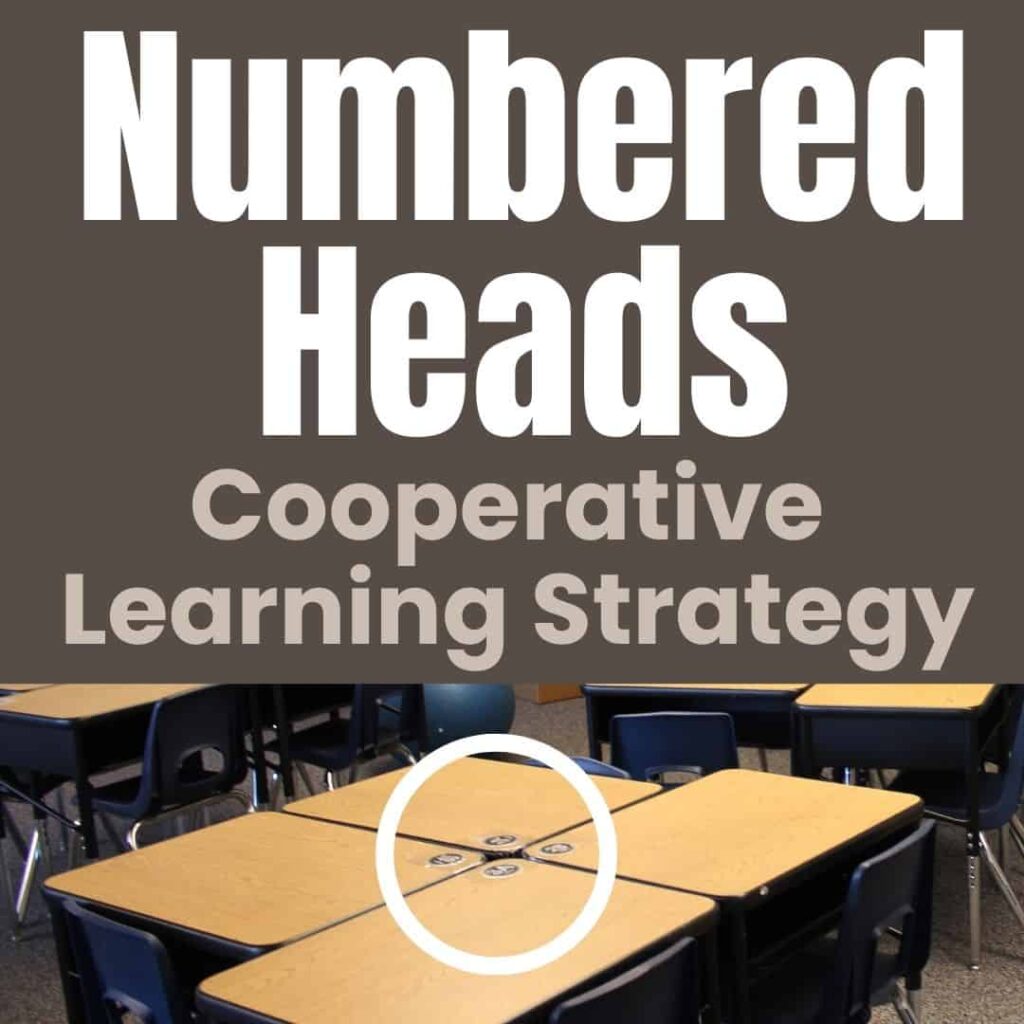
To learn how to train your students on the Numbered Heads strategy see this post.
Quiz Quiz Trade
Quiz Quiz Trade is a movement-based cooperative learning activity that works well for review.
Students each have a question card. They walk around the room and find a partner. Each student asks their question, listens to the answer, and then trades cards before finding a new partner.
This activity is often used for:
- vocabulary review
- math fact practice
- science concept review
- social studies terms
- sentence frame practice
I often use this strategy in the afternoons with my English learners. It gets them up and moving and practicing the academic language in the sentence frames we have learned.
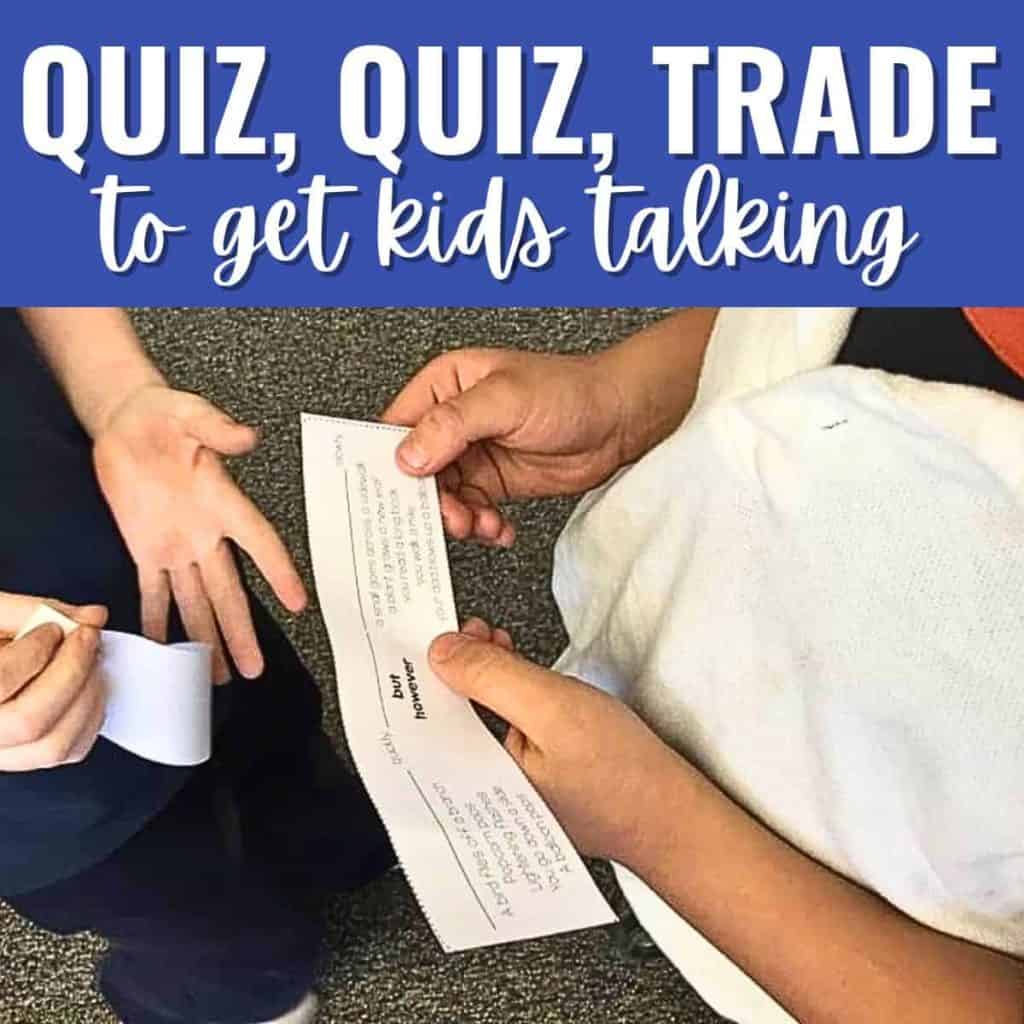
To learn how to train your students on Quiz, Quiz, Trade, see this post.
Inside Outside Circle
Inside-Outside Circle is a cooperative learning structure in which students form two circles. One circle faces outward while the other faces inward, so that each student has a partner.
Students discuss a question or review a concept with their partner. After a short discussion, one circle rotates so students have a new partner.
Teachers often use this structure for:
- vocabulary review
- discussion questions
- concept review before a test
- sharing ideas during writing lessons
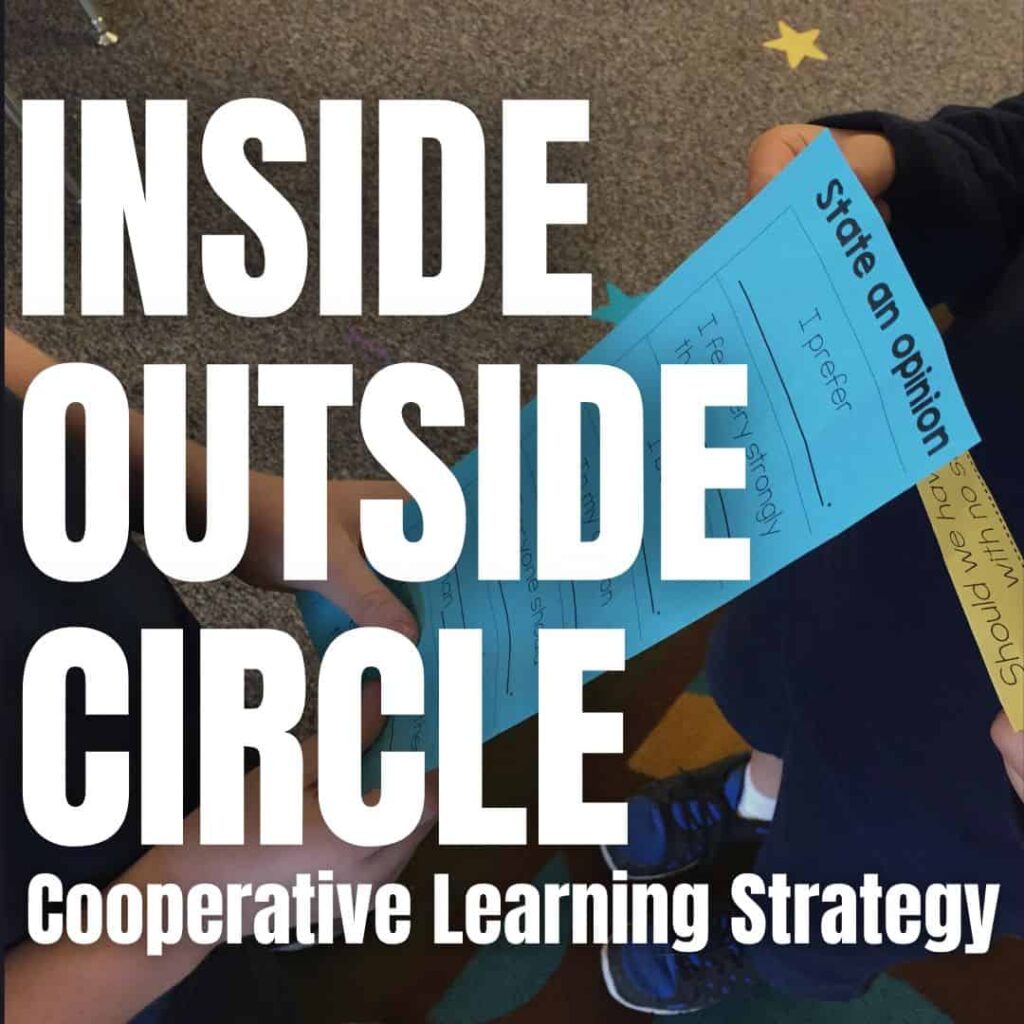
To learn how to set up Inside Outside Circle, see this post.
Lines of Communication
Lines of Communication is a cooperative learning strategy where students form two lines facing each other and discuss a question or task with a partner. After each discussion, one line moves so that students have a new partner.
Teachers often use Lines of Communication for:
- reviewing key ideas from a lesson
- practicing academic language
- discussing reading comprehension questions
- sharing problem-solving strategies
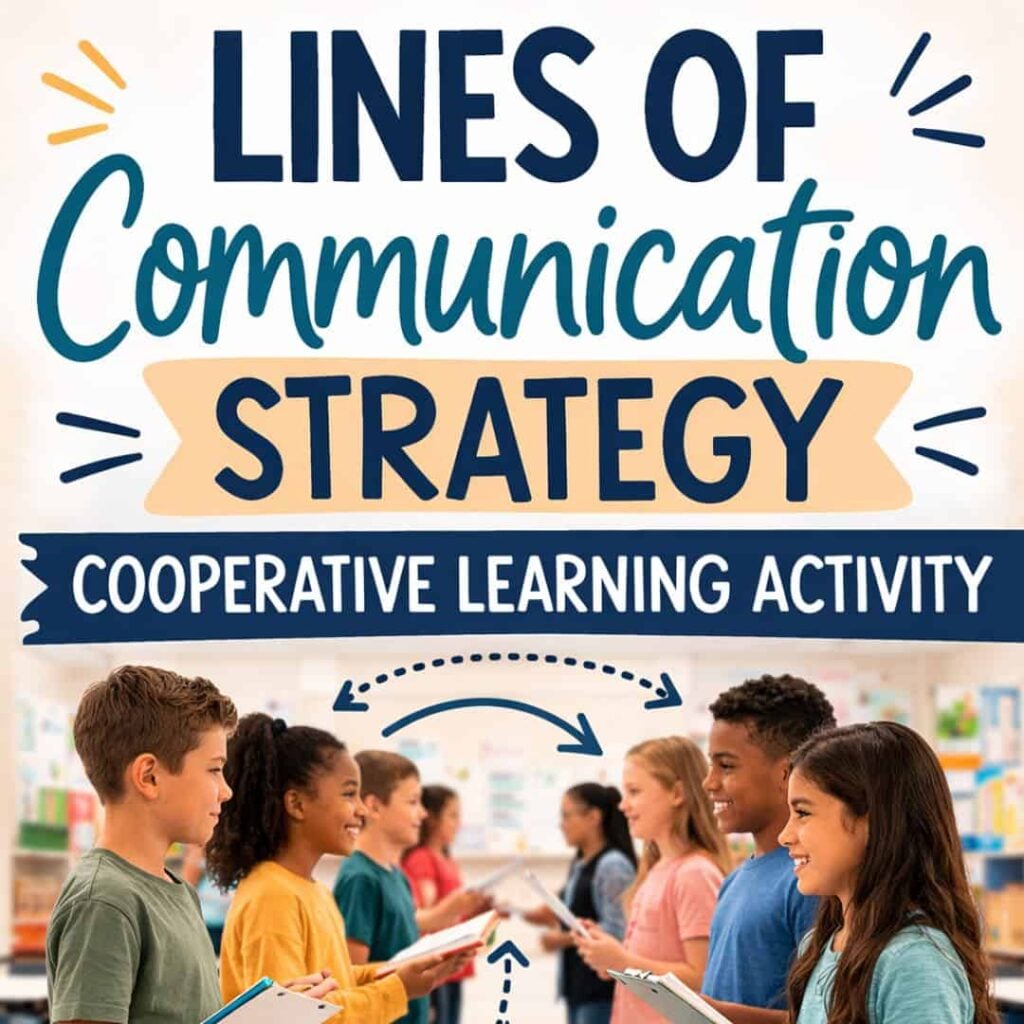
This simple structure allows students to interact with multiple classmates while reviewing ideas from the lesson.
Give One, Get One
Give One, Get One is a cooperative learning strategy where students share ideas with multiple classmates while collecting new ideas in return. Students begin by writing their own responses to a prompt. They then move around the room to meet with different partners. During each conversation, students give one idea and get one idea, adding their partner’s response to their list.
Teachers often use Give One, Get One for:
- brainstorming ideas before writing
- reviewing vocabulary or key concepts
- identifying examples of a topic
- summarizing important ideas from a lesson
Because students collect ideas from several partners, Give One, Get One works especially well when students need to generate multiple responses or perspectives on a topic.
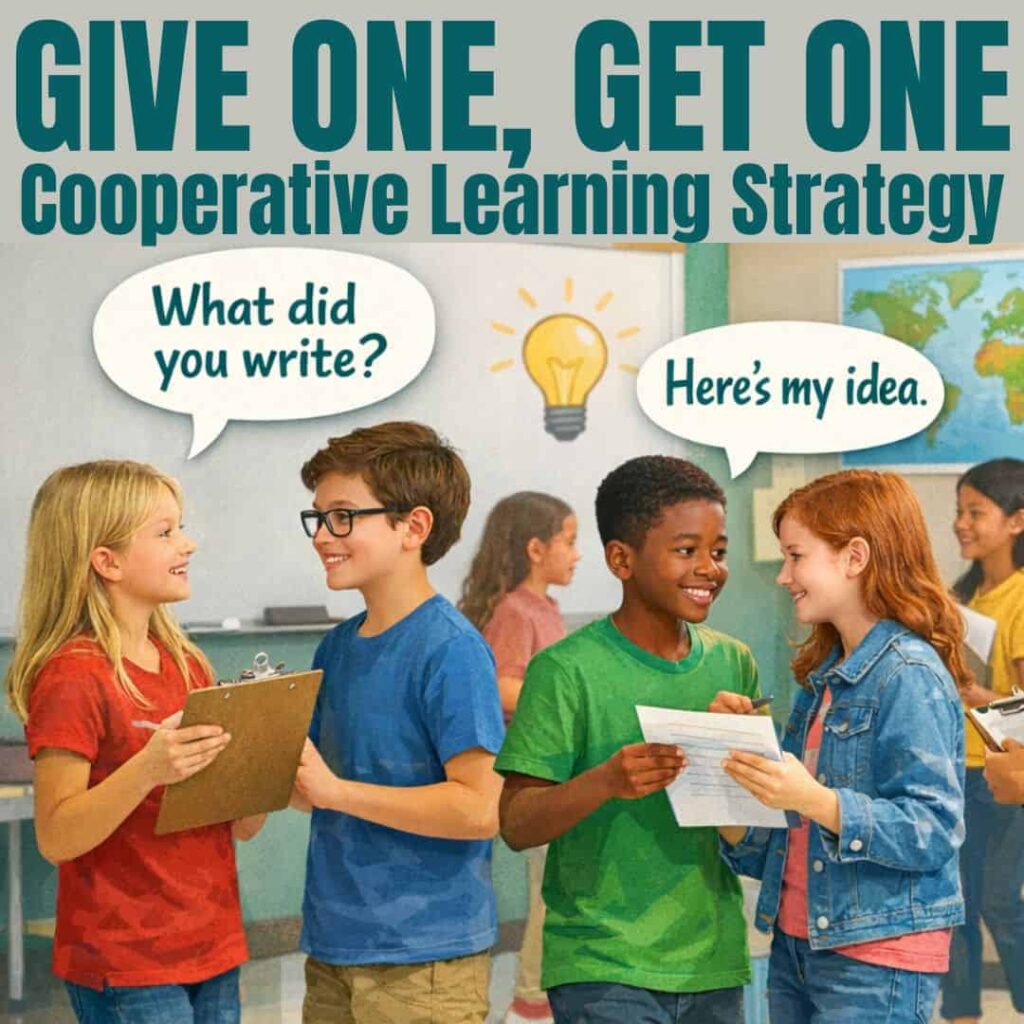
This structure helps students expand their thinking by hearing a variety of ideas from classmates.
Cooperative Learning Activities Examples for Direct Instruction
Teachers often use cooperative learning activities as short pauses during instruction or to review concepts just taught during a whole-group lesson.
Here are a few cooperative learning activities examples that work well during lessons:
Reading
Students discuss the main idea of a paragraph or predict what might happen next in the story.
Math
Students explain the strategy they used to solve a problem.
Science
Students describe the evidence that supports a scientific claim.
Social Studies
Students discuss why a historical event was important.
These short discussions help students process information and give teachers insight into student understanding.
Building a Toolbox of Cooperative Learning Strategies
Most teachers find it helpful to use a small set of cooperative learning strategies consistently throughout the year. When students become familiar with the routines, transitions become quick, and discussions run more smoothly.
Using strategies such as Turn and Talk, Think Pair Share, Numbered Heads Together, and Quiz Quiz Trade during direct instruction keeps students thinking, talking, and participating throughout the lesson.
Over time, these routines help transform whole-group lessons into active learning experiences where every student has opportunities to explain ideas, listen to others, and deepen their understanding of the content.

great ideas! Thank you