
Give One, Get One Cooperative Learning Strategy
The Give One, Get One strategy is a cooperative learning activity where students share an idea with a partner and collect a new idea in return. Students begin by writing their own responses to a prompt, then move around the room to exchange ideas with classmates. Each time they talk with a partner, they share one idea and add one new idea to their list.
I use this strategy when I want students to generate ideas, review concepts, or share their thinking with several classmates. Repeated exchanges help students hear multiple perspectives while expanding their understanding of a topic.
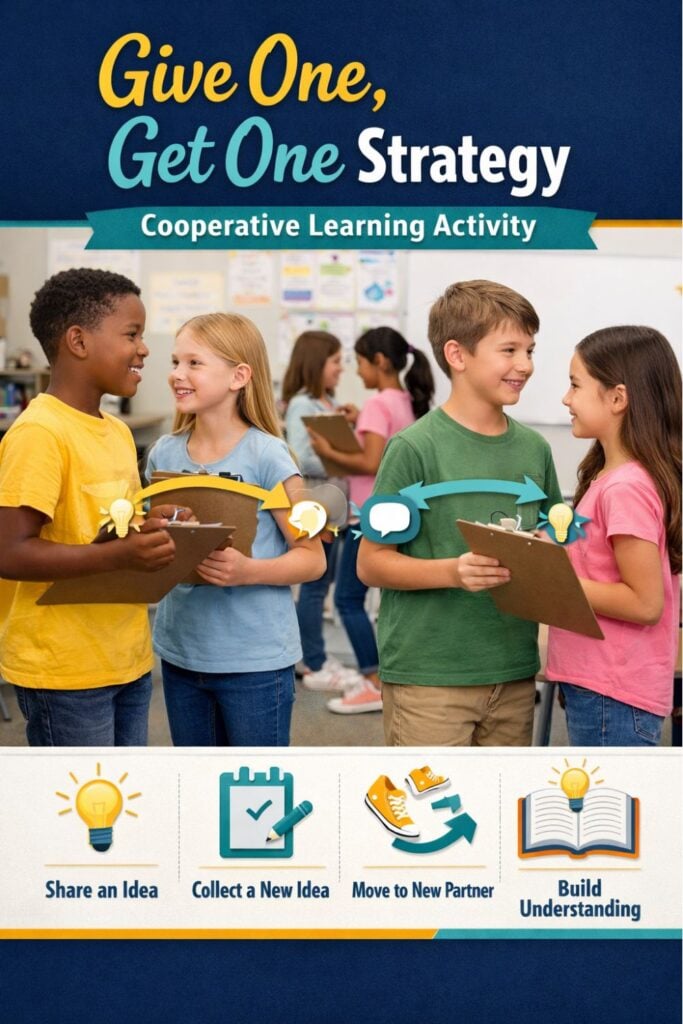
Give One, Get One can be used in almost any subject area and works especially well during brainstorming, concept review, and writing preparation.
Give One, Get One is just one example of many cooperative learning strategies teachers can use to encourage student discussion and idea sharing during lessons.
What Is the Give One, Get One Strategy?
The Give One, Get One cooperative learning strategy is a structured discussion activity where students exchange ideas with multiple classmates. Each student begins with a list of responses to a question or prompt.
Students then move around the classroom and meet with a partner. During the conversation, each student shares one idea from their list and writes down one new idea from their partner.
After the exchange, students move to another partner and repeat the process.
By the end of the activity, students have collected a variety of ideas from different classmates.
This strategy helps students:
- generate new ideas
- review key concepts
- hear different perspectives
- practice explaining their thinking
Because students collect ideas from several partners, their list of responses grows throughout the activity.
How the Give One, Get One Strategy Works
The routine is simple and works for many different types of lessons.
1. Present a Question or Prompt
The teacher provides a lesson-related prompt.
Examples include:
- list examples of animal adaptations
- name strategies used to solve a math problem
- brainstorm ideas for a writing topic
- list causes of a historical event
2. Students Write Their Own Ideas
Students begin by writing several ideas independently. This step ensures that every student has something to contribute during the activity.
I give students about three to five minutes for this step and make sure everyone has at least two or three ideas written before we start moving. Students who skip this step tend to just copy whatever their partners say, which defeats the purpose of the exchange.
3. Students Find a Partner
Students stand up and find a partner in the classroom.
4. Give One Idea and Get One Idea
Each student shares one idea from their list. Then each student writes down one new idea they learned from their partner.
5. Find a New Partner
Students move to a new partner and repeat the process.
The activity continues until students have collected several ideas from different classmates.
Classroom Setup for Give One, Get One
The Give One, Get One strategy requires very little preparation.
I give students a simple recording sheet that includes spaces for ideas they give and ideas they get. I’ve used both a formal recording sheet and just a folded piece of notebook paper divided into two columns. Either works. The key is that students have somewhere to write so the ideas don’t disappear after the conversation.
The recording sheet might look like this:
| Give One (My Ideas) | Get One (Ideas from Classmates) |
|---|---|
| Idea 1 | New Idea |
| Idea 2 | New Idea |
| Idea 3 | New Idea |
| Idea 4 | New Idea |
Students begin by filling in their own ideas in the Give One column. As they talk with partners, they record new ideas in the Get One column.
When to Use Give One, Get One in the Classroom
This cooperative learning strategy works well during many parts of a lesson.
I use Give One, Get One for:
- brainstorming ideas before writing
- reviewing vocabulary
- identifying examples of a concept
- summarizing key points from a lesson
- generating questions about a topic
Because students interact with several classmates, the activity helps them expand their thinking and generate ideas quickly.
Examples of Give One, Get One Prompts
Give One, Get One works best with prompts that encourage students to generate multiple responses.
Examples include:
Reading
- List character traits that describe the main character.
- Identify important events in the story.
Math
- List strategies that can be used to solve this problem.
- Identify different ways to represent the number.
Science
- List examples of animal adaptations.
- Identify factors that affect an ecosystem.
Writing
- Brainstorm ideas for a narrative story.
- List reasons that support your opinion.
How Give One, Get One Compares to Other Cooperative Learning Strategies
Give One, Get One is similar to other cooperative learning activities that encourage students to interact with several partners.
For example:
- Quiz Quiz Trade focuses on asking and answering questions with a partner.
- Inside Outside Circle rotates partners in a circle formation.
- Lines of Communication rotates partners using two lines of students.
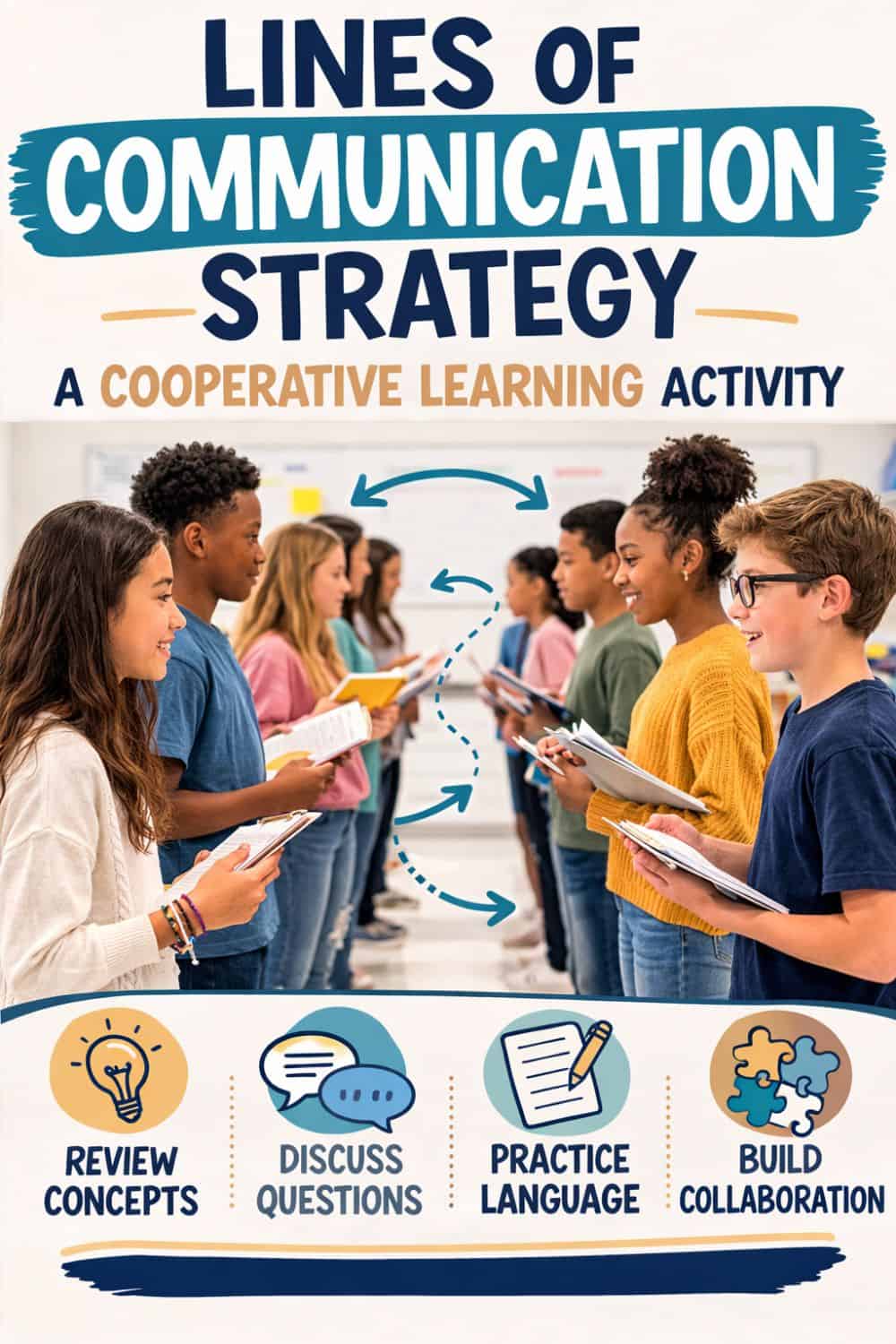
Give One, Get One differs because students collect ideas from multiple classmates rather than answering a single question.
This makes it especially useful for brainstorming and idea generation.
Tips for Using Give One, Get One Successfully
A few simple routines help the activity run smoothly.
- Give students time to write their own ideas before starting.
- Encourage students to move quickly to new partners.
- Remind students to record new ideas they receive.
- Set a clear time limit for the activity.
One thing that helps the movement stay orderly: I tell students to raise their hand when they finish an exchange so they can find their next partner without wandering. With younger students, I also set a visible timer so they know exactly how long each conversation lasts.
When students understand the expectations, the activity becomes an efficient way to share ideas and review concepts.
Using the Give One, Get One Strategy in Your Classroom
Give One, Get One is one of those routines that gets easier every time you run it. By exchanging ideas with multiple classmates, students expand their thinking and gain new perspectives.
Whether students are brainstorming writing topics, reviewing vocabulary, or identifying examples of a concept, Give One, Get One gives them a structured way to interact and build their understanding of the lesson content.
Jessica BOschen
Jessica is a teacher, homeschool parent, and entrepreneur. She shares her passion for teaching and education on What I Have Learned. Jessica has 16 years of experience teaching elementary school and currently homeschools her two middle and high school boys. She enjoys scaffolding learning for students, focusing on helping our most challenging learners achieve success in all academic areas.