
Small Moment Story Ideas for Personal Narrative Writing
Small moment story ideas help students turn broad personal narrative topics into focused stories they can actually write. Instead of writing about an entire vacation, birthday, or school day, students learn to choose one small seed moment and stretch it with details.

I used this watermelon vs. seed writing activity when we revisited personal narrative writing near the end of the year. It gave students a concrete way to sort big topics from focused story ideas before choosing one moment to write about.
What Are Small Moment Story Ideas?
A small-moment story idea is a focused event from a student’s life. It is not “my trip to the beach.” It might be “the moment a wave knocked over my sandcastle” or “the first time I put my feet in the cold water.”
That difference matters because personal narratives need details, feelings, actions, and a clear beginning, middle, and end. When students choose a topic that is too broad, they often write a list of events rather than a story.
Small Moment Story Ideas for 2nd and 3rd Grade
Some students can think of a personal narrative idea right away, but many need examples before they can choose a focused seed story. These small moment story ideas work well for 2nd and 3rd grade because they are familiar, concrete, and narrow enough for students to stretch with details.
School Small Moment Ideas
- The moment you walked into a new classroom
- A time you answered a hard question
- The moment you finished a project you worked hard on
- A funny moment at recess
- A time you helped a classmate
- The moment you got nervous before sharing your work
Family Small Moment Ideas
- A time you cooked or baked something with someone
- The moment you opened a special gift
- A funny thing that happened at dinner
- A time you helped at home
- The moment you surprised someone
- A time you got ready for a family celebration
Friendship Small Moment Ideas
- The moment you made a new friend
- A time you and a friend laughed together
- The moment you solved a problem with a friend
- A time you felt left out and what happened next
- The moment you invited someone to play
- A time a friend helped you
Adventure and Play Small Moment Ideas
- The moment you learned to ride a bike or scooter
- A time you climbed, jumped, ran, or tried something new
- The moment you got muddy, wet, or messy
- A time you played a game and something surprising happened
- The moment you won, lost, or almost won
- A time you explored a new place
Feelings Small Moment Ideas
- A time you felt proud
- The moment you felt brave
- A time you were embarrassed
- The moment you felt disappointed
- A time you were surprised
- The moment you calmed down after feeling upset
After students choose an idea, have them test whether it is really a seed story. If they can tell the whole story in a few minutes and picture the exact moment in their mind, it is probably focused enough for a personal narrative.
Watermelon vs. Seed Writing for Personal Narratives
We started by talking about watermelon ideas and seed ideas. A watermelon idea is a big topic, such as “my birthday party” or “a day at the park.” A seed idea is one small part of that topic, such as “blowing out the candles” or “falling off the swing.”
During whole-group instruction, students practiced turning watermelon topics into seed stories. This gave them a simple structure for narrowing their personal narrative ideas before they started planning.
Sorting Watermelon and Seed Ideas
After the whole-group lesson, students worked with a partner to sort example ideas. Some ideas were watermelons, and others were seeds. As they sorted, students had to explain why an idea was too broad or focused enough for a personal narrative.
This partner activity is helpful because students hear how classmates think through the difference. If you have students who need more support, assign partners intentionally so they can hear stronger examples and practice explaining their thinking out loud.

Using a Small Moment Graphic Organizer
After sorting examples, each student filled in a My Small Moments chart. This gave them a place to collect possible seed story ideas before choosing one to develop into a personal narrative.
A small moment graphic organizer works well in a writing journal because students can return to it later. When they get stuck during independent writing, they already have a list of personal narrative ideas waiting for them.

If you want a more detailed planning lesson, this narrative prewriting activity walks through brainstorming, choosing a small moment, and using a narrative graphic organizer before drafting.
Helping Students Generate Personal Narrative Ideas
Some students can quickly name small moments, while others need more support to remember and talk through possible stories. That does not mean they have no stories to tell. It usually means they need more oral rehearsal, visuals, shared examples, and time to connect an experience to a writing idea.
Before asking students to choose a topic independently, try brainstorming around familiar prompts such as a time you got hurt, a time you felt proud, a time something surprised you, or a time you went somewhere special. These prompts can spark memories without locking students into one assigned topic.
More Personal Narrative Writing Support
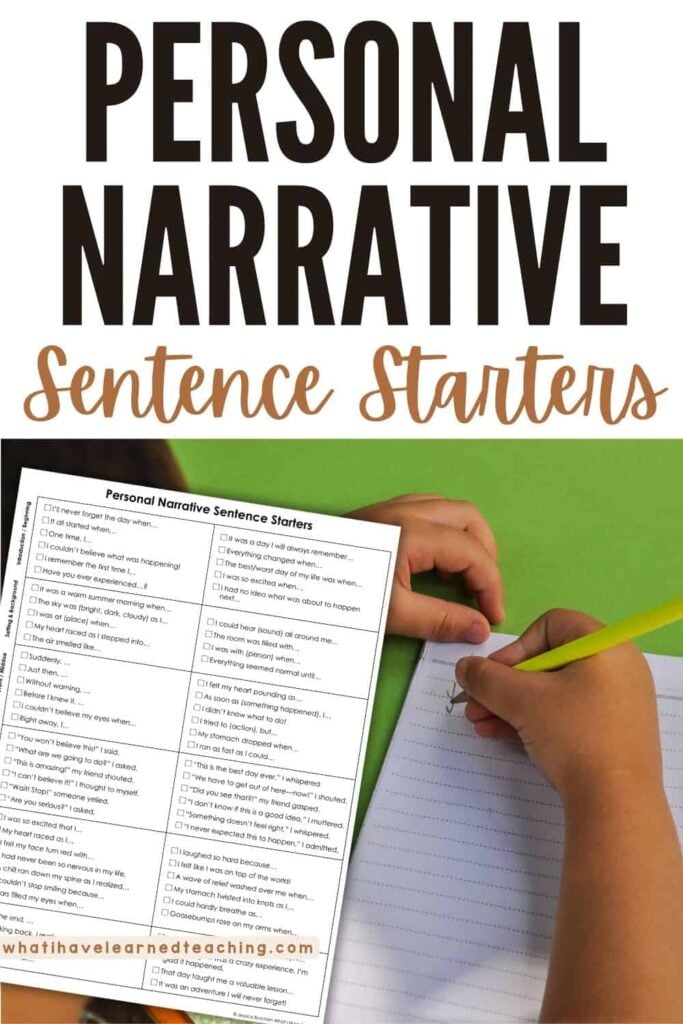
Once students have chosen a small moment, they may still need help getting the story started. These personal narrative sentence starters can support students in writing leads, transitions, dialogue, and reflections.
If you want the full set of materials shown in this post, you can find the Narrative Writing Tools here. They include support for brainstorming, planning, drafting, and revising personal narratives.
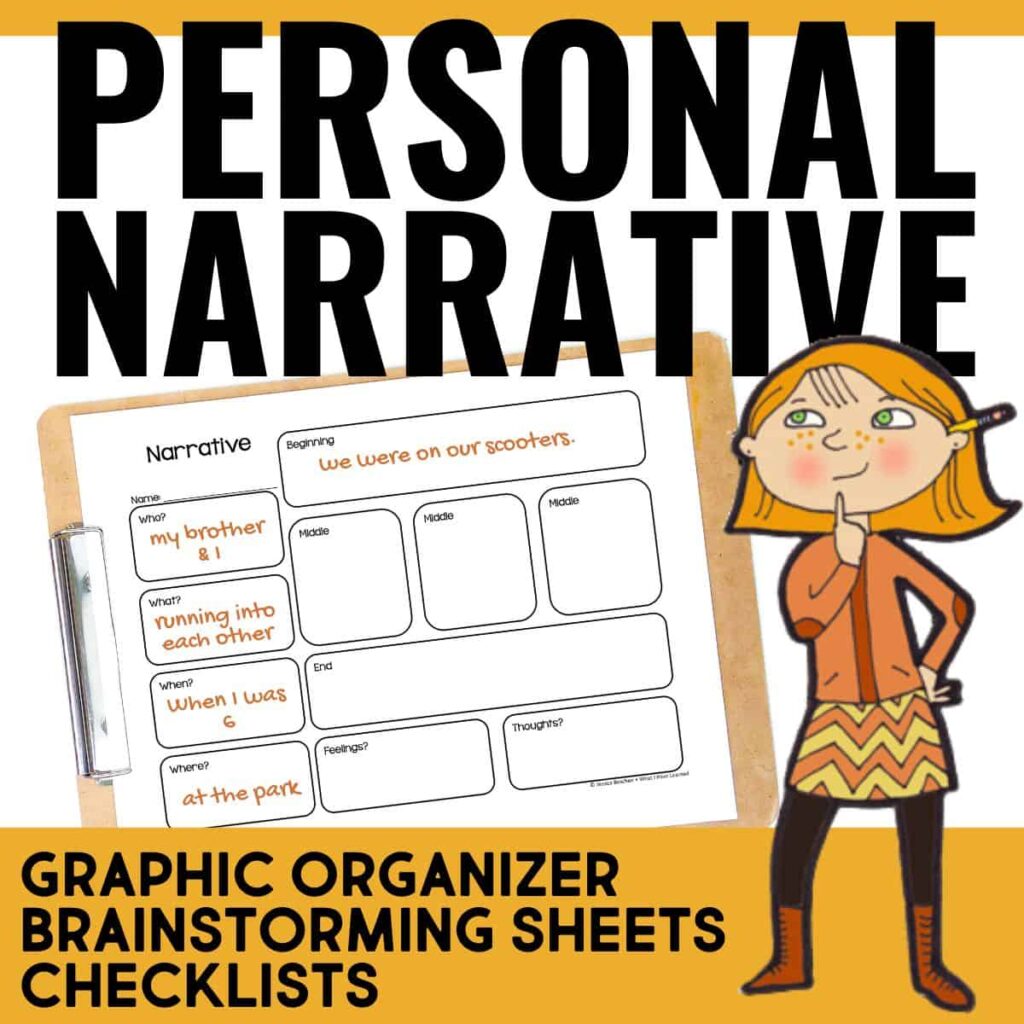
Narrative Writing Tools for Small Moments & Personal Narratives | Grades 1–5
Help students master personal narrative writing with these engaging Narrative Writing Tools! Designed for grades 1–5, this resource includes small moment activities, brainstorming pages, graphic organizers, narrative checklists, mentor tools, and student writing samples to guide young writers through the entire writing process. Perfect for writing workshop, literacy centers, and whole-group instruction.
Small moment writing takes practice, especially for students who are used to choosing large topics. The more students sort examples, talk through ideas, and collect possible seed stories, the easier it becomes for them to choose one focused moment and write with detail.
Jessica BOschen
Jessica is a teacher, homeschool parent, and entrepreneur. She shares her passion for teaching and education on What I Have Learned. Jessica has 16 years of experience teaching elementary school and currently homeschools her two middle and high school boys. She enjoys scaffolding learning for students, focusing on helping our most challenging learners achieve success in all academic areas.