
Inside Outside Circle: The Kagan Cooperative Learning Strategy
The Inside-Outside Circle strategy is a cooperative learning structure in which students form two circles and discuss questions or review concepts with a partner. One circle faces inward while the other faces outward, so that each student has a partner directly across from them. After a short discussion, one circle rotates, giving students a new partner for the next question.
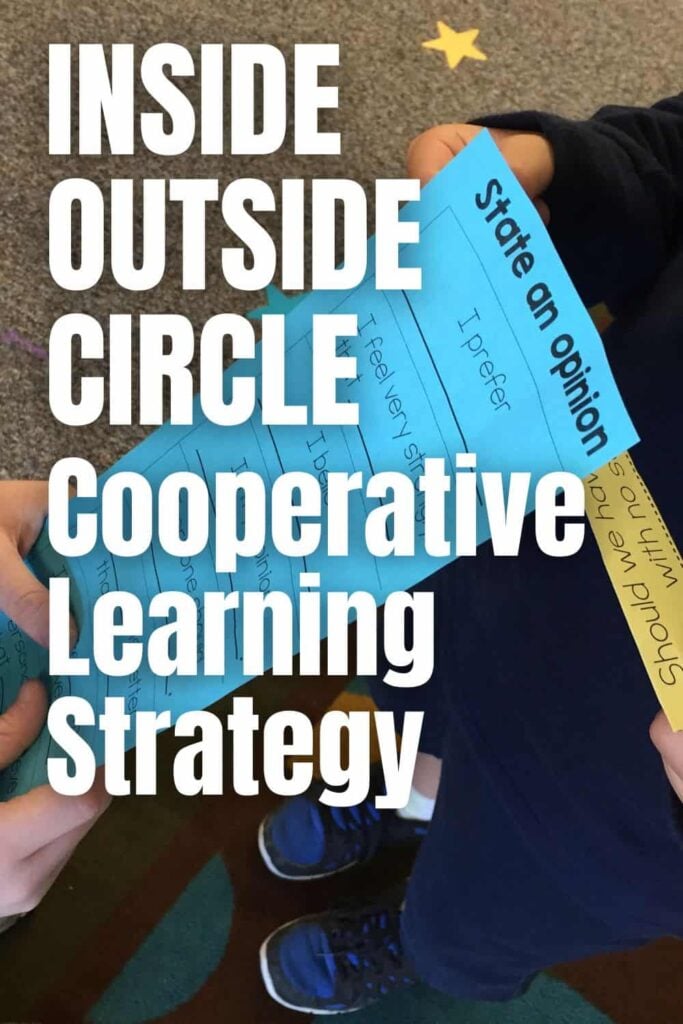
This structure works well when teachers want students to review ideas, practice academic language, or discuss questions with multiple classmates. The movement keeps students engaged, while repeated partner discussions reinforce key concepts.
Inside Outside Circle is especially useful during review activities, vocabulary practice, and end-of-lesson discussions.
What Is Inside Outside Circle?
Inside Outside Circle is a Kagan cooperative learning strategy in which students form two concentric circles, discuss a question or prompt with the partner facing them, and then rotate to a new partner when the teacher signals.
The teacher asks a question or gives a prompt. Students discuss the answer with their partner for a short period of time. After the discussion, the teacher signals one circle to rotate so students have a new partner.
The process repeats with a new question or task.
This structure allows students to:
- discuss ideas with several partners
- practice explaining their thinking
- review key concepts from a lesson
- stay actively engaged through movement
Because students speak with multiple classmates, they hear different explanations and perspectives during the activity.
How the Inside Outside Circle Strategy Works
The routine follows a few simple steps.
1. Students Form Two Circles
Half of the class forms an inside circle facing outward. The other half forms an outside circle facing inward so that students are paired with a partner.
Each student should have someone directly across from them.
2. The Teacher Asks a Question or Prompt
The teacher provides a question or task related to the lesson.
Examples include:
- defining vocabulary words
- explaining a math strategy
- answering comprehension questions
- sharing an idea for a writing prompt
3. Students Discuss With Their Partner
Students talk with their partner for a short period of time. Both students should have a chance to speak and explain their thinking.
4. Rotate the Circle
After the discussion, the teacher signals for one circle to rotate. Students move one space so that each student has a new partner.
The teacher then gives a new question, and the process repeats.
The rotation direction matters for consistency. I always rotate the outside circle to the right. Once students know this, transitions take about five seconds, and no one ends up confused about which way to move.
Classroom Setup for Inside Outside Circle
This strategy requires a little preparation the first time you use it, but the setup can make the routine much easier throughout the year.
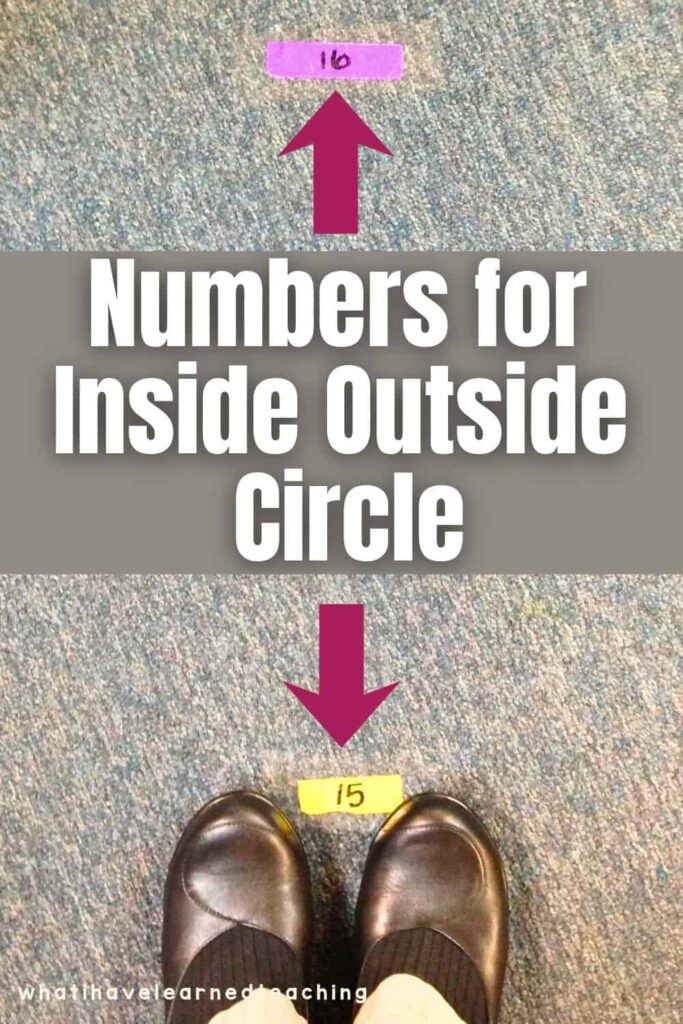
In my classroom, I use colored duct tape on the floor to mark two circles. I write numbers on the duct tape and then cover it with packing tape so the numbers don’t wear off.
- The outer circle contains odd numbers.
- The inner circle contains even numbers.
For example, student 1 stands across from student 2, student 3 faces student 4, and so on. These numbered spots help students quickly find their place and partner. This odd and even sequence also allows me to ask specific students to stand on an odd number or ask the even numbers to rotate.
I usually weave the circles in and out of the desks so students can still move around the classroom while forming the circles. Once the spots are taped down, students learn where to stand, and the activity can begin quickly.
Why Teachers Use Inside Outside Circle
Because students repeat the same discussion with several partners in sequence, they get multiple chances to explain their thinking — each time with someone who may approach the answer differently. The movement between partners also helps reset attention, which is useful later in the day or after a long work period. The structure works especially well for vocabulary practice and concept review because the repetition reinforces ideas without feeling like rote drill.
When to Use Inside Outside Circle
I reach for this structure most often at the end of a lesson, not the beginning. When students have just taken in new information, explaining it to three or four classmates in quick succession does more to consolidate that learning than re-reading notes or answering a worksheet. The accountability is real, too — students know they will have to explain again in 30 seconds, so they pay attention to how their partner explains it.
Teachers often use it for:
- vocabulary review
- discussion questions
- concept review before a test
- sharing ideas during writing lessons
I often use this activity when students need a quick movement break. It works especially well near the end of the day, when students benefit from standing, moving, and reviewing what they learned.
Using Inside Outside Circle With Other Cooperative Learning Strategies
Inside Outside Circle is just one of many cooperative learning strategies teachers can use during lessons.
If you’re building a collection of discussion routines, you may also want to explore these strategies:
Using a variety of cooperative learning structures helps keep classroom discussions engaging and gives students multiple opportunities to explain their thinking.
Using Inside Outside Circle With Quiz Quiz Trade
One way to extend the Inside Outside Circle strategy is to combine it with Quiz Quiz Trade. This approach gives students a prompt card or sentence frame to use during each partner discussion. After they finish talking with a partner, students trade cards, then rotate to the next partner.
To begin, give each student a card. The card might contain a vocabulary question, review question, math problem, or a sentence frame students should complete. Students stand in the two circles and discuss the question with their partner.
After both partners respond, they trade cards. Then the outside circle rotates so students meet a new partner. With a new partner and a new card, the discussion begins again.
One adjustment I make when combining these two structures: I give students a moment to read their new card before the next discussion begins, especially if the cards vary in difficulty. Students who get a harder card mid-rotation will shut down if they don’t have ten seconds to look at it first.
Bring the Inside Outside Circle Strategy Into Your Lessons
The Inside Outside Circle strategy is a simple way to combine discussion, movement, and review in the classroom. By rotating partners, students practice explaining ideas multiple times while hearing new perspectives from classmates.
Once students know the routine — where to stand, which direction to rotate, how long they have to talk — the structure runs itself. That is the real value of building it into your regular teaching: the first few times take setup, and after that it becomes one of the faster ways to get every student talking at once.

This is wonderful and validates what I am doing in the practice of Resolana to allow students to use their voice. Thank you so much. We are a college preparation program utilizing unique methods in preparing our youth for high school, college, career and life.