
Half Composition Notebook Ideas: 7 Daily Routines
Half composition notebooks are cheap, tiny, and everywhere in teacher supply hauls right now, but once you’ve bought a class set of 40, the real question is what to do with them. The best half composition notebook ideas all share one thing: they turn the little notebook into a daily routine, not a random supply that lives in a desk.
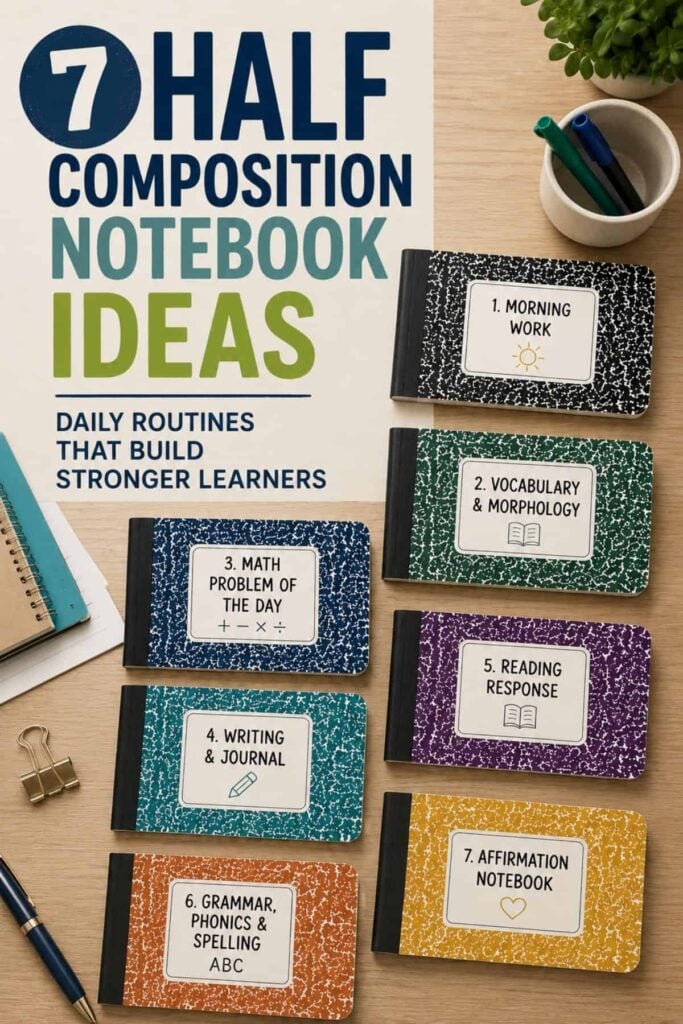
This post walks through why these small notebooks work so well and seven ways to use them for the quick, repeatable routines that run an elementary classroom, plus a simple morning routine you can start tomorrow.
Why Half Composition Notebooks Work So Well
A full notebook can feel like a big commitment for a young student, and a blank full page is a lot of space to fill. Half-size notebooks solve that in a few ways:
- Small enough to manage. They fit in a desk, stack in a bin, and don’t swallow the day the way a full notebooking project can.
- Cheap enough for every student. They cost a little, and you can often cut standard composition books in half to get two for the price of one.
- Right-sized for quick routines. A half page is just enough for a warm-up, a response, or a quick check, so students finish and feel successful instead of staring at empty space.
That combination is why they shine for short, repeatable practice rather than long projects. The trick is to pick one routine per notebook and use it the same way every day.


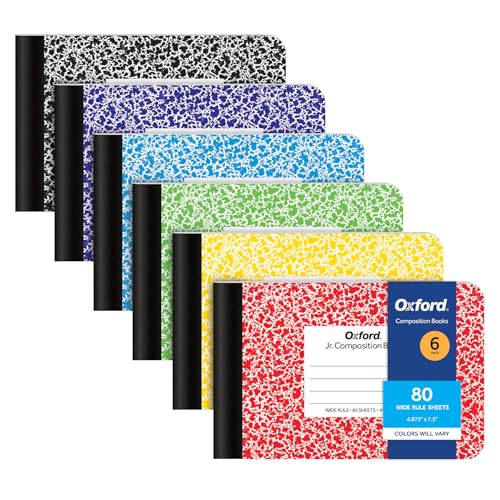
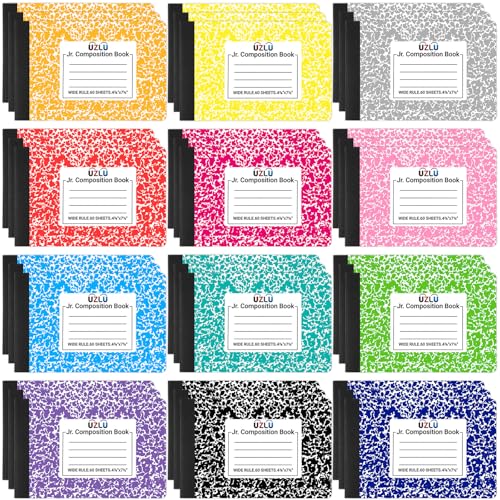
7 Half Composition Notebook Ideas by Routine
Each of these works as its own notebook. Pick the ones that fit your day, and keep each notebook to a single, consistent purpose.
1. Morning Work Notebook
Students open to a fresh half page each morning and respond to a prompt or question of the day, add the date, and complete a quick review task. Because the page is small, it’s a real routine students can finish before the day starts rolling, not a worksheet pile to grade.
2. Vocabulary and Morphology Notebook
Use it for a word of the day, definitions, semantic maps, or word parts like roots, prefixes, and suffixes. A small page is ideal for one word or one morpheme at a time. If you teach word parts, my morphology morning work routine drops right into a notebook like this.
3. Math Problem of the Day Notebook
Students solve one problem or word problem of the day and show their thinking. The half page keeps the focus on a single problem done well. A daily number routine works beautifully here, and my Number of the Day routine is built for exactly this kind of quick, repeatable practice.
4. Writing and Journal Notebook
One handy trick: use the left side to plan and the right side to draft, so students always have a place to organize their thinking before they write. This works for a daily journal prompt or a short paragraph. Pair it with writing prompts to keep the routine going, and use sentence-building practice for students who need help getting started.
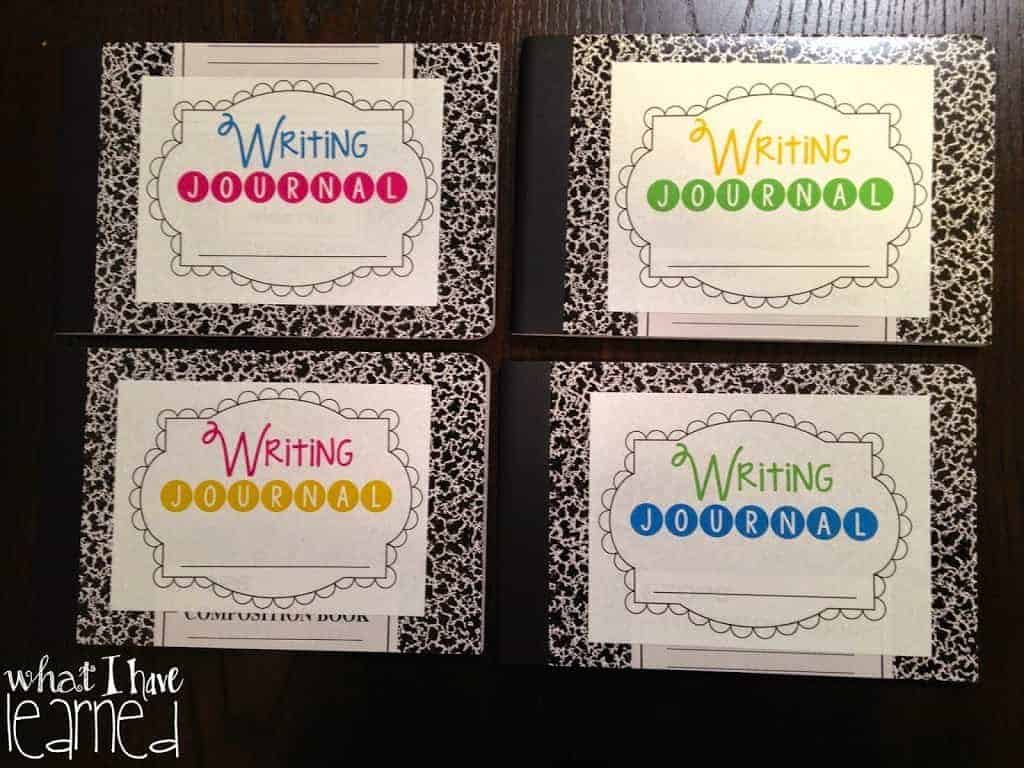
I used these half-notebooks as writing journals. Grab this printable cover in this post.
5. Reading Response Notebook
Students read a short passage and write a quick response, a summary, a reaction, or an answer to a text question. A routine like ReadWorks Article-A-Day pairs naturally with a small reading response notebook, since each entry is meant to be short and daily.
6. Grammar, Phonics, and Spelling Notebook
This one holds the daily follow-up work: fix-it sentences, sentence work, spelling practice, and handwriting or cursive. Keeping it all in one small notebook means students always know where their word work lives. My spelling activities and phonics notebook ideas both fit this routine.
7. Affirmation Notebook
Not every routine has to be academic. Some teachers have students write one affirmation each morning, a single positive line about themselves or their day. It takes a minute, it builds a healthy habit, and by the end of the year students have a whole notebook of them. It pairs well with your goal-setting journal routines.
A Half-Notebook Morning Routine to Try Tomorrow
If you want a concrete place to start, here’s a morning routine one teacher shared that packs several skills into a few minutes. As students arrive, they open their notebook and:
- Write the date.
- Respond to a word of the day or solve a math problem of the day.
- Write the time from the classroom clock.
- Count out a set of coins and record the amount.
Then, once attendance is done, the class reviews the answers together. Students get daily reps on date, telling time, money, and a word or math skill, all on one small page, and the review turns it into a shared routine instead of silent seatwork. Change the word or problem each day, and the structure stays exactly the same, which is what makes it stick.
Tips for Managing a Class Set
A class set of little notebooks needs a little system so it doesn’t become a pile of lost supplies:
- One notebook, one purpose. Keep the math notebook for math and the vocabulary notebook for vocabulary so students always know which is which.
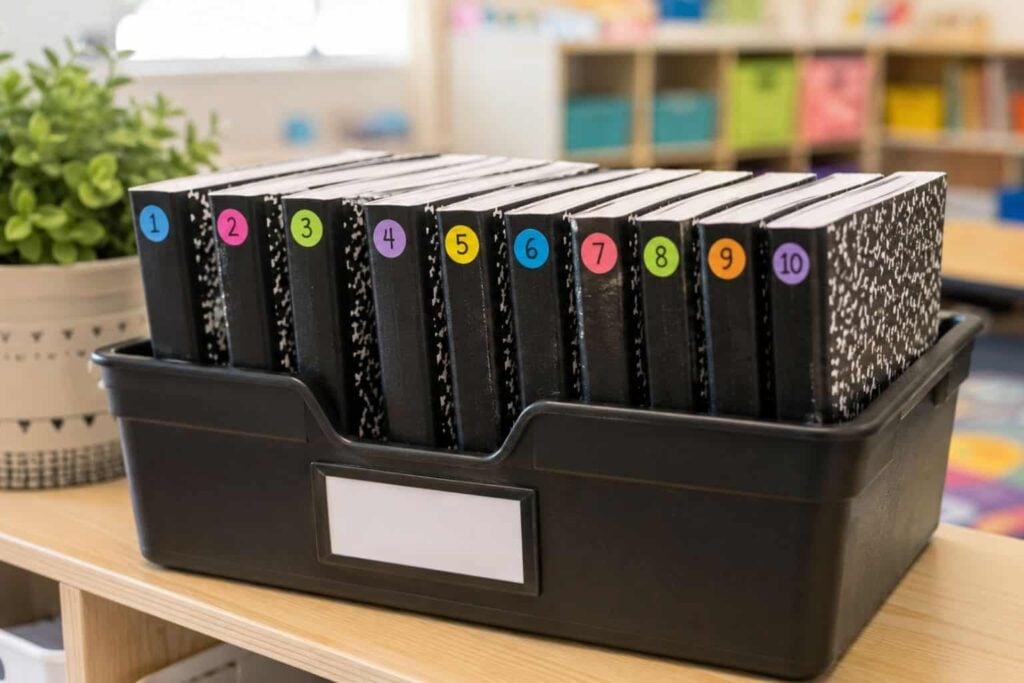
- Label and store by class. Number them and keep them in a bin by table group so passing them out takes seconds.
- Use tabs if one notebook covers two subjects. A couple of tabs keep math and word work from bleeding together.
- Make it a routine, not a random supply. The notebooks earn their keep when they’re used the same way every day.
Frequently Asked Questions
Final Thoughts
Half composition notebooks are one of those simple tools that do a lot once you give them a job. Choose a routine, use it the same way every day, and let the small page keep the practice short and doable. Start with one notebook, whether that’s morning work, vocabulary, or math, and add another once the routine is running on its own.
Looking for ready-made routines to fill those notebooks? A few that drop right in: my Morphology Morning Work for the vocabulary notebook, my Number of the Day routine for the math notebook, and Stretch a Sentence for the writing notebook. You can find these and more in my TPT store.
Jessica BOschen
Jessica is a teacher, homeschool parent, and entrepreneur. She shares her passion for teaching and education on What I Have Learned. Jessica has 16 years of experience teaching elementary school and currently homeschools her two middle and high school boys. She enjoys scaffolding learning for students, focusing on helping our most challenging learners achieve success in all academic areas.