
Morning Work Ideas That Build Real Skills (Not Busywork)
The first ten minutes of the day set the tone for everything that follows. Students trickle in, you take attendance and answer the same question for the fifth time, and you need something for them to do that runs on its own. The best morning work ideas do two things at once: they give students a calm, predictable way to start, and they build a real skill instead of filling time.
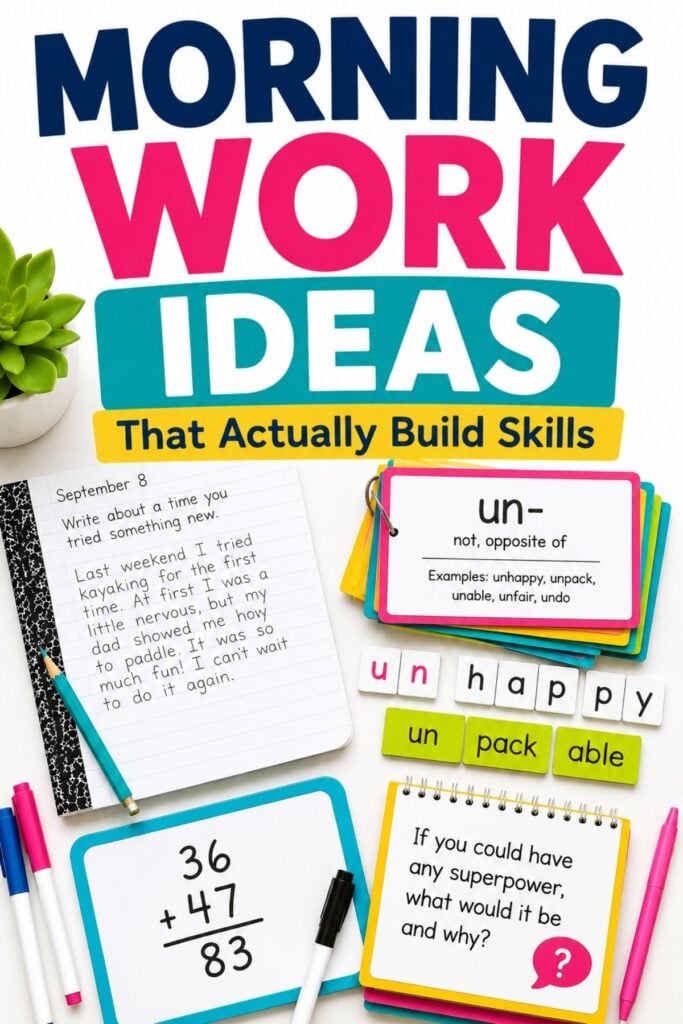
This post rounds up morning work and bell ringer routines by type, so you can pick a rotation that fits your grade and actually reinforces what you are teaching.
What Makes Morning Work Actually Work
Whether you call it morning work, bell work, or bell ringers, the same rules make it succeed. Students must be able to start without you, because you are busy during those first minutes. It should be predictable, so the routine itself does the managing. And it works best when it circles back to skills students need spaced practice on, the kind that benefit from a little bit every day rather than one big lesson.
That last point is what separates skill-building morning work from busywork. A word search fills ten minutes. A morpheme students break apart, or a prompt they respond to in writing, builds something. Research on quiet, predictable starts to the day, often called soft starts, points to the same conclusion: a calm, consistent entry routine helps students settle and focus. Edutopia has a good overview of soft starts and morning routines if you want the why behind it.
Word Study Morning Work Ideas
Word study is one of the best fits for a daily routine because it rewards small, repeated exposure. Morphology, the study of prefixes, suffixes, and root words, is especially strong here. Students meet a morpheme, see it in real words, and use it, all in a few minutes. Over a year, that daily habit adds up to a much bigger vocabulary and stronger decoding of unfamiliar words.
A predictable weekly structure keeps it independent: introduce the morpheme Monday, build and sort words midweek, and apply it in a sentence by Friday.
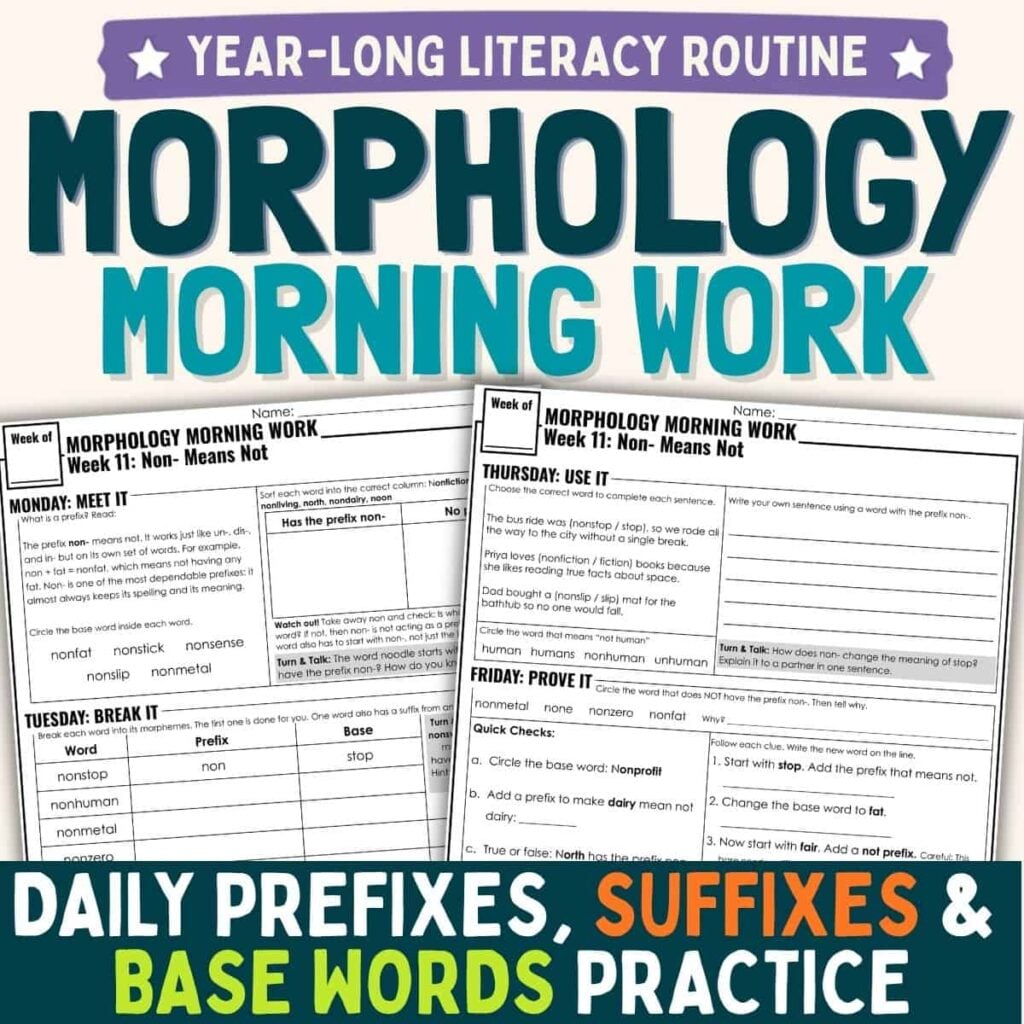
My morphology morning work follows this routine, with a consistent Monday-through-Friday flow that students learn once and then run on their own.
Writing Morning Work Ideas
Writing is a natural morning routine because students can do it independently and at their own pace. A prompt on the board, a journal, and ten minutes is all it takes. The key is variety, so it does not go stale by October:
- Creative prompts get students imagining and building narrative skill.
- Opinion prompts ask students to take a side and back it up, which sneaks in persuasive writing practice.
- Seasonal prompts tie the writing to what is happening in the year and keep it fresh.
- Letter writing gives the writing a real audience and purpose.

If you want a bank to pull from, my writing prompts for kids collection sorts creative, opinion, and seasonal prompts by type, and my friendly letter writing prompts work well when you want students writing to a real reader.
Thinking and Discussion Bell Ringer Ideas
Some of the best bell ringers get students talking and thinking before the academic day ramps up. A question on the board that students answer in a notebook, or turn and share with a partner, builds community and gives reluctant talkers a low-stakes way in. These also double as a soft transition when students need to settle before a lesson.
A rotating set of questions keeps this fresh: a would-you-rather on Monday, an icebreaker on Tuesday, a would-you-defend-it opinion question later in the week. My would you rather questions for kids and my icebreaker questions for elementary students give you a full year of prompts you can post as a daily bell ringer without any prep.

Need more ideas for questions you can ask your students? This post contains all of my questions posts in one place.
Math and Skills Practice Morning Work Ideas
Morning is a good window for skills that need steady, spaced practice: number sense, fact fluency, a problem of the day. A short math warm-up keeps skills warm between units and catches gaps early. The same goes for sentence-level writing skills, where a quick daily fix-it or expand-it routine builds habits that show up in longer writing later. My sentence writing warm-ups work well as a daily bell ringer for exactly this reason.
Whatever you choose, keep the format steady so students can start independently. The routine is what makes morning work run itself, not the worksheet.
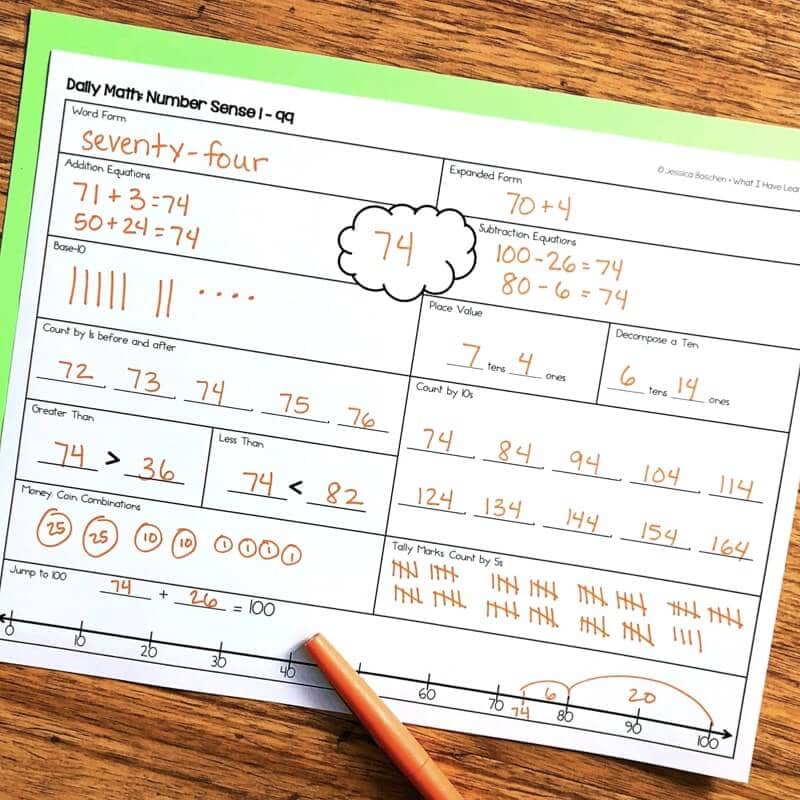
Check out this daily math warm-up. It’s a little longer than traditional bell-work, but is packed full of skill practice.
Frequently Asked Questions
Bringing It All Together
Good morning work is less about the perfect worksheet and more about a predictable routine that builds a real skill a little at a time. Pick one or two types that match what your students need, keep the format steady, and let the routine do the managing. The calm start is a bonus you will feel every single morning.
Looking for a ready-to-go routine? My Morphology Morning Work gives students a consistent Monday through Friday word study routine they can run independently, and my writing prompts and question-based posts give you a full year of prompts to rotate through.
Jessica BOschen
Jessica is a teacher, homeschool parent, and entrepreneur. She shares her passion for teaching and education on What I Have Learned. Jessica has 16 years of experience teaching elementary school and currently homeschools her two middle and high school boys. She enjoys scaffolding learning for students, focusing on helping our most challenging learners achieve success in all academic areas.