
Here is an interesting Black History fact most students have never heard: Claudette Colvin refused to give up her bus seat on a Montgomery bus nine months before Rosa Parks did the same thing. Facts like that make Black History Month facts stick with students because they are surprising, human, and easy to picture.
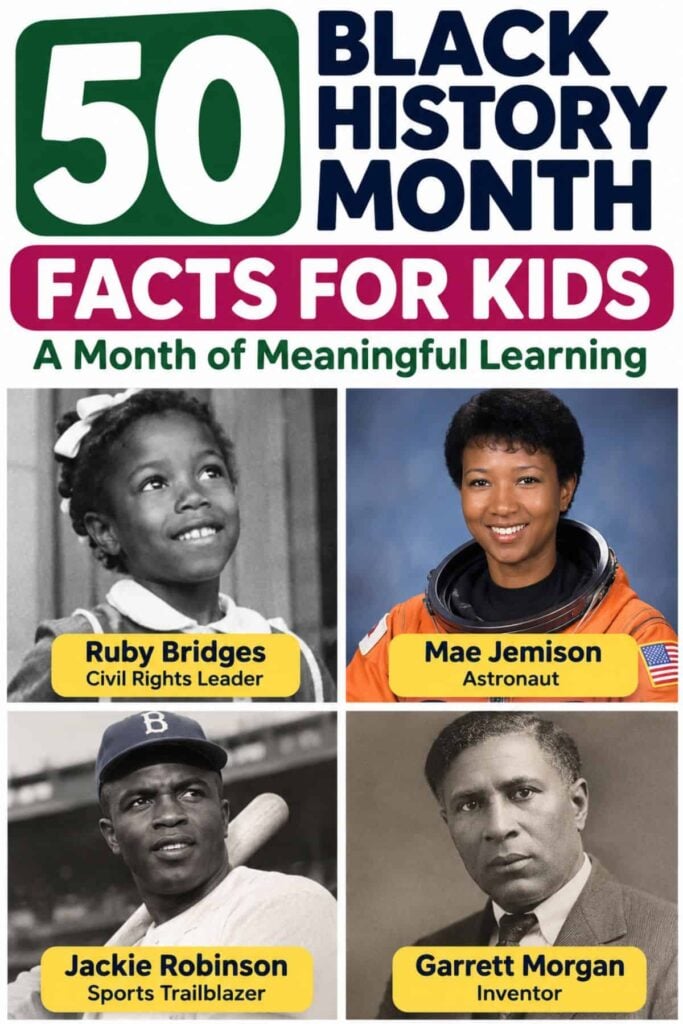
This post gives you 50 interesting Black History facts for elementary students, grouped into four weeks so you can share one a day through February in a morning meeting, a read-aloud, or a quick writing prompt. The facts are written in plain, kid-friendly language, so you can read them straight off the screen.
Why Black History Month Facts Matter in the Classroom
Black History Month gives students a window into people and moments that shaped the country, and a single fact a day is one of the simplest ways to open it. A short, interesting Black History fact works because it invites a question. When students hear that a six-year-old girl walked into an all-white school with federal marshals at her side, they want to know more, and that curiosity is the doorway to real learning.
These 50 facts are built for that daily rhythm. They are split into four weekly themes: civil rights leaders, inventors and scientists, trailblazers in arts and sports, and lesser-known heroes, so you can move through February with a focus each week. Read one aloud at morning meeting, post it as a fact of the day, or hand it to students as a writing prompt. If you want a deeper lesson to go with the facts, my Black History Month reading passage and activities pair an informational text with vocabulary and discussion questions.

Planning the whole month? These Black History Month activities and teaching ideas pull together reading, biographies, and classroom projects in one place.
How Black History Month Started
Carter G. Woodson and Negro History Week
Black History Month began with a historian named Carter G. Woodson. In 1926, Woodson launched Negro History Week to ensure the achievements of Black Americans were taught in schools and not left out of the story. The week grew in popularity over the decades, and in 1976 it expanded into the full Black History Month we recognize today. Woodson is often called the father of Black history for getting it all started.
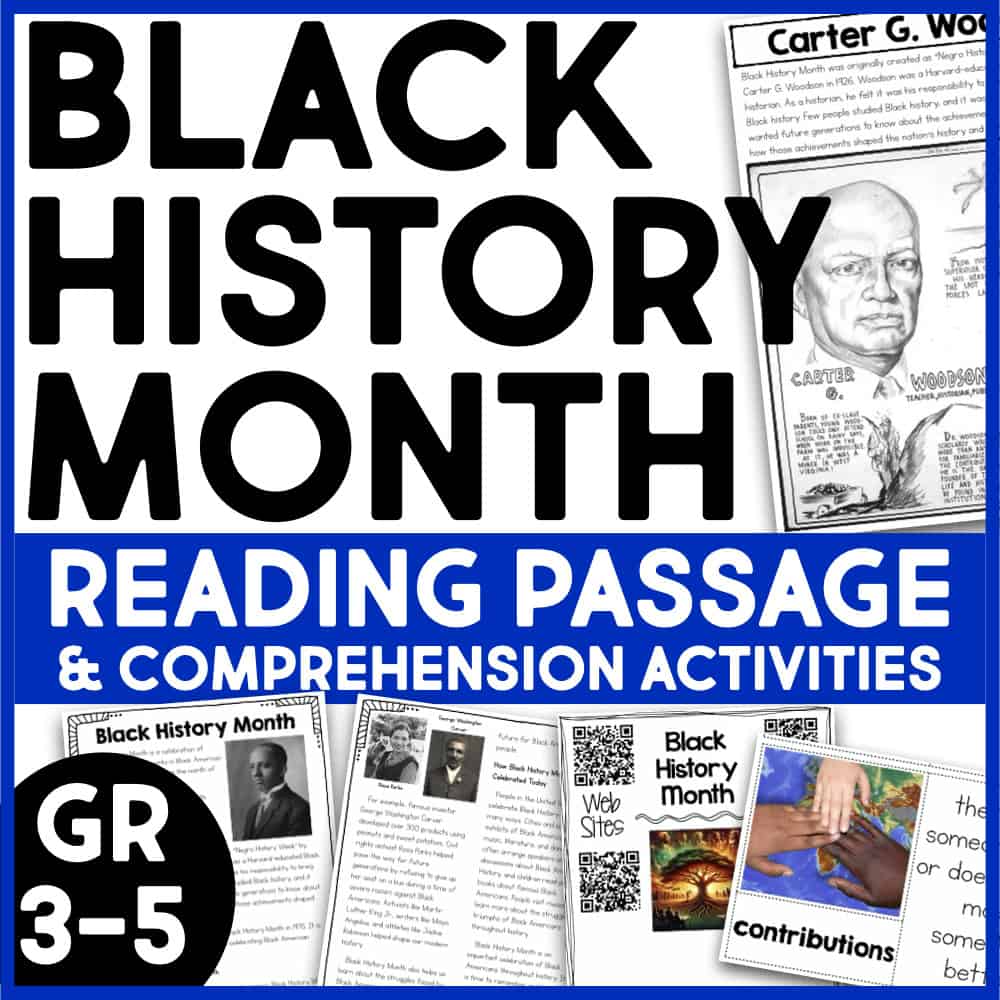


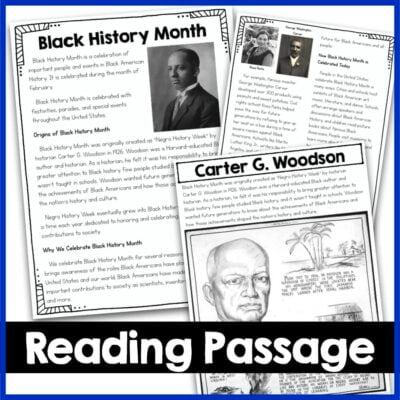
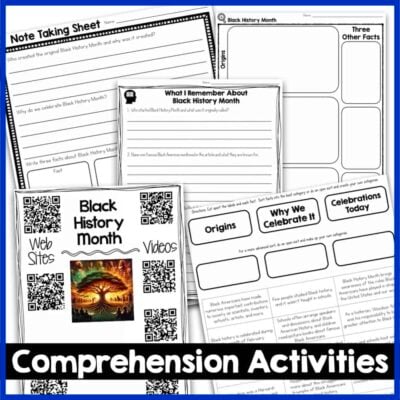
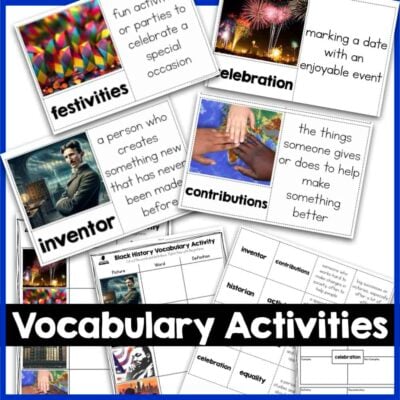
Black History Month Articles & Activities
This non-fiction unit explores the origins, significance, and modern-day celebrations of Black History Month while supporting critical thinking and literacy skills.
You can explore primary sources and lesson materials on the official Black History Month site hosted by the Library of Congress.
Why Black History Month Is in February
February was not chosen at random. Woodson picked it because it holds the birthdays of two people central to the end of slavery: Abraham Lincoln, born February 12, and Frederick Douglass, the formerly enslaved abolitionist and writer, who chose to celebrate his birthday on February 14. Communities were already honoring both men in February, so building the week around those dates made sense. That is why Black History Month lands in the shortest month of the year.
Week 1: Civil Rights Leaders and Milestones (Facts 1-12)
Start the month with the people and moments that pushed the country toward equal rights. These twelve facts work well for morning meeting, and several connect to lessons you may already teach in February. For more ideas on one of these figures, my Martin Luther King Jr. classroom ideas post has activities for all elementary grades.
- Rosa Parks refused to give up her bus seat to a white passenger in Montgomery, Alabama, in 1955. Her arrest sparked the Montgomery Bus Boycott, a protest that lasted more than a year.
- Claudette Colvin was only 15 when she refused to give up her bus seat, nine months before Rosa Parks. She later became one of the people whose court case helped end bus segregation.
- Martin Luther King Jr. gave his famous “I Have a Dream” speech in 1963 in front of a crowd of more than 250,000 people at the March on Washington.
- Ruby Bridges was just six years old in 1960 when she became one of the first Black children to integrate an all-white elementary school in the South.
- John Lewis helped lead the 1965 march from Selma to Montgomery, where peaceful marchers were met with violence. The events helped push the nation toward voting rights for all.
- The Civil Rights Act of 1964 made it against the law to treat people unfairly because of their race, color, religion, sex, or where they were born.
- The Voting Rights Act of 1965 protected the right of Black Americans to vote by outlawing unfair tests and rules that had been used to keep them from the ballot box.
- Thurgood Marshall became the first Black Supreme Court Justice in 1967. Before that, he was the lawyer who won the case that ended legal segregation in public schools.
- Shirley Chisholm became the first Black woman elected to the United States Congress in 1968, and later the first Black woman to run for president from a major party.
- Medgar Evers worked for the NAACP in Mississippi, helping Black citizens register to vote and investigating injustice during the civil rights movement.
- Bayard Rustin was the lead organizer of the 1963 March on Washington, pulling together one of the largest peaceful protests in American history in just a few weeks.
- The NAACP was founded in 1909 to fight for equal rights for Black Americans. It is one of the oldest civil rights organizations in the country and is still active today.
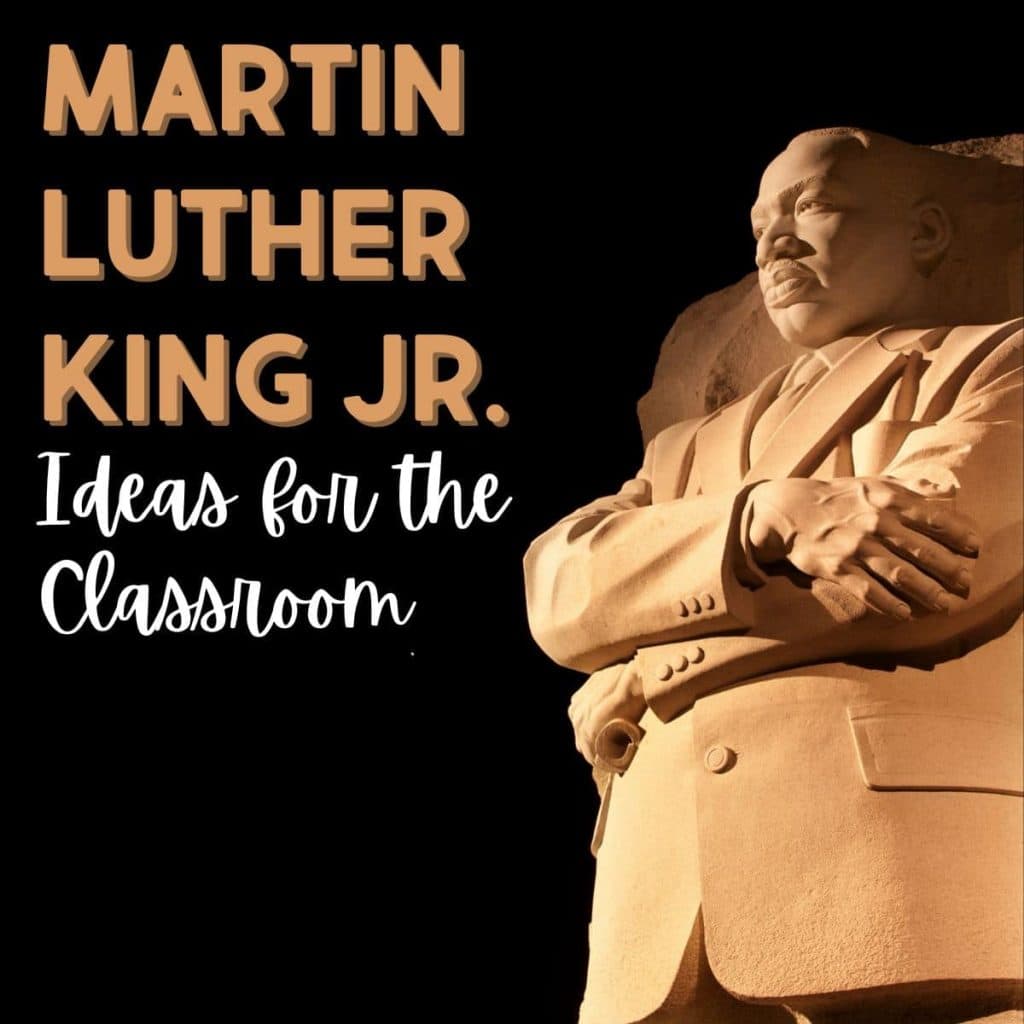
Teaching Dr. King this February? These Martin Luther King Jr. classroom activities work for every elementary grade.
Week 2: Inventors, Scientists, and Innovators (Facts 13-24)
Week two shifts to the Black inventors and scientists whose work students use or benefit from every day. These facts spark a “did you know” moment and connect naturally to science lessons.
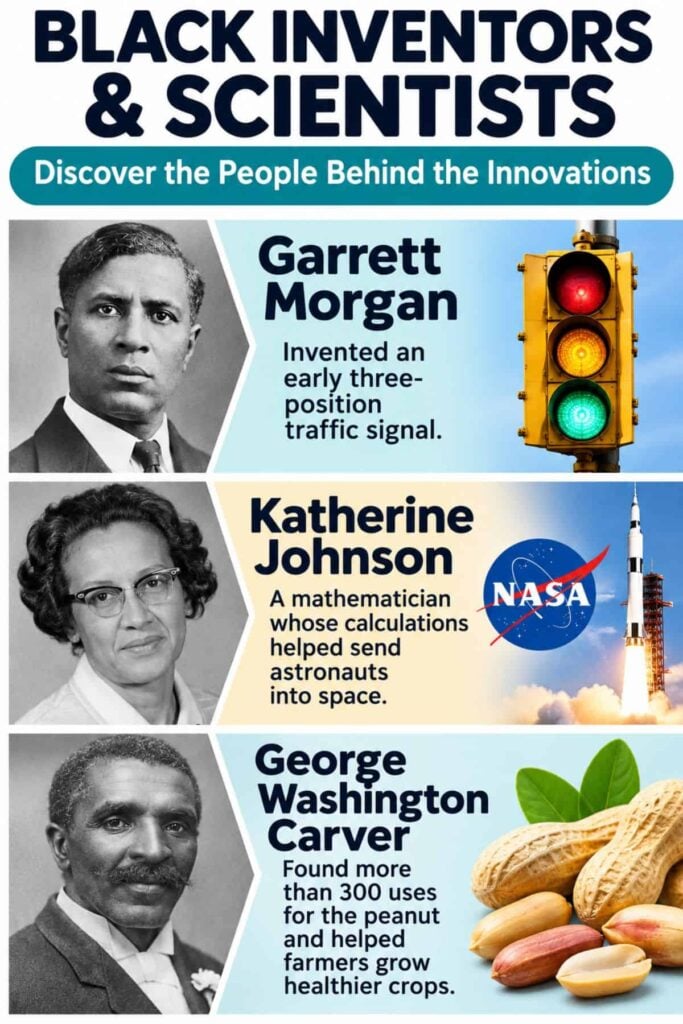
- George Washington Carver found more than 300 uses for the peanut, from glue to soap, and taught farmers how to grow crops that kept their soil healthy.
- Garrett Morgan invented an early three-position traffic signal and a safety hood that helped firefighters breathe in smoke, an early version of the gas mask.
- Mark Dean was one of the engineers who helped build the first IBM personal computer, and he holds three of the computer’s nine original patents.
- Katherine Johnson was a NASA mathematician whose calculations helped send astronaut John Glenn safely around the Earth in 1962. He asked for her to check the numbers by hand.
- Mae Jemison became the first Black woman to travel into space in 1992, aboard the space shuttle Endeavour. She was a doctor and engineer before becoming an astronaut.
- Dr. Charles Drew figured out how to store blood plasma in blood banks, a discovery that has saved countless lives during surgeries and emergencies.
- Lewis Latimer improved the lightbulb by inventing a longer-lasting carbon filament, which helped make electric light affordable for everyday homes.
- Alexander Miles patented a design for automatic elevator doors in 1887, making elevators far safer by closing the shaft when the car was not there.
- Dr. Patricia Bath invented a laser device that made cataract surgery more accurate, helping people around the world keep or regain their sight.
- Otis Boykin invented an improved control unit used in pacemakers, the small devices that help keep a person’s heart beating steadily.
- Benjamin Banneker was a self-taught astronomer and mathematician in the 1700s who helped survey the land that became Washington, D.C., and published popular almanacs.
- Dr. Daniel Hale Williams performed one of the first successful heart surgeries in 1893 and founded a hospital that trained Black doctors and nurses.
Week 3: Trailblazers in Arts, Sports, and Culture (Facts 25-36)
Week three celebrates Black Americans who broke barriers in sports, music, film, and the arts. These facts tend to be crowd-pleasers, and many connect to things students already love.
- Jackie Robinson broke Major League Baseball’s color barrier in 1947 when he joined the Brooklyn Dodgers, opening the door for Black athletes in professional sports.
- Madam C.J. Walker built a hair care company from the ground up and became one of the first self-made female millionaires in America.
- Bessie Coleman earned her pilot’s license in 1921, becoming the first Black woman and first Native American woman to fly a plane. She had to travel to France to train.
- Misty Copeland became the first Black woman named a principal dancer at the famous American Ballet Theatre, in 2015.
- The Harlem Renaissance was a burst of Black art, music, and writing in the 1920s. Writers like Langston Hughes and Zora Neale Hurston became some of its best-known voices.
- Duke Ellington was a composer and bandleader who shaped the sound of jazz, writing thousands of songs over a career that lasted more than 50 years.
- Alvin Ailey founded a dance theater that told stories of Black life and culture through modern dance, and it still performs for audiences around the world.
- Gordon Parks became the first Black staff photographer at Life magazine, using his camera to show the country both injustice and everyday Black life.
- Marian Anderson was a world-famous singer who performed for a crowd of 75,000 at the Lincoln Memorial in 1939 after being turned away from another concert hall because of her race.
- Sidney Poitier became the first Black man to win the Academy Award for Best Actor, in 1964, and spent his career choosing roles that showed Black characters with dignity.
- Jesse Owens won four gold medals in track and field at the 1936 Olympics in Berlin, a powerful moment in front of the whole world.
- Ella Fitzgerald was known as the “Queen of Jazz” and became the first Black woman to win a Grammy Award, in 1959.
Week 4: Interesting Black History Facts and Everyday Heroes (Facts 37-50)
Close out the month with some little-known Black history and surprising stories students rarely hear. These fun Black history facts are the ones that get the “I did not know that” reaction that makes the learning stick.
- Bessie Stringfield is believed to be the first Black woman to ride a motorcycle solo across the United States, which she did in the 1930s at a time when few women rode at all.
- Bass Reeves was one of the first Black deputy U.S. Marshals west of the Mississippi River, and some historians believe his life helped inspire the legend of the Lone Ranger.
- Robert Smalls was born into slavery and escaped by secretly steering a Confederate ship past enemy guards to freedom. He later became a member of Congress.
- Henrietta Lacks had cells, known as HeLa cells, that have helped scientists make huge advances in medicine, including the polio vaccine and cancer research.
- Alice Coachman became the first Black woman to win an Olympic gold medal, in the high jump at the 1948 Games in London.
- Wilma Rudolph overcame a childhood illness that affected her leg and went on to win three gold medals in track at the 1960 Olympics.
- Juneteenth marks June 19, 1865, the day enslaved people in Texas finally learned they were free, more than two years after the Emancipation Proclamation. It is now a national holiday.
- Matthew Henson was an explorer who helped lead the 1909 expedition credited with reaching the North Pole, one of the hardest journeys of its time.
- Dr. Rebecca Lee Crumpler became the first Black woman to earn a medical degree in the United States, in 1864, and cared for people who had just gained their freedom.
- Guion Bluford became the first Black American to travel into space, in 1983, aboard the space shuttle Challenger.
- Mary McLeod Bethune was an educator who started a small school for Black students that grew into a university, and she advised U.S. presidents on education.
- Hiram Rhodes Revels became the first Black member of the United States Senate in 1870, just a few years after the end of slavery.
- Barack Obama was elected the first Black president of the United States in 2008 and took office in 2009, serving two terms.
- Kamala Harris was sworn in during 2021 as the first Black woman and first South Asian woman to serve as Vice President of the United States.
How to Use These Interesting Black History Facts in Your Classroom
Fifty facts give you roughly one for every school day in February, with a few to spare. The routine is simple: pick one fact a day and build a small habit around it. Here are two ways to use them.
Daily Black History Fact for Morning Meeting
Post one fact a day as a “fact of the day” and read it aloud during morning meeting. Ask students what surprised them, what they wonder about, or who they want to learn more about. You can put the fact on a slide, write it on the board, or print a few on cards. If a daily share is new for your class, my morning work routines post has more ways to build a calm, predictable start to the day.
Writing Prompts from These Facts
Each fact doubles as a quick journal prompt. Ask students to respond to a fact in a few sentences: what they think it would have felt like, why the person was brave, or what they would ask that person. This turns a 30-second read-aloud into a short writing task with real substance. For more ways to get students writing from a prompt, my writing prompts for elementary students post has routines you can reuse all year.

Looking for another daily share? These Black History Month quotes work alongside a fact of the day for morning meeting or a writing prompt.
Black History Month FAQ
Bringing It All Together
One interesting Black History fact a day adds up to a month of learning that students actually remember. Share a fact at morning meeting, let it spark a question, and turn that curiosity into a conversation or a few sentences of writing. If your students want to go deeper on any of the people in this list, my biographies for elementary students post is a natural next step for independent reading and research.
Jessica BOschen
Jessica is a teacher, homeschool parent, and entrepreneur. She shares her passion for teaching and education on What I Have Learned. Jessica has 16 years of experience teaching elementary school and currently homeschools her two middle and high school boys. She enjoys scaffolding learning for students, focusing on helping our most challenging learners achieve success in all academic areas.