
Walt Disney Biography Activities for Elementary Students
Teaching a Walt Disney biography unit gives students a story that genuinely captures their attention — a kid who loved to draw, faced real setbacks, and kept creating anyway. Whether you’re studying famous inventors, entrepreneurs, or American history figures, Walt Disney is one of those subjects that pulls students in from the very first sentence.
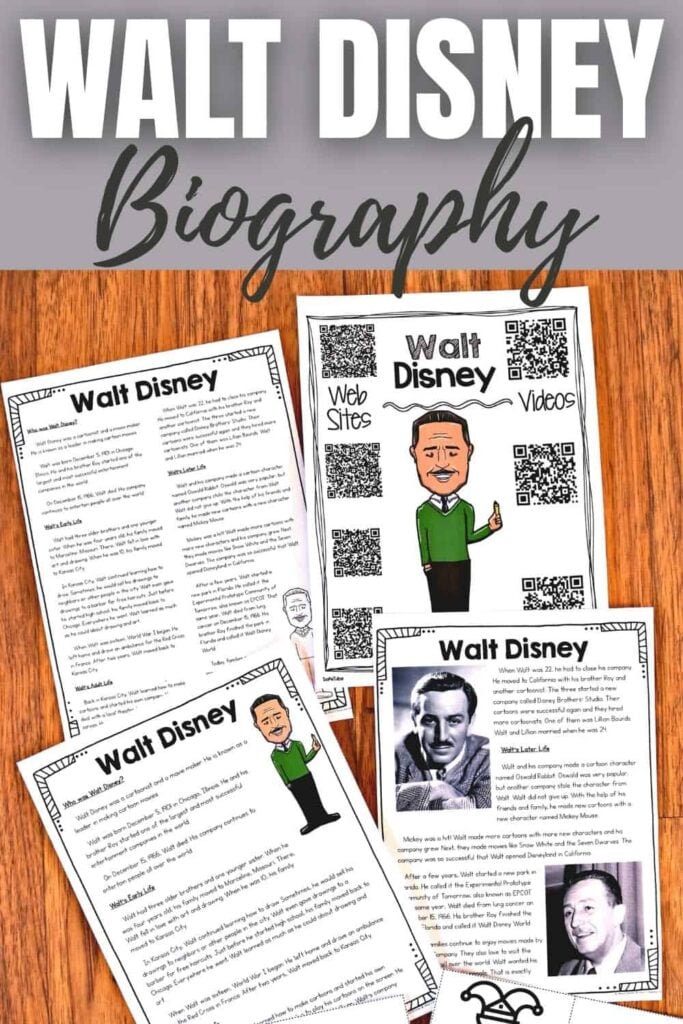
Here’s how to make the most of your Walt Disney biography activities so students walk away with real comprehension and strong writing skills to show for it.
Why Walt Disney Works So Well as a Biography Subject
Biographies are most powerful when students can see themselves in the subject — at least a little. Walt Disney’s early life is surprisingly relatable. He moved around a lot as a kid, fell in love with drawing, and even sold his artwork to neighbors to earn spending money. By the time your students learn that he drove an ambulance in World War I at sixteen and then had to close his very first company at twenty-two, they’re invested. The failures are as important as the successes, and that makes for rich discussion.
For elementary students, Walt Disney also connects naturally to the concept of persistence. He lost his first major cartoon character — Oswald the Lucky Rabbit — to another company, then went on to create Mickey Mouse. That’s a concrete, story-worthy example of resilience that even your youngest students can grasp and talk about.
How to Structure Your Walt Disney Biography Activities
A strong biography unit moves students through three phases: building background knowledge, reading and responding to text, and producing some kind of written output. Here’s how each phase can work with a focus on Walt Disney.
Before Reading: Vocabulary and Prior Knowledge
Before students read the biography, spend a few minutes reviewing key vocabulary. Words like cartoonist, entertain, company, deal, successful, and character appear directly in the reading and can trip students up if they’re meeting them cold. A quick vocabulary sort or word-definition match gets these terms into students’ working memory before they need to use them in context.
This pre-reading vocabulary work matters especially for English learners. Connecting each word to a visual or a real-world example (“a company is a business — think of the Disney Company”) gives them an anchor before the text introduces the word.
During Reading: Active Annotation
One of the best ways to keep students engaged while reading biography text is to give them a simple annotation system. Students mark passages with symbols as they read — an exclamation point for something interesting, a question mark for something confusing, and an asterisk for something important to remember. This low-prep strategy makes the reading active rather than passive, and it gives students something to reference when they answer comprehension questions afterward.
For younger students or struggling readers in 2nd and 3rd grade, reading the text aloud together first, then going back to annotate independently, works well. By 4th and 5th grade, many students can annotate during their first read.
After Reading: Comprehension and Response Activities
Post-reading activities should push students beyond basic recall. Yes, they need to know the facts — dates, events, accomplishments — but the real learning happens when they organize, sort, and respond to those facts. Some of the most effective activities for a Walt Disney biography unit include:
- Graphic organizers that prompt students to record key facts, character traits, and Walt’s most significant accomplishments
- Comprehension questions that require text evidence, not just memory — asking students what Walt did as a child that matched his future career is a great cause-and-effect question with a specific answer
- Fact sorts where students categorize events into Early Life, Adulthood, and Late Life — this builds timeline understanding and reinforces the sequence of events as a reading skill
- Cloze reads that reinforce vocabulary in context, especially useful for review or for students who need additional scaffolding
- Venn diagrams comparing Walt Disney to another biography subject students have studied — a natural cross-text connection activity
Writing About Walt Disney’s Life
Biography units are a natural entry point for informational writing. Once students have gathered facts and organized their thinking, writing the biography report feels manageable rather than overwhelming. A structured summary frame — Walt Disney wanted… but… so he… Then… — gives students a narrative scaffold that helps them see how events connect. This structure works well for 2nd and 3rd-graders who are still learning how to move beyond a list of facts and into connected paragraphs.
For 4th- and 5th-graders, push further. A full report that includes an introduction, sections on early life, adult life, and later life, and a conclusion about Walt’s legacy gives students practice with multi-paragraph informational writing organized around a real subject. Requiring students to identify Walt’s character traits and support them with evidence from the text is a strong way to integrate reading and writing standards at the upper elementary level.
If you want students to do additional research beyond the classroom biography, providing QR codes that link to kid-friendly websites and videos lets them explore at their own pace — particularly useful for early finishers or students who want to go deeper. Sites like Ducksters and Kiddle offer biography content written at an accessible reading level. You can learn more about using QR codes for student research in this post on QR codes for biography research reports.
Walt Disney Biography Activities Ready to Use
If you’re looking for everything in one place, the Walt Disney Biography resource in my TPT store includes the full biography text in two formats, vocabulary activities with picture-word-definition matching, a graphic organizer, comprehension questions, a fact sort, a sequence of events activity, a Venn diagram, a summary writing frame, report pages, QR code links, and an answer key.
There’s also a set of pages without the illustrated graphics for older students who prefer a more straightforward look. It’s designed to take students all the way from first read to finished report without you having to piece together materials from multiple sources.
Final Thoughts
A Walt Disney biography unit works because the story is genuinely interesting and the structure of his life — early passion, real failure, and remarkable resilience — maps naturally onto the comprehension and writing skills you’re already teaching. When students can root those skills in a real person’s story, the work sticks.
According to the Reading Rockets resource on biography, reading biographies develops students’ ability to understand character motivation and the sequence of events — two skills that transfer directly to both literary and informational text comprehension. Start with vocabulary, give students a purpose for reading, and let the activities build toward a finished written product. Walt Disney’s story will do the rest.
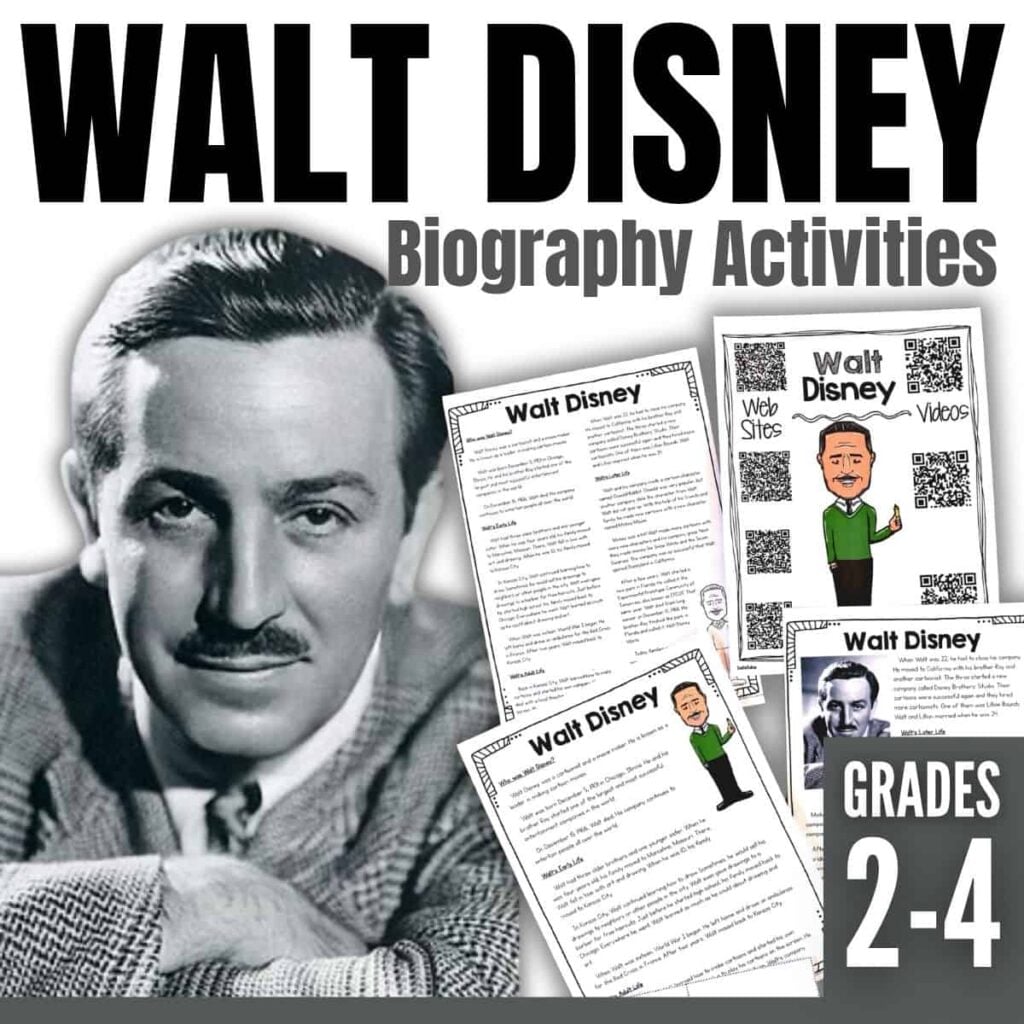
Our Walt Disney Biography and Report is an excellent tool for teachers looking to integrate reading, writing, and social studies into their curriculum.
Jessica BOschen
Jessica is a teacher, homeschool parent, and entrepreneur. She shares her passion for teaching and education on What I Have Learned. Jessica has 16 years of experience teaching elementary school and currently homeschools her two middle and high school boys. She enjoys scaffolding learning for students, focusing on helping our most challenging learners achieve success in all academic areas.