
Solar System Reading Passages for Elementary Classrooms
Teaching the solar system is one of those topics that instantly hooks students… until the reading gets too dense. Unlike passive solar system worksheets, these passages pair reading with organizers and research activities that require students to think. We want kids curious about planets, moons, and stars. Finding science reading materials that balance strong content with kid-friendly language can feel like a tall order.
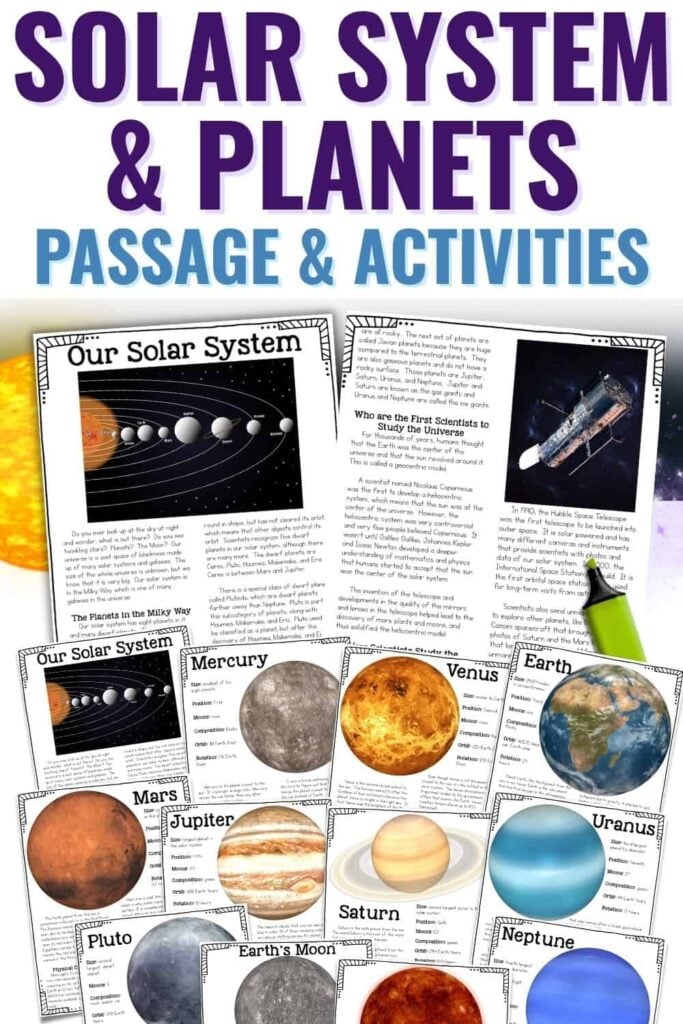
These Solar System Reading Passages were created with real classrooms in mind. They give students meaningful exposure to science concepts while supporting reading comprehension, vocabulary development, and informational writing. They’re flexible enough to use across multiple grade levels and structured enough to save you planning time.
What’s Included in the Solar System Reading Passage Set
This resource includes informational articles covering the entire solar system, written at a second-, third-, and fourth-grade reading range. Each topic follows the same predictable structure, which helps students focus on understanding the content rather than decoding a new format each time.
Students read about:
- An overview of the solar system
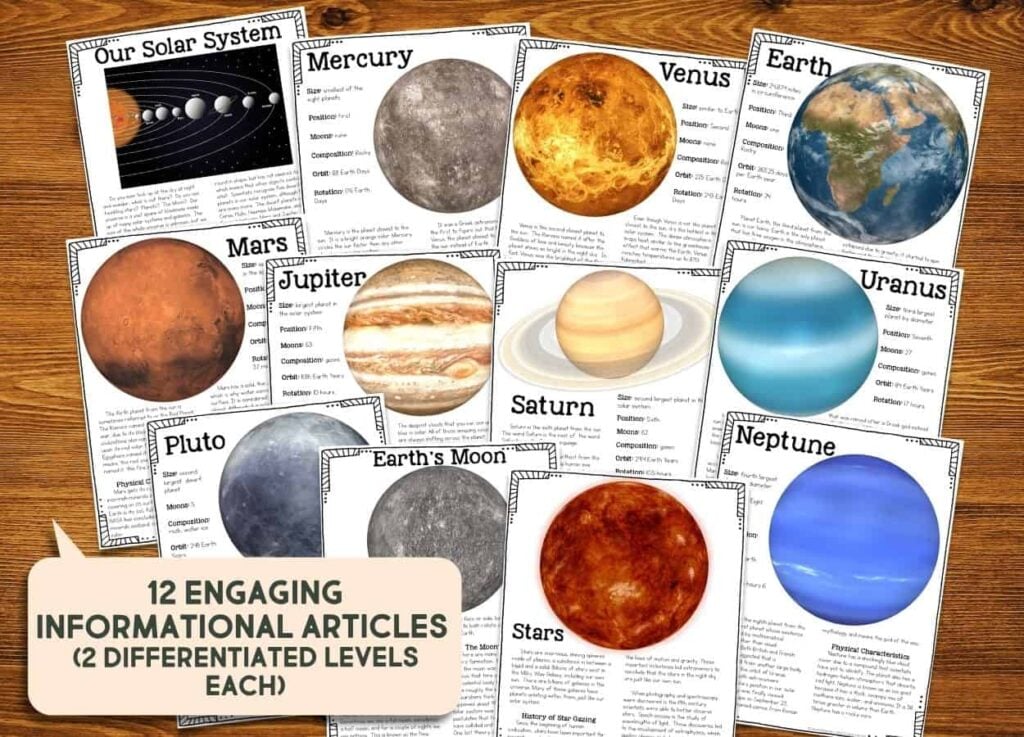
- Each planet (Mercury through Neptune)
- Pluto and dwarf planets
- Earth’s Moon
- Stars and the Sun
Rather than generic solar system worksheets, each topic comes with two article formats, vocabulary cards, graphic organizers, and fact sorts.
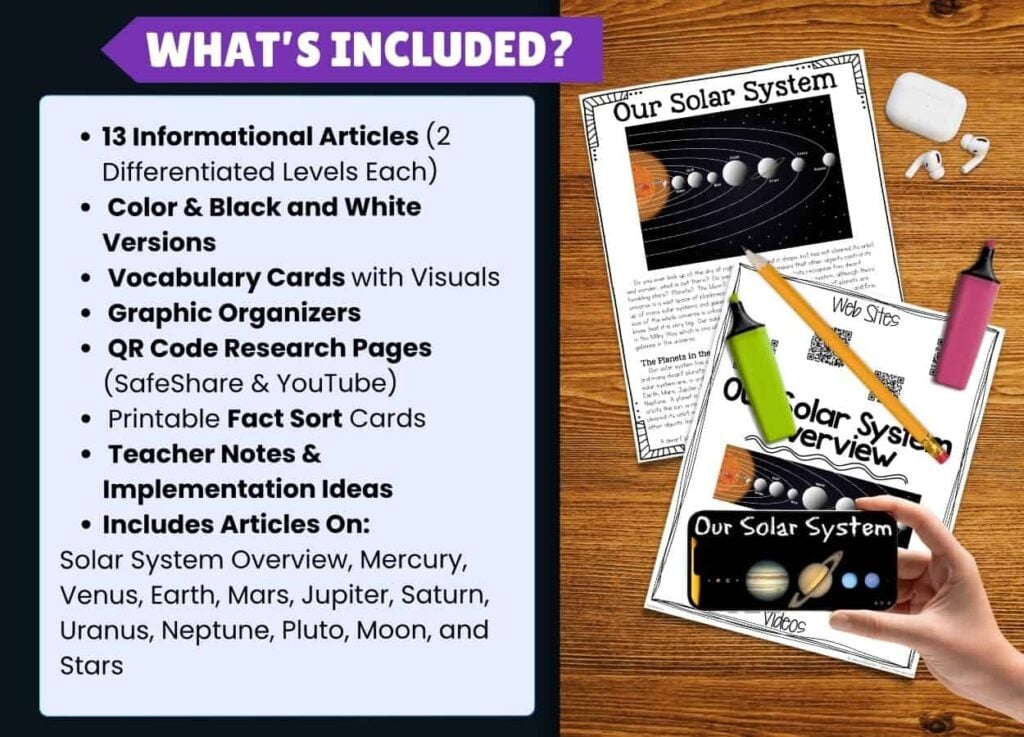
For every topic, you’ll find:
- Two article formats: a one-page black-and-white version and a two-page color version with images
- Vocabulary cards with clear definitions for key science terms
- Note-taking and comprehension graphic organizers
- Fact sort activities using details pulled directly from the text
- QR code research pages with links to age-appropriate websites and videos (both SafeShare and YouTube options). The QR code pages are ideal for solar system exploration. Students extend their reading into additional sources and deepen their understanding of each topic.
The consistent layout makes this an easy resource to revisit throughout a space unit without having to reteach directions.
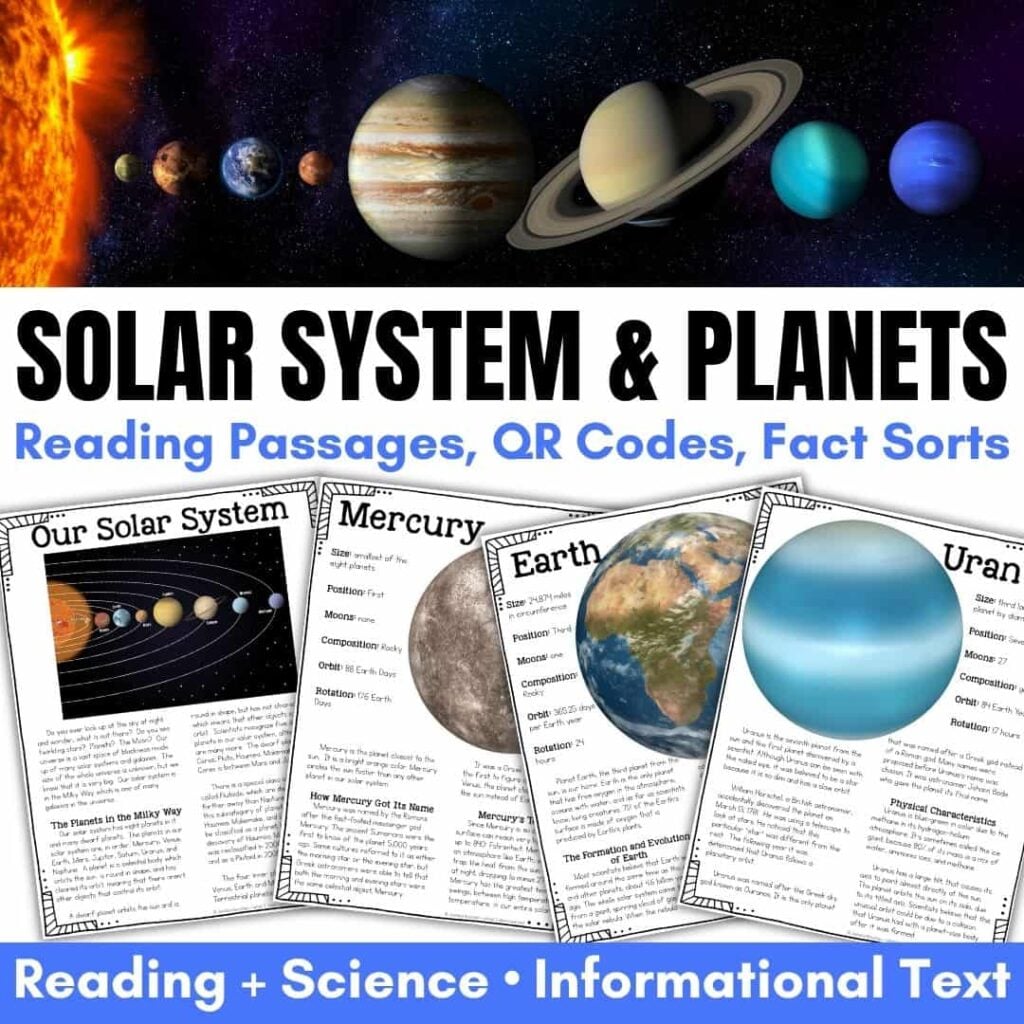
Designed for upper elementary learners, this resource combines engaging informational articles, graphic organizers, and research tools to build understanding of the planets, stars, sun, and moon.
How Teachers Can Use These Reading Passages
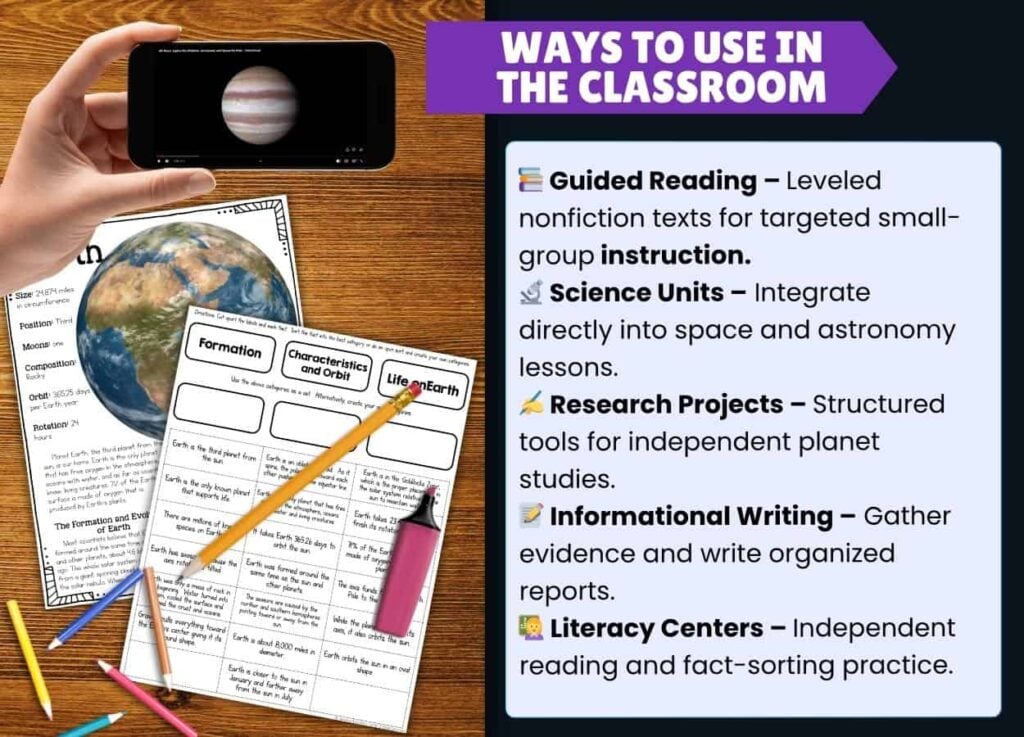
These passages slide easily into your existing science block and work well across several instructional settings.
Whole-Group Science Lessons
Use the overview or planet passages as shared reading. Model how to pull out key solar system facts, discuss academic vocabulary, and connect ideas across paragraphs. The vocabulary cards are helpful for pre-teaching words before reading.
These passages help students understand how the solar system works—from the pull of gravity that keeps planets in orbit to the relationship among Earth, the Moon, and the Sun.
Small Groups or Literacy Centers
Because each article follows the same structure, students can work more independently after the first few lessons. Pair a reading passage with a graphic organizer or fact sort for a focused center that reinforces both science and reading skills.
Research and Informational Writing
The QR code pages extend learning without adding extra prep. Students gather information from the passage and additional sources, then organize their thinking using the provided organizers. This works especially well for planet reports or compare-and-contrast writing.
Differentiation Made Easier
The controlled sentence length and structure support developing readers, while the science content stays accurate and detailed. Stronger readers can dig deeper into the QR code research, while others focus on the main passage and fact sorts.
Why This Resource Works So Well for Elementary Classrooms
This set was designed to do more than “cover” the solar system. These are solar system reading passages written specifically as solar system resources for kids—approachable language, real science. It supports real instructional goals:
- Students walk away with solid solar system facts woven into their comprehension skills, not just memorized definitions.
- Reinforces academic vocabulary in context
- Encourages students to organize information, not just copy facts
- Works across grades without feeling babyish or overwhelming
- Saves time with ready-to-use layouts and repeatable routines
It’s especially helpful for teachers who want science content that connects naturally with ELA standards without turning science into another pile of worksheets.
A Reliable Go-To for Your Space Unit
If you’re teaching the solar system and want reading materials that are clear, consistent, and classroom-tested, these passages check all the boxes. They give students meaningful exposure to planets, moons, and stars while supporting the literacy skills they’re already working on.
Whether you’re doing a deep solar system exploration unit or a quick science read, these passages fit. Students come away with a clear understanding of how the solar system works, supported by structured reading and hands-on organizers.
Designed for upper elementary learners, this resource combines engaging informational articles, graphic organizers, and research tools to build understanding of the planets, stars, sun, and moon.
Jessica BOschen
Jessica is a teacher, homeschool parent, and entrepreneur. She shares her passion for teaching and education on What I Have Learned. Jessica has 16 years of experience teaching elementary school and currently homeschools her two middle and high school boys. She enjoys scaffolding learning for students, focusing on helping our most challenging learners achieve success in all academic areas.