
Picture Writing Prompts That Stretch Simple Sentences
Ask an elementary student to write about their weekend, and you often get one flat line: “It was fun.” Give that same student a photo of a dog splashing through fall leaves, and suddenly there is something to notice, something to say.
That is the power of picture writing prompts. A good image gives students both a subject and a reason to add detail, which makes it one of the easiest ways to move a reluctant writer from a bare sentence to a real description.
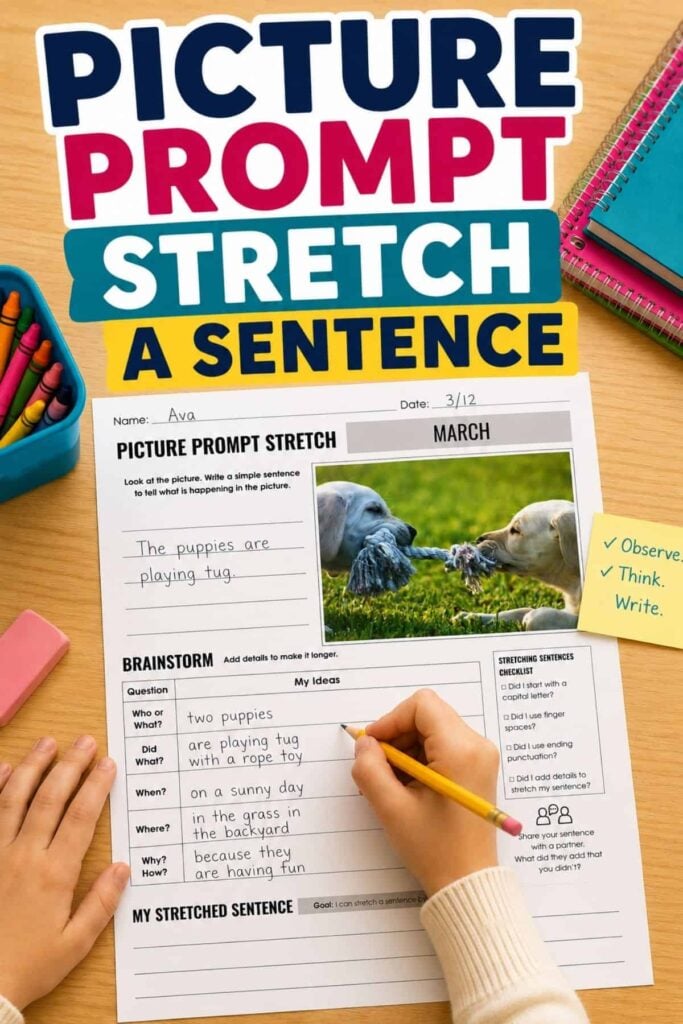
This post covers what makes picture writing prompts work, how to use them to stretch a simple sentence into a paragraph, and the ways they fit into your week in 2nd and 3rd grade.
What Are Picture Writing Prompts?
A picture writing prompt is an image students respond to in writing. Instead of staring at a blank page, students look at a scene, notice what is happening, and write about it. The best prompts give students something concrete to describe, and they invite the details that turn a plain sentence into a strong one: who is in the picture, what they are doing, where they are, and why it might be happening.
Picture prompts work for a wide range of writers. A student who struggles to generate ideas gets a starting point. A student who writes plenty gets a focus for their detail. Because the image carries some of the thinking, students can put their energy into the words rather than inventing a topic from nothing.
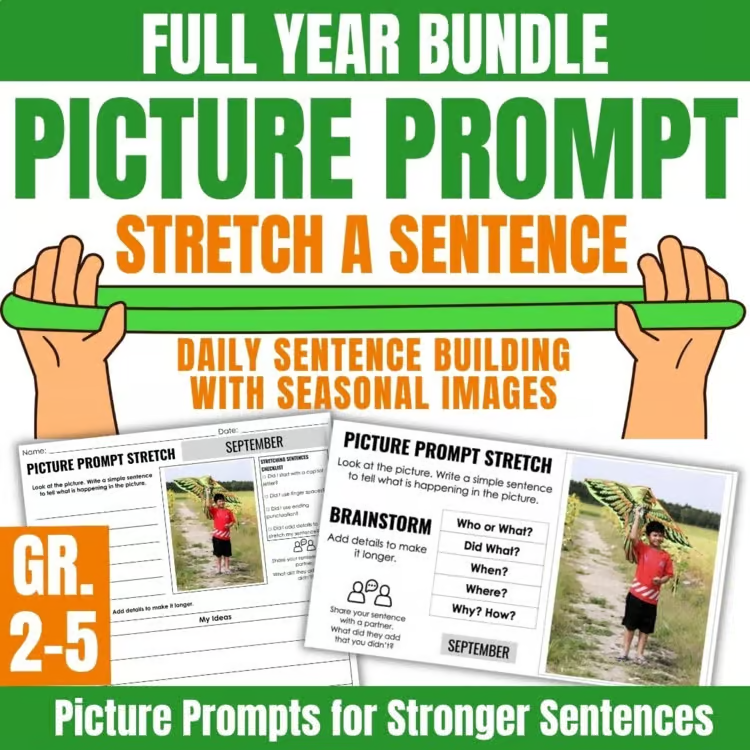
Students use engaging picture prompts to observe details, answer scaffolded questions, and write about a picture while expanding simple sentences into detailed paragraphs.
Why Picture Writing Prompts Work
Visual support lowers the barrier to writing. When the topic is right in front of students, they are not spending working memory on “what should I write about.” They can spend it on how to say it well. That is especially helpful for younger writers and for students who find open-ended prompts overwhelming.
Pictures also build observation and inference, two skills that reach well beyond writing. Students learn to look closely, notice details, and support an idea with evidence from what they see. Reading Rockets has helpful background on descriptive writing and why concrete detail matters. When the detail comes from a real image, students have something to point to, which makes “add more detail” a concrete instruction instead of a vague one.
How to Use Picture Writing Prompts to Stretch a Sentence
The real growth happens when a picture prompt is paired with a scaffold that walks students from noticing to writing. A simple, repeatable routine:
- Start with one simple sentence. Have students write a plain sentence about the picture, like “The dog ran.” This is the base they will build on.
- Brainstorm with question words. Walk through who or what, did what, when, where, why, and how. Students jot a detail for each one they can find in the image.
- Stretch the sentence. Students fold those details back in: “The muddy dog raced through the fall leaves after school because it was chasing a squirrel.”
- Grow into a paragraph. Once students can stretch one strong sentence, the same details become the seeds of a short paragraph.
This is the same thinking behind stretching sentences, just anchored to an image. If you want the foundation, my post on how to teach stretch a sentence walks through the question-word method in detail, and my free stretch a sentence worksheet is a good way to try it before adding pictures.
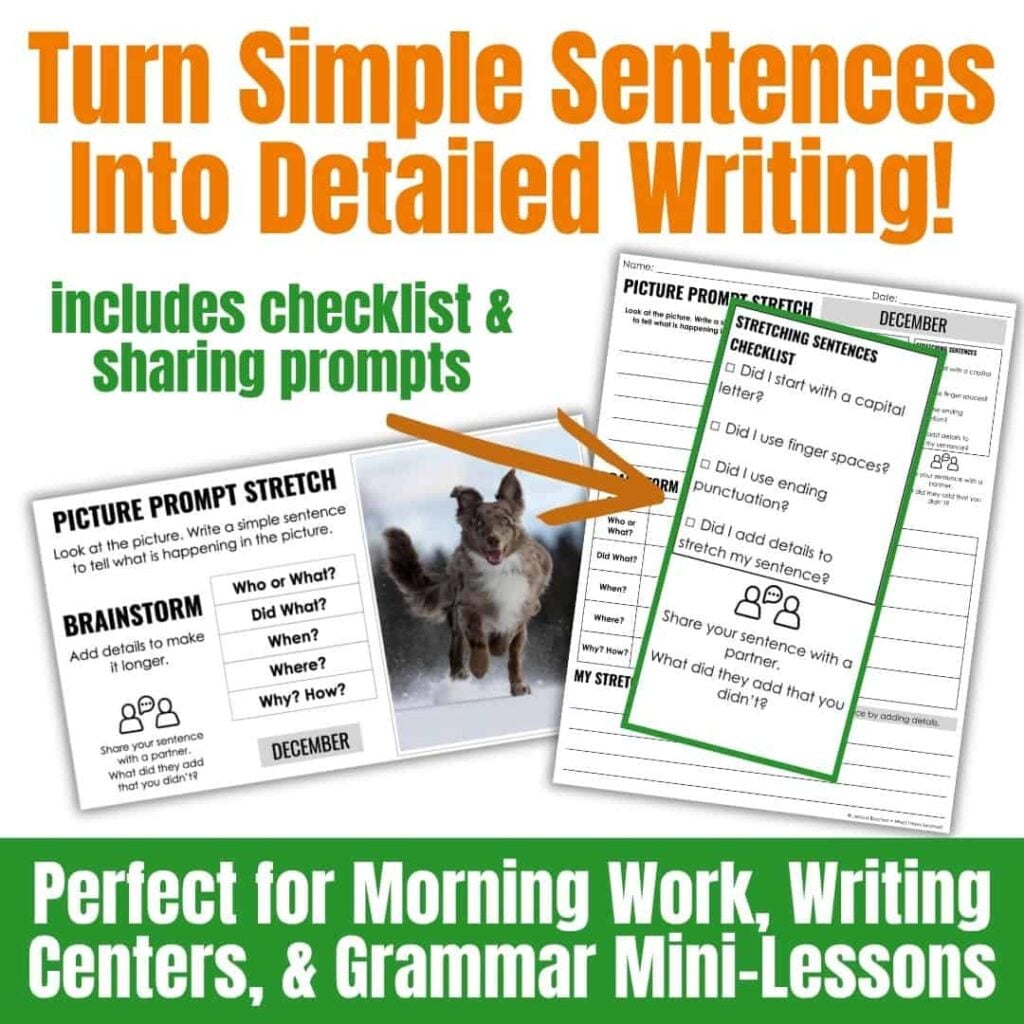
Ways to Use Picture Writing Prompts in the Classroom
Picture writing prompts are flexible, which is why they earn a permanent spot in many classrooms. A few ways to work them in:
- Morning work or a bell ringer. One prompt a day is a calm, independent way to start, and it keeps writing skills warm.
- Writing centers or Daily 5. A stack of prompts gives students an independent writing task they can pick up on their own.
- Early finishers and sub plans. Because the routine is predictable, students can do it without a full lesson, which makes it easy to leave for a substitute.
- Small-group instruction. A shared image gives a group a common reference for talking through detail and structure together.
Seasonal images keep the routine fresh year-round, so the prompts feel current in September and again in February. If you already rotate other short writing routines, my sentence writing warm-ups pair well with picture prompts for a full week of sentence-level practice.
Frequently Asked Questions
Bringing It All Together
Picture writing prompts give students what a blank page does not: a subject and a reason to add detail. Pair a good image with a simple observe-then-stretch routine, and students move from “The dog ran” to writing with real description. Keep the routine steady, rotate the images by season, and let the pictures do the work of getting students started.
Want a set ready to print? My Picture Prompt Stretch a Sentence growing bundle includes 20 seasonal picture prompts per monthly set, each with a brainstorm chart and scaffolded questions that guide students from one simple sentence to a detailed paragraph. It pairs directly with my Stretch a Sentence yearlong bundle for a full year of sentence-building practice.
Students use engaging picture prompts to observe details, answer scaffolded questions, and write about a picture while expanding simple sentences into detailed paragraphs.
Jessica BOschen
Jessica is a teacher, homeschool parent, and entrepreneur. She shares her passion for teaching and education on What I Have Learned. Jessica has 16 years of experience teaching elementary school and currently homeschools her two middle and high school boys. She enjoys scaffolding learning for students, focusing on helping our most challenging learners achieve success in all academic areas.