
Writing Prompts for Kids: Creative, Opinion, Seasonal, and Journal Ideas
Writing prompts are one of the easiest ways to get students writing. When students sit down with a blank page, many of them freeze. A prompt gives them a starting point and a little nudge to begin putting their thoughts into words.
Teachers use writing prompts in many ways. Some use them as morning work. Others use them during writing workshop or as quick activities between lessons. Writing prompts can support narrative writing, opinion writing, reading response, and even friendly letter writing.
This guide brings together many different types of writing prompts for elementary students. You’ll find seasonal prompts, creative writing ideas, opinion prompts, reading response questions, and journal ideas that work well in grades 2–5.
How to Teach With Writing Prompts
Writing prompts are flexible tools that can be used in many ways throughout the school day. Some teachers use them for daily writing practice, while others include them as part of writing workshop or literacy centers.
If you’re introducing prompts, it helps to model how students should respond. Show students how to read the prompt, think about possible ideas, and expand their writing with details.
Writing prompts can be used for:
- daily journal writing
- writing warm-ups
- early finisher activities
- writing centers
- small group instruction
- seasonal classroom writing activities
Many teachers begin with short responses and gradually encourage students to write longer pieces as they become more comfortable.
You can see detailed examples and teaching ideas here:

Teaching ideas for using writing prompts in your classroom.
Why Writing Prompts Work Well in the Classroom
Writing prompts help students begin writing without spending too much time deciding what to write about.
Teachers often use prompts for:
- morning work
- writing centers
- writing workshop mini-lessons
- quick writes
- early finisher activities
- seasonal classroom activities
Prompts also help students practice specific writing skills such as describing details, explaining opinions, reflecting on reading, and organizing ideas.
Creative Writing Prompts for Fictional Narratives
Creative writing prompts encourage imagination and storytelling. Students often enjoy these prompts because they allow them to invent characters, settings, and adventures.
Examples of creative prompts include:
- Imagine you discovered a secret door in your classroom. Where does it lead?
- If animals could talk, what would your pet say about your family?
- You wake up and find that gravity has stopped working. What happens next?
Creative prompts work well when teaching narrative writing or when students need a break from more structured writing assignments.

Check out the creative writing prompts.
Opinion Writing Prompts
Opinion writing prompts ask students to share what they think and explain their reasons.
Examples include:
- Should students have homework every night?
- Which is better: recess before lunch or after lunch?
- Should pets be allowed at school?
Opinion prompts help students practice:
- stating an opinion
- giving reasons
- organizing ideas logically

Need more ideas for opinion writing? Check out these prompts.
Friendly Letter Writing Prompts
Letter writing gives students a chance to practice real-world writing skills. Friendly letter prompts give students a reason to write to someone.
Ideas might include:
- Write a letter to a favorite author.
- Write to a grandparent about your week at school.
- Write to a friend telling them about your favorite hobby.
Students practice:
- letter format
- audience awareness
- clear communication

See the list of friendly letter writing prompts.
How to Writing Prompts
How-to writing prompts (also called procedural writing) help students explain how to do something step by step. This type of writing teaches students to organize their ideas, use sequence words, and include clear details so the reader can follow their directions.
These prompts work especially well for elementary students because they connect to everyday experiences. Students can write about things they already know how to do, which helps them focus on writing clearly instead of trying to come up with ideas.
Examples of how-to prompts include:
- How to make a sandwich
- How to get ready for school
- How to play your favorite game
- How to draw a picture
- How to train a dragon
How-to writing is also a great way to teach transition words like first, next, then, and last. Many students benefit from practicing this structure before moving into longer informational writing.
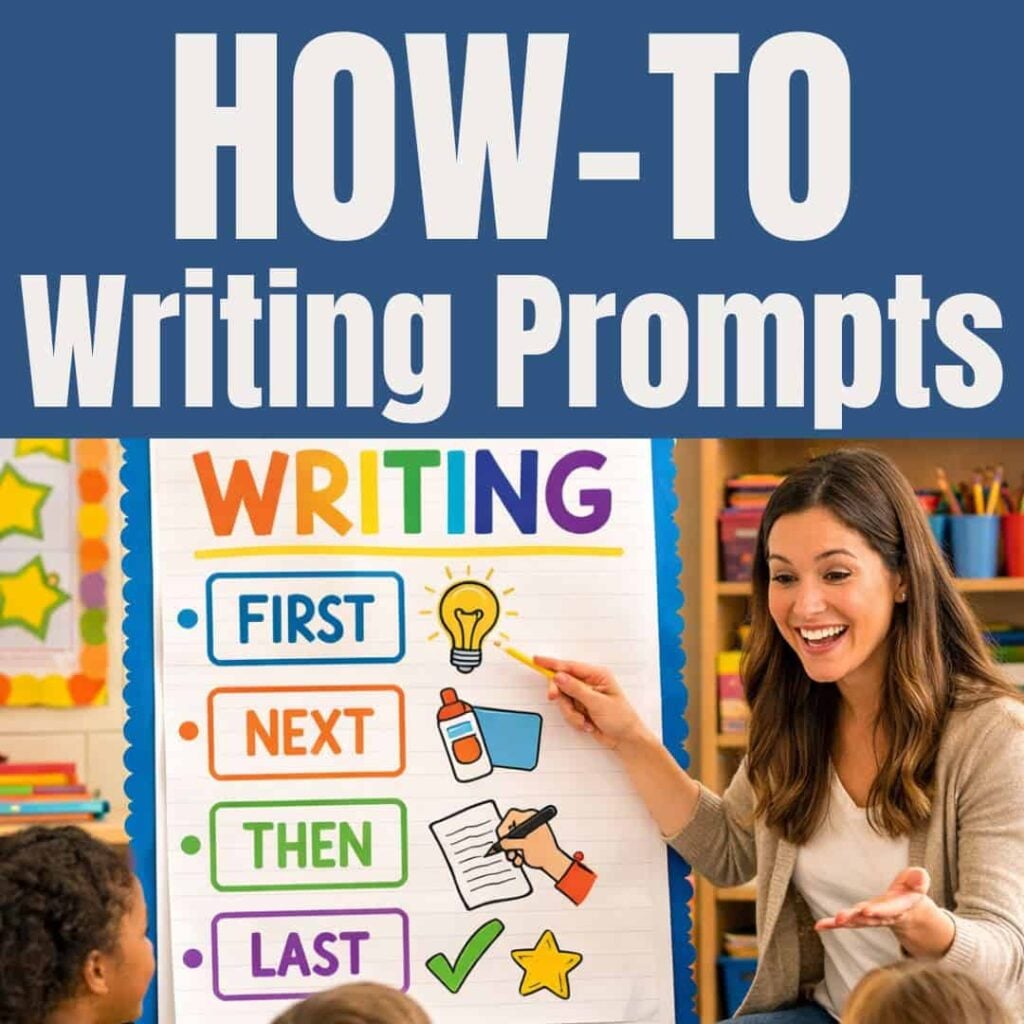
If you’re teaching younger students, you can find more targeted ideas here:
Reading Response Writing Prompts
Writing about reading helps students think more deeply about books. Reading response prompts encourage students to reflect on characters, events, and themes.
Examples of reading response questions include:
- Which character changed the most in the story?
- What lesson did the main character learn?
- What would you have done differently than the character?
Reading response prompts help students practice:
- comprehension
- analysis
- explaining ideas using evidence from the text

Find examples of writing prompts that can be used for any book. Plus, get a free PDF download of all of the reading response prompts!
Seasonal Writing Prompts
Seasonal prompts bring excitement to writing time. Students often enjoy writing when the topic connects to holidays or classroom celebrations.
Halloween Writing Prompts
Halloween prompts often involve mysterious characters and imaginative stories.
Examples include:
- You discover a haunted house in your neighborhood.
- Your pumpkin begins talking to you.
- A friendly ghost asks for your help.

Get the full list of Halloween writing prompts to use in your classroom.
Thanksgiving Writing Prompts
Thanksgiving prompts often focus on gratitude, traditions, and fall themes.
Examples include:
- Write about something you are thankful for.
- Describe your favorite Thanksgiving food.
- Imagine you are a turkey trying to escape Thanksgiving dinner.

Get the full list of Thanksgiving writing prompts.
Christmas Writing Prompts
Christmas prompts include storytelling, imaginative scenarios, and reflections on holiday traditions.
Examples include:
- You wake up on Christmas morning and discover a mysterious gift.
- What would happen if Santa’s sleigh broke down?
- Write a letter to Santa.

Click below for the full list of Christmas writing prompts.
End-of-the-Year Journal Writing Prompts
Journal prompts allow students to write more personally about their experiences, ideas, and reflections.
Many teachers use journal writing as a quiet daily routine or a way to reflect at the end of a unit or school year.
Examples include:
- What was your favorite memory from this school year?
- What is something new you learned this year?
- What are your goals for next year?
These types of prompts help students develop reflection skills and build writing fluency.

These prompts work great for the last month of school.
A Year-Long Writing Prompt Resource for the Classroom
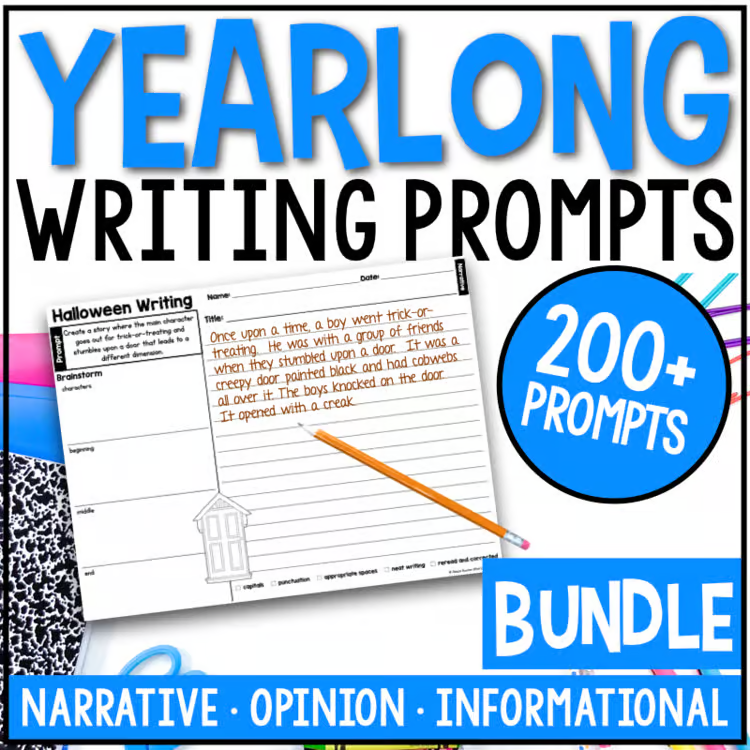
If you like using writing prompts regularly, having a ready-to-use set for the entire school year can make planning much easier. Instead of searching for new prompts each week, you can simply print a page, and students are ready to begin writing.
This year-long writing prompt bundle includes monthly prompts designed for elementary classrooms. The prompts cover multiple writing types so students practice different skills throughout the year.
The resource includes prompts for:
- opinion writing
- narrative writing
- seasonal and holiday topics
- daily writing practice or morning work
Each prompt page includes a word bank to help students generate ideas and expand their writing. This support is especially helpful for younger writers or students who need help getting started.
Teachers often use these prompts for:
- morning work
- daily journal writing
- writing centers
- early finisher activities
- seasonal writing lessons
Since the prompts are organized by month, they naturally fit into classroom routines throughout the year.
You can see the full resource here:
Would you like a printable version of these writing prompts that you can use throughout the school year?
Tips for Using Writing Prompts with Students
A few simple strategies can help students get more out of writing prompts:
- Let students choose from several prompts.
- Encourage them to add details and examples.
- Allow time for sharing writing with a partner.
- Use prompts regularly so students build writing stamina.
Short daily writing activities often help students become more confident writers.
Using Writing Prompts with Cooperative Learning
Writing prompts can work well with cooperative learning structures that encourage students to share ideas before writing. When students discuss a prompt with classmates, they often generate more ideas and feel more confident starting their responses.
Strategies such as Think–Pair–Share or Inside–Outside Circle allow students to talk through their ideas with a partner before writing. These short discussions help students organize their thinking and hear different perspectives.

If you want more ways to combine writing and discussion, you can read about several classroom structures here:
Writing Prompts That Get Students Excited to Write
Writing prompts can turn a blank page into an opportunity for ideas, stories, and thoughtful responses. When students have a clear starting point, they are more willing to begin writing and develop their ideas.
Using a mix of creative prompts, opinion questions, reading responses, and seasonal writing activities keeps writing fresh throughout the year. Some prompts encourage imagination, others help students explain their thinking, and some invite them to reflect on their experiences.
With a variety of prompts available, teachers can easily build writing routines that support student growth and confidence. Whether you need a quick writing warm-up, a journal activity, or a full writing lesson, the prompts in this guide can help students build strong writing habits while having fun along the way.
Jessica BOschen
Jessica is a teacher, homeschool parent, and entrepreneur. She shares her passion for teaching and education on What I Have Learned. Jessica has 16 years of experience teaching elementary school and currently homeschools her two middle and high school boys. She enjoys scaffolding learning for students, focusing on helping our most challenging learners achieve success in all academic areas.