
100 Opinion Writing Prompts for Elementary Students

These 100 opinion writing prompts for kids are ready to use — no prep needed. They cover four categories: school life, home and family, books and games, and big questions, with prompts that work across K-5 and scale up or down depending on how much support your students need.
If you’re looking for broader brainstorming ideas to spark discussion before writing, check out this post on opinion writing topics for kids. These prompts are the next step: specific, ready-to-assign writing starters you can drop into morning work, writing centers, quick writes, or full opinion writing lessons.

Opinion writing prompts give students opportunities to practice sharing their ideas and supporting them with reasons. These prompts can be used during writing centers, morning work, or full writing lessons. If you’re looking for more ideas and strategies, this complete guide to teaching opinion writing in elementary school explains how prompts fit into a complete opinion writing program.
These prompts work across K-5. For kindergarten and 1st grade, the open-ended one-sentence prompts (“Is summer better than winter?”) work best for oral warm-ups before writing. For 2nd and 3rd grade, the school and family prompts tend to generate the strongest responses. For 4th and 5th grade, the “Big Questions” prompts push students toward more abstract reasoning and pair well with structured argument frames.
How to Use Opinion Writing Prompts in the Classroom
When students write about something they actually care about, they stay on topic longer and come up with stronger reasons. Prompts that connect to students’ real experiences give them something specific to say.
How can teachers choose the right opinion writing prompts that fit their students?
The best opinion writing prompt is one students can actually take a position on. Look for topics where reasonable people disagree, where students have personal experience, and where the stakes feel real to a kid. “Should schools have uniforms?” lands differently than “Should students help plan school menus?” — both are valid, but know your class before you choose.

Opinion Writing Unit | 2nd & 3rd Grade Common Core Writing Resource
Teach opinion writing with confidence using this Common Core-aligned Opinion Writing Unit for 2nd and 3rd grade students. This comprehensive resource includes graphic organizers, sentence frames, anchor charts, writing prompts, assessments, and engaging activities that help students develop strong opinion writing skills through both oral language practice and written application.

100 Opinion Writing Prompts for Elementary Teachers
Here are 100 opinion writing prompts for elementary students, organized by topic so you can find the right fit for any lesson or discussion.
Opinion Writing Prompts About School
These opinion writing prompts about school help students practice sharing ideas about classroom rules, learning routines, and school expectations they experience every day.
- Should schools have uniforms? Students can argue for or against school uniforms, considering aspects like self-expression, equality, and convenience.
- Is homework necessary? This allows students to discuss the benefits and drawbacks of homework.
- Is it important to learn a second language? Discuss cultural understanding and career benefits.
- Should junk food be banned in schools? Discuss health impacts and personal choices.
- Should schools have longer breaks? Balance academic needs with relaxation and play.
- Should all kids play a musical instrument? Discuss cultural and cognitive benefits versus interests and time.
- Should schools teach more about environmental protection? Argue the importance of education on sustainability.
- Should students have homework on weekends? Weigh academic benefits against free time and relaxation.
- Are books better sources of knowledge than the Internet? Compare depth of information and reliability.
- Should all students learn to play chess? Argue the cognitive and strategic benefits.
- Should there be more outdoor education? Discuss learning in natural environments versus traditional classrooms.
- Should kids participate in competitive exams? Weigh the pressure against the learning and opportunities.
- Should kids learn about personal finance in school? Argue the importance of financial literacy from a young age.
- Should students have a longer school day? Balance academic improvement with time for other activities.
- Is it important to go to college? Discuss the value of higher education versus other paths.
- Should students be allowed to grade their teachers? Discuss the benefits and challenges of this feedback system.
- Should kids learn about gardening in school? Argue the benefits of connecting with nature and understanding food sources.
- Is it better to have a strict teacher or a lenient one? Debate the impact of different teaching styles on learning.
- Should students have more choice in classroom seating?
- Should kids have a daily reading time? Weigh the benefits of reading against other activities.
- Should kids be taught to meditate in school? Argue the benefits of mindfulness and stress reduction.
- Should children be taught coding in school? Weigh the future relevance against other educational priorities.
- Should children have a say in what they learn at school? Discuss student interests versus curriculum requirements.
- Is it important to learn about space? Argue the value of understanding the universe and scientific exploration.
- Should students have snack breaks at school? Debate the benefits of energy replenishment versus potential distractions.
- Is it better to do group projects or work alone? Compare collaboration skills and individual responsibility.
- Should kids be allowed to choose their school subjects? Weigh student interests against a balanced education.
- Should students have a say in school rules? Debate student involvement in governance versus adult expertise.
- Is it better to play an instrument or sing? Compare musical expression, skill development, and accessibility.
- Should students help plan school menus? Argue student preferences versus nutritional guidelines.
- Is it important to learn about art in school? Discuss cultural appreciation, creativity, and critical thinking.
- Should kids ride bikes to school? Weigh health, environmental impact, and safety.
- Should students have a longer recess? Balance play and socialization with academic time.
- Should schools start later in the day? Debate the impact on sleep, learning, and daily routine.
Opinion Writing Prompts About Home, Family, and Pets
These opinion writing prompts about home and family encourage students to form opinions about daily responsibilities, family routines, and choices they make outside of school.
- Are pets better than toys? Students can compare the emotional connection with pets versus playing with toys.
- Should kids have cell phones? They can explore safety, distraction, and communication aspects.
- Should all kids learn to cook? Discuss the importance of cooking skills for independence and health.
- Should kids play sports? Consider physical health, teamwork, and time commitment.
- Should kids earn screen time or be given it freely?
- Is it better to be an only child? Consider the pros and cons of having siblings.
- Is it better to travel or stay at home? Discuss experiences gained through travel versus comfort at home.
- Should children help with household chores? Explore responsibility, teamwork, and skill development.
- Should kids be paid for doing chores?
- Should kids be allowed to vote on family decisions? Debate the importance of democracy versus the adult experience.
- Is it better to live in the city or the countryside? Contrast the environment, lifestyle, and opportunities.
- Should kids have a say in what they eat? Debate nutrition against personal taste and choice.
- Are cats better pets than dogs? Compare the characteristics and care requirements of each.
- Is it important to celebrate birthdays? Discuss the significance of marking personal milestones.
- Should children have a say in their bedtime? Debate autonomy versus the need for parental guidance.
- Is it better to have a big family or a small one? Discuss the dynamics and relationships in different family sizes.
- Should kids be allowed to have exotic pets? Discuss the care, ethics, and safety of keeping unusual animals.
- Should kids learn to swim? Argue the importance of safety, health, and recreation.
- Should kids help plan family vacations? Debate the value of their input versus adult decision-making.
- Are indoor pets better than outdoor pets? Consider safety, companionship, and lifestyle impact.
- Is it important to have a clean room? Argue organization, hygiene, and personal responsibility.
- Should kids be allowed to stay up late on weekends? Weigh relaxation and fun against the importance of a routine.
- Is it better to play outside or inside? Discuss physical activity, imagination, and safety.
- Should families eat dinner together every night?
Opinion Writing Prompts About Books, Movies, and Games
These opinion writing prompts about books, movies, and games give students familiar topics to compare, helping them practice giving reasons and explaining preferences.
- Is it better to read a book or watch a movie? Compare the experiences of reading versus watching the same story.
- Are video games good or bad? Explore creativity, problem-solving skills, and potential downsides.
- Are indoor games better than outdoor games? Compare physical health, creativity, and social interaction.
- Are team sports better than individual sports? Compare teamwork, individual achievement, and social aspects.
- Is watching TV a waste of time? Discuss educational content versus the potential for inactivity.
- Are board games better than video games? Compare social interaction, strategy, and screen time.
- Are traditional games better than modern ones? Discuss the cultural significance and simplicity versus innovation.
- Are online games better than offline games? Compare the social aspects, accessibility, and potential for addiction.
- Are animated movies better than live-action movies? Compare the creativity, realism, and appeal of each genre.
- Are fantasy books better than real-life stories? Compare escapism and creativity versus realism and relatability.
- Are reality shows better than scripted shows? Compare authenticity, entertainment value, and educational content.
- Should there be a limit to screen time for kids? Discuss health, productivity, and balance with digital life.
- Are superheroes more interesting than historical figures? Compare entertainment value and educational content.
- Are science fiction books better than fantasy books? Compare the themes, creativity, and potential for learning.
Opinion Writing Prompts About Big Questions
These opinion writing prompts about big questions ask students to think more deeply about values, choices, and ideas, supporting higher-level thinking and discussion.
- Is summer better than winter? Encourage students to compare seasons, focusing on activities, weather, and holidays.
- Are zoos good for animals? This prompts a discussion on animal welfare and conservation.
- Are superheroes better role models than real-life heroes? Compare fictional characters with actual people who make a difference.
- Is it better to give or receive gifts? Discuss the joy of giving against the excitement of receiving.
- Is it important to have a hobby? Consider personal growth, relaxation, and skill development.
- Is success more about effort or talent?
- Is it better to have many friends or a few close ones? Debate the value of quantity versus quality in friendships.
- Is it better to stand out or fit in?
- Should kids be allowed to use social media? Explore online safety, communication, and potential distractions.
- Is it better to be realistic or optimistic? Debate the benefits of practicality versus positive thinking.
- Are robots a good invention? Discuss the benefits and potential drawbacks of automation.
- Is it better to live in the past or the present? Compare the advancements and simplicity of different times.
- Is it better to be famous or to have privacy? Weigh the allure of fame against the value of privacy.
- Is it important to have a best friend? Consider the value of a close, trusted relationship.
- Is it important to learn about other cultures? Discuss the value of diversity and global understanding.
- Is it better to be a leader or a follower? Debate the roles and responsibilities of each.
- Is it better to live in a house or an apartment? Weigh space, community, and lifestyle differences.
- Are electric cars better than gasoline cars? Consider environmental impact, technology, and practicality.
- Is it better to be early or exactly on time? Discuss punctuality, time management, and respect for others’ time.
- Is it important to celebrate national holidays? Discuss the significance of history, culture, and unity.
- Is it better to be tall or short? Discuss the advantages and challenges of both.
- Is it important to keep a diary? Argue the benefits of self-expression and memory keeping.
- Are handmade gifts better than store-bought ones? Discuss the thoughtfulness, effort, and personalization.
- Are public libraries still important? Discuss the role of libraries in the digital age for learning and community.
- Is helping others more important than helping yourself?
- Is it better to be honest or kind? Debate the balance between truth and compassion.
- Are traditional toys better than electronic toys? Compare creativity, skill development, and engagement.
- Is it important to have a favorite color? Discuss personal expression and the psychology of preferences.
- Is it better to forgive or hold a grudge?
- Is it better to be an artist or a scientist? Discuss creativity versus logic and their impact on society.
In addition to the above opinion writing prompts, consider other sources of ideas to motivate your reluctant writers, including mentor texts, picture prompts, and student’s experiences. Be sure that each prompt encourages critical thinking and self-expression, allowing students to explore their opinions and develop persuasive writing.
These thought-provoking prompts not only stimulate lively discussion among students but also help them hone their persuasive writing. Students learn to express their viewpoints clearly and constructively by engaging with these topics, creating a culture of open dialogue.
Using a variety of opinion writing prompts helps students practice sharing ideas, giving reasons, and explaining their thinking. These opinion writing prompts for elementary students are designed to spark discussion first and lead naturally into writing.
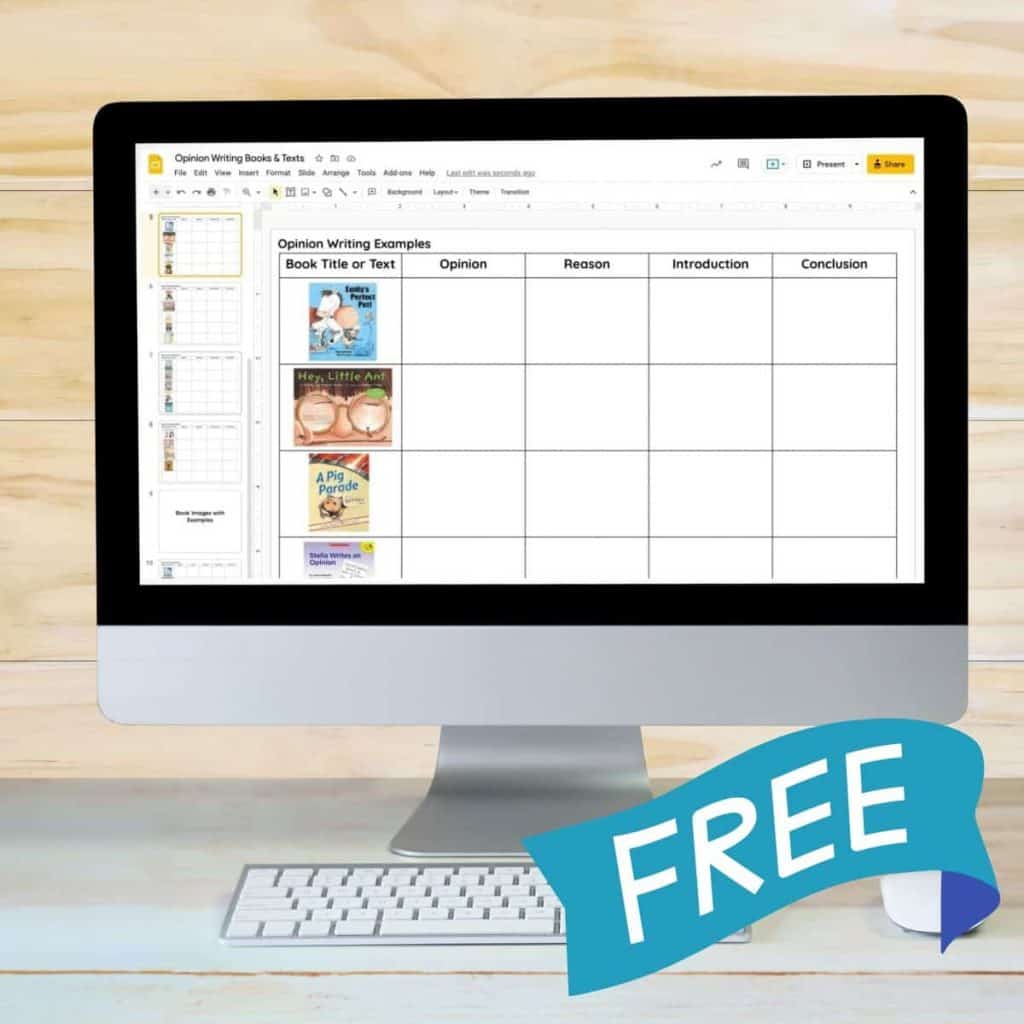
Opinion Writing Instruction Posts
This post about opinion writing prompts complements another blog post about how I teach our opinion writing unit. This instructional unit includes lesson plans in which students write about some of the above topics and learn how to structure their opinion writing to communicate their ideas best.
If your students struggle to turn prompts into complete opinion paragraphs, pairing strong prompts with sentence frames and structured lessons can make a big difference.
Would you like to read more about how to teach opinion writing in the classroom? Take a look at these blog posts.
- 7 Ways to Introduce Opinion Writing
- Picture Books to Teach Opinion Writing
- Teaching How to State an Opinion
- Teaching How to Supply Reasons
- Teaching How to Introduce Opinion Writing
- Teaching How to Conclude the Opinion Writing
- Teaching Ideas to Solidify Students’ Understanding of Opinion Writing

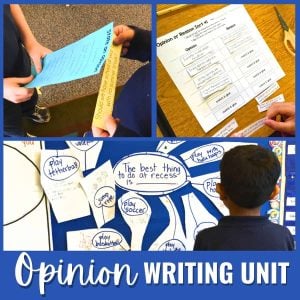

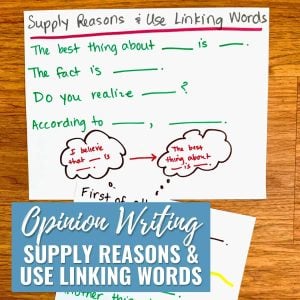


Opinion Writing Unit | 2nd & 3rd Grade Common Core Writing Resource
Teach opinion writing with confidence using this Common Core-aligned Opinion Writing Unit for 2nd and 3rd grade students. This comprehensive resource includes graphic organizers, sentence frames, anchor charts, writing prompts, assessments, and engaging activities that help students develop strong opinion writing skills through both oral language practice and written application.
Jessica BOschen
Jessica is a teacher, homeschool parent, and entrepreneur. She shares her passion for teaching and education on What I Have Learned. Jessica has 16 years of experience teaching elementary school and currently homeschools her two middle and high school boys. She enjoys scaffolding learning for students, focusing on helping our most challenging learners achieve success in all academic areas.