
Opinion Writing Unit for 2nd Grade
Children love sharing their opinions. They try to convince parents to buy a toy, choose a TV show, or serve dessert first. In second grade, students already know what they think — they just don’t yet know how to turn those thoughts into clear, organized writing.
Teaching opinion writing in 2nd grade works best when students are given strong language support and clear routines. This Opinion Writing Unit focuses on scaffolding academic language so students can state an opinion, supply reasons, and write simple introductions and conclusions with confidence.

This post gives an overview of how I teach opinion writing in 2nd grade from start to finish. If you want to focus on a specific skill, these posts break down each part of the opinion writing process in more detail:
- 7 Ways to Introduce Opinion Writing in Elementary Classrooms
- Picture Books to Teach Opinion Writing
- Teaching Students to State an Opinion
- Teaching Students to Support Their Opinions With Reasons
- Teaching Introductions for Opinion Writing
- Teaching Conclusions for Opinion Writing
- Teaching Ideas to Strengthen Students’ Understanding of Opinion Writing
Teaching opinion writing through a structured unit allows students to practice each step of the writing process over several lessons. Students learn how to state their opinion, give reasons, organize their ideas, and write a conclusion. You can see how this unit fits into the bigger picture in this guide to teaching opinion writing in elementary school.

Opinion Writing Unit | 2nd & 3rd Grade Common Core Writing Resource
Teach opinion writing with confidence using this Common Core-aligned Opinion Writing Unit for 2nd and 3rd grade students. This comprehensive resource includes graphic organizers, sentence frames, anchor charts, writing prompts, assessments, and engaging activities that help students develop strong opinion writing skills through both oral language practice and written application.
How to Teach Opinion Writing in 2nd Grade
Writing a full opinion paragraph can feel overwhelming for students who are new to this type of writing. Instead of teaching everything at once, the Opinion Writing Unit separates each component into its own set of lessons. Students follow the same routine each week, focusing on one skill at a time while gradually increasing the complexity of their academic language.
How This Approach Supports 2nd Grade Opinion Writing Standards
This approach aligns with second grade opinion writing expectations by giving students repeated practice with each required component: introducing a topic, stating an opinion, supplying reasons, using linking words, and providing a concluding statement.
Teaching each part separately allows students to understand what each component does before combining them into a full paragraph.
Teaching Opinion Writing Components One at a Time
These opinion writing components are taught separately so students can focus on one skill at a time. I recommend teaching them in this order:
- State an Opinion
- Supply Reasons
- Write an Introduction
- Write a Conclusion
This progression aligns well with the expectations of second grade writers and allows students to build confidence before combining all parts into a full paragraph.
If you’re working with third graders, consider adding Explain Reasons as a third step.
Why do I go in this order to teach opinion writing?
The most important and often easiest part for students is stating their opinion. They are very good at telling you what they like or want, although it might not be with academic language. Because students already have the skill in place, you only need to attach the academic language and apply it to the formal writing process. Plus, stating an opinion is the most important part of the opinion writing process. The rest of the pieces fall apart if students don’t have a strong opinion statement.
Using Gradual Release to Teach Opinion Writing in 2nd Grade
Each day of the Opinion Unit goes through a gradual release of responsibility where students are taught the new process, practice it as a whole group, practice it with a partner, then apply the new learning in writing. Students have the most success when they have multiple opportunities to practice, both orally and in writing, and apply the academic language.
Because the routine stays the same each week, students know what to expect and can focus their energy on improving their writing instead of learning new directions.
All of the materials shown come from my Opinion Writing Unit for 2nd Grade, a complete unit designed to take students from oral opinions to fully written opinion paragraphs.

Using Partner Talk to Strengthen Opinion Writing
Students talking and working with each other using sentence frames for a specific purpose is one of the fastest ways they can develop academic language. The Opinion Writing Unit encourages the use of cooperative learning strategies to get students talking and writing.

One of the most common strategies used is Pair Up & Switch. For this activity, half of the students have a prompt and the other half of the students have a list of sentence frames. Students find a partner. The student who has the prompt reads it. The student who has the sentence frames answers it. Students switch papers and find a new partner.
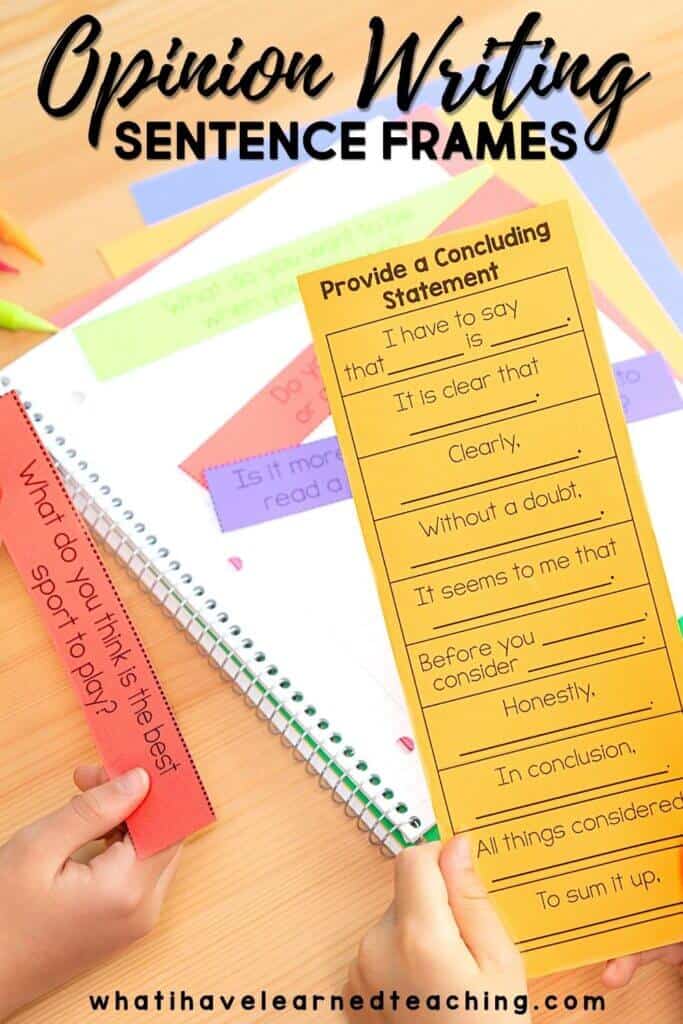
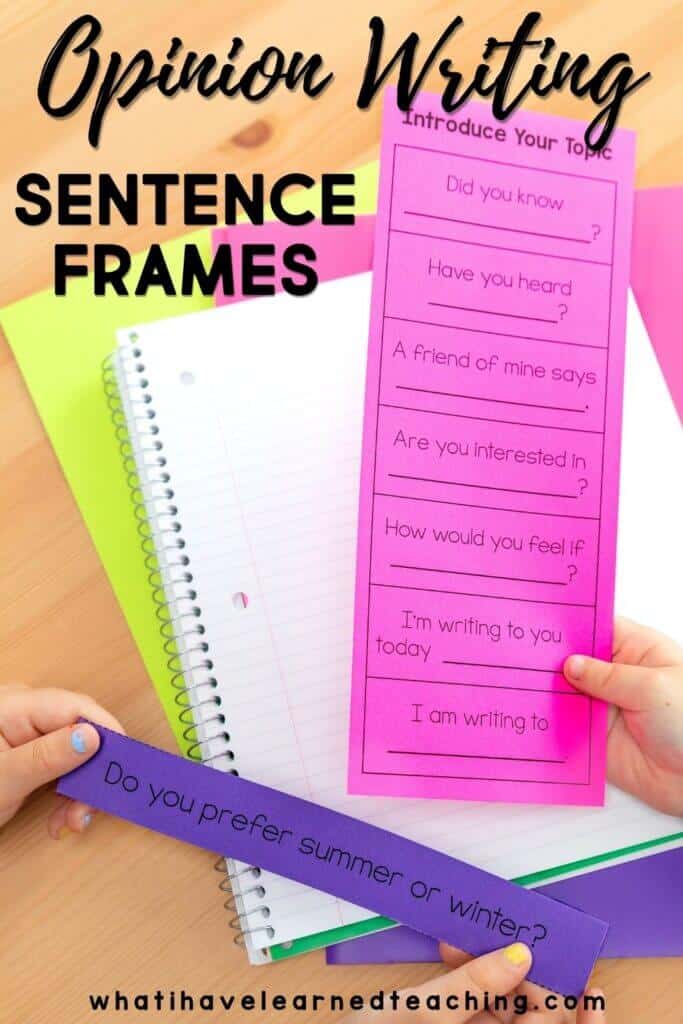
Sentence Frames to Support 2nd Grade Opinion Writing
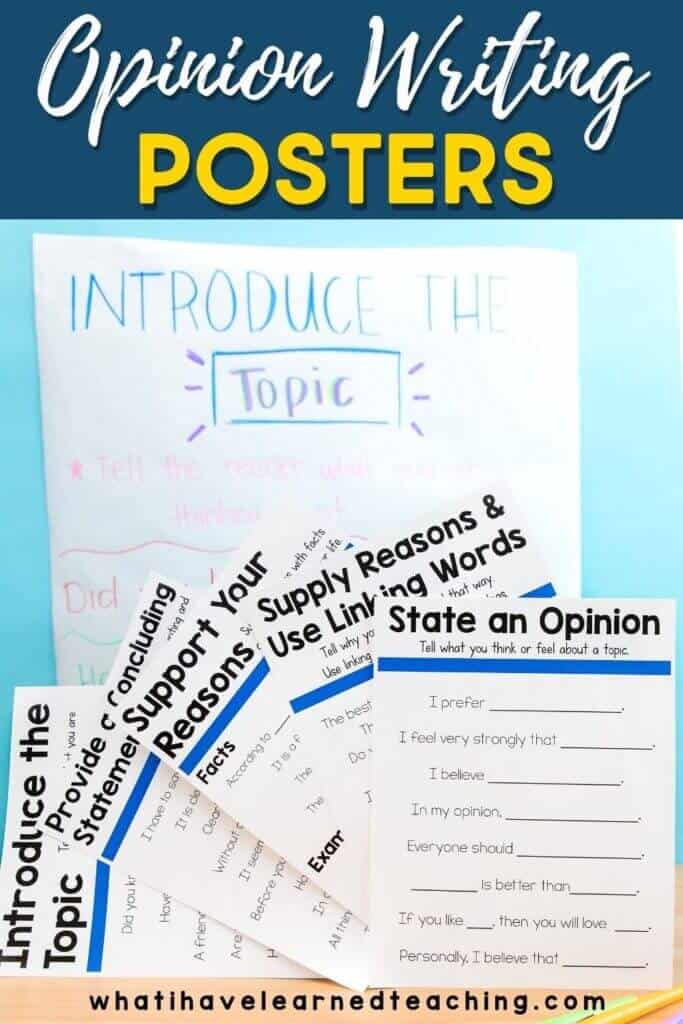
The Opinion Writing Unit provides sentence frames for every component of opinion writing for second grade. The sentence frames move from easy to more complex academic language.
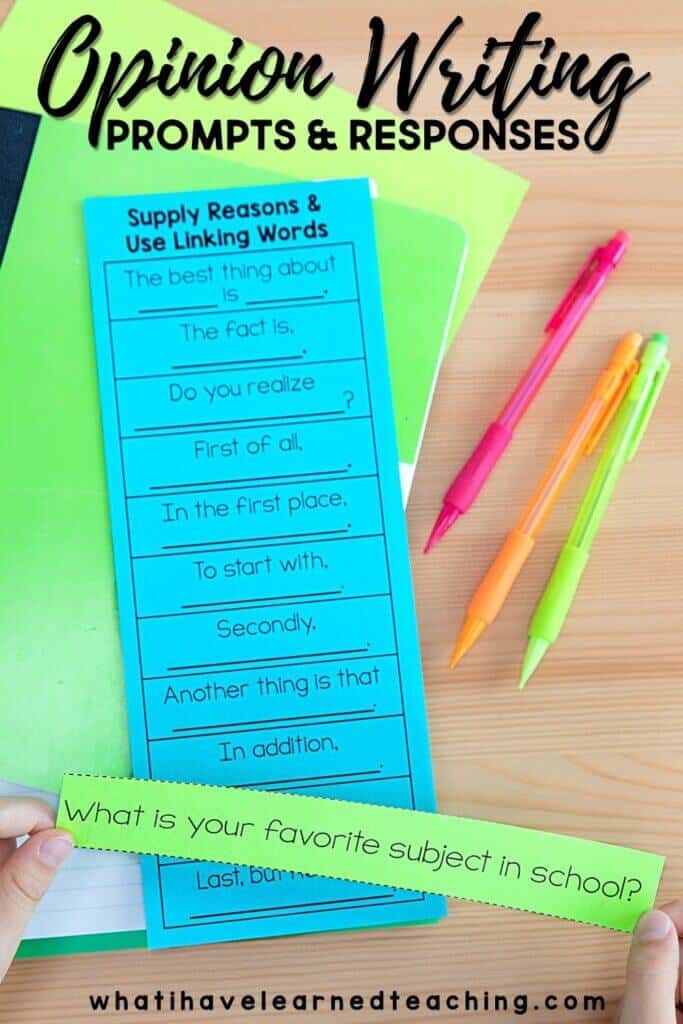
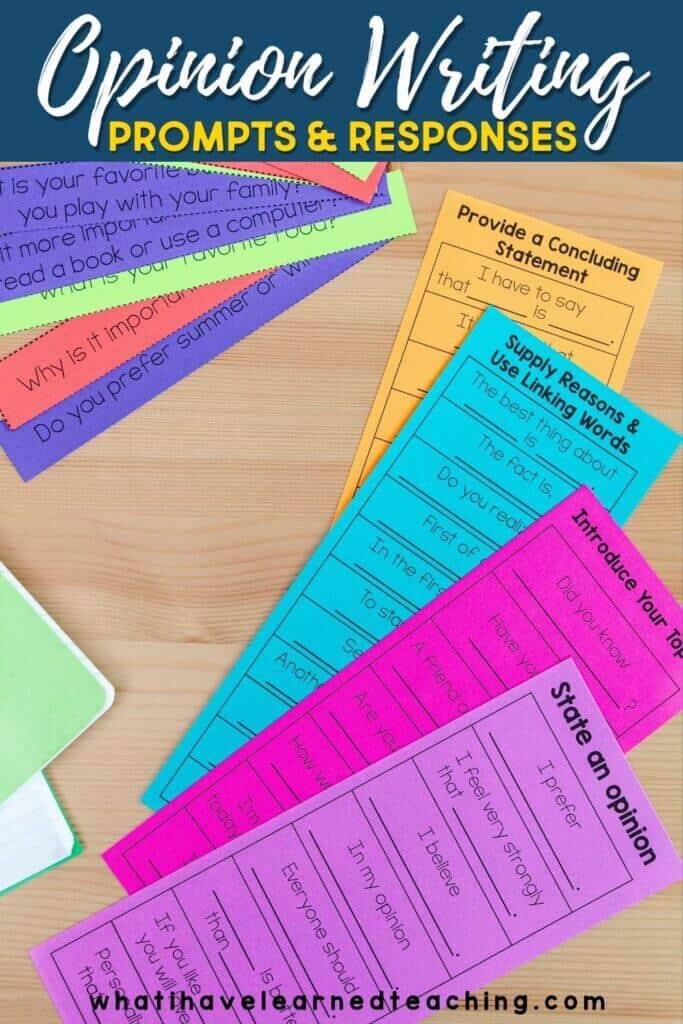
When teaching students how to use the sentence frames, start with the easier sentence frames. Provide a lot of oral practice between the teacher and whole group as well as between partners. Check in frequently to fix mistakes.
As students become proficient in using the easier sentence frames, start using more complex sentence frames. Practice them the same way you practice the easier sentence frames.
Toward the end of the week, encourage students to create their own sentences or combine sentences. Practice this whole group then allow students to play with the language. Again, frequent check-ins will help keep on top of the errors that might come up.
Opinion Writing Unit | 2nd & 3rd Grade Common Core Writing Resource
Teach opinion writing with confidence using this Common Core-aligned Opinion Writing Unit for 2nd and 3rd grade students. This comprehensive resource includes graphic organizers, sentence frames, anchor charts, writing prompts, assessments, and engaging activities that help students develop strong opinion writing skills through both oral language practice and written application.
Using Games to Practice Opinion Writing Skills
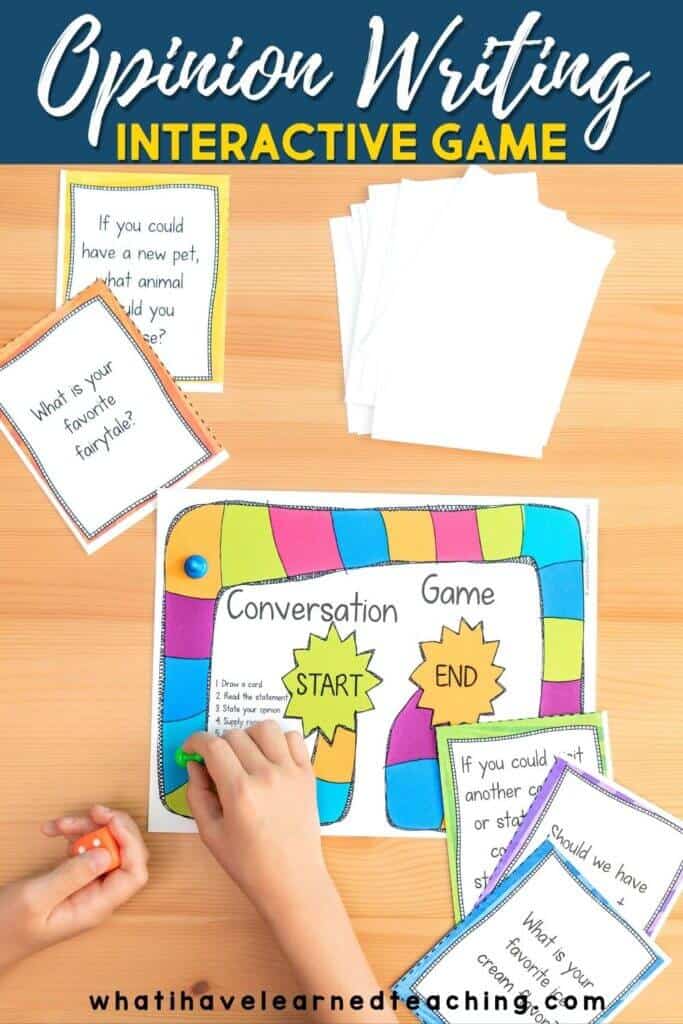
Kids LOVE playing games! After students have had some partner practice and are familiar with the sentence frames, have them play a game in a small group. Provide students with a set of prompts. Use the ones included in the Opinion Writing Unit or create your own unique to your school or classroom.
Provide students with a list of sentence frames for the component you’re working on that week and give them a bit of time to work through the prompts.
Using Sentence Sorts to Clarify Opinion Writing Components
Sorts are one of my favorite resources to use when teaching. They focus students’ attention on the similarities and differences in the sentences and force students to make a best-fit choice. All of the sorts in the Opinion Unit are closed sorts, meaning the labels are given to students.

To take it a step further, consider giving students sentences without labels and see if they can group the sentences by similarities and then label the group of sentences. Open sorts require higher-level thinking skills and require students to work on organizational skills that may not be available in other activities.
Opinion Writing Unit | 2nd & 3rd Grade Common Core Writing Resource
Teach opinion writing with confidence using this Common Core-aligned Opinion Writing Unit for 2nd and 3rd grade students. This comprehensive resource includes graphic organizers, sentence frames, anchor charts, writing prompts, assessments, and engaging activities that help students develop strong opinion writing skills through both oral language practice and written application.
While the opinion writing unit has a variety of sorts to use for state an opinion vs. supply a reason and whole paragraph sorts, you can also create classroom specific sorts from students’ writing samples.
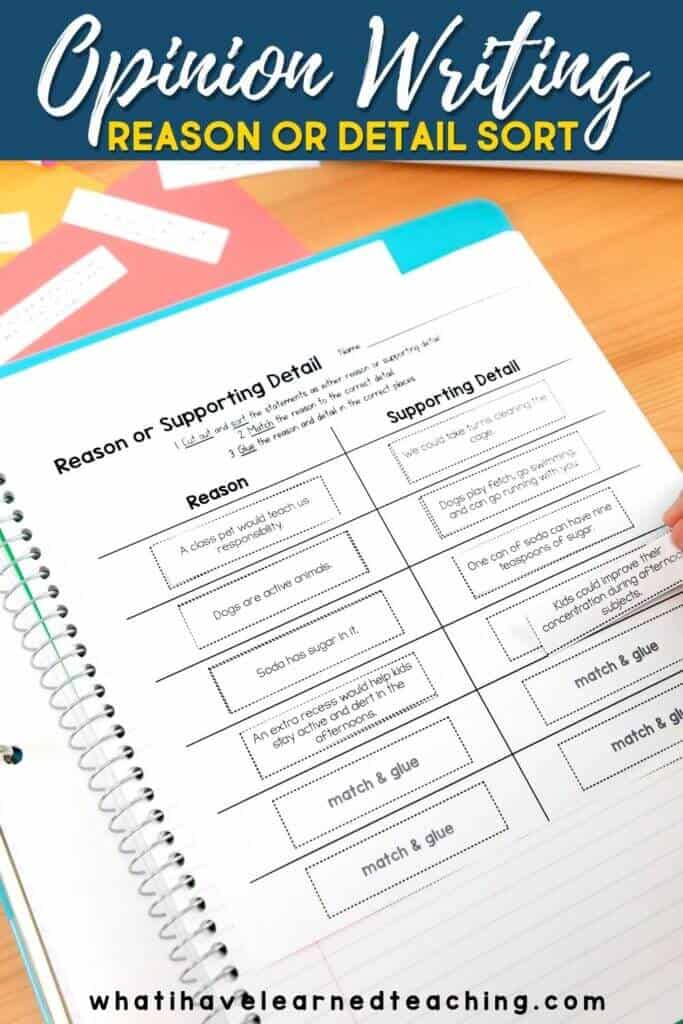
Make a copy of the writing sample, cut the sentences apart, and place them in a different order on the paper. Photocopy the mixed-up order and have students place the sentences in order. If you save the sorts in an envelope, you can reuse them year after year!

Use Opinion Graphic Organizers to Plan Writing
Help students generate ideas and plan their writing by using graphic organizers.
Use a web graphic organizer to brainstorm ideas. The web can be used for stating an opinion, supplying reasons, and giving examples.

Once students have generated their ideas and narrowed down their opinion and reasons, the opinion writing framework graphic organizers can be use to help them plan and organize their writing.

Individual Practice to Solidify Opinion Writing
In addition to whole group, small group, and partner practice, it’s important for students to practice each component of opinion writing individually. Students need to practice that component in isolation and in conjunction with the other components.
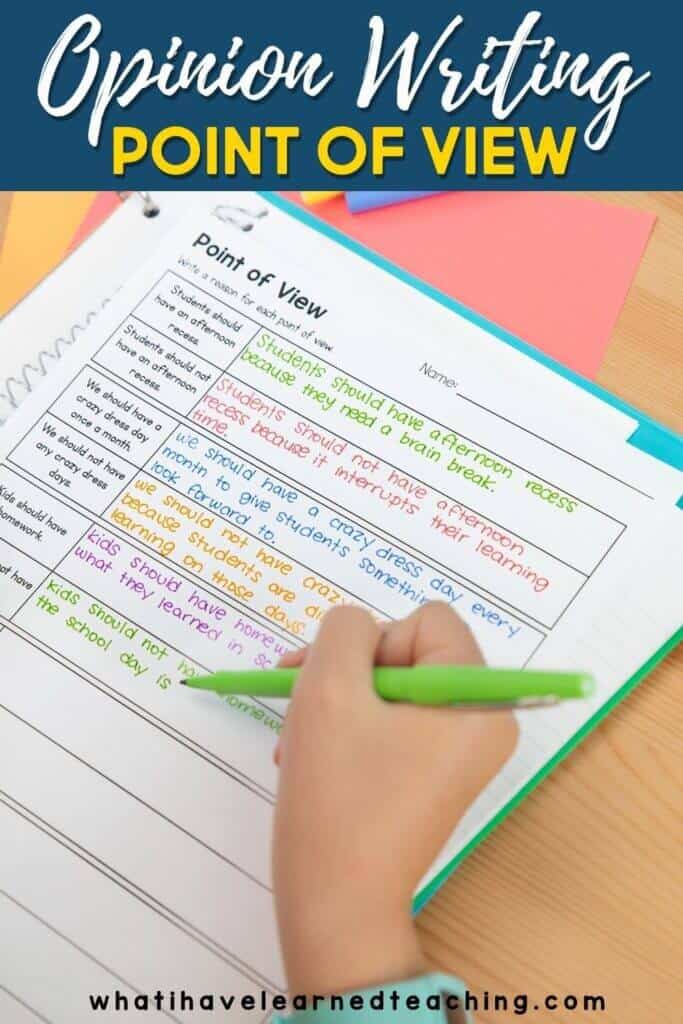
Give students time to write individually every day. Have them focus on the specific skill and work in previously learned skills.



Keep students accountable by using a checklist
As students gain confidence and skills throughout the opinion writing unit, hold them accountable to using academic language and developing well writing opinion paragraphs by using a checklist throughout the process. The Opinion Writing Unit comes with a checklist. Adapt it for use throughout the unit by focusing on specific components. At the end of the unit require students to have all the boxes checked.
As you conference with students about their writing, use the checklist to share with students what they are doing well and to address areas for improvement. A checklist provides a common language and clear expectations so that students can successfully write opinion pieces.
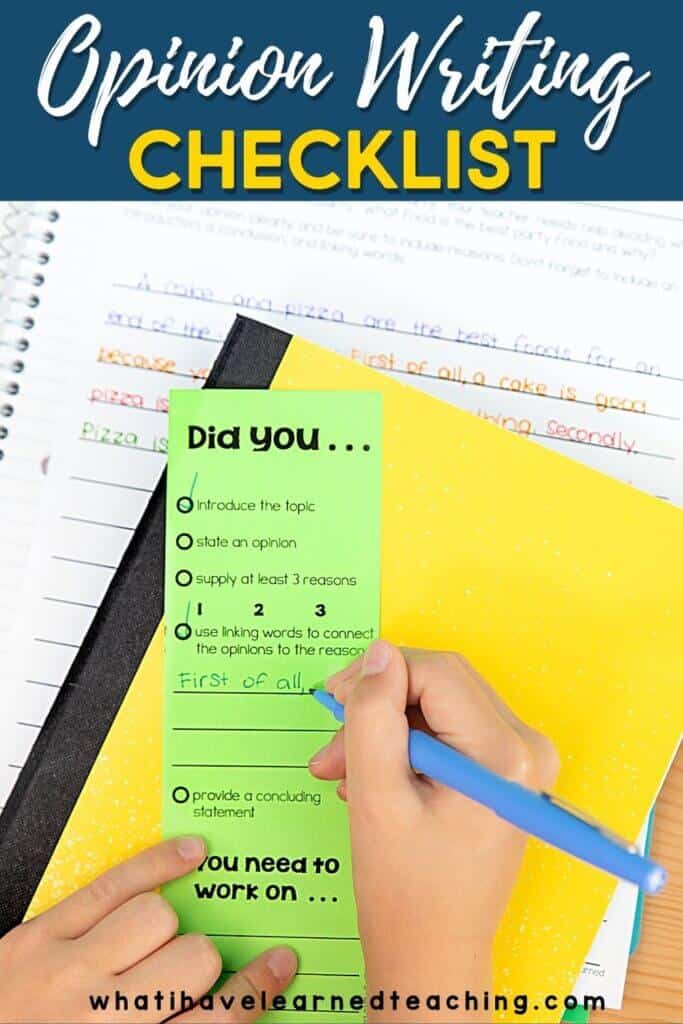
Learn From Student Writing Samples
Along with a checklist, consider using anonymized student samples to analyze writing during whole group discussions. As you progress through the unit, collect students samples. Remove the names and use them as writing samples to show what has been written well and what needs improvement.
Pick out sentences for each component of writing. Have students work with the sentences to improve them by adding details.

Cut apart the samples and have students identify the components or sort the sentences into the correct order. There are many ways to use writing samples during an instructional unit. Be sure to keep them year after year!
How Long Does It Take to Teach Opinion Writing in 2nd Grade?
Because each component is taught separately, this unit typically spans several weeks. Teachers can adjust pacing based on student needs, spending more time on oral practice or sentence frames when needed.
Who This Opinion Writing Unit Works Best For
This approach works especially well for second grade classrooms, English learners, and students who need clear language support. The consistent routine and repeated oral practice help students gain confidence before writing independently.
Opinion Writing Unit | 2nd & 3rd Grade Common Core Writing Resource
Teach opinion writing with confidence using this Common Core-aligned Opinion Writing Unit for 2nd and 3rd grade students. This comprehensive resource includes graphic organizers, sentence frames, anchor charts, writing prompts, assessments, and engaging activities that help students develop strong opinion writing skills through both oral language practice and written application.
About the Opinion Writing Unit
All of the strategies shown here come from my Opinion Writing Unit, which provides structured lessons, sentence frames, games, sorts, graphic organizers, and checklists designed specifically for 2nd grade writers.
The unit supports students step by step as they learn to write clear, organized opinion paragraphs with confidence.
You can find the Opinion Writing Unit on my website or on Teachers Pay Teachers.
Read More about Teaching Opinion Writing
7 Ways to Introduce Opinion Writing
Teaching How to State an Opinion
Teaching How to Supply Reasons
Teaching How to Introduce Opinion Writing
Teaching How to Conclude the Opinion Writing
Teaching Ideas to Solidify Students’ Understanding of Opinion Writing
Picture Books to Teach Opinion Writing
Opinion Writing Unit
Opinion Writing Sentence Starters
100 Opinion Writing Prompts
Jessica BOschen
Jessica is a teacher, homeschool parent, and entrepreneur. She shares her passion for teaching and education on What I Have Learned. Jessica has 16 years of experience teaching elementary school and currently homeschools her two middle and high school boys. She enjoys scaffolding learning for students, focusing on helping our most challenging learners achieve success in all academic areas.