
Questions for Kids: Classroom Discussion, SEL, and Community-Building Ideas
Questions are one of the most flexible tools teachers use every day. The right questions help students feel comfortable sharing, guide meaningful discussions, and support both social and academic growth in the classroom.
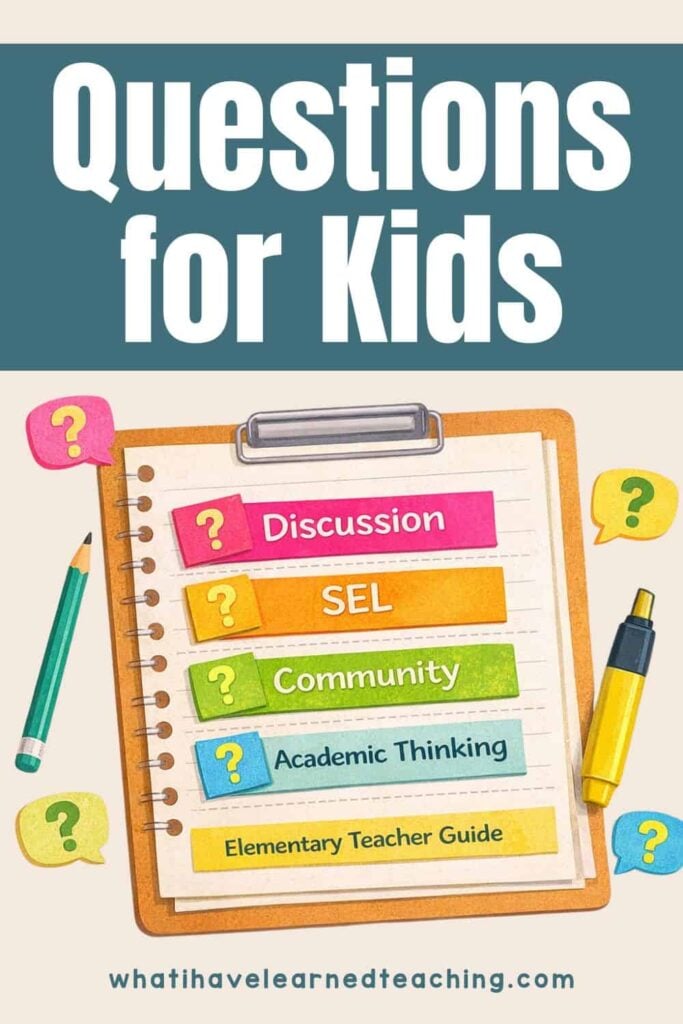
Teachers use questions in many ways—during morning meetings, community circles, lessons, and transitions throughout the day. This guide brings those uses together in one place, helping you quickly find the types of questions that fit your students and your routines.
Use this page as a starting point, then follow the links to specific question sets you can use right away.
Questions for Building Classroom Community
Community-building questions help students get to know one another and feel included. These questions are especially useful during the first weeks of school, after long breaks, or any time a class needs to reconnect.
When Teachers Use Community Questions
Teachers often use community questions:
- on the first day or first week of school
- during morning meetings or circle time
- after schedule changes or class disruptions
These questions give students a low-pressure way to share and listen.
Where Community Questions Work Best
Community questions work well in whole-group settings, partner shares, or small groups. They help students practice speaking, listening, and responding respectfully.
For ready-to-use prompts, explore:
- Icebreaker questions for elementary classrooms
- Questions to build community in a classroom
- Would You Rather questions for kids



SEL Questions for Kids
Social-emotional learning questions help students reflect on feelings, choices, and relationships. They support emotional awareness and give teachers a simple way to check in with students.
Morning Meeting and Emotional Check-Ins
SEL questions are often used during morning meetings to help students start the day feeling heard. They also work well as emotional check-ins after recess, lunch, or challenging moments.
Supporting Classroom Discussions
SEL questions encourage students to name emotions, consider others’ perspectives, and reflect on behavior. Over time, this builds stronger communication and trust within the classroom.

Sel Qustions for Elementary Students
For a deeper collection designed specifically for classroom use, check out these SEL Questions.
Academic and Learning Questions for Students
Questions also play a key role in learning. Academic questions help students explain their thinking, make connections, and respond thoughtfully to what they read and study.
Reading and Writing Discussions
Teachers often use open-ended questions during read-alouds, book discussions, and writing activities to help students move beyond short answers.
You may find these helpful:
Research and Content-Area Thinking
In content areas, questions guide inquiry and help students focus their research. Asking strong questions supports deeper understanding across subjects.
Related resources include:



Fun and Low-Pressure Questions for Kids
Not every question needs a serious goal. Fun questions give students a chance to participate without worrying about being “right,” which can increase engagement.
Brain Breaks and Transitions
Teachers often use lighthearted questions during transitions, brain breaks, or at the end of the day to keep students involved and energized.
Encouraging Participation from All Students
Fun questions are especially helpful for students who may be hesitant to speak up. The playful format lowers the pressure and encourages more voices to join in.
For classroom-ready ideas, see:
How Teachers Use Questions in Daily Classroom Routines
Questions are most effective when they’re part of consistent routines. Many teachers build them into the day so students know what to expect.
Common Classroom Routines
Teachers regularly use questions during:
These routines help students practice listening, speaking, and sharing ideas in a structured way.
Keeping Discussions Focused and Manageable
Using clear routines and expectations helps keep discussions productive. Over time, students become more comfortable responding thoughtfully and respectfully.
Choosing the Right Questions for Your Students
When selecting questions for kids, it helps to think about:
- students’ grade levels
- the purpose of the discussion
- whether the goal is connection, reflection, or learning
Adjusting Questions by Grade Level
Younger students often respond best to simple, concrete questions, while older elementary students can handle questions that ask for explanation or reasoning. Small adjustments can make the same question work across grade levels.
Using Visual and Auditory Supports
Visual supports like name cards, sentence starters, or charts can help students respond more confidently. Auditory supports such as call-and-response or think-pair-share can also increase participation.
Bringing It All Together
Questions are a powerful part of everyday teaching. From building classroom community to supporting SEL and academic discussions, the right questions help students feel comfortable, engaged, and ready to participate.
Use this page as a hub, then explore the linked resources to find specific question sets that match your classroom needs. With a thoughtful mix of community, SEL, and academic questions, you can support meaningful conversations all year long.
Jessica BOschen
Jessica is a teacher, homeschool parent, and entrepreneur. She shares her passion for teaching and education on What I Have Learned. Jessica has 16 years of experience teaching elementary school and currently homeschools her two middle and high school boys. She enjoys scaffolding learning for students, focusing on helping our most challenging learners achieve success in all academic areas.