
Greek and Latin Root Words Games That Make Roots Stick
Roots are one of the best vocabulary tools you can teach, but a worksheet of roots and meanings gets old fast. The fix is play. Greek and Latin root word games give students the repeated exposure roots need without the worksheet fatigue, and friendly competition makes them want to use word parts instead of just memorizing them.
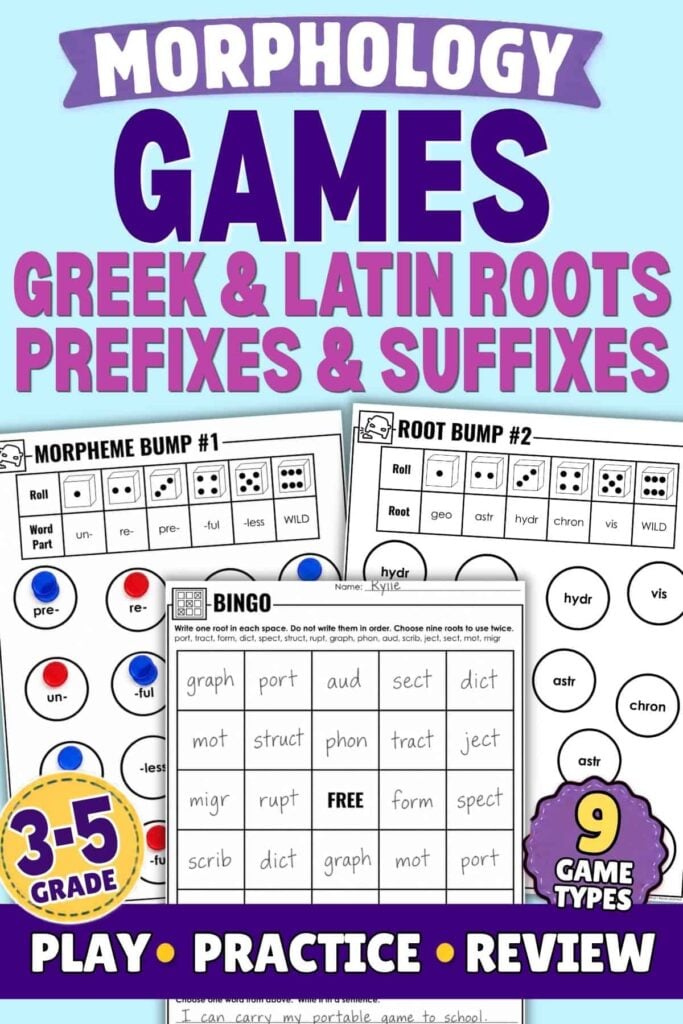
This post rounds up hands-on games and activities for practicing roots in upper elementary, from quick warm-ups to full-class games you can pull out on a Friday.
If you are just getting started with roots, my post on common Latin and Greek roots has the list of high-value roots to teach and a grade-by-grade plan. Once students have a few roots under their belt, these games help them stick.
Why Use Games to Teach Roots?
Roots reward repetition, but repetition is exactly what students tune out. Games solve that. They give students many quick, low-stakes encounters with the same roots, which is how word parts move into long-term memory. Games also get students talking, and explaining why transport and portable share a meaning does more for understanding than filling in a blank ever could. The literacy nonprofit Reading Rockets provides a strong background on why working with roots and affixes strengthens reading.
Greek and Latin Root Words Games to Try
These range from five-minute warm-ups to full-class games. Most use only cards, dice, or a whiteboard.
Root Word Bingo
Students fill a bingo board with roots. You call out a meaning or an example word, and students cover the matching root. It is an easy way to review a big set of roots at once, and it works as a whole-class game or a center.
Root and Meaning Match
Make two sets of cards, one with roots and one with meanings, and have students match them. Turn it into a memory game by flipping cards face down and taking turns finding pairs, or play it as a race in small groups. This one doubles as a quick formative check of who knows their roots.
Word-Building Races
Give teams a root and set a timer. Teams race to list as many real words as they can that use it. When time is up, groups share, and any word another team did not have earns a point. Students teach each other words and see how many words a single root unlocks.
Root Word Game Show
Set up a quiz-show board with categories like “name the meaning,” “give an example word,” and “build a word.” Teams pick a question and answer for points. It is a strong review before an assessment and gets the whole class engaged.
Roll a Root
Assign roots to the numbers on a die, or use a spinner. Students roll, then have to give the meaning and a word that uses the root, or write a sentence with one of its words. The element of chance keeps a simple review feeling like a game.
Root Word Sorts
Give students a stack of words and have them sort by root, then explain what the words in each group share. Sorting pushes students to reason about meaning, not just match. My post on sorting activities in the classroom has more ways to use this routine.
Ready-Made Root Word Games (No Prep)
You can build every game above from index cards and a master root list, and for some classes that is all you need. If you would rather skip the cutting and prepping, I made a ready-to-use set that’s done for you. My Greek and Latin Roots Games and Activities come by grade: the 4th-grade set covers 15 roots and the 5th-grade set covers 19, with a parallel Prefixes and Suffixes set for 3rd grade.
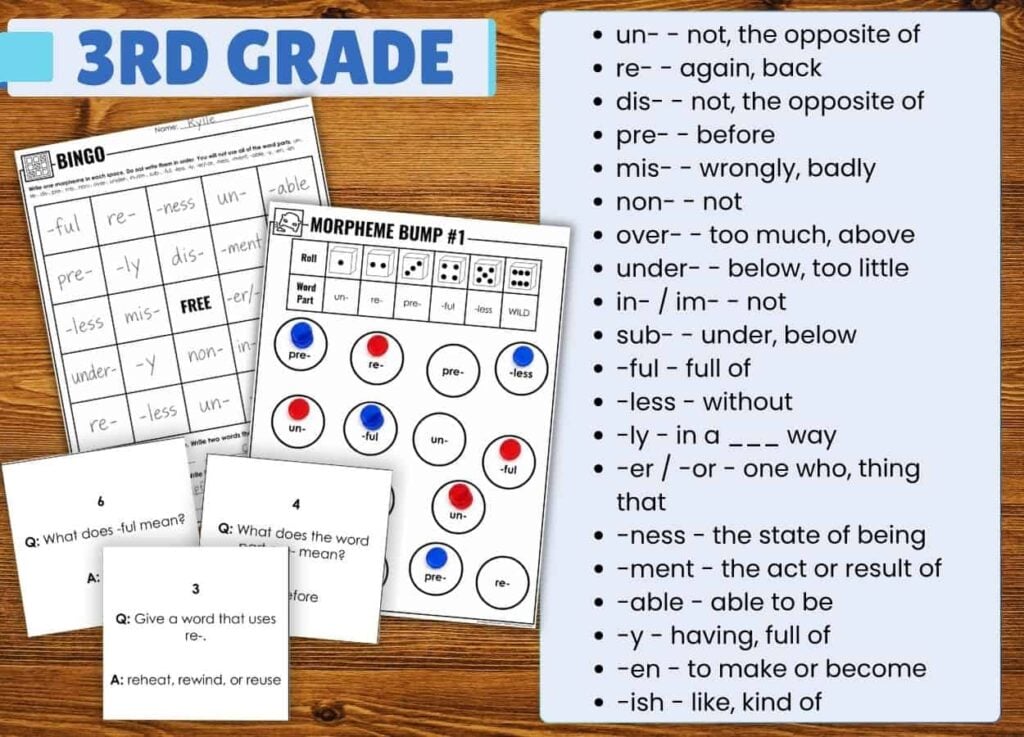
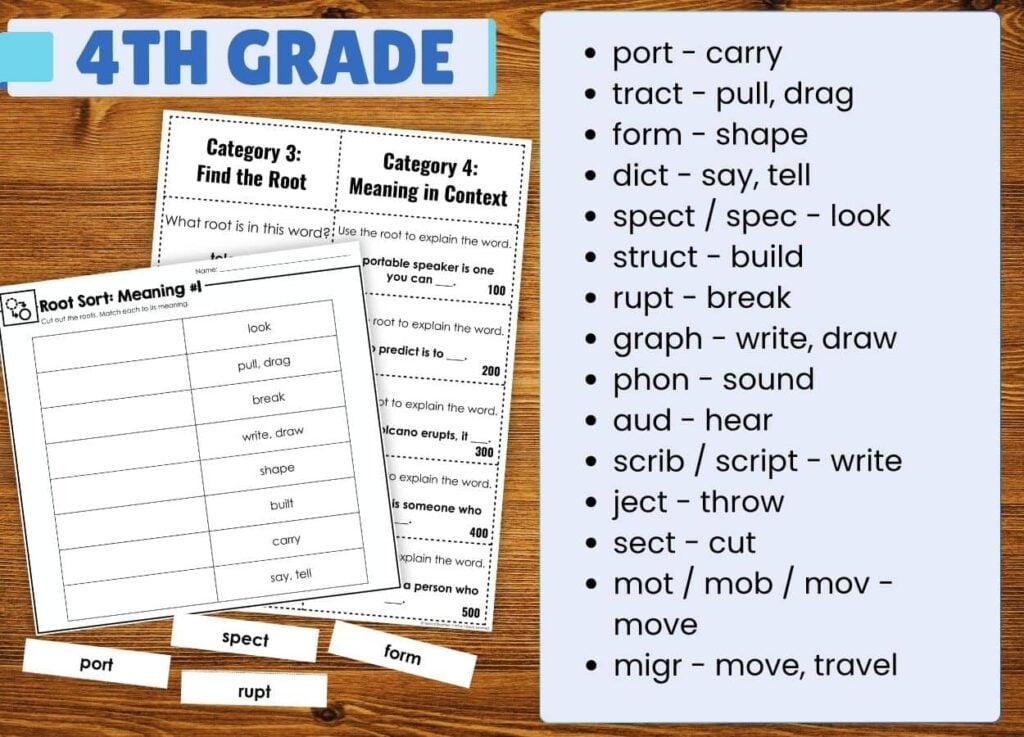
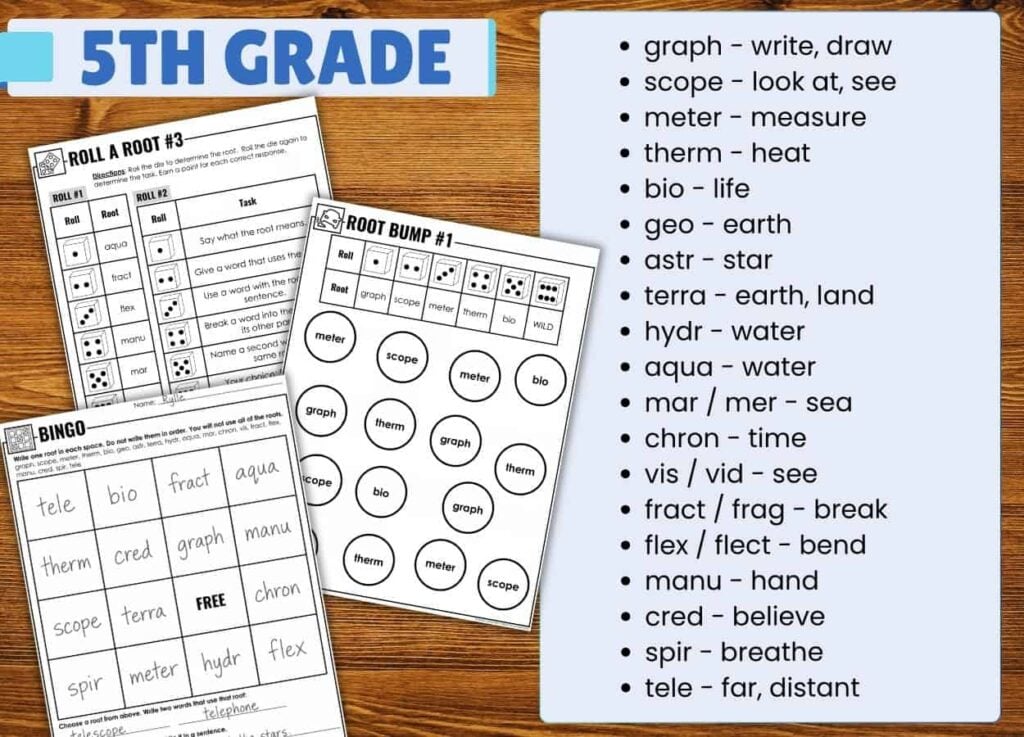
Each game uses one master word-part list, so once students learn one game, they need almost no reteaching for the next. Each set includes a master list and word bank with answer keys, print-and-play Bingo with meaning cards and three differentiated word levels, and more word-building and review games, all built for the exact uses below: centers, early finishers, Friday review, and warm-ups.
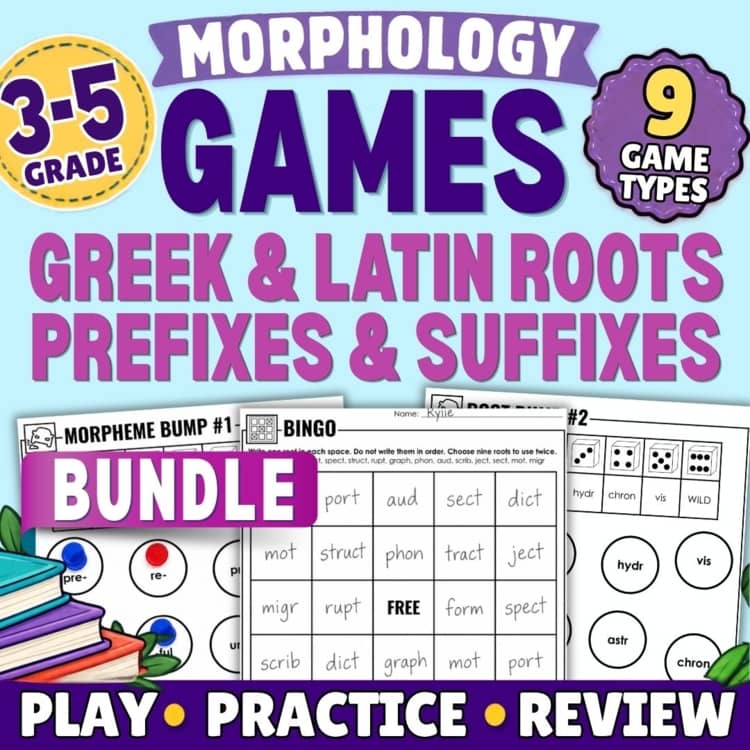
Morphology Games Bundle Greek & Latin Roots Prefixes Suffixes Activities
A Greek and Latin roots games bundle for 3rd, 4th, and 5th grade, with prefixes, suffixes, and roots practice through bingo, sorts, partner games, and movement activities. Three grade-level resources give students repeated, low-prep word study practice across 54 word parts.
Making Root Word Games Part of Your Routine
Games work best when they build on steady, everyday practice rather than replacing it. A short daily routine introduces the roots, and games give students repeated, playful exposure that helps them stick. A few ways to fit them in:
- Friday review. Play a whole-class game with the roots you introduced that week.
- Vocabulary centers. Put matching, bingo, or sorts in a center students rotate through.
- Early finishers. Keep a matching or word-building game ready for early finishers.
- Warm-ups. Roll a Root or run a quick word-building race to start a lesson fast.
To keep the roots visible between games, a word wall helps. My morphology word wall keeps roots and affixes posted and active, and my morphology morning work introduces one word part at a time so students come to game day already knowing the roots. For the bigger picture, my What is Morphology post explains how word parts build reading.
Frequently Asked Questions
Bringing It All Together
Greek and Latin root word games turn a skill students might dread into one they look forward to. Introduce the roots with steady daily practice, then use games to give students the repeated, playful exposure that makes roots stick. Once students are racing to build words from a root, you know the strategy has taken hold.
Want the games ready to print? My Greek and Latin Roots Games and Activities sets (4th and 5th grade, plus a Prefixes and Suffixes set for 3rd grade) give you print-and-play Bingo, matching, word-building, and review games that all run off one master word-part list. To introduce the roots first, my Morphology Morning Work builds them through a short daily routine.
Morphology Games Bundle Greek & Latin Roots Prefixes Suffixes Activities
A Greek and Latin roots games bundle for 3rd, 4th, and 5th grade, with prefixes, suffixes, and roots practice through bingo, sorts, partner games, and movement activities. Three grade-level resources give students repeated, low-prep word study practice across 54 word parts.
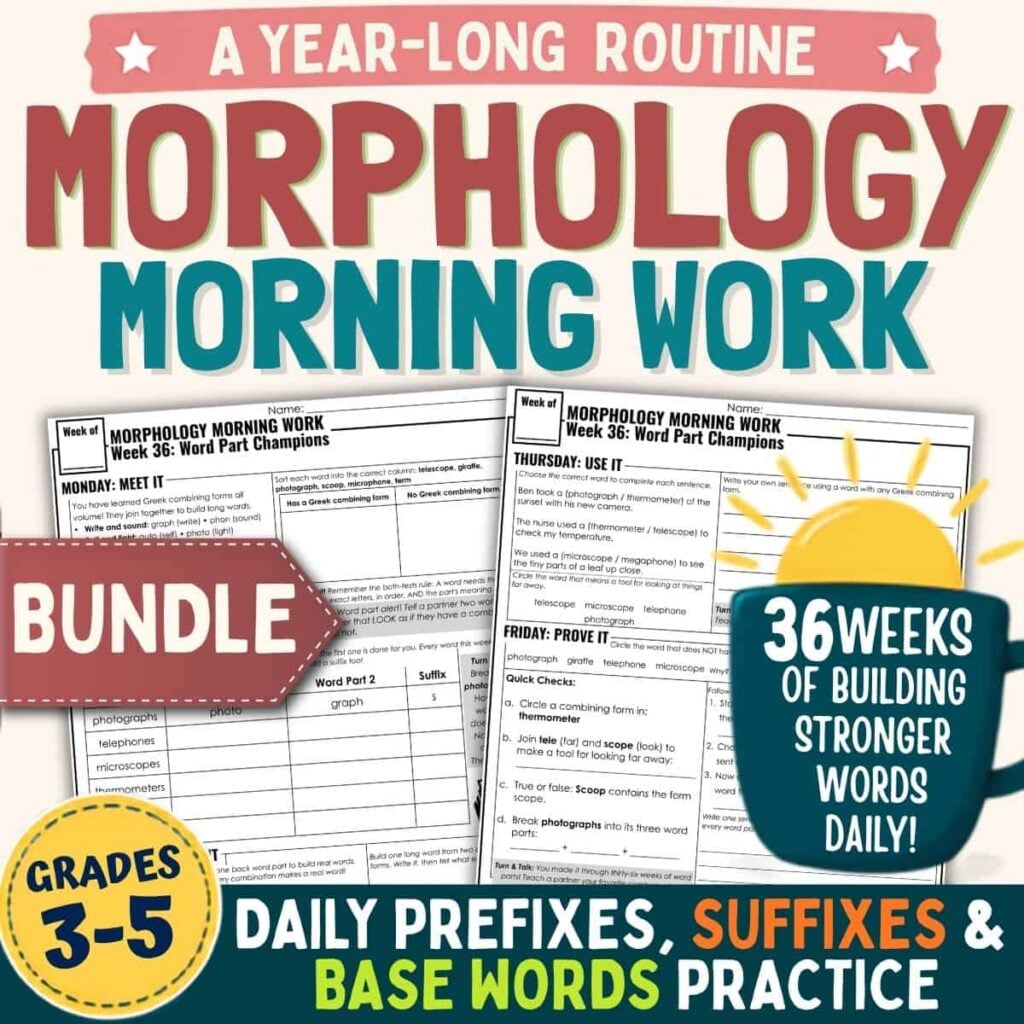
Morphology Morning Work Bundle | 36 Weeks of Prefixes, Suffixes, Latin Roots & Greek Combining Forms
Make morphology instruction simple and consistent all year long with this 36-week Morphology Morning Work Bundle! Students build vocabulary, decoding, spelling, and word-analysis skills through daily practice with prefixes, suffixes, base words, Latin roots, and Greek combining forms. Each week follows the same five-day routine, making this no-prep resource perfect for morning work, literacy warm-ups, word study, intervention, and spiral review.
Jessica BOschen
Jessica is a teacher, homeschool parent, and entrepreneur. She shares her passion for teaching and education on What I Have Learned. Jessica has 16 years of experience teaching elementary school and currently homeschools her two middle and high school boys. She enjoys scaffolding learning for students, focusing on helping our most challenging learners achieve success in all academic areas.