
How to Build a Morphology Word Wall That Students Use
When a 4th grader hits the word transportation in a science text and freezes, it is usually not because they have never seen it. It is because no one has shown them they already know its parts: trans-, port-, and -ation. A morphology word wall makes those parts visible all year long, so students have a reference for breaking apart unfamiliar words instead of guessing or skipping them.
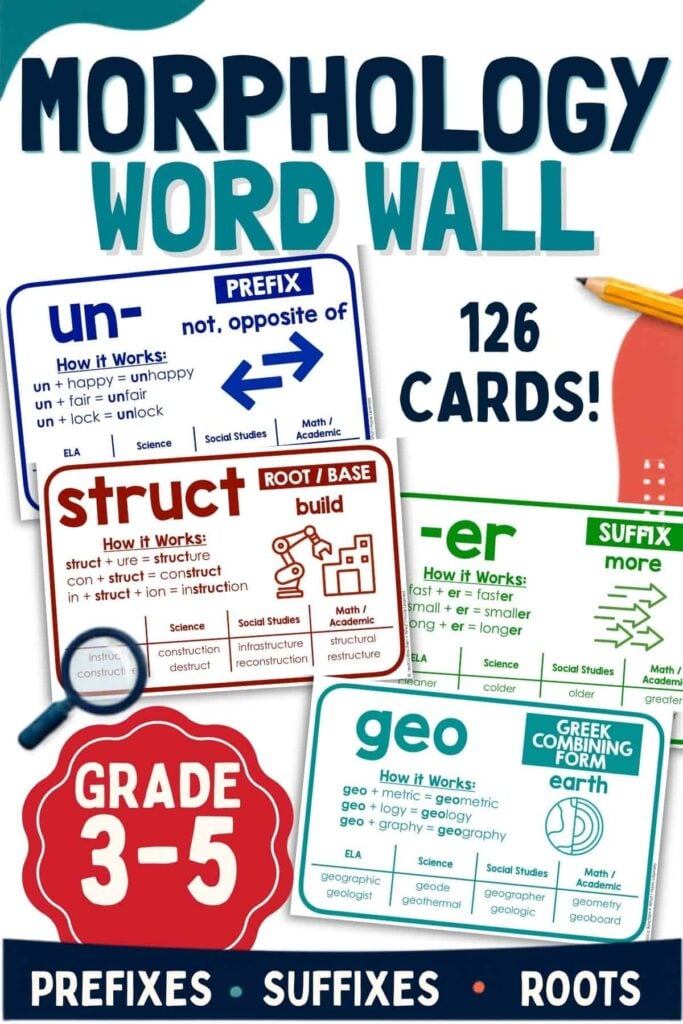
This post covers what to include on a morphology word wall, how to organize it to build from familiar affixes to academic roots, and how to keep students using it rather than letting it fade into classroom wallpaper.
Why a Morphology Word Wall Belongs in Your Classroom
Morphology is the study of morphemes, the smallest units of meaning in words: prefixes, suffixes, roots, and bases. Teaching students to notice these parts is one of the highest-value things you can do for reading, because a single root like port unlocks a whole family of words: transport, import, export, portable.
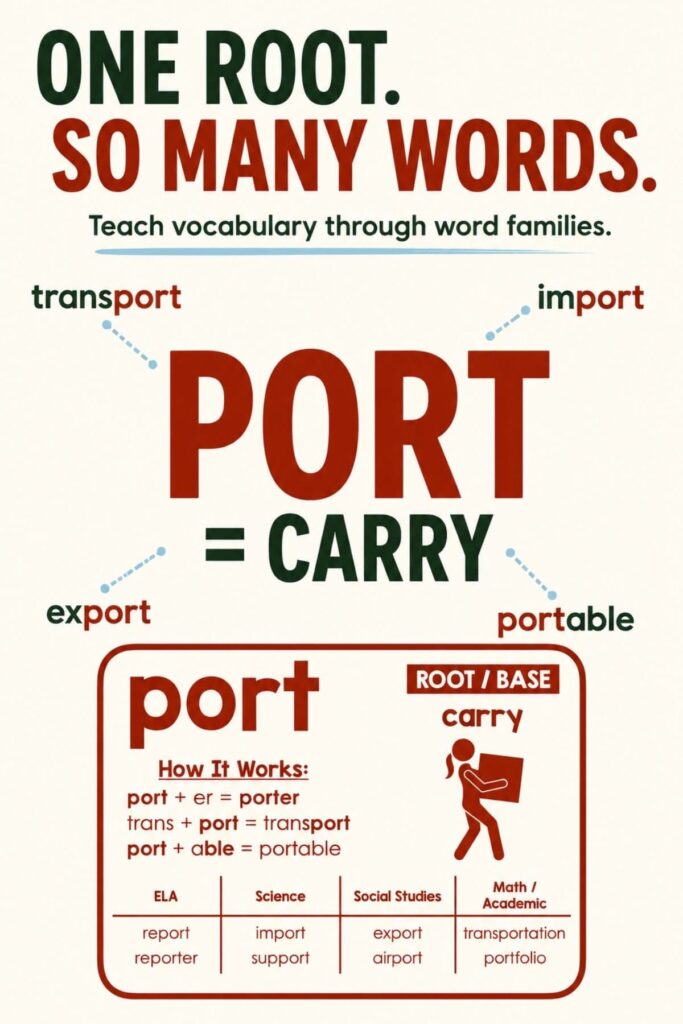
Research on morphological awareness consistently links it to stronger vocabulary, decoding, and reading comprehension, especially as texts get denser in the upper elementary grades. Reading Rockets has a helpful overview of roots and affixes if you want the research behind it.
A word wall makes that instruction permanent. Instead of teaching a prefix on Tuesday and hoping it sticks, you post it so students can look it up every time they meet it in reading, writing, or a content-area lesson. The wall becomes a shared reference the whole class builds on across the year.

These morphology activities help students break apart unfamiliar words, build academic vocabulary, and recognize meaningful word-part patterns across reading, spelling, writing, science, social studies, and math.
What to Put on a Morphology Word Wall
A morphology word wall is different from a spelling word wall. You are not posting whole words to memorize; you are posting the meaningful parts students can combine. A strong wall covers four kinds of morphemes:
- Prefixes: Word parts added to the front that change meaning, like un-, re-, pre-, mis-, and dis-.
- Suffixes: Endings that change meaning or part of speech, like -ed, -ing, -ful, -less, and -tion.
- Latin roots and bases: Academic building blocks like port (carry), struct (build), dict (say), and spect (look).
- Greek combining forms: Parts that build science and technical vocabulary, like photo, graph, meter, and tele.
Each card works best when it shows the morpheme, its meaning, and room for example words students find. That way the wall is not just a display; it is a collection students grow as they read.
Organize the Wall by Instructional Sequence
The most common mistake is posting the whole wall on day one. A word wall students cannot yet read is just decoration. Build it in the order you teach, moving from the most familiar parts to the most academic:
- Start with common prefixes students already half-know, like un-, re-, and pre-.
- Add high-frequency suffixes, beginning with the inflectional endings -s, -ed, and -ing before moving to -ful, -less, and -tion.
- Introduce core Latin roots once students are comfortable adding and removing affixes.
- Finish with Greek combining forms, which pair naturally with science and technical units.
Adding cards as you teach them means every part on the wall is one students can use, and the growing wall becomes a visible record of how much word-building power they have picked up. This sequence pairs naturally with a daily routine. My morphology morning work introduces one morpheme at a time in the same build-as-you-go order, so the word wall and the morning routine reinforce each other.
How to Keep Students Using the Word Wall
A word wall only earns its space if students interact with it. A few routines that keep it active:
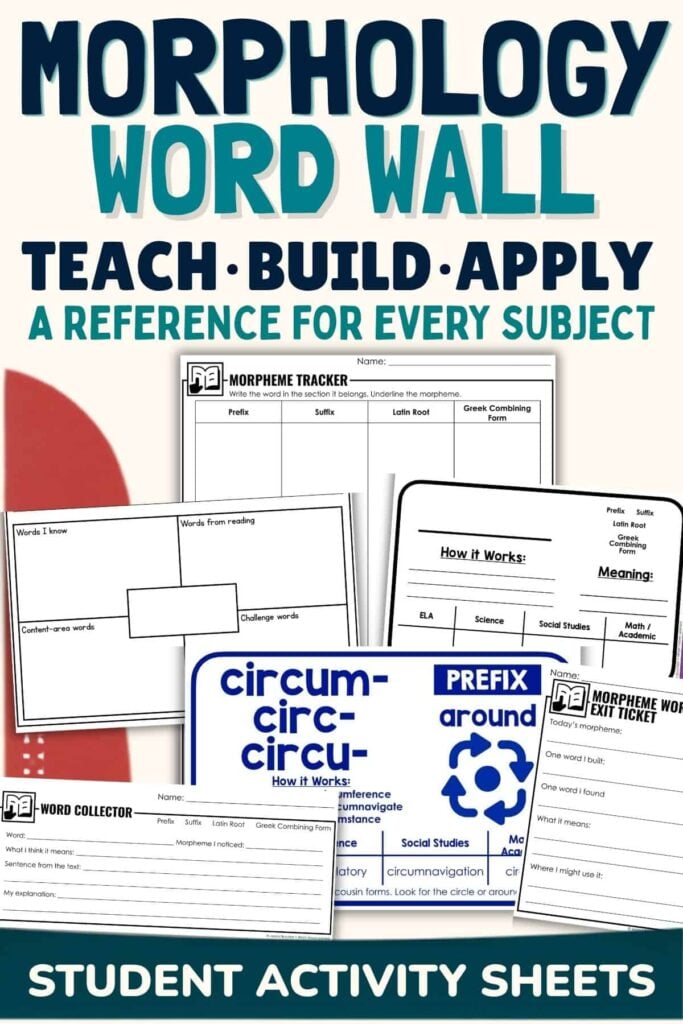
- Word collecting. When students find a wall morpheme in their reading, they add the word to that card. The wall grows with real, meaningful examples.
- Build and break. Give students a root and have them build as many words as they can, or hand them a big word to break into parts using the wall.
- Exit tickets. A quick “one word I built with today’s morpheme” ties the wall to a daily check for understanding.
- Sort by type. Have students sort mixed morphemes into prefixes, suffixes, roots, and combining forms, using the wall as their reference.
Sorting is one of the most effective of these because it forces students to reason about meaning and structure. If you use sorts in other subjects, my post on sorting activities in the classroom has more ways to build that thinking.
Students can take the roots and affixes from the wall and build words with them on a set of morphology worksheets, which turns the wall into active practice.
Print a Portable Ring Set
If you want students to have access to the cards beyond the wall, print a smaller set and put them on a ring. This works especially well for small groups, word study centers, intervention, or independent reading. Students can flip through the cards at their seats instead of walking to the bulletin board every time they want to check a word part.
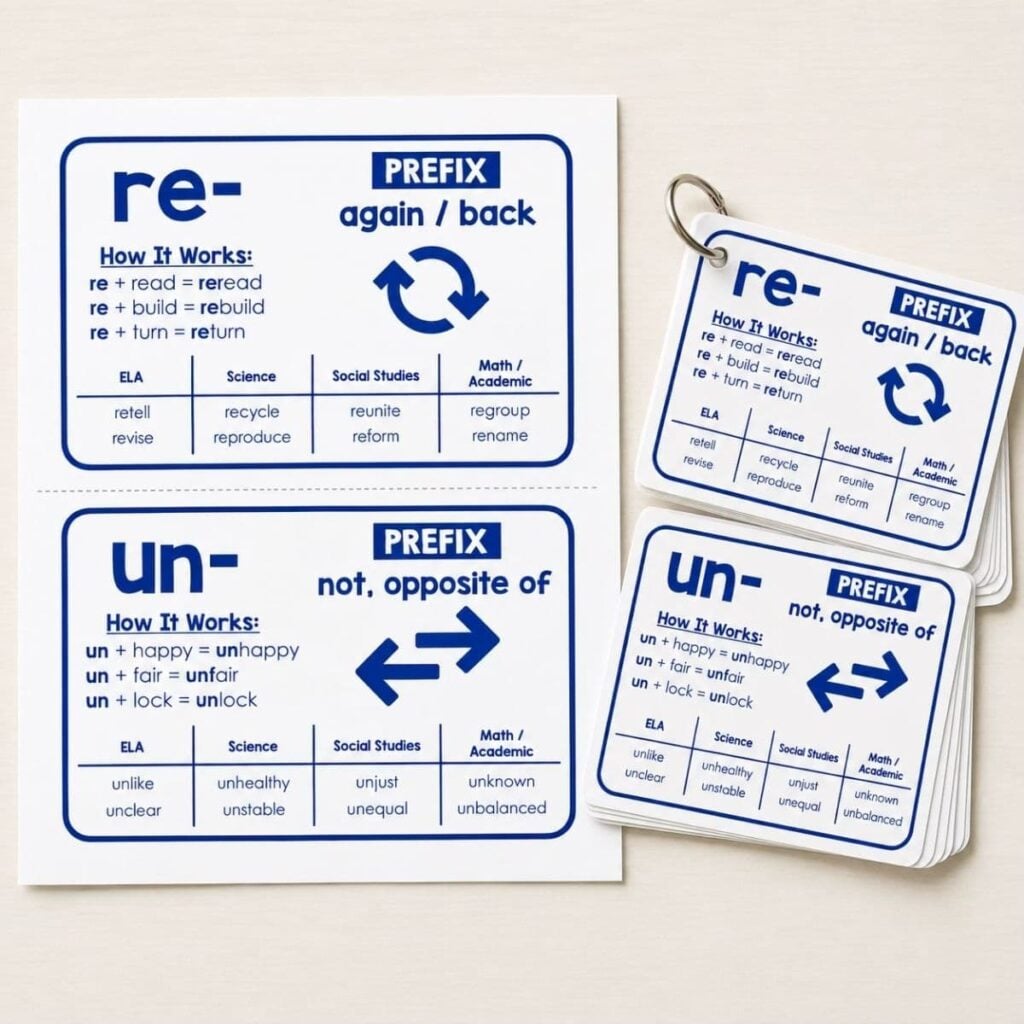
The full-size cards are set up two to a page, which makes them easy to print and post on a word wall. To create a smaller handheld set, print the PDF with multiple pages per sheet to reduce the card size. After printing, cut the cards apart, laminate them if you want extra durability, and hole-punch one corner of each card. Then place them on a binder ring.
A ring set is especially helpful for:
- small-group morphology practice
- partner review
- desk-side reference during reading or writing
- portable support for intervention groups
Keep one master set on the wall and make a few smaller ring sets for students to use during the week. That way the same morphology cards work as both a classroom display and a hands-on reference tool, which makes them much more likely to be used.
Frequently Asked Questions
Bringing It All Together
A morphology word wall gives students a permanent, growing reference for the parts that make up thousands of words. Build it in the order you teach, keep it to meaningful morphemes rather than whole words, and give students daily reasons to add to it and use it. Once it is up and active, students start breaking apart unfamiliar words on their own, which is the whole point.
These morphology activities help students break apart unfamiliar words, build academic vocabulary, and recognize meaningful word-part patterns across reading, spelling, writing, science, social studies, and math.
Want a set ready to print? My Morphology Word Wall Cards and Activities include 126 cards covering 150 morphemes, roots, and combining forms, organized by instructional sequence, plus student activity sheets like word collectors, exit tickets, and morpheme trackers. It pairs directly with my morphology morning work so the wall and your daily routine follow the same order.
Jessica BOschen
Jessica is a teacher, homeschool parent, and entrepreneur. She shares her passion for teaching and education on What I Have Learned. Jessica has 16 years of experience teaching elementary school and currently homeschools her two middle and high school boys. She enjoys scaffolding learning for students, focusing on helping our most challenging learners achieve success in all academic areas.