
What Is a Root Word? Definition and Examples for Kids
A student hits the word transportation and freezes, sure they have never seen it before. But hidden in the middle is a root they may already know: port, meaning to carry. Root words are the part of a word that carries its core meaning, and teaching students to spot them turns long, scary words into something they can reason through.
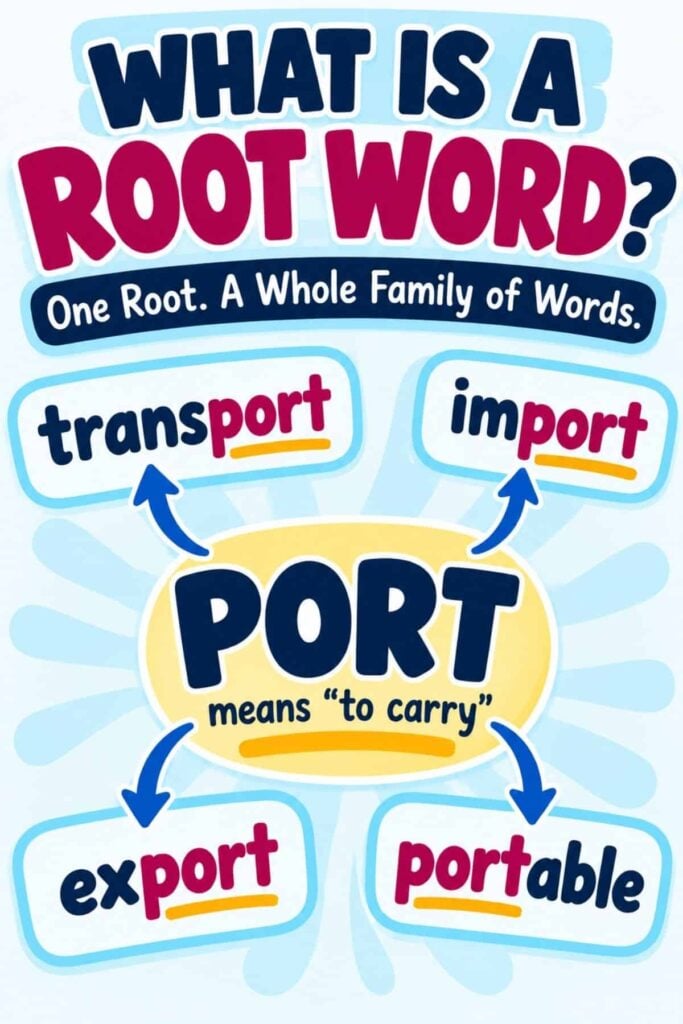
This post gives you a plain-English definition of root words, kid-friendly examples, the difference between a base word and a root, and a short Greek and Latin roots list you can use right away in elementary grades.
What Is a Root Word?
A root word is the part of a word that holds its main meaning. Every other piece, the prefix at the front or the suffix at the end, attaches to that root and shifts the meaning. The root is the anchor. Take the root spect, which means to look. Add parts to it, and you get inspect, respect, spectator, and inspection, all carrying that idea of looking. Learn one root, and you hold the key to a whole family of words.
That is why root words matter so much for reading and vocabulary. A student who knows port means carry can make sense of transport, import, export, and portable without memorizing each one separately. Roots give students a strategy for unlocking unfamiliar words on their own, which is exactly what they need as the texts get harder in third grade and beyond.
Base Words vs. Root Words: What’s the Difference?
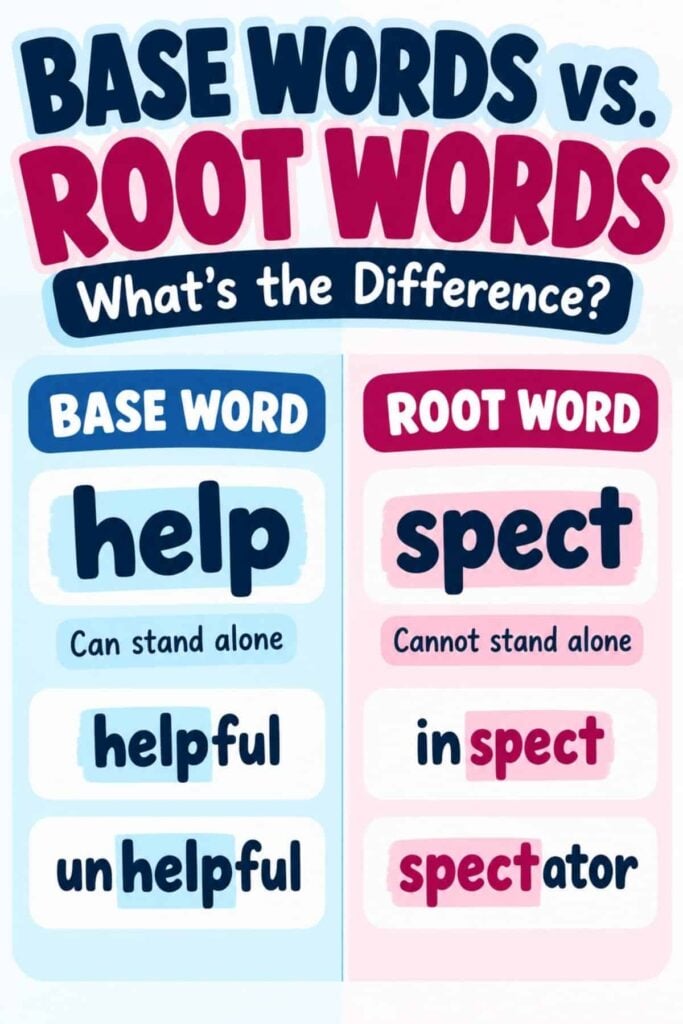
These two terms get used interchangeably, but there is a useful distinction worth teaching. A base word is a complete word that can stand on its own, like play in replay or help in helpful. A root, especially a Greek or Latin root, often cannot stand alone. Spect is not a word by itself, but it is the root inside inspect and spectacle.
For younger students, start with base words, since they are easier to see and already make sense on their own. As students move into the upper elementary grades, introduce true roots that carry meaning but do not stand alone. Both are root words in the broad sense, parts that carry meaning, so you do not need to overcomplicate the vocabulary. Just know the difference so you can explain it when a sharp student asks why spect is not a word.
How to Find the Root Word in a Word
Once students know what a root word is, the next skill is finding it inside a longer word. This is the part that turns root words from a definition into a reading strategy, and it works with a simple, repeatable routine you can model out loud.
- Cover the beginning. Look for a prefix at the front, like un-, re-, or dis-, and cover it with your finger.
- Cover the ending. Look for a suffix at the back, like -ful, -ing, or -tion, and cover that too.
- Look at what is left. The part in the middle is usually the root, the piece that carries the core meaning.
- Check that it makes sense. Ask whether the root’s meaning fits the whole word in its sentence. If it does, students have found it.
Take the word unhelpful. Cover un- at the front and -ful at the back, and you are left with help, the base word that carries the meaning. Try it with replaying: cover re- and -ing, and play is left. The routine is always the same: peel off the front, peel off the back, and name what carries the meaning. After a few practice rounds, it becomes the first thing students try when a long word stops them.
Root Word Examples
The clearest way to teach root words is to show the root and a few words built from it. Here are common examples to start with:
| Word | Root | Root Meaning |
|---|---|---|
| inspect | spect | to look |
| transport | port | to carry |
| dictate | dict | to say |
| structure | struct | to build |
| telephone | tele + phon | far + sound |
| photograph | photo + graph | light + write |
| biology | bio + logy | life + study |
Notice that words like telephone and photograph are built from two roots joined together, which is common with Greek word parts. Pointing that out helps students see that a long word is often just two meaningful pieces side by side.
Where Root Words Come From
Most root words in English trace back to Greek and Latin. That is why a root like port (carry) or graph (write) unlocks so many words at once: these ancient parts were used to build huge families of English vocabulary, especially the academic words students meet in science and social studies. You do not need to teach the origins formally in the younger grades. Just knowing that roots come from these two languages helps students understand why the same small part keeps showing up.
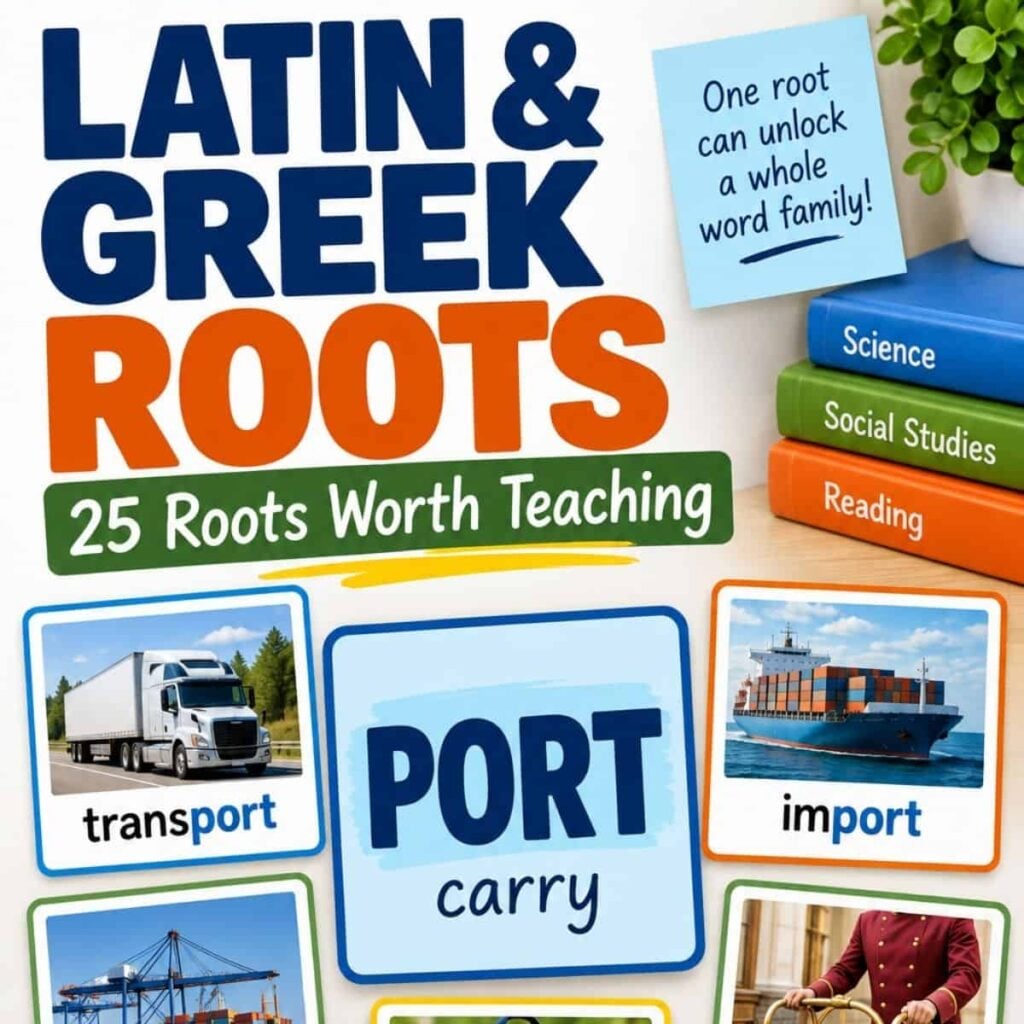
If you want the full, grade-by-grade list of the most useful roots with meanings and example words, that lives in my post on common Latin and Greek roots.
How to Explain a Root Word to a Child
Keep the explanation concrete. Tell students a root word is like the root of a plant: the part everything else grows from. The prefix and suffix are like branches and leaves, but the root is where the meaning starts. Then show it with a word they know, like unhelpful: the root is help, and once you see it, the whole word makes sense.
From there, make it a habit. When students meet a long word in reading, ask them to look for a word part they recognize before they give up. This small routine, practiced over time, is how root-word awareness turns into independent word solving.
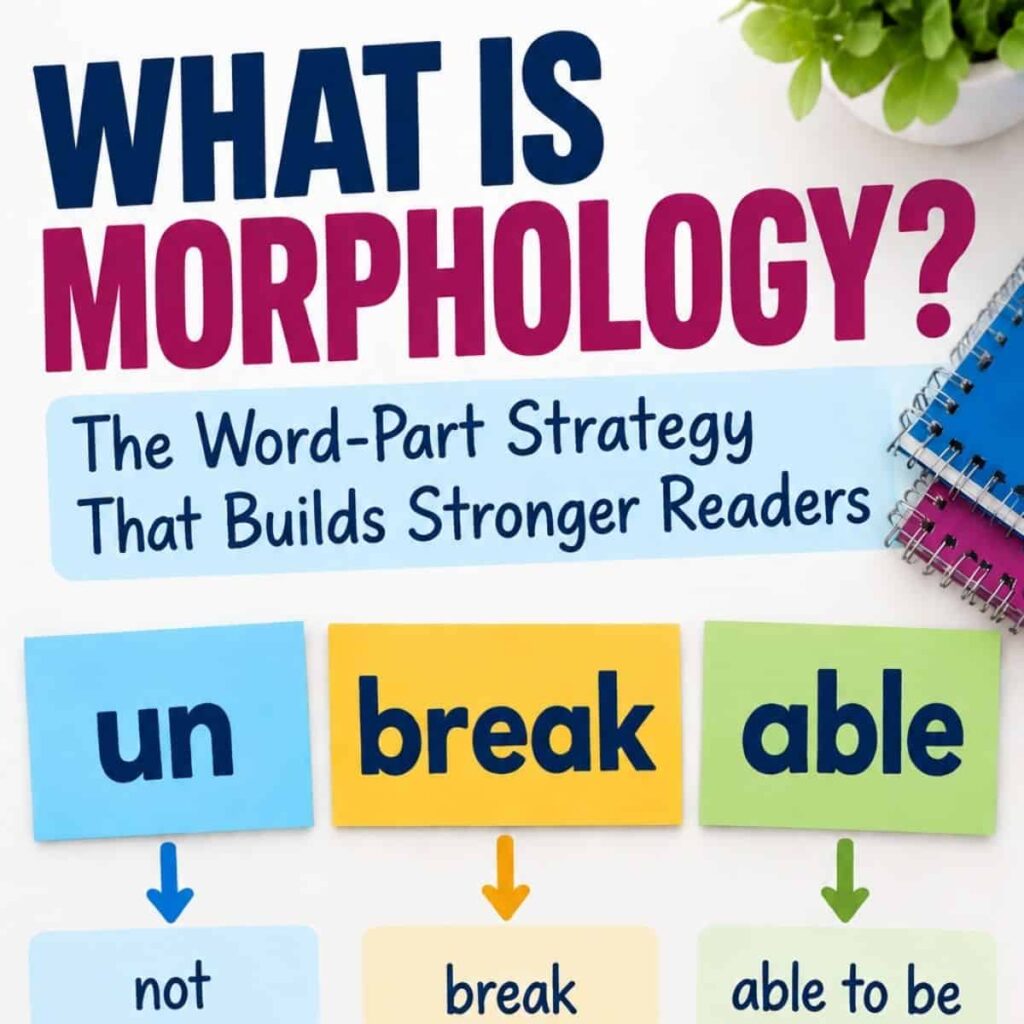
Root words are one piece of the bigger picture of word-part instruction, which I cover in my post on what morphology is and why it matters.
Frequently Asked Questions About Root Words
Putting Root Words to Work
Once students understand that root words carry meaning, the next step is practice: building words from a root, spotting roots in their reading, and connecting new words to roots they already know. For hands-on practice, my morphology worksheets have students build and sort words from a single root, which is one of the best ways to make root-word knowledge stick. Teach students to look for the root first, and long words stop being obstacles and start being puzzles they can solve.
Jessica BOschen
Jessica is a teacher, homeschool parent, and entrepreneur. She shares her passion for teaching and education on What I Have Learned. Jessica has 16 years of experience teaching elementary school and currently homeschools her two middle and high school boys. She enjoys scaffolding learning for students, focusing on helping our most challenging learners achieve success in all academic areas.