
Morphology Worksheets That Build Words
Open most morphology worksheets, and you find the same task: match the root to its meaning, then draw a line. Students can pass that page without ever building a word or noticing how a root actually behaves. Morphology worksheets do their real job when students take a root like port and build transport, import, export, and portable themselves, then figure out what each prefix changed. That is the difference between memorizing and understanding, and by fourth and fifth grade it is the skill that lets students attack unfamiliar words on their own.
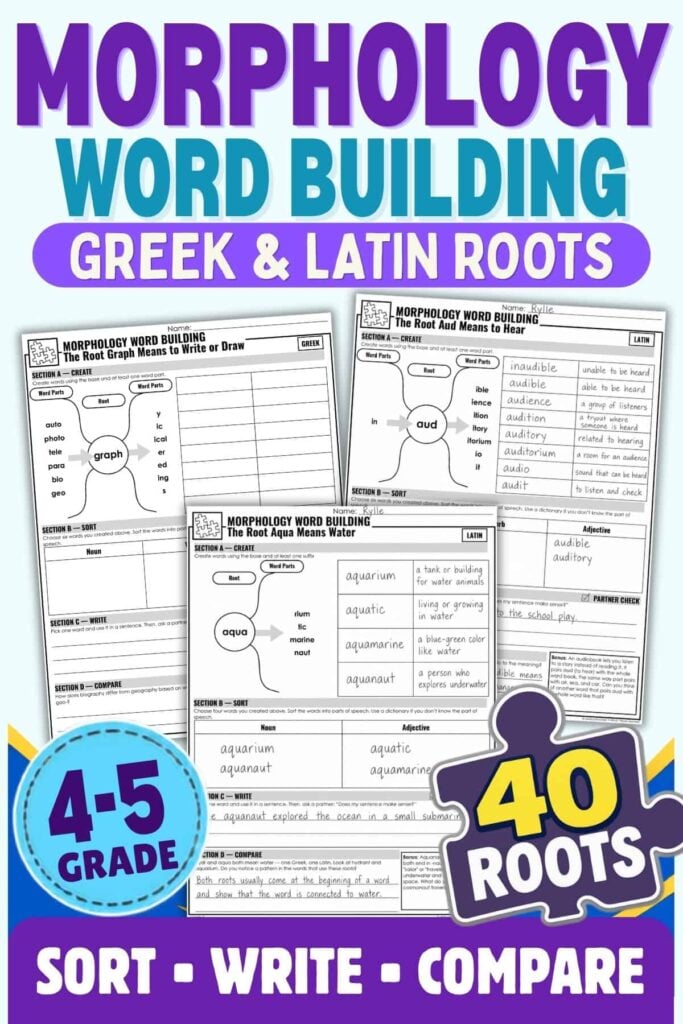
This post walks through what makes a morphology worksheet worth the paper, how to build a simple word-building routine, and how to match the roots to your grade level.
What Makes Morphology Worksheets Actually Work
A weak morphology worksheet treats a root like a vocabulary word to memorize. A strong one treats it like a tool. The goal is not for students to recite that struct means “to build.” It is for them to see that construct, destruction, instructor, and obstruct all carry that meaning, and to reason through a new struct word they have never seen before.
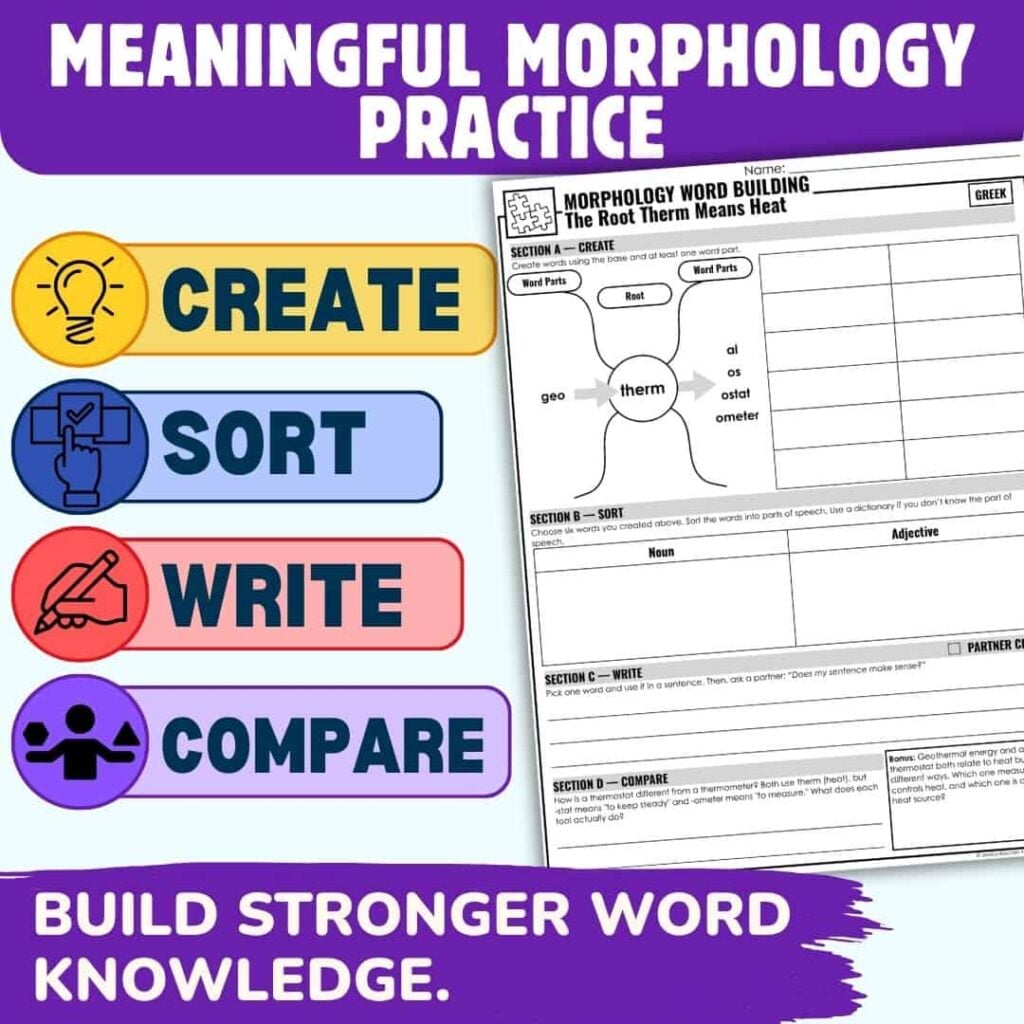
The worksheets that build that skill share a few features. Students generate words rather than receive them, so they are doing the thinking. They work with real words that appear in books and content-area reading, not invented ones. And they go past the definition into how the word is used, whether that means sorting by part of speech or writing a sentence. When a worksheet asks students to build, sort, and use a word from the same root, it covers meaning, grammar, and application in one page. That is far more than a matching activity ever does.
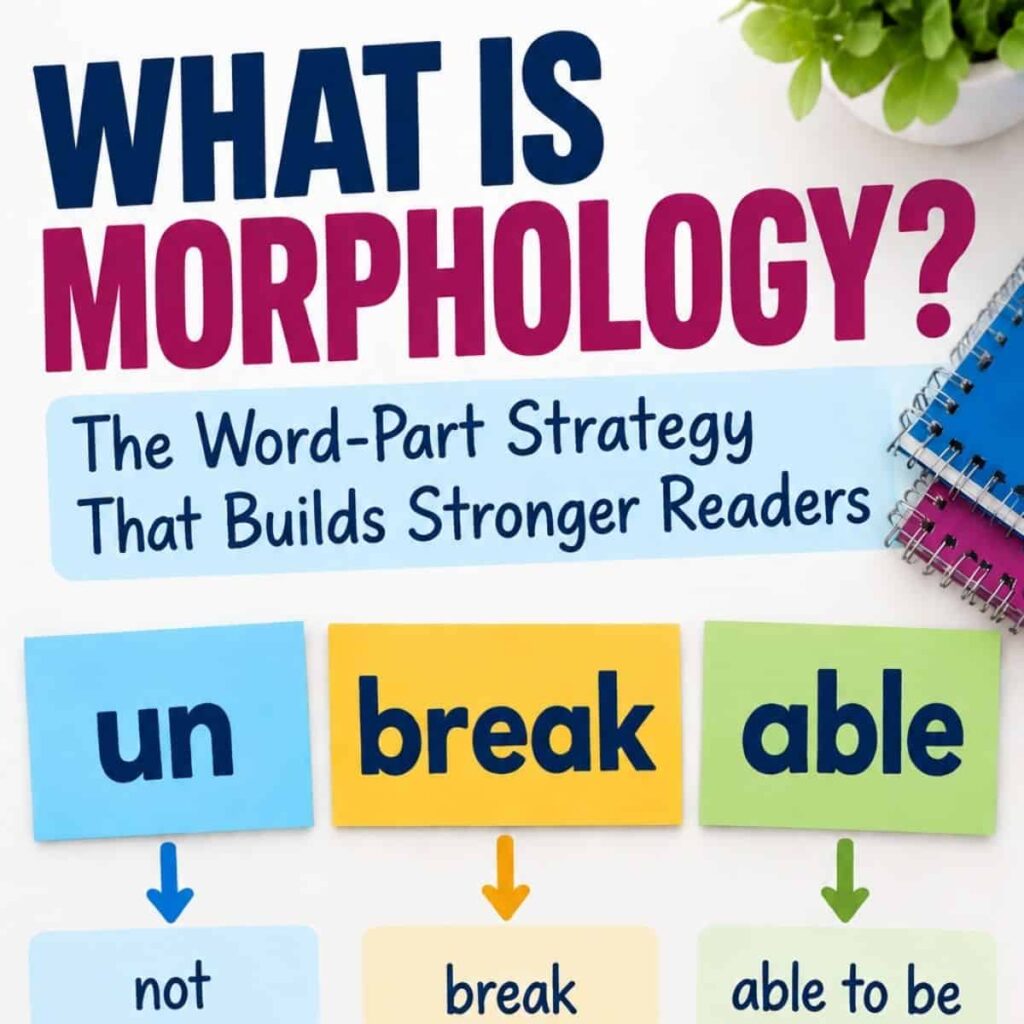
If you are still deciding whether morphology deserves this much room in your literacy block, my post on what morphology is and why it matters makes the full case.
A Word-Building Routine for Morphology Worksheets
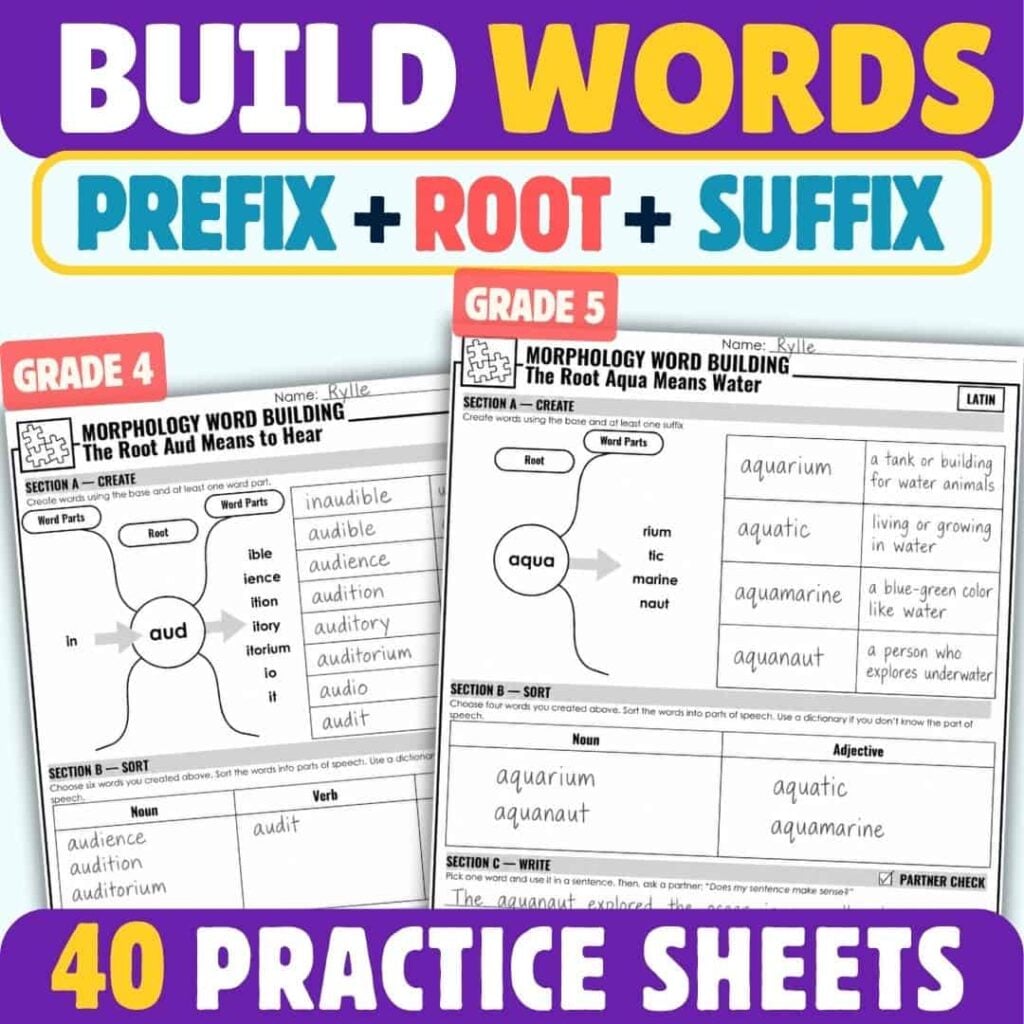
A routine matters because it lets you change the root every week without reteaching the task. Once students know the four moves, you hand them a new root, and they know exactly what to do. Here is a routine that works well from third grade up, and it is the structure my own morphology worksheets follow.
Build the words
Give students the root and a bank of prefixes and suffixes, and have them combine the parts into as many real words as they can. This is where the thinking happens. A student building from tract will produce attract, subtract, distraction, and retractable, and in doing so they see the same “pull or drag” meaning surface again and again. A dictionary nearby helps them check whether a build is a real word.
Sort by part of speech
Have students take the words they built and sort them into nouns, verbs, and adjectives. This quietly teaches that a suffix often signals a word’s job: -ion tends to make a noun, -ive tends to make an adjective. Students start to predict a word’s part of speech from its ending, which is exactly the kind of pattern recognition that speeds up their reading.
Use one word in a sentence
Pick one built word and write a sentence with it, then have a partner check whether the sentence makes sense. This step turns a word students can define into a word they can actually use. The partner check adds accountability and a little conversation, which matters when the rest of the page is independent.
Compare two related words
End by asking students to compare two words from the same root, like how import differs from export, or predict from contradict. Because the root is constant, the only thing that changes the meaning is the prefix, so students have to reason about what that prefix does. This is the highest-order move on the page and the one that transfers most directly to reading new words.
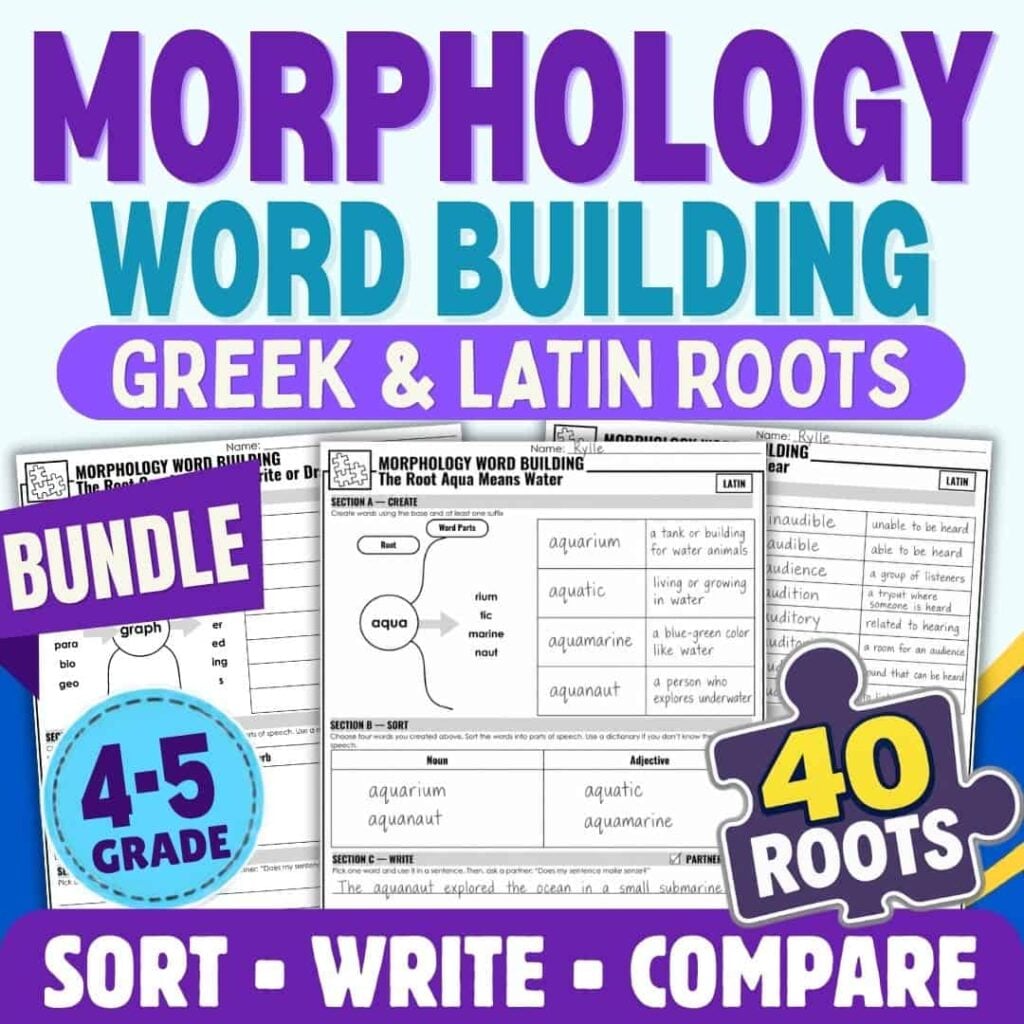
This morphology morning work bundle gives 4th and 5th grade students structured practice with Greek and Latin roots, prefixes, suffixes, word building, sorting, sentence writing, and word-meaning comparisons.
Choosing Roots by Grade Level
Morphology worksheets work best when the roots match what students are ready for. The jump from fourth to fifth grade is not about harder pages. It is about which roots you put in front of them and how those roots combine.
Fourth grade: roots that take familiar prefixes
By fourth grade, students should already recognize the everyday prefixes and suffixes from the primary grades. That makes it the right time to build Latin roots on top of that foundation. Roots like port (carry), struct (build), rupt (break), dict (say), spect (look), and tract (pull) all take prefixes students already know, so the root is the only new piece. A student who knows re- and trans- can build report and transport the day they meet port.
Fifth grade: Greek combining forms
Fifth grade is where Greek combining forms come in, and they behave differently. Roots like graph (write), bio (life), geo (earth), tele (far), scope (look), therm (heat), and meter (measure) often pair with each other rather than with a traditional prefix. Students build geothermal from geo plus therm, or telescope from tele plus scope. These roots also carry a lot of science and math vocabulary, so the word study reinforces content-area reading at the same time. It helps to name the connection when a root shows up in their science text.
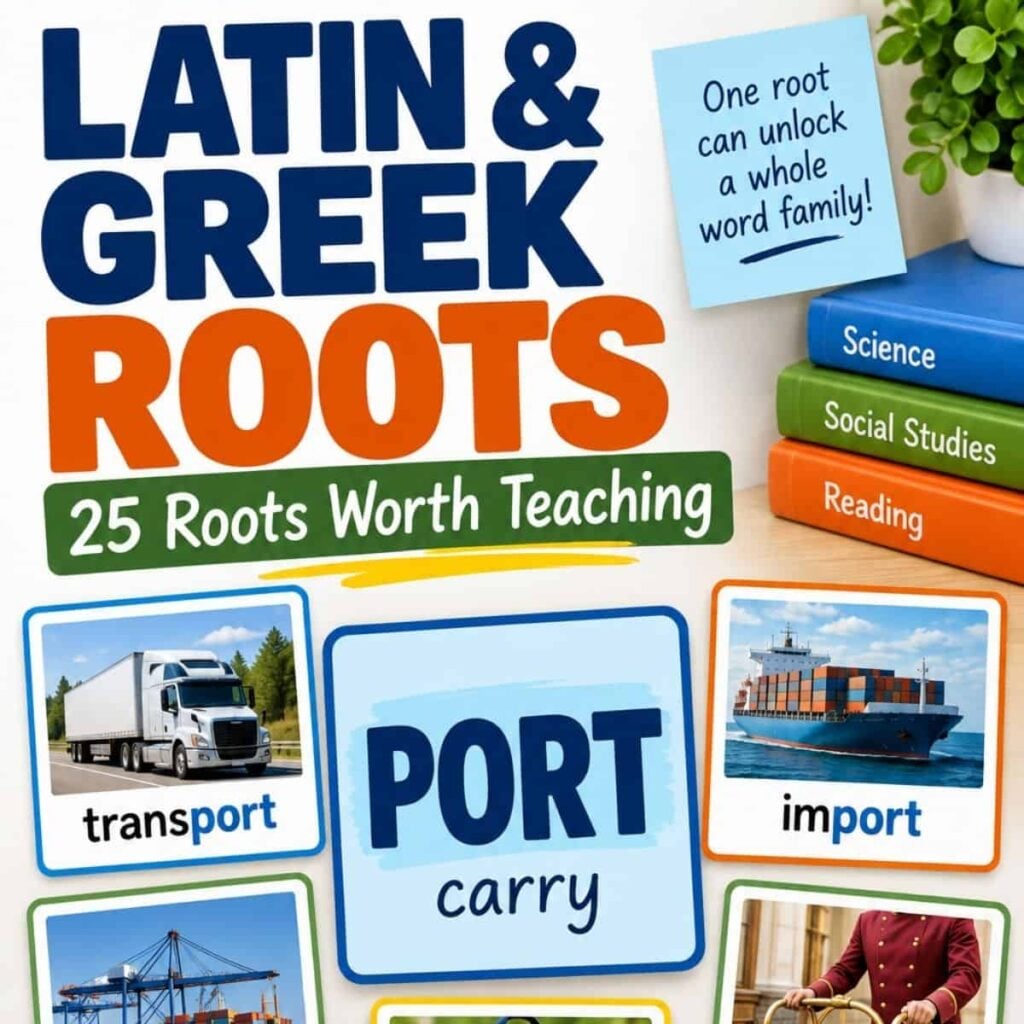
For a fuller list to plan from, my post on common Latin and Greek roots breaks the most useful roots down by grade.
What to Watch for When Students Build Words
Word building surfaces a few predictable snags, and knowing them ahead of time saves you a lot of mid-lesson questions. None of these are problems to avoid. They are the exact moments where students learn how words really work, as long as you are ready for them.
Roots that change spelling. Several roots shift depending on what attaches to them: scrib becomes script, spec becomes spect, fract becomes frag. Students will ask why describe and description do not look alike. That is the right question, and the short answer is that the root has more than one form. Point it out rather than smoothing it over.
Plausible non-words. A student combining parts will sometimes build something that follows the rules but is not a real word. This is where the dictionary earns its place at the station. Checking a build teaches students that morphology predicts meaning, but usage confirms it.
Endings that can be more than one part of speech. Words ending in -ing or -ed can act as a verb or an adjective depending on the sentence. When students sort, expect some words to land in more than one column, and treat that as a chance to talk about how a word is used, not just how it is spelled.
The goal is not a perfect page. It is students noticing patterns and exceptions, which is exactly the thinking that transfers to the words they meet in reading.
Use Word History to Stretch Students
The part of a morphology worksheet that hooks stronger students is usually the word history. Once students can build and sort, they are ready to reason about where a word came from, and those small etymology puzzles are where the real curiosity shows up.
The trick is to connect a familiar word to its parts in a way students would never guess on their own. A verdict is what a jury announces, and it comes from ver (truly) plus dict (say), so a verdict is literally a “true saying.” Bankrupt traces back to a phrase meaning “broken bench,” which described bankers who could not pay their debts, and rupt (break) still hides inside it. A manuscript pairs manu (hand) with script (write), a clue to how books were made before printing presses. These questions do two things at once. They give early finishers something truly challenging, and they show every student that a word is a small piece of history rather than a random string of letters. When you want to push a student further, ask them to find their own example of a root hidden in a word that doesn’t obviously show it.
How to Use Morphology Worksheets in Your Week
One advantage of a consistent worksheet is how many places it fits. Because the routine stays the same, the same page format works across your week:
- Independent morning work. A root a week gives students a predictable start-of-day task that builds real skill. If you want this spelled out as a daily routine, my morphology morning work post covers it.
- A word study center. The build-and-sort format runs without you, which makes it a strong station during small-group time.
- Early finisher work. Students who wrap up early can keep building words from the week’s root instead of coasting.
- Partner practice. The sentence check and the compare question both work well with a partner, so the worksheet doubles as a quick paired activity.
If you want the research behind putting word parts at the center of vocabulary instruction, Reading Rockets has a helpful overview of root words, roots, and affixes.
Frequently Asked Questions
Bringing It All Together
The best morphology worksheets ask students to do something with a root, not just define it. Build the words, sort them, use one, and compare two, and students walk away with a strategy they can apply to any unfamiliar word. Match the roots to the grade, keep the routine steady, and let the same format carry across your week.
Looking for ready-made pages? My Morphology Word Building sets for 4th and 5th grade include 20 roots each, with the build, sort, write, and compare routine already laid out. You can find them in my TPT store.
This morphology morning work bundle gives 4th and 5th grade students structured practice with Greek and Latin roots, prefixes, suffixes, word building, sorting, sentence writing, and word-meaning comparisons.
Jessica BOschen
Jessica is a teacher, homeschool parent, and entrepreneur. She shares her passion for teaching and education on What I Have Learned. Jessica has 16 years of experience teaching elementary school and currently homeschools her two middle and high school boys. She enjoys scaffolding learning for students, focusing on helping our most challenging learners achieve success in all academic areas.